How to Grow Money Plant Correctly: The Ultimate Expert Guide
Did you know that nearly 90% of people are making critical errors with their indoor vines? A healthy, vibrant home starts with lush, thriving greenery that catches the eye.
To achieve that colourful, highly attractive look in your space, you must learn to grow money plant correctly. Most beginners unknowingly drown their roots or starve their leaves of vital nutrients.
It is time to ditch the guesswork and rely on proven, data-driven plant care. This guide will show you exactly how to transform your struggling sprouts into magnificent, trailing masterpieces.
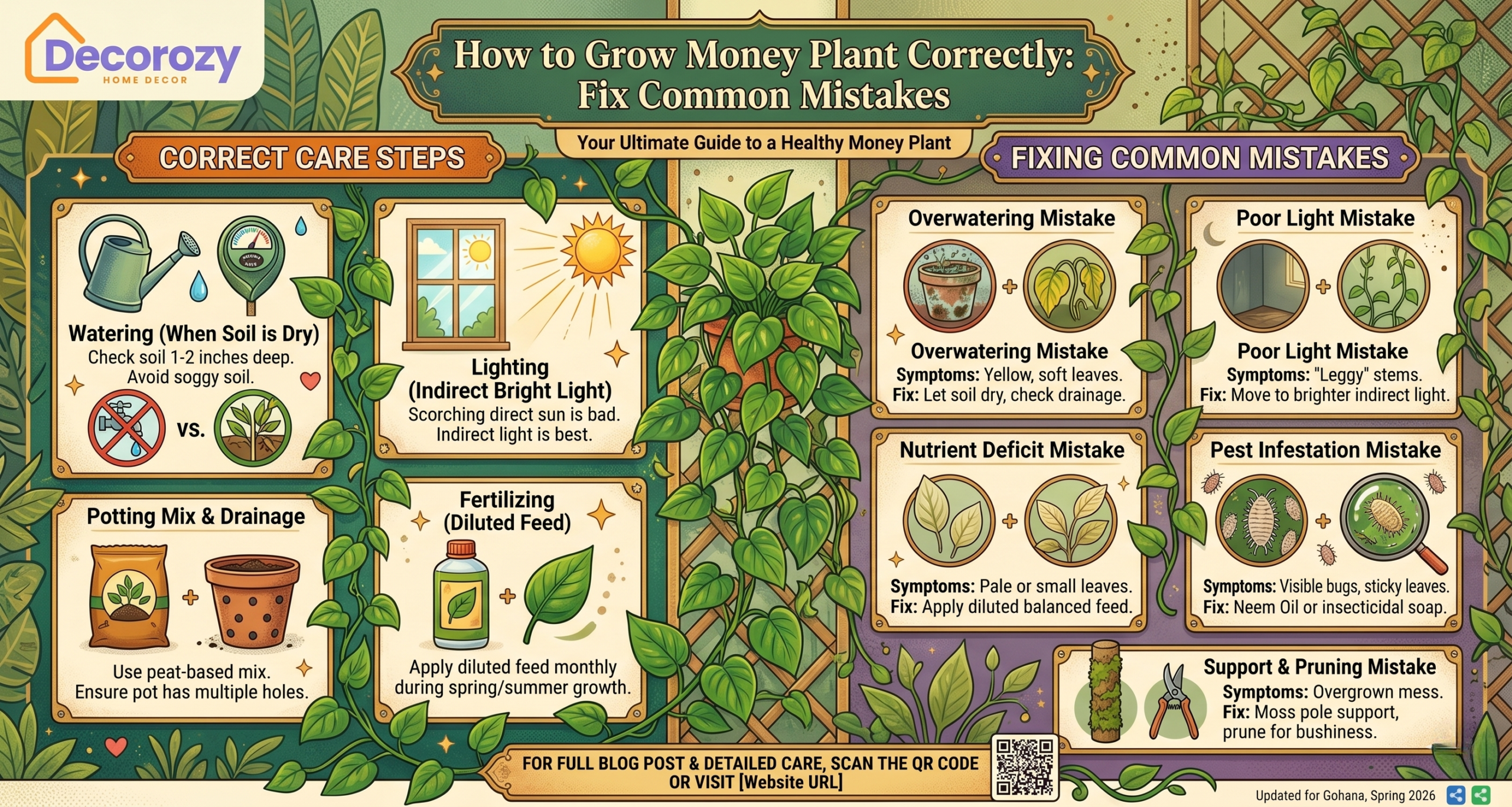
Quick Answer: To grow a money plant correctly, place it in bright, indirect sunlight and use well-draining, aerated potting soil. Water only when the top two inches of soil feel completely dry. Maintain moderate humidity and feed with a balanced liquid fertilizer monthly during the growing season.
The Fundamentals to Grow Money Plant Correctly
Understanding the natural habitat of the Epipremnum aureum is the first step to success. These tropical vines thrive under the filtered canopies of larger trees in the wild.
Replicating this environment indoors means avoiding harsh, direct sunlight at all costs. Direct rays will scorch the leaves, destroying that attractive, vibrant variegation you want.
Instead, position your pot near an east-facing window for optimal, bright, indirect light. This simple lighting adjustment is the foundation of long-term plant health.
Watering is where the vast majority of plant owners fail. Overwatering leads directly to root rot, which is the number one killer of indoor houseplants.
You must allow the soil to dry out significantly between watering sessions. Always check the top two inches of the potting mix with your finger before reaching for the watering can.
Why You Must Grow Money Plant Correctly for Your Home
A thriving money plant is more than just a decorative element. It serves as a powerful, natural air purifier, actively removing toxins like formaldehyde and benzene from your indoor air.
When you care for these vines properly, they grow rapidly, creating a stunning visual impact. Trailing vines add a colourful, attractive dimension to empty shelves and dull corners.
Furthermore, in practices like Vastu and Feng Shui, these plants are believed to attract wealth and prosperity. However, a dying or sickly plant is said to have the exact opposite effect.
By optimizing your care routine, you ensure your plant remains a vibrant symbol of positive energy. Healthy foliage translates to a healthier, more beautiful living environment.
Step-by-Step Guide to Preventing Common Care Mistakes
The soil mix you choose dictates the future of your plant’s root system. Never use heavy garden soil, as it retains too much moisture and suffocates delicate roots.
Opt for a well-draining mixture containing peat moss, perlite, and standard potting soil. This combination retains just enough moisture while allowing excess water to drain instantly.
Yellowing leaves are the first warning sign that your routine needs adjusting. This is almost always a symptom of poor drainage or an inconsistent watering schedule.
To encourage bushier, more attractive growth, do not be afraid to prune your plant. Snipping the ends of the vines forces the plant to branch out, preventing a thin, leggy appearance.
Finally, remember to wipe the leaves down with a damp cloth every few weeks. Dust buildup prevents the plant from photosynthesizing efficiently, slowing down its growth rate.
Transforming your home with lush foliage requires knowledge, consistency, and the right approach. For more expert interior styling tips and botanical advice, explore our premium guides at Decorozy.com today!
FAQ Schema
- Question 1: Why are the leaves on my money plant turning yellow?
- Answer: Yellow leaves on a money plant are primarily caused by overwatering and poor soil drainage. Ensure your pot has drainage holes and only water the plant when the top two inches of the soil are completely dry to the touch.
- Question 2: Can a money plant survive in low light conditions?
- Answer: Yes, money plants are highly adaptable and can survive in low light. However, their growth will slow down significantly, and variegated varieties may lose their colourful, attractive leaf patterns, reverting to solid green.
- Question 3: How often should I fertilize my indoor money plant?
- Answer: You should fertilize your money plant once a month during the active growing seasons of spring and summer. Use a balanced, water-soluble houseplant fertilizer diluted to half strength to avoid chemical root burn.
CUSTOMERS ALSO EXPLORED
Discover More Beautiful Collections
Explore premium handcrafted décor, divine idols, traditional pooja collections, and exclusive decorative products loved by customers across India.
🌸
Durga Maa Idols
Elegant Durga Maa statues crafted with fine detailing.
View Products →
🦚
Radha Krishna Idols
Graceful Radha Krishna idols symbolizing eternal love.
Shop Now →
🐄
Kamdhenu Cow Idol
Premium Kamdhenu Cow with Calf decorative idol.
View Details →
🛕
God Idols Collection
Discover our complete collection of premium God idols.
Explore More →
🔥
Today’s Best Deals
Save more on bestselling décor and spiritual collections.
Grab Offers →
Looking for Premium Home Décor?
Shop handcrafted God idols, elegant home décor, traditional handicrafts, and exclusive collections designed to enhance every space.
Visit Decorozy →