Unique Tribal Festival of Northeast India: A Complete Cultural Guide
If you’ve never heard of the Hornbill Festival or Bihu, you’re missing one of the most extraordinary cultural landscapes on earth. The festival of Northeast India is not just a seasonal event — it’s a living, breathing archive of tribal identity, spiritual devotion, and ancestral memory. Spanning eight states, each with its own languages, communities, and cosmologies, Northeast India offers a festival calendar that rivals anywhere in the world. In this guide, you’ll discover the most important, iconic, and deeply human celebrations this region has to offer.
What Is the Festival of Northeast India?
The festival of Northeast India refers to the wide spectrum of cultural, religious, and tribal celebrations observed across Assam, Nagaland, Manipur, Meghalaya, Mizoram, Tripura, Arunachal Pradesh, and Sikkim.
These festivals aren’t tourist productions. They’re community events passed down through oral traditions, woven into the agricultural calendar, and tied directly to nature, ancestors, and the divine.
A Region Unlike Any Other in India
Northeast India is home to over 200 distinct tribes and sub-tribes. Each group has its own language, mythology, and ceremonial calendar. That diversity is exactly what makes the festivals of Northeast so remarkable — you could spend months traveling the region and still encounter something entirely new every week.
The terrain plays a role too. Mountains, rivers, dense forests, and rice paddies all shape when and how people celebrate. Harvest time, monsoon arrivals, and the sowing season each carry their own ritual weight.
Why These Festivals Matter Religiously and Culturally
For many communities here, there is no clean line between religion and culture. Festivals are prayer, community gathering, social bonding, and ancestral remembrance — all at once.
Some tribes follow animism, others Christianity, Buddhism, or Hinduism. But even where formal religions have arrived, older traditions persist underneath them, often beautifully blended. That layering makes the cultural festivals of Northeast India spiritually rich in a way that’s genuinely hard to find elsewhere.
Famous Festivals of Northeast India You Should Know
When people talk about the famous festivals of Northeast India, a handful of names come up almost universally. Let’s start there — then go deeper into the lesser-known ones that are just as incredible.
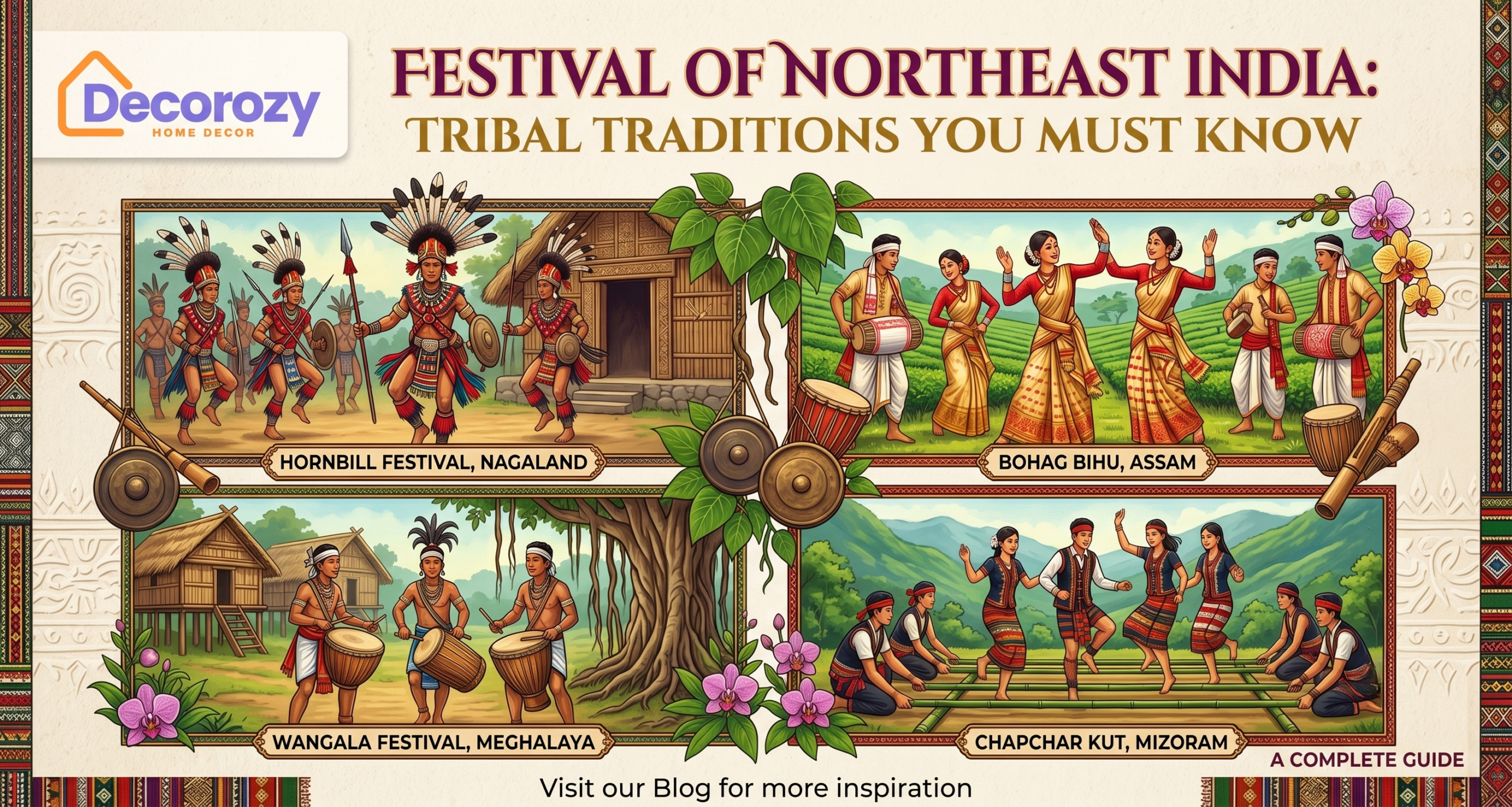
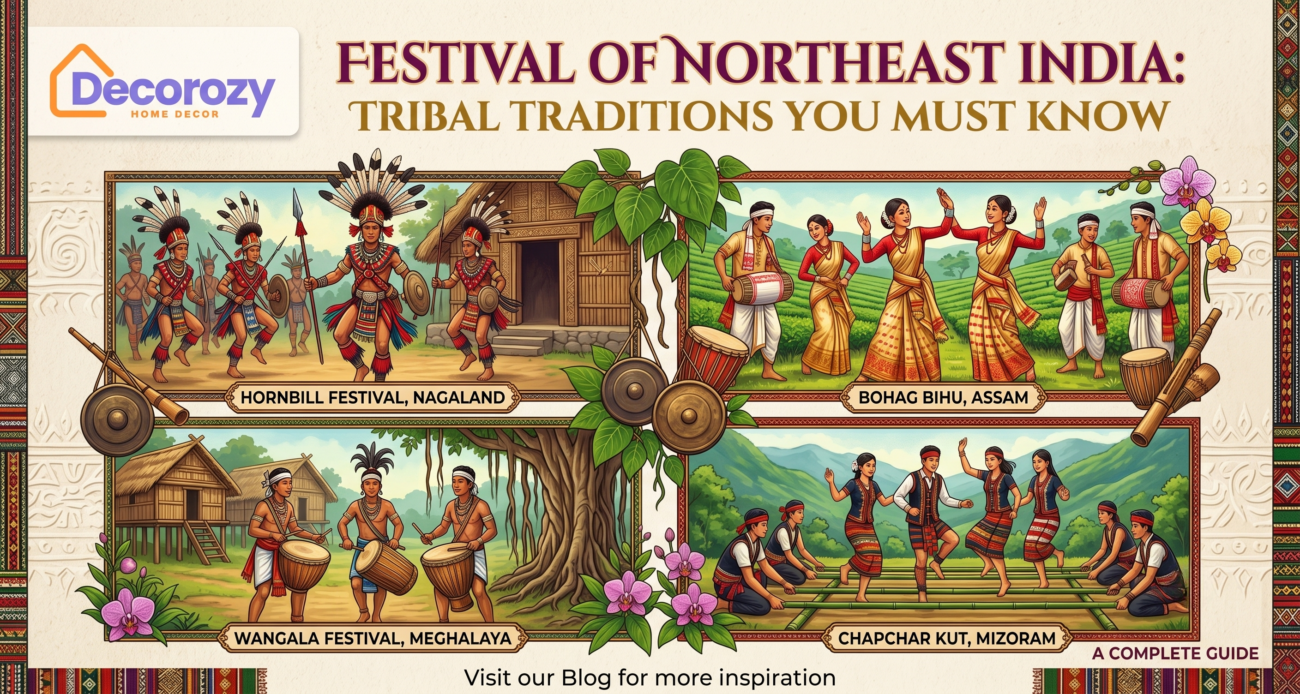
Hornbill Festival (Nagaland) — Held every December in Kisama Heritage Village near Kohima, this is arguably the single most famous tribal festival in all of India. It brings together all of Nagaland’s major tribes for 10 days of dance, music, traditional games, indigenous food, and craft exhibitions. The atmosphere is electric.
Bihu (Assam) — Assam celebrates Bihu three times a year, but the Rongali Bihu in April is the big one. It marks the Assamese New Year and the start of the agricultural season. The Bihu dance — performed by young men and women in traditional attire — is energetic, joyful, and deeply expressive.
Wangala (Meghalaya) — The Garo people’s Wangala festival is a harvest thanksgiving to their sun deity, Misi Saljong. Hundreds of traditional drums are played simultaneously during the “hundred drums” ceremony. If you’ve never heard that sound echoing across the Garo Hills, it’s difficult to describe.
Chapchar Kut (Mizoram) — This spring festival celebrates the completion of the most difficult stage of jhum (shifting) cultivation. Mizo people come together in bright traditional dress, performing the famous Cheraw (bamboo dance), which requires remarkable precision and coordination.
Losar (Sikkim & Arunachal Pradesh) — Celebrated by Buddhist communities, Losar marks the Tibetan New Year. Monasteries come alive with masked dances (Cham), butter sculptures, and prayer ceremonies. The spiritual energy during Losar is palpable.
Tribal Festivals of Northeast India That Deserve More Attention
Beyond the big names, the tribal festivals of Northeast India include dozens of ceremonies that rarely make mainstream travel lists — yet they’re equally extraordinary.
Ali Aye Ligang (Mishing tribe, Assam) — A sowing festival welcoming the agricultural season with rice beer, dance, and offerings to nature spirits.
Sangai Festival (Manipur) — A 10-day event celebrating the state’s art, culture, handloom, handicrafts, and the endangered Sangai deer.
Ziro Festival of Music (Arunachal Pradesh) — Part tribal cultural experience, part indie music festival, held against the backdrop of one of the most scenic valleys in Asia.
Pung Cholom (Manipur) — A drum dance tradition where performers display breathtaking physical skill with the traditional Manipuri drum.
Important Festivals of Northeast India: A State-by-State Overview
State
Key Festival
When
Significance
Assam
Bihu
April, October, January
New Year, harvest, and nature
Nagaland
Hornbill Festival
December
Inter-tribal cultural showcase
Manipur
Yaoshang / Sangai
March / November
Holi equivalent + cultural expo
Meghalaya
Wangala
October–November
Harvest thanksgiving
Mizoram
Chapchar Kut
March
Post-jhum spring festival
Tripura
Kharchi Puja
July
Fourteen deity worship
Arunachal Pradesh
Losar / Solung
February / September
New Year and harvest
Sikkim
Losar / Saga Dawa
February / May–June
Buddhist celebrations
Understanding this map of the important festivals of Northeast India helps travelers and students see the full picture — this is not a monolith. It’s eight distinct cultural worlds, each with its own spiritual vocabulary.
Fairs and Festivals of Northeast India: What Makes Them Different
The Role of Nature in Every Celebration
One thing unites virtually all the fairs and festivals of Northeast India — an intimate relationship with the natural world. Nearly every major festival is tied to planting, harvesting, rain, or the changing of seasons.
This isn’t symbolic. For agricultural communities, a failed harvest is a genuine crisis. So these festivals carry real urgency. When the Garo community thanks the sun god during Wangala, or when Assamese farmers welcome the New Year at Bihu, they’re not performing nostalgia. They’re doing something they believe actually matters.
That sincerity is what visitors often feel most powerfully when they attend these events in person.
How Tribal Identity Is Preserved Through Festivals
Language can be suppressed, dress codes can change, but festivals are remarkably resilient. Across the Northeast, tribal communities have used their annual celebrations as anchors of identity — even through colonial disruption, migration, and modernization.
The tribal festivals of Northeast India pass down oral histories, teach younger generations traditional songs and dances, and reinforce social bonds through shared ritual. It’s community memory made visible once a year.
Pros and Cons of Visiting the Festival of Northeast India
Pros: ✔ Unmatched authenticity — these are real community celebrations, not recreations ✔ Visual spectacle of tribal costumes, dances, and crafts is extraordinary ✔ Deeply educational — especially for understanding India’s cultural diversity ✔ Warm hospitality from local communities is genuinely touching ✔ Many festivals coincide with beautiful seasonal landscapes (harvest time, spring)
Cons: ✘ Remote locations — some festivals require significant travel and planning ✘ Limited tourist infrastructure in many states outside of major cities ✘ Inner Line Permits are required for some states (Arunachal Pradesh, Nagaland, Manipur, Mizoram) ✘ Festival dates change yearly based on lunar calendars — always verify in advance ✘ Crowd management at flagship events like Hornbill can be challenging in peak years
Cultural Festivals of Northeast India: Final Recommendations
Which Festival Should You Visit First?
If you’re visiting for the first time and want maximum impact, the Hornbill Festival in Nagaland is the obvious starting point. It’s well-organized, deeply authentic, and gives you access to multiple tribes in one place. December weather in Kohima is also crisp and pleasant.
For a more off-the-beaten-path experience, Wangala in Meghalaya or Chapchar Kut in Mizoram will show you a more intimate, community-level celebration that feels less curated and more genuinely alive.
If your interest is spiritual and religious rather than cultural spectacle, Losar in Sikkim — with its monastery rituals, butter lamp offerings, and masked dances — is truly moving.
Practical Tips for Experiencing These Festivals Respectfully
Apply for permits early. Several northeastern states require Inner Line Permits (ILPs) for foreign nationals and sometimes even for Indian citizens from other states. Don’t leave this to the last minute.
Dress modestly and ask before photographing. Some ceremonies are sacred. Ask permission before pointing a camera at rituals or community elders.
Try the food. Tribal cuisine across the Northeast is exceptional — smoked meats, fermented bamboo shoots, rice beer. It’s central to the festival experience.
Stay with homestays where possible. Many communities offer traditional homestays during festival season. It’s far more enriching than a hotel and directly supports local families.
Learn a few words in the local language. Even a greeting in Nagamese, Mizo, or Garo goes a long way in building genuine connection.
Frequently Asked Questions About the Festival of Northeast India
Q1: What is the festival of Northeast India most famous for? The festival of Northeast India is most famous for its extraordinary tribal diversity. From Nagaland’s Hornbill Festival to Assam’s Bihu, these celebrations are known for colorful traditional costumes, indigenous music, ancestral dances, and deep connections to agricultural and spiritual life — all rooted in communities that have preserved their customs for centuries.
Q2: What are the most important tribal festivals of Northeast India? The most important tribal festivals of Northeast India include the Hornbill Festival (Nagaland), Wangala (Meghalaya), Chapchar Kut (Mizoram), Bihu (Assam), and Solung (Arunachal Pradesh). Each reflects distinct tribal heritage, nature reverence, and community identity. These festivals are active expressions of living culture, not historical reenactments.
Q3: Do I need a special permit to attend festivals in Northeast India? Yes, for several northeastern states you’ll need an Inner Line Permit (ILP). States requiring ILPs include Arunachal Pradesh, Nagaland, Manipur, and Mizoram. Foreign nationals may also need Protected Area Permits (PAPs) for certain regions. Always check the latest requirements with the respective state government offices or the Ministry of Home Affairs well before your trip.
Q4: When is the best time to visit for the cultural festivals of Northeast India? October through February is generally the best window for cultural festivals of Northeast India. This period covers the Hornbill Festival (December), Wangala (October–November), and Losar (February). March is ideal for Chapchar Kut in Mizoram. April is Bihu season in Assam. Plan around specific festivals rather than general seasons for the richest experience.
Q5: How can I experience the fairs and festivals of Northeast India responsibly? To experience fairs and festivals of Northeast India responsibly, always ask permission before photographing sacred rituals, dress modestly, respect community boundaries, and purchase crafts directly from artisans rather than middlemen. Stay in local homestays, eat local food, and take time to learn about the community’s history before arriving. Your presence should leave something positive behind.
Conclusion: The Festival of Northeast India Is a World of Its Own The festival of Northeast India is not a single event. It’s a living mosaic of eight states, hundreds of tribes, and thousands of years of cultural memory — all expressed through dance, music, prayer, and community. Here are the key takeaways from this guide: The festivals here are deeply tied to nature, agriculture, and tribal identity — not tourist productions States like Nagaland, Assam, Meghalaya, and Mizoram each offer distinct and irreplaceable festival experiences Planning ahead — especially for permits and seasonal timing — is essential for a smooth visit Respectful, curious, engaged participation is what separates a meaningful experience from a superficial one Whether you’re a traveler, a researcher, a student of religion and culture, or simply someone fascinated by the depth of human tradition — the cultural festivals of Northeast India will leave a genuine mark on you.
✨ Popular Categories
Browse our most loved collections of handcrafted home décor, divine idols, pooja essentials and exclusive decorative products.