Top Festivals of Meghalaya, Nagaland & Mizoram: A Complete Cultural Guide
Northeast India doesn’t get nearly enough attention on the world’s cultural map — and that’s honestly a shame. The Wangala Festival of Meghalaya alone is enough to stop you in your tracks. Add to that the electric energy of Nagaland’s tribal celebrations and the colorful spirit of Mizoram’s festivals, and you have one of the most culturally rich corners of the entire planet.
In this guide, you’ll get a deep, honest look at the most famous festivals of Meghalaya, Nagaland, and Mizoram — what they mean, when they happen, and why people across the world are starting to pay attention. Whether you’re a traveler, a student, or simply someone curious about global traditions, this one’s for you.
What Is the Wangala Festival of Meghalaya?
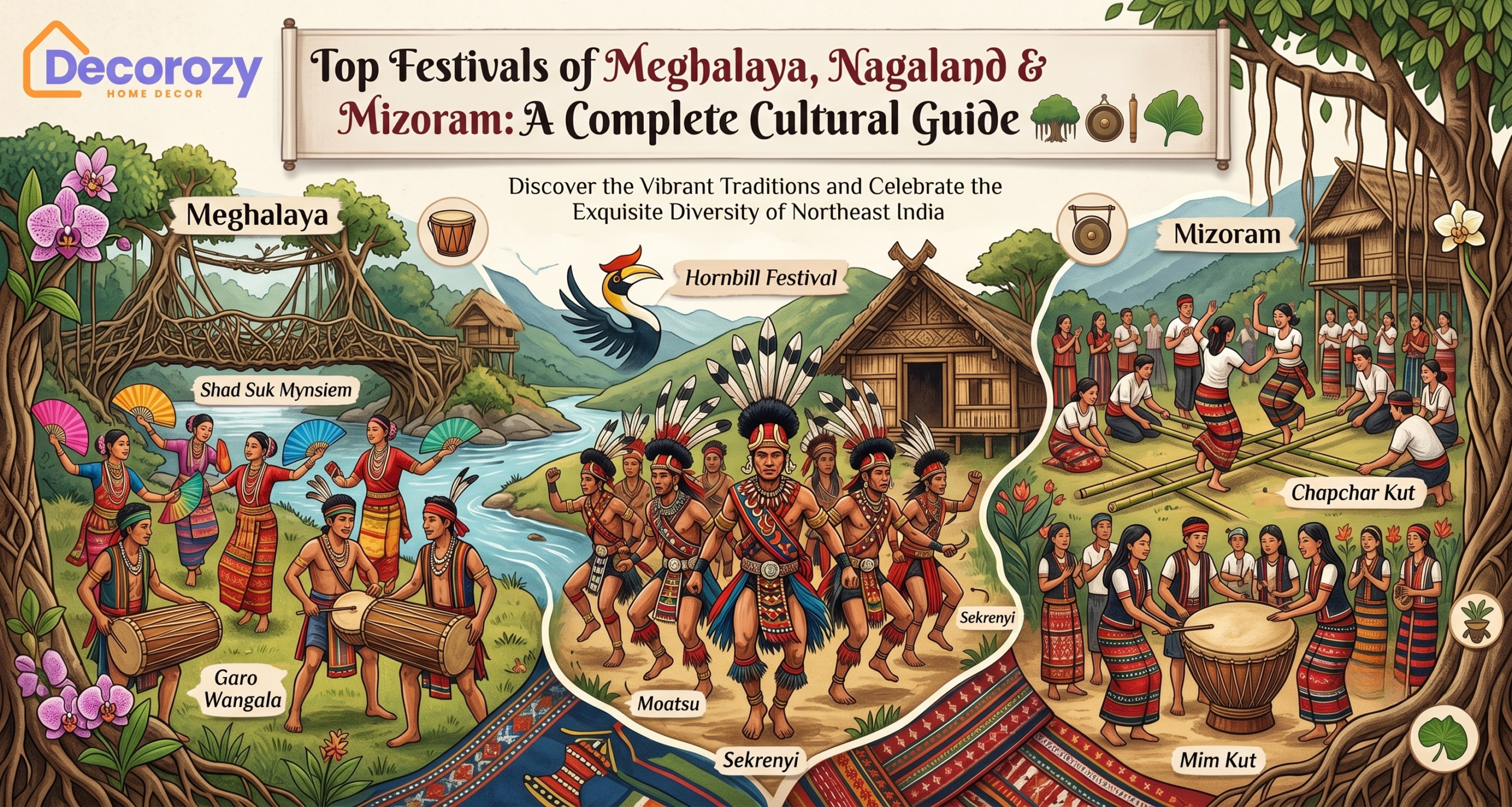
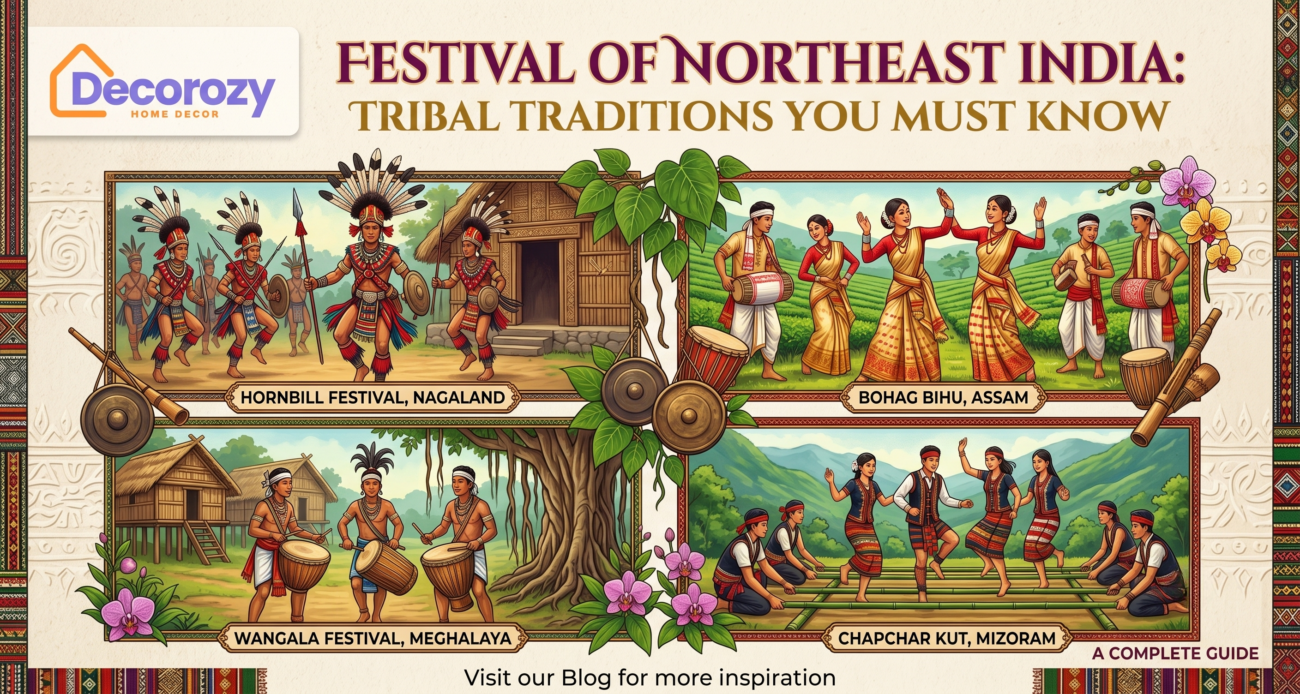
The Wangala Festival of Meghalaya is a post-harvest festival celebrated by the Garo tribe, one of the major indigenous communities of Meghalaya. Known widely as the “Festival of Hundred Drums,” Wangala is a thanksgiving celebration offered to Saljong — the Sun God who blesses the land with fertility and abundance.
It usually takes place in October or November, right after the harvest season wraps up. Communities come together to dance, beat traditional drums, and offer prayers. The atmosphere is unlike anything you’ll find elsewhere in South Asia.
The History and Origin of Wangala
The Garo people have celebrated Wangala for centuries. At its core, this festival is deeply spiritual — it’s their way of saying thank you to the deity who made the harvest possible. Elders and priests lead the rituals, and the community participates with full devotion.
Over time, the state government of Meghalaya began organizing large-scale Wangala events to promote tourism and cultural preservation. Today, the Wangala 100 Drums Festival at Asanang near Tura draws thousands of visitors every year.
The Wangala Festival of Meghalaya Fill in the Blanks — Key Facts
If you’re studying this festival for academics or competitive exams, here are the essential facts:
Celebrated by: The Garo tribe of Meghalaya
Deity worshipped: Saljong (Sun God of fertility)
Season: Post-harvest (October–November)
Key feature: Hundred drums beaten simultaneously
Location: Mainly in the Garo Hills region
Other name: The Hundred Drums Festival
These fill-in-the-blank facts are frequently asked in school exams and general knowledge quizzes about Northeast India.
Famous Festivals of Meghalaya Beyond Wangala
While Wangala is the crown jewel, Meghalaya is home to several other famous festivals worth knowing.
Nongkrem Dance Festival
Celebrated by the Khasi tribe, Nongkrem is a five-day festival held in the Smit village near Shillong. The highlight? A spectacular ritual dance performed by young Khasi women in traditional silver jewelry and silk skirts. It’s a feast for the eyes and a deeply religious event.
Behdienkhlam Festival
This one belongs to the Jaintia tribe. It’s celebrated to drive away evil spirits and pray for a good harvest. The festival involves colorful wooden structures being carried through the village and later immersed in water — symbolic, dramatic, and unforgettable.
Moatsu Festival of Nagaland — The Warrior’s Celebration
Nagaland is famous for its warrior culture, and the Moatsu Festival of Nagaland reflects that spirit perfectly. Celebrated by the Ao Naga tribe, Moatsu falls in the first week of May every year — specifically from May 1 to 3.
It’s a post-sowing festival that marks the end of the agricultural preparation season. Think of it as the community’s moment to exhale, celebrate, and connect with their roots before the long growing season ahead.
What Happens During Moatsu?
The Ao Nagas celebrate with:
Folk songs and dances performed in traditional attire
Feasting with rice beer (a significant cultural element)
Storytelling passed down through generations
Games and sports that test strength and endurance
Communal bonding — families and friends gathering across villages
One of the most moving aspects of Moatsu is how it keeps oral traditions alive. Stories of ancestors, battles, and blessings are shared around fires, preserving history in the most human way possible.
Famous Festivals of Nagaland — A Quick Overview
Nagaland is perhaps most internationally recognized for the Hornbill Festival, held annually in December at Kisama Heritage Village. It brings all 16 Naga tribes under one roof for 10 days of music, dance, food, and craftsmanship.
Here’s a comparison of key Nagaland festivals:
Festival
Tribe
Month
Purpose
Moatsu
Ao Naga
May
Post-sowing celebration
Hornbill
All 16 Tribes
December
Cultural unity & tourism
Sekrenyi
Angami Naga
February
Purification & renewal
Tuluni
Sumi Naga
July
Mid-summer celebration
Aoling
Konyak Naga
April
Spring & new year
Famous Festivals of Mizoram — Joy, Music & Community
Mizoram’s festivals are vibrant, musical, and rooted in a deep sense of community. The people of Mizoram (known as the Mizo) are celebrated for their warmth, and their festivals reflect exactly that.
Chapchar Kut — The Most Famous Festival of Mizoram
Chapchar Kut is the most well-known and widely celebrated of all the main festivals of Mizoram. It falls in March, right after the jungle-clearing phase of jhum cultivation (slash-and-burn farming). Communities celebrate with traditional dances, bamboo dances (Cheraw), and communal feasting.
The Cheraw dance — where performers gracefully step between moving bamboo poles — is one of the most visually stunning folk dances in all of India. It has become a symbol of Mizo identity worldwide.
Main Festivals of Mizoram at a Glance
Beyond Chapchar Kut, Mizoram celebrates several other meaningful festivals:
Mim Kut — A harvest festival dedicated to the spirits of the deceased. Celebrated in August–September with offerings of corn and other crops.
Pawl Kut — Another harvest thanksgiving festival, celebrated in December. Communities gather to share food and express gratitude for the year’s crops.
Christmas — Given the high Christian population in Mizoram, Christmas is celebrated with extraordinary joy, carol singing, and church events across the state.
Why These Festivals Matter to the World
You might wonder — why should someone outside Northeast India care about these festivals?
Here’s why these celebrations deserve global attention:
✔ They preserve endangered indigenous cultures — many of these traditions exist nowhere else on Earth. ✔ They offer a living classroom — for historians, anthropologists, and anyone curious about humanity’s diverse spiritual traditions. ✔ They promote responsible tourism — visiting these festivals contributes directly to local economies and cultural sustainability. ✔ They challenge homogenization — in a world of fast food and streaming services, these festivals remind us that human creativity is endlessly diverse. ✔ They’re genuinely joyful — at the end of the day, these are celebrations of life, community, and gratitude. That’s universal.
Pros and Cons of Festival Tourism in Northeast India
Before you plan a trip, here’s an honest look at both sides:
Pros: ✔ Authentic, immersive cultural experiences ✔ Relatively low tourist crowds compared to mainstream destinations ✔ Direct contribution to tribal community livelihoods ✔ Unique photography and storytelling opportunities ✔ Festivals are generally open and welcoming to outsiders
Cons: ✘ Remote locations can make access challenging ✘ Limited accommodation in some areas during peak festival dates ✘ Language barriers in smaller villages ✘ Certain rituals are sacred and not meant for public viewing
Final Thoughts on the Wangala Festival and Northeast India’s Cultural Gems
What Makes These Festivals Truly Special
The Wangala Festival of Meghalaya, the Moatsu of Nagaland, and Chapchar Kut of Mizoram aren’t just events on a calendar. They’re living, breathing expressions of identity, spirituality, and resilience. Each festival carries centuries of history — passed down not through books, but through drumbeats, dances, and shared meals.
If you ever get the chance to witness any of these firsthand, take it. You won’t regret it.
Practical Tips for Anyone Planning to Visit
Book accommodation early — especially for Hornbill Festival and Wangala’s 100 Drums event.
Hire a local guide — they’ll explain the rituals in ways no guidebook can.
Dress respectfully — modest clothing is appreciated, especially during religious ceremonies.
Ask before photographing — some moments are sacred, and permission matters.
Try the local food — festival cuisine is part of the experience. Don’t skip it.
Frequently Asked Questions About the Wangala Festival of Meghalaya
Q1: What is the Wangala Festival of Meghalaya? The Wangala Festival of Meghalaya is a post-harvest thanksgiving festival celebrated by the Garo tribe. It honors Saljong, the Sun God of fertility. Known as the “Festival of Hundred Drums,” it takes place in October or November each year, featuring traditional drumming, dancing, and communal prayers.
Q2: What is the Moatsu Festival of Nagaland and when is it celebrated? The Moatsu Festival of Nagaland is celebrated by the Ao Naga tribe from May 1 to 3 each year. It marks the end of the sowing season and features folk songs, rice beer, tribal dances, and community feasting. It’s one of the most beloved and famous festivals of Nagaland.
Q3: What are the main festivals of Mizoram? The main festivals of Mizoram include Chapchar Kut (March), Mim Kut (August–September), and Pawl Kut (December). Christmas is also celebrated widely due to Mizoram’s large Christian population. Chapchar Kut is the most famous, known for the Cheraw bamboo dance.
Q4: How is the Wangala Festival different from other harvest festivals in India? Unlike most harvest festivals, the Wangala Festival of Meghalaya is uniquely centered on drumming — specifically, hundreds of traditional drums beaten simultaneously. The Garo tribe’s connection to Saljong and their specific post-harvest rituals make Wangala culturally distinct from festivals like Pongal or Onam.
Q5: When is the best time to attend the Wangala Festival of Meghalaya? The best time to attend the Wangala Festival of Meghalaya is November, particularly during the large-scale “100 Drums Festival” organized at Asanang near Tura in the Garo Hills. This government-supported event draws the largest crowds and offers theost complete cultural experience for visito
Conclusion: The Wangala Festival and Northeast India’s Living Heritage
The Wangala Festival of Meghalaya is more than a harvest celebration — it’s a window into the soul of the Garo people. Pair that with the post-sowing joy of the Moatsu Festival of Nagaland and the bamboo-dance magic of Mizoram’s famous Chapchar Kut, and you have a cultural trifecta that the world genuinely needs to know more about.
These are festivals built on gratitude, community, and generations of lived wisdom. They’re not curated for Instagram — they’re real, raw, and profoundly human.
Whether you’re a student filling in blanks for an exam, a traveler planning your next meaningful journey, or simply someone who believes that cultural diversity is worth celebrating — this guide has given you a solid foundation.
✨ Popular Categories
Browse our most loved collections of handcrafted home décor, divine idols, pooja essentials and exclusive decorative products.