Festival of West Bengal: Durga Puja and Cultural Grandeur
Every autumn, something extraordinary happens across West Bengal. The air changes — there’s a fragrance of shiuli flowers, the distant beat of dhak drums, and a collective excitement that no calendar can fully prepare you for. The festival of West Bengal, especially Durga Puja, is not merely a religious observance. It is arguably the largest outdoor art and culture festival on the planet. Millions of people — believers and non-believers alike — pour into the streets. In this article, you’ll learn about the history, rituals, cultural layers, and regional diversity of Bengal’s celebrated festivals, including how they connect to the broader fairs and festivals of northeast India.
Festival of West Bengal: Understanding the Heart of Bengali Culture
West Bengal is a state where religion, art, and everyday life are woven into one seamless fabric. Its festivals reflect this beautifully. They are not isolated events — they are community experiences that define the Bengali identity across generations.
Why Festivals Matter So Deeply in West Bengal
Bengalis have a saying: “Baro mase tero parbon” — thirteen festivals in twelve months. That phrase alone tells you everything. Festival culture here runs deeper than tradition. It is a shared emotional inheritance.
Whether it’s a small neighbourhood Kali Puja or the city-wide spectacle of Durga Puja, every celebration carries the weight of stories, rituals, art, music, and community bonding. Families that live abroad plan their annual homecoming specifically around these dates. That speaks volumes.
The Religious and Cultural Diversity of Bengal’s Celebrations
West Bengal hosts a remarkable range of festivals that cut across Hindu, Muslim, Christian, and tribal communities. Some of the most significant include:
Durga Puja — the grandest of all
Kali Puja — celebrated on Diwali night with equal fervour
Eid-ul-Fitr and Eid-ul-Adha — observed with great warmth in Muslim communities
Christmas — Kolkata’s Park Street transforms into a glittering display
Poush Mela — a deeply spiritual fair rooted in Baul traditions
Ganga Sagar Mela — a massive pilgrimage event at the Ganges delta
Each of these tells a different story. Together, they form the cultural heartbeat of the state.
West Bengal Durga Puja: Why It’s Called the World’s Largest Festival
If you’ve never witnessed West Bengal Durga Puja firsthand, no description will fully do it justice. But let’s try.
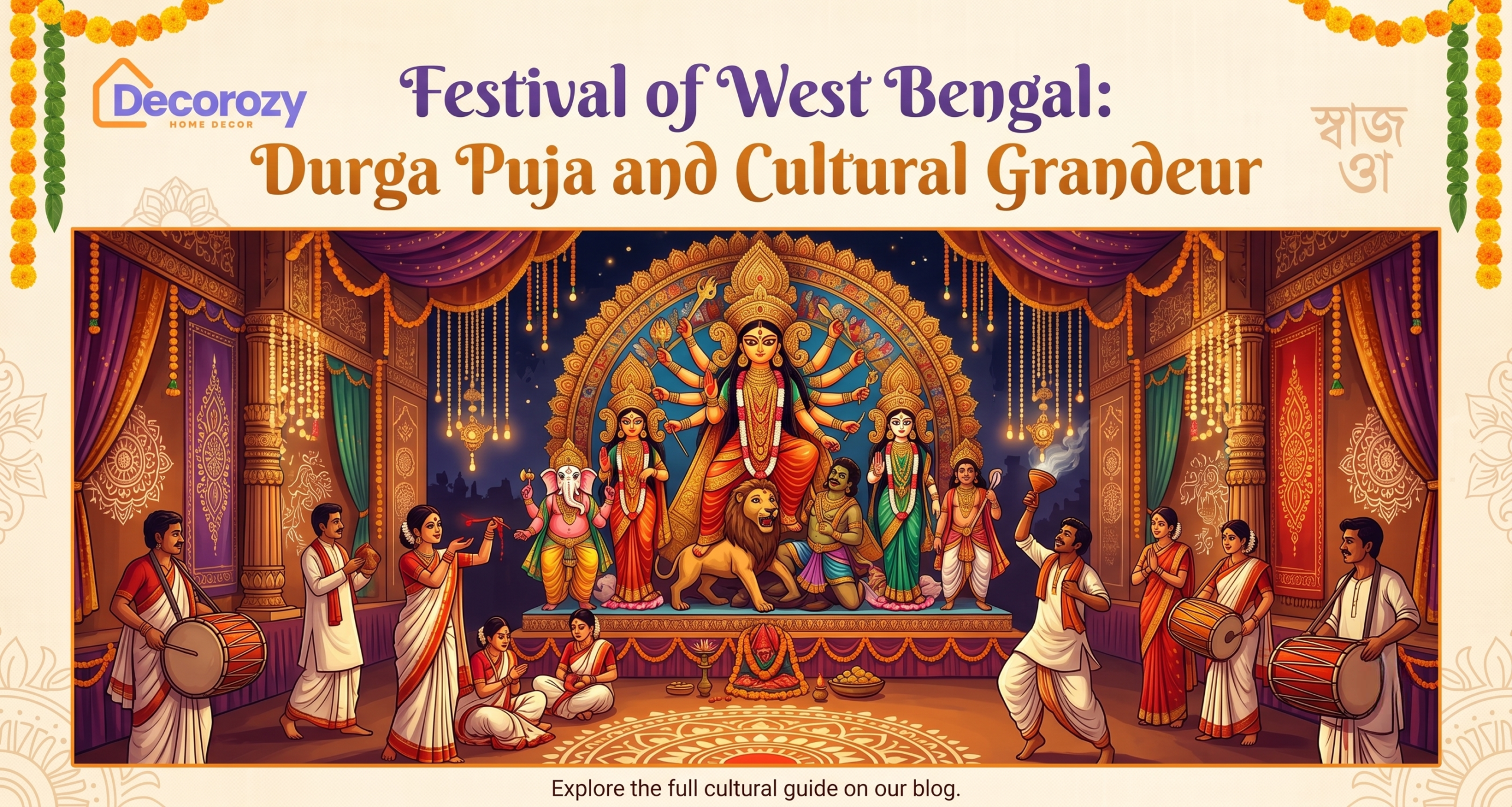
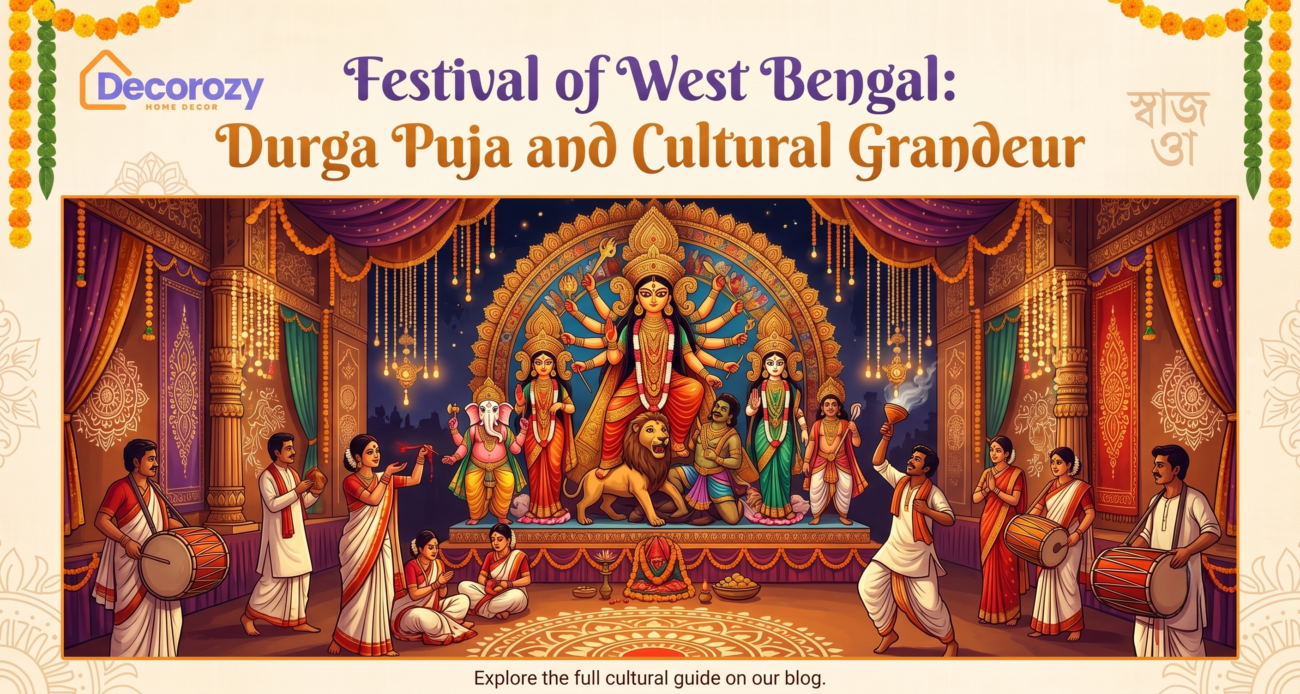
Durga Puja is a five-day festival celebrating the victory of Goddess Durga over the buffalo demon Mahishasura. It falls in the Hindu month of Ashwin, typically between September and October. In Kolkata and across Bengal, the festival transforms entire neighbourhoods into open-air galleries.
Featured Snippet Answer: West Bengal Durga Puja is a five-day Hindu festival celebrating Goddess Durga’s triumph over evil. It is recognized by UNESCO as an Intangible Cultural Heritage of Humanity. The celebrations involve elaborately constructed pandals, artistic idols, cultural performances, and community feasting, drawing tens of millions of participants across the state every year.
The History Behind West Bengal Durga Puja
The origins of community Durga Puja — called “Baroyari Puja” — date back to the late 18th century. The first recorded community celebration is believed to have taken place in 1790 in Guptipara, Hooghly. However, it was the zamindars (landlords) of Bengal who popularized the elaborate celebrations we recognize today.
Over centuries, Durga Puja evolved from an aristocratic family ritual into a fully public, democratic celebration. By the 20th century, neighbourhood committees (puja committees) had taken over, making it a truly people’s festival.
In 2021, UNESCO officially inscribed the “Durga Puja in Kolkata” on its Representative List of Intangible Cultural Heritage of Humanity. A deeply deserved recognition.
The Five Days of Durga Puja Explained
Understanding the structure of Durga Puja helps you appreciate its depth:
Shashthi — The goddess is welcomed. The idol’s eyes are ceremonially unveiled (Chokkhu daan).
Saptami — Rituals begin in earnest. Morning prayers fill every pandal with incense and chanting.
Ashtami — The most sacred day. Sandhi Puja (the junction prayer) falls at the precise crossover between Ashtami and Navami.
Navami — Final major rituals. The air is thick with emotion.
Dashami (Vijaya Dashami) — The goddess is bid farewell. Idols are immersed in water (Bisarjan). Married women smear each other with sindoor in the famous Sindoor Khela ritual.
Each day has its own emotional register. Ashtami feels solemn and powerful. Dashami feels bittersweet — like watching a beloved guest leave.
West Bengal Durga Puja Pandal: Art, Architecture, and Creativity Unleashed
One of the most famous festival of West Bengal traditions is the pandal (temporary structure) that houses the Durga idol. These are not tents. They are full-scale architectural installations built by teams of craftsmen, architects, and artists over months.
What Makes a Durga Puja Pandal Special
Every year, puja committees in Kolkata and across Bengal compete to create the most spectacular, most talked-about pandal. Themes range from:
Recreations of world heritage sites (the Vatican, the Louvre, Angkor Wat)
Environmental and social commentary (pollution, deforestation, women’s rights)
Traditional Bengali village settings
Abstract modern art installations
The craftsmanship is staggering. Some pandals are constructed entirely from recycled materials — newspapers, thermocol, clay pots, or even discarded fishing nets. Others employ LED technology, immersive soundscapes, and theatrical lighting that creates a genuinely cinematic experience.
The famous pandals of North Kolkata (Shyambazar, Bagbazar, College Square) are legendary. Visiting them on Saptami or Ashtami night — with tens of thousands of other pandal hoppers — is an experience that rewires you somehow.
Famous Durga Puja Pandal Hubs Across the State
While Kolkata dominates the headlines, pandal culture thrives across the state:
Location
Known For
Kolkata (North)
Traditional grandeur, old aristocratic style
Kolkata (South)
Theme-based artistic installations
Durgapur
Industrial city’s large community pujas
Asansol
Tribal art influences in decoration
Siliguri
Blend of Bengali and hill culture aesthetics
Krishnanagar
Famous for hyper-realistic clay idols
Famous Festival of West Bengal Beyond Durga Puja
Durga Puja understandably dominates global attention. However, the famous festival of West Bengal extends well beyond these five days in autumn.
Kali Puja — The Night Goddess Celebration
Kali Puja falls on the new moon night of Kartik, just weeks after Durga Puja. Where Durga Puja is joyful and community-oriented, Kali Puja carries a deeper, more intense spiritual energy. The goddess Kali — dark, fierce, and protective — is worshipped through the night with lamps, offerings, and ritual chanting.
In Kolkata, the night sky blazes with fireworks. It’s simultaneously the Bengali version of Diwali — except with its own distinct character.
Poush Mela — The Baul Soul of Bengal
Held annually at Shantiniketan (the university town founded by Rabindranath Tagore), Poush Mela is a three-day fair celebrating Bengali folk music, Baul singers, handloom crafts, and rural heritage. It’s a world away from the spectacle of Durga Puja — quieter, more meditative, but equally moving.
Ganga Sagar Mela — Faith at the River’s Edge
Every January, around the festival of Makar Sankranti, millions of Hindu pilgrims gather at Sagar Island where the Ganges meets the Bay of Bengal. This is one of the largest human gatherings in the world after the Kumbh Mela. The spiritual energy at dawn, when thousands take a holy dip, is unlike anything else.
Fairs and Festivals of Northeast India: The Broader Cultural Context
West Bengal sits at a cultural crossroads. To its north and east lie the seven northeastern states, each with their own astonishing festival traditions. The fairs and festivals of northeast India share some emotional DNA with Bengal’s celebrations — a reverence for nature, community, and seasonal cycles — but they are visually and culturally distinct.
Major Festivals Connecting Bengal and the Northeast
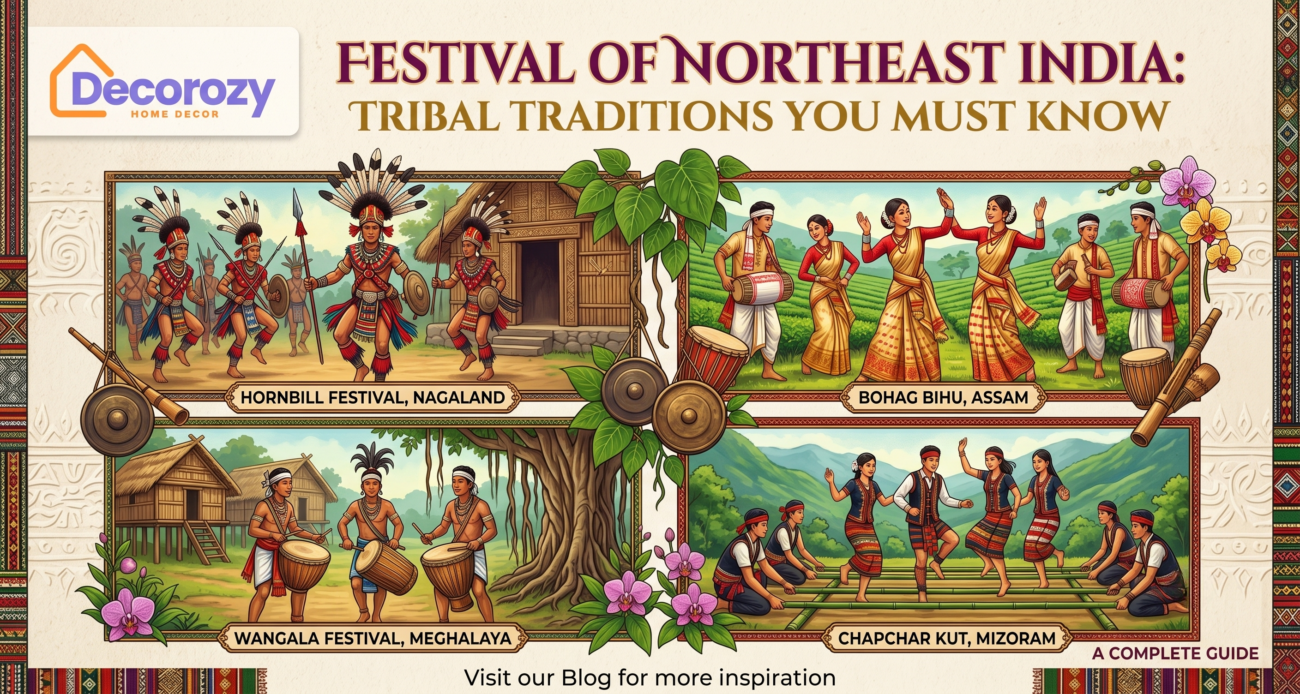
Bihu (Assam) — Three harvest festivals marking the agricultural calendar. Celebrated with traditional Bihu dance, music, and feasting.
Hornbill Festival (Nagaland) — A showcase of Naga tribal culture, held each December in Kisama. Often called the “Festival of Festivals”.
Sangai Festival (Manipur) — A celebration of Manipuri culture, dance, crafts, and the endangered Sangai deer.
Losar (Sikkim/Arunachal Pradesh) — Tibetan New Year celebrated with masked dances and monastery rituals.
These festivals, like West Bengal’s own, are deeply tied to identity. They resist homogenization. They insist on being seen, heard, and experienced on their own terms.
Festivals of West Bengal: A Paragraph-by-Paragraph Cultural Overview
To truly appreciate the festivals of West Bengal in paragraph form — as a single, coherent narrative — you have to step back from the individual events and see the larger pattern.
Bengal celebrates in cycles. The year begins with Poush Mela in winter, moves through spring festivals like Dol Purnima (Holi in Bengal, but with its own gentler spirit), surges through the heat of summer with smaller local pujas, and then erupts in the magnificent autumn with Durga Puja and Kali Puja.
The Role of Music, Dance, and Art in Bengali Festivals
No festival in West Bengal exists without artistic expression. The dhak drum is the heartbeat of Durga Puja. Rabindra Sangeet (Tagore songs) weave through Baul melodies at Poush Mela. Folk dance traditions like Chhau and Gambhira perform at regional fairs. Street theatre, puppet shows, and recitations of epics are embedded in village festivals.
This is not entertainment added on top. The art is the festival.
The Social Function of West Bengal Festivals
Festivals in West Bengal serve a powerful social purpose. They temporarily dissolve class distinctions. A factory worker and a corporate executive stand side by side in the same pandal queue. They eat the same khichuri prasad. For a few days, the hierarchy flattens.
This is why so many Bengalis who have moved abroad — to Mumbai, Delhi, or London — feel a specific kind of longing during Durga Puja season. It’s not just nostalgia for the spectacle. It’s longing for that feeling of belonging.
Pros and Cons of Attending Durga Puja and Bengal Festivals as a Visitor
Pros: ✔ Unmatched cultural immersion — art, music, food, and ritual all in one place ✔ Completely free to attend — pandals are open to all ✔ UNESCO-recognized heritage experience ✔ Incredibly welcoming community — Bengalis love sharing their festivals ✔ Extraordinary photography and storytelling opportunities
Cons: ✘ Massive crowds, especially in Kolkata — can be overwhelming ✘ Hotels book up months in advance; plan well ahead ✘ Traffic and logistics in the city become genuinely chaotic ✘ Weather in October can be warm and humid
Final Guide: How to Experience the Festival of West Bengal the Right Way
Practical Tips for First-Time Visitors
Book accommodation early — at least two to three months in advance for Durga Puja
Use the Kolkata Metro — far faster than road transport during the festival
Start pandal hopping late at night — the queues are shorter and the atmosphere magical
Eat at community kitchens — many pandals serve free or subsidised prasad meals
Hire a local guide or join a cultural tour — context makes the experience richer
Respect the rituals — observe quietly during actual puja ceremonies
Best Time to Visit for Each Festival
Festival
Best Month
Location
Durga Puja
October
Kolkata & all districts
Kali Puja
October/November
Kolkata
Poush Mela
December
Shantiniketan, Birbhum
Ganga Sagar Mela
January
Sagar Island, South 24 Parganas
Dol Purnima
March
Shantiniketan, Nadia
Frequently Asked Questions About Festival of West Bengal
Q1: What is the most famous festival of West Bengal? The most famous festival of West Bengal is undoubtedly Durga Puja. Recognized by UNESCO as an Intangible Cultural Heritage of Humanity, it is celebrated over five days in autumn with elaborately decorated pandals, artistic idols, cultural performances, and community gatherings. Kolkata is the epicentre, but it resonates across every district of the state.
Q2: How is West Bengal Durga Puja different from other states’ celebrations? West Bengal Durga Puja is uniquely community-driven. Unlike family-based celebrations elsewhere, Bengal’s Durga Puja is organized by neighbourhood committees with elaborate public pandals open to all. The festival doubles as an art and architecture showcase, with themes, installations, and competitive creativity that set it apart from any other regional celebration.
Q3: What are the main fairs and festivals of northeast India related to Bengal? The fairs and festivals of northeast India include Bihu in Assam, the Hornbill Festival in Nagaland, Sangai Festival in Manipur, and Losar in Sikkim. While culturally distinct, these festivals share Bengal’s emphasis on community celebration, folk arts, and seasonal rituals — and many Bengal-based tourists visit them as part of extended northeast cultural tours.
Q4: Is Durga Puja only a Hindu festival, or can anyone attend? Durga Puja, while rooted in Hindu tradition, is celebrated by people of all faiths in West Bengal. The public pandals are open to everyone — tourists, non-Hindus, and foreigners are welcomed warmly. It has evolved into a cultural festival as much as a religious one, which is part of why UNESCO gave it international recognition.
Q5: When should I visit West Bengal to see the Durga Puja pandals? The best time to visit the West Bengal Durga Puja pandal experience is during Ashtami and Navami — the third and fourth days of the festival. Pandal hopping after 10 PM on these nights offers the most atmospheric experience. Plan to be in Kolkata between the 3rd and 7th day after the new moon in October.
”
”
Conclusion: The Festival of West Bengal Is an Experience That Stays With You
The festival of West Bengal — and Durga Puja at its heart — is not something you simply watch. You feel it in your chest when the dhak drums start. You see it in the eyes of a grandmother watching the idol being immersed into the river on Dashami, tears mixing with the evening rain.
Whether you’re exploring the artistic wonder of a West Bengal Durga Puja pandal in Kolkata, attending the soulful Poush Mela in Shantiniketan, or extending your journey to the fairs and festivals of northeast India, you are participating in something ancient and alive.
The festivals here carry history, identity, art, and faith — all braided together in a way that’s genuinely rare in the modern world.
Our advice? Visit once. You’ll be planning your return before you’ve even left.
✨ Popular Categories
Browse our most loved collections of handcrafted home décor, divine idols, pooja essentials and exclusive decorative products.