


Summer Solstice 2026: Longest Day of the Year Explained

Summer Solstice 2026: Longest Day of the Year Explained

Discover the Summer Solstice 2026: Longest Day of the Year

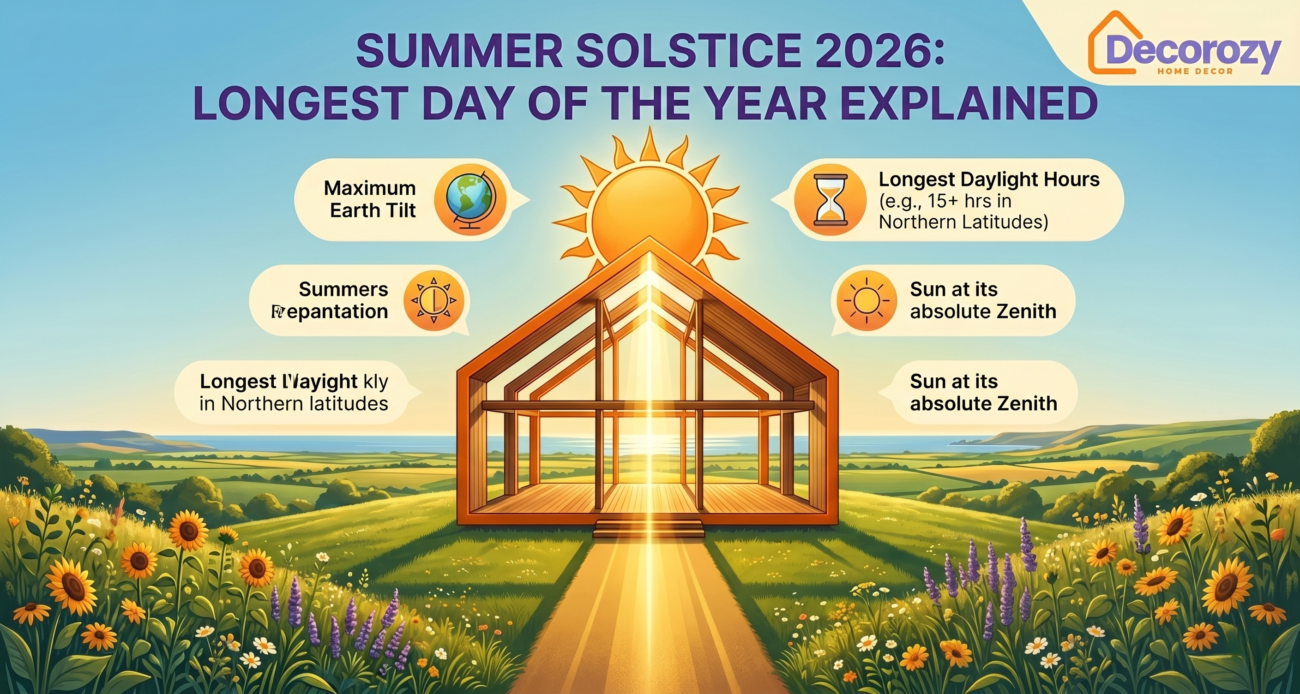
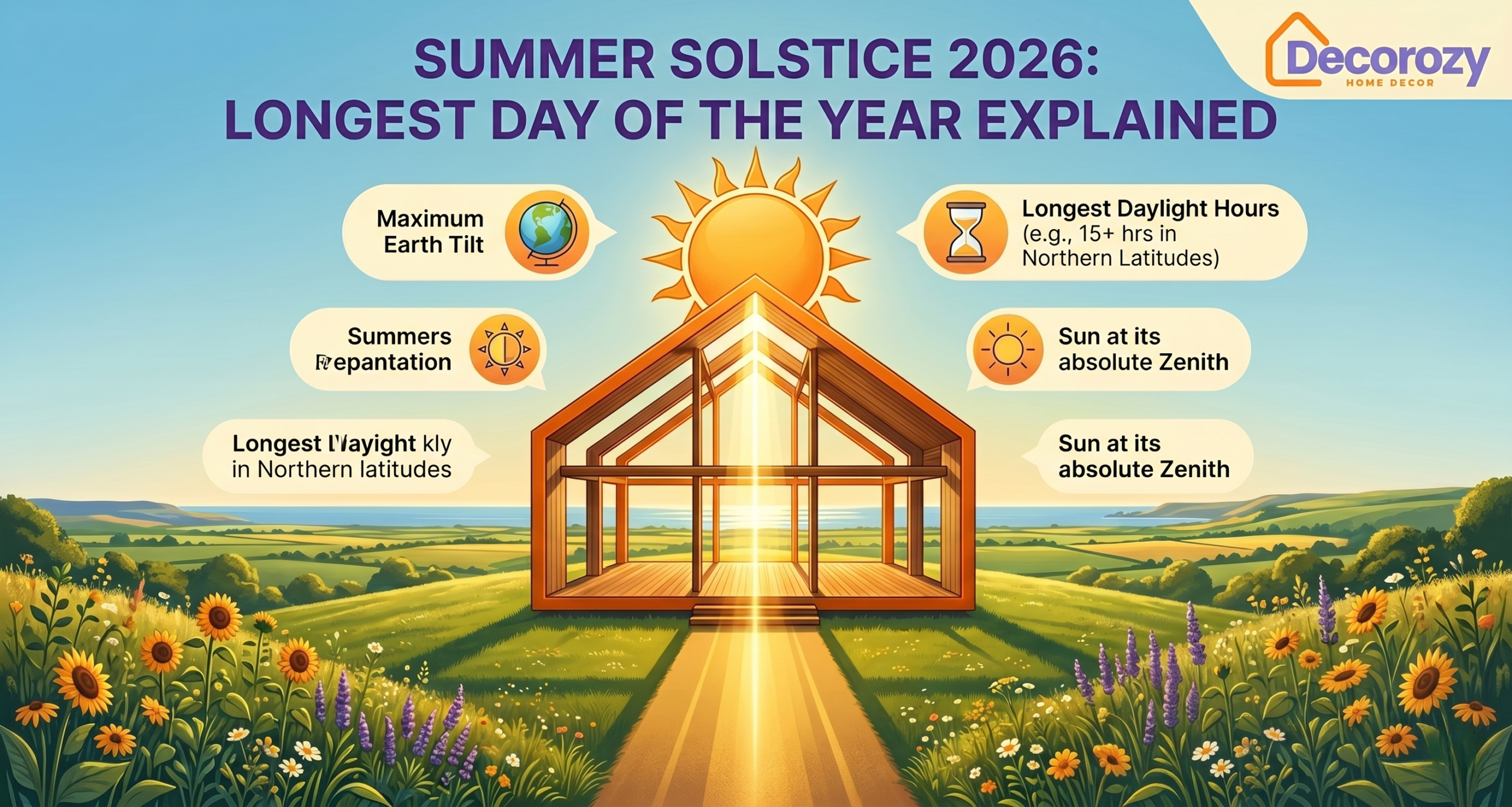
The astronomical calendar brings us a spectacular event this June, marking a pivotal shift in our global seasons. As we prepare for the Summer Solstice 2026: Longest Day of the Year, the Northern Hemisphere tilts maximally toward the sun. Let us explore the mechanics and marvels behind this celestial milestone.

Quick Answer: The Summer Solstice 2026 occurs on Sunday, June 21, at 4:24 A.M. EDT (1:54 P.M. IST). It marks the longest day of the year in the Northern Hemisphere due to Earth’s 23.5-degree maximum axial tilt toward the Sun, officially beginning astronomical summer.

What Causes the Summer Solstice 2026: Longest Day of the Year?

Planetary geometry dictates our changing seasons and our daily hours of sunlight. Earth rotates on a central axis that is permanently tilted at approximately 23.5 degrees relative to its orbital plane.

During the June solstice, the Northern Hemisphere reaches its absolute maximum tilt toward the Sun. Consequently, our home star sits directly overhead at the Tropic of Cancer (23.5° North).

This direct solar angle creates the longest possible path for the Sun across our daytime sky. It results in maximum daylight hours and the astronomical start of summer for the northern half of the globe.

The Cultural Impact of the Summer Solstice 2026: Longest Day of the Year

For millennia, civilizations have tracked this solar peak to guide critical agricultural cycles and spiritual rituals. Ancient architectural wonders, such as Stonehenge in the UK, were built to align perfectly with the solstice sunrise.

In 2026, this powerful solar date uniquely coincides with both Father’s Day and the 12th International Day of Yoga. India will host major Yoga Day events in Kolkata, centering on the theme “Yoga for Healthy Ageing.”

Meanwhile, the Southern Hemisphere experiences the exact opposite celestial phenomenon. As the north basks in abundant sunlight, the south observes its winter solstice and the shortest day of the year.

Detailed Analysis: Daylight Hours and Astronomical Mechanics

The exact duration of daylight you experience during the solstice depends entirely on your global latitude. Tropical regions near the equator see just over 12 hours, while polar regions experience continuous 24-hour sunlight.

For instance, New Delhi will witness roughly 13 hours and 58 minutes of daylight this year. Further north, cities like New York will enjoy just over 15 hours of warming summer sunlight.

Interestingly, the solstice itself does not guarantee the earliest sunrise or the latest sunset. Due to Earth’s elliptical orbit, these specific solar milestones actually occur a few days before and after the official solstice date.

Understanding our planet’s celestial movements deepens our connection to the natural rhythms of the world. Celebrate the abundant sunlight, observe the changing seasons, and embrace the bright energy of summer. Ready to align your home’s aesthetic with the vibrant warmth of the new season? Explore our exclusive, sun-inspired interior collections at Decorozy.com today!

FAQ Schema

  • Question 1: Which is the longest day of the year in 2026?
  • Answer: Sunday, June 21, 2026, is the longest day of the year in the Northern Hemisphere, an astronomical event officially known as the summer solstice.
  • Question 2: What is the exact time of the 2026 summer solstice?
  • Answer: The 2026 summer solstice occurs precisely at 4:24 A.M. Eastern Daylight Time (EDT), which translates to 1:54 P.M. Indian Standard Time (IST) and 08:24 UTC.
  • Question 3: Why do we experience the summer solstice?
  • Answer: The solstice occurs because Earth’s axis is tilted by 23.5 degrees. In June, the Northern Hemisphere tilts maximally toward the Sun, resulting in direct sunlight and extended daylight hours.

Leave a Reply

Your email address will not be published. Required fields are marked *