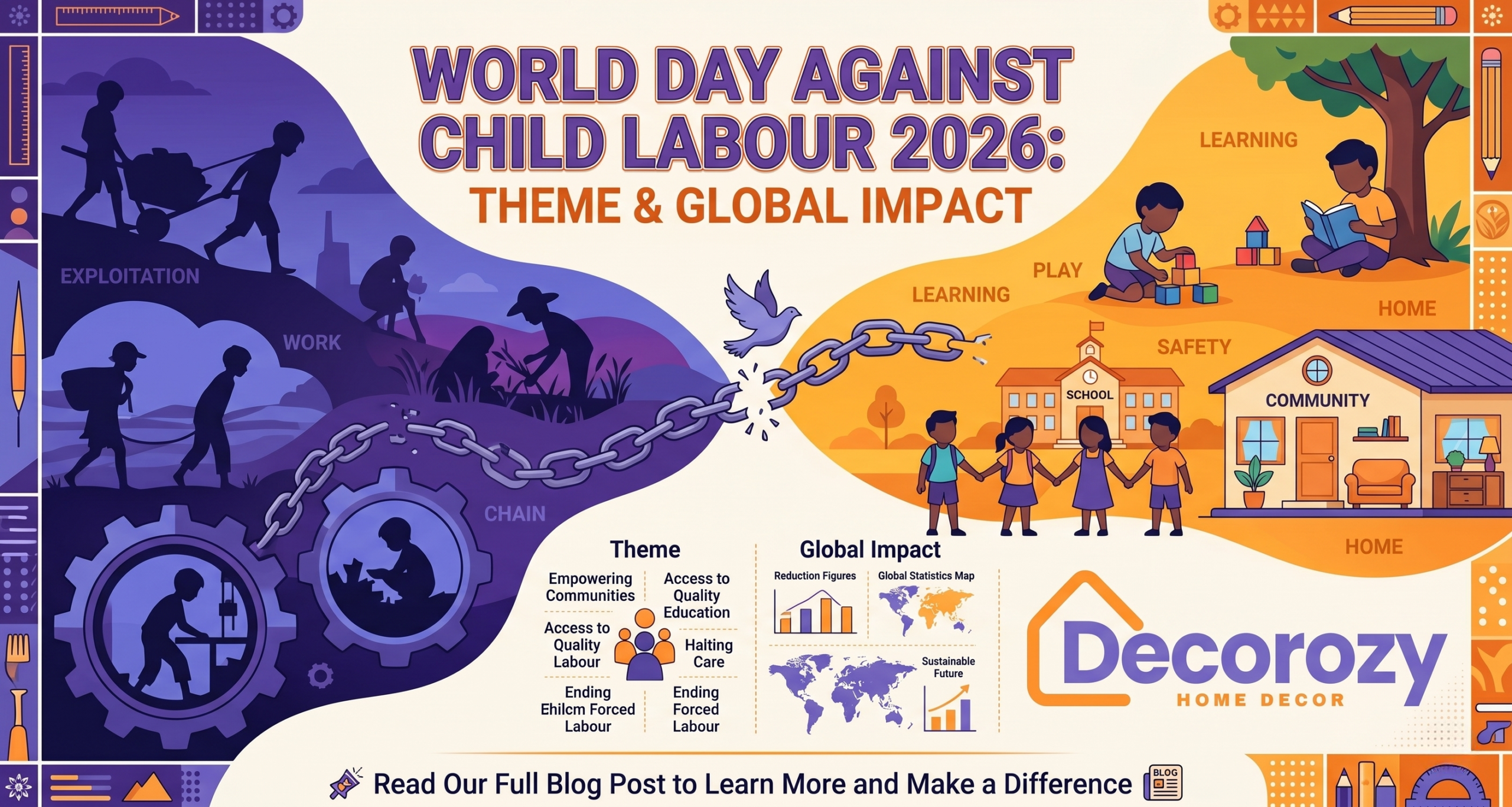
World Day Against Child Labour 2026: Awareness, Theme, and Global Significance
The World Day Against Child Labour 2026 is a pivotal global observance dedicated to eradicating the exploitation of minors worldwide. As we approach this crucial date, governments, businesses, and communities are mobilizing to protect our most vulnerable demographic.
Understanding the root causes of child exploitation is the first step toward creating sustainable, long-term change. This comprehensive guide breaks down the actionable strategies needed to secure a safer future for youth across the globe.
Quick Answer: Observed annually on June 12, World Day Against Child Labour 2026 is an ILO-led initiative to eliminate child exploitation globally. The 2026 theme, “Red Card to Child Labour,” focuses on securing quality education for youth and promoting decent work for adults.
Understanding the Core Mission of World Day Against Child Labour 2026
Child labour refers to any work that deprives children of their childhood, their potential, and their fundamental dignity. It encompasses activities that are physically, mentally, or socially harmful, actively interfering with their educational development.
Not all work performed by minors is classified as exploitation; light household chores or skill-building family duties can be beneficial. However, work crosses the line into child labour when it exposes minors to hazardous environments or forces them into illicit activities.
The International Labour Organization (ILO) established this observance in 2002 to draw unprecedented attention to these systemic abuses. By highlighting these urgent issues, the global community is pushed to reevaluate labor laws, enforce stricter regulations, and prioritize youth welfare.
The Global Picture: Why World Day Against Child Labour 2026 Matters
Despite decades of intervention, the statistics surrounding youth exploitation remain a severe international crisis. Over 138 million children are currently trapped in child labour globally, with nearly 54 million enduring highly hazardous working conditions.
Sub-Saharan Africa bears the highest burden, driven largely by extreme poverty, agricultural demands, and a lack of accessible educational infrastructure. Similarly, rapid industrialization in parts of Asia has pushed marginalized youth into dangerous manufacturing and construction roles.
These children are frequently subjected to toxic materials, heavy machinery, and gruelling hours for minimal or no pay. This exploitation not only risks their immediate physical health but also perpetuates generational cycles of poverty and illiteracy.
Key Strategies and the Theme for World Day Against Child Labour 2026
The official theme for this year is “Red Card to Child Labour: Fair Play for Children, Decent Work for Adults.” This powerful slogan emphasizes that ending youth exploitation requires fundamentally stabilizing the adult workforce.
When adults receive fair wages and decent work opportunities, families are no longer forced to rely on their children for financial survival. Universal social protection and robust safety nets are critical components of this preventative strategy.
Furthermore, the recent Marrakech Global Framework for Action provides a concrete roadmap for governments and policymakers. It demands integrated responses that target the socio-economic root causes of child labor rather than just treating the symptoms.
Eradicating Exploitation: Corporate Responsibility and Legislation
International efforts to combat child labor are heavily reliant on stringent legislation and corporate accountability. The ILO’s Minimum Age Convention and the Worst Forms of Child Labour Convention serve as the legal backbone for global enforcement.
In countries like India, the Child Labour (Prohibition and Regulation) Act works alongside initiatives like the National Child Labour Project (NCLP). These legal frameworks are designed to rescue exploited minors and rehabilitate them through intensive educational and vocational training.
Simultaneously, the private sector is facing intense pressure to guarantee ethical sourcing and transparent supply chains. Modern consumers demand that global corporations take proactive steps to ensure their products are entirely free from child labor.
Taking Action: How You Can Support the Movement
Eradicating child labour requires a unified, multi-sector approach involving governments, NGOs, educators, and everyday citizens. Raising public awareness through social media campaigns and community discussions is a highly effective way to spark grassroots momentum.
Supporting organizations that provide free, accessible education is one of the most powerful tools against youth exploitation. When children are safely learning in classrooms, they are effectively shielded from the dangers of the informal labor market.
You can also make a significant impact by consciously supporting ethical brands and advocating for stricter corporate regulations. Every informed purchase and shared educational resource brings us one step closer to ending this global crisis.
Ending child labor is a collective moral responsibility that demands our immediate and unwavering attention. Stay informed, shop ethically, and join the conversation on Decorozy.com to help us build a world where every child can safely learn, play, and grow.
FAQ Schema
- Question 1: When is World Day Against Child Labour 2026?
- Answer: World Day Against Child Labour is observed globally on June 12, 2026. This annual event, established by the ILO, aims to raise awareness and drive actionable strategies to eliminate child exploitation worldwide.
- Question 2: What is the theme of World Day Against Child Labour 2026?
- Answer: The official 2026 theme is “Red Card to Child Labour: Fair Play for Children, Decent Work for Adults.” It highlights the necessity of providing adults with fair wages to prevent families from relying on child labor.
- Question 3: How can individuals help stop child labour?
- Answer: Individuals can combat child labor by raising public awareness, supporting educational charities, and advocating for strict governmental policies. Additionally, consumers can choose to buy from ethical brands that guarantee child-labor-free supply chains.
✨ Popular Categories
Browse our most loved collections of handcrafted home décor, divine idols, pooja essentials and exclusive decorative products.
View Deals →
🛕 Divine Collection
Bring peace and positivity with beautifully crafted idols.
Shop God Idols →
💰 Lakshmi Collection
Elegant Lakshmi idols symbolizing wealth and prosperity.
View Products →
🎨 Indian Handicrafts
Traditional handcrafted décor made by skilled artisans.
Explore Now →
🦌 Animal Decor
Unique decorative animal figurines for modern interiors.
Discover More →
🏠 Home Store
Explore our complete range of premium home décor products.
Visit Store →
🪔 Pooja Essentials
Everything you need for daily worship and festive rituals.
Shop Essentials →