Money Plant Water vs Soil: The Ultimate Growth Guide
Growing indoor plants brings vibrant life and fresh air into your modern home. When deciding between a money plant water vs soil setup, many plant lovers feel conflicted.
Both methods offer distinct advantages for your indoor garden’s health. Let’s explore the biological science and design benefits behind each approach.
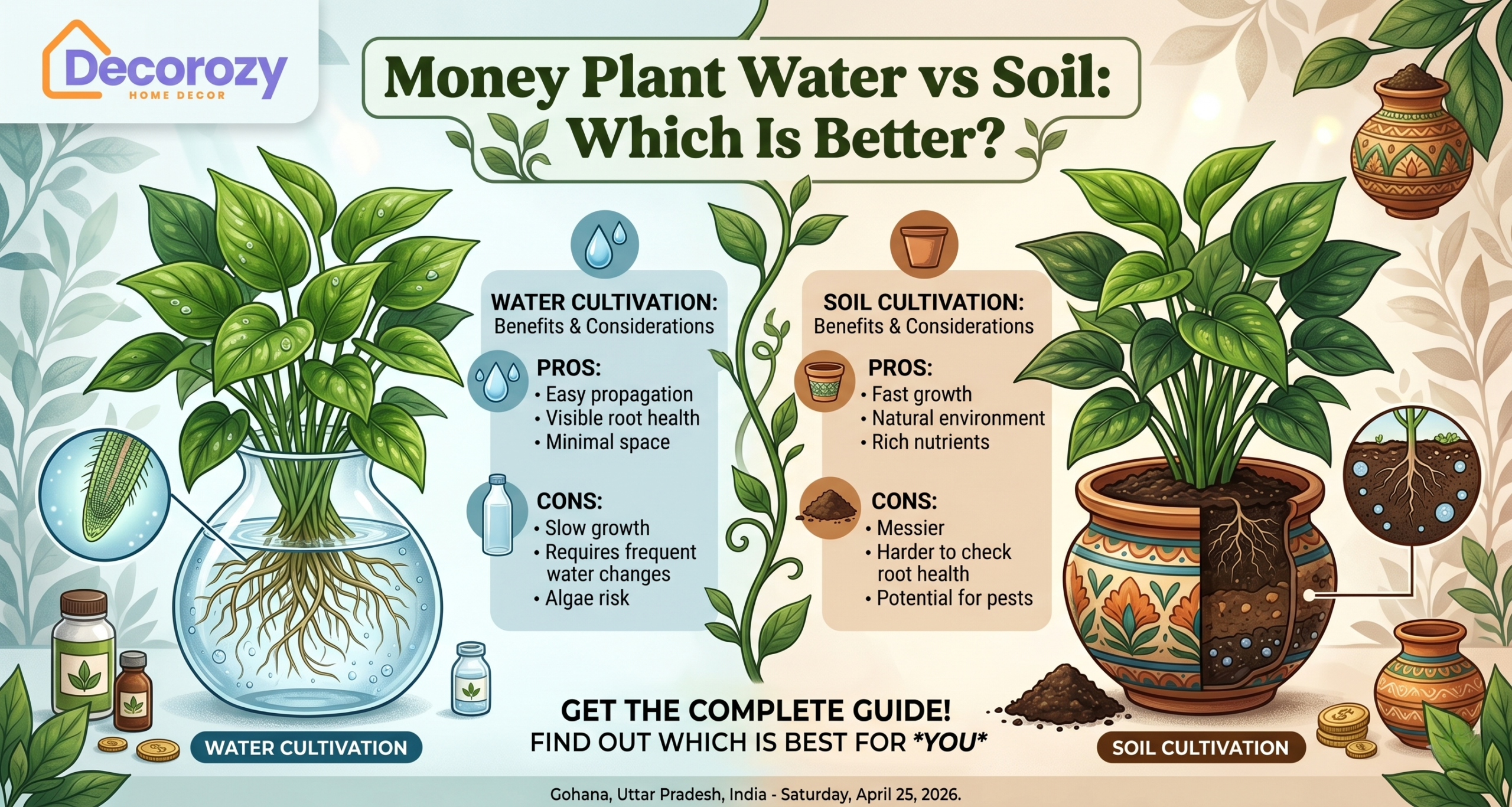
Quick Answer: When comparing a money plant in water vs soil, soil promotes faster, thicker growth and larger leaves due to higher nutrient density. However, water propagation is cleaner, highly decorative, and practically immune to overwatering issues. Your choice depends entirely on your aesthetic preferences and maintenance style.
Understanding the Basics: Money Plant Water vs Soil
Money plants, scientifically known as Epipremnum aureum, are incredibly resilient houseplants. They possess a unique biological ability to adapt to entirely distinct growing mediums.
Choosing between a money plant water vs soil environment dictates its overall growth rate. Soil provides a dense, nutrient-rich anchor for extensive root systems to develop.
Conversely, a water setup encourages a completely different type of root morphology. Water roots are finer, more fragile, and specifically adapted to absorb dissolved oxygen.
When grown in soil, the roots grow thick and fibrous to push through dirt. These soil roots are highly efficient at extracting essential macronutrients like nitrogen.
Water roots, however, lack the protective outer layer found on terrestrial roots. They are delicate but highly optimized for an aquatic environment.
Understanding this biological difference is crucial for long-term plant care. You cannot simply swap a mature plant between mediums without proper preparation.
The Benefits of a Money Plant Water vs Soil Setup
Growing your plant in high-quality potting soil guarantees access to vital nutrients. This traditional method leads to robust foliage and significantly faster vertical growth.
Soil also provides structural stability for climbing pothos varieties. You can easily add a moss pole to encourage massive, fenestrated leaves.
With soil, your plant can achieve its maximum genetic potential. The leaves will look exceptionally vibrant, ensuring your indoor space looks attractive and colorful.
On the flip side, water setups are undeniably elegant and visually striking. They completely eliminate the risk of frustrating soil-borne pests like fungus gnats.
A glass vase display makes tracking root health incredibly simple and clean. It is the perfect low-maintenance option for busy professionals who forget to water.
Furthermore, water propagation prevents the common issue of root rot from overwatering. The roots only take what they need, making it a foolproof cultivation method.
Detailed Analysis: How to Transition Safely
Moving your plant between these two mediums requires careful, methodical preparation. Transitioning from soil to water means thoroughly washing all dirt from the root system.
Even a tiny amount of leftover soil in the water will cause rapid bacterial rot. Always use room-temperature, filtered, or distilled water for the best aquatic results.
Transitioning from water to soil is a slightly more delicate process. Water roots are fragile and can easily suffer from severe transplant shock.
To minimize shock, plant the water-rooted cutting into a light, airy aroid mix. Heavy, dense soils will instantly suffocate the delicate aquatic root system.
Keep the new potting soil consistently moist for the first two to three weeks. This transition period helps the delicate water roots acclimate to the denser environment.
Once you see new leaf growth, gradually reduce your watering frequency. At this stage, your money plant has successfully established its new soil root system.
Both growing methods yield beautiful, air-purifying results for your home. Your final decision ultimately depends on your daily lifestyle and interior design goals.
Ready to elevate your interior landscape with stunning botanicals? Explore more expert gardening tips and beautiful home styling ideas at Decorozy.com today!
FAQ Schema
- Question 1: Does a money plant grow faster in soil or water?
- Answer: A money plant grows significantly faster in soil. Soil contains essential macronutrients and provides better structural support, allowing the plant to produce larger leaves and thicker vines compared to a water-only setup.
- Question 2: Can a money plant live in water forever?
- Answer: Yes, a money plant can live in water indefinitely. However, to keep it healthy long-term, you must change the water weekly and occasionally add a few drops of liquid hydroponic fertilizer to replenish missing nutrients.
- Question 3: Why are my money plant leaves turning yellow in water?
- Answer: Yellowing leaves in water usually indicate a lack of nutrients, poor water quality, or inadequate sunlight. Switch to filtered water, clean the glass container, and ensure the plant receives bright, indirect light to restore its color.
CUSTOMERS ALSO EXPLORED
Discover More Beautiful Collections
Explore premium handcrafted décor, divine idols, traditional pooja collections, and exclusive decorative products loved by customers across India.
🌸
Durga Maa Idols
Elegant Durga Maa statues crafted with fine detailing.
View Products →
🦚
Radha Krishna Idols
Graceful Radha Krishna idols symbolizing eternal love.
Shop Now →
🐄
Kamdhenu Cow Idol
Premium Kamdhenu Cow with Calf decorative idol.
View Details →
🛕
God Idols Collection
Discover our complete collection of premium God idols.
Explore More →
🔥
Today’s Best Deals
Save more on bestselling décor and spiritual collections.
Grab Offers →
Looking for Premium Home Décor?
Shop handcrafted God idols, elegant home décor, traditional handicrafts, and exclusive collections designed to enhance every space.
Visit Decorozy →