



Structure of the Yajurveda Explained: A Complete Guide

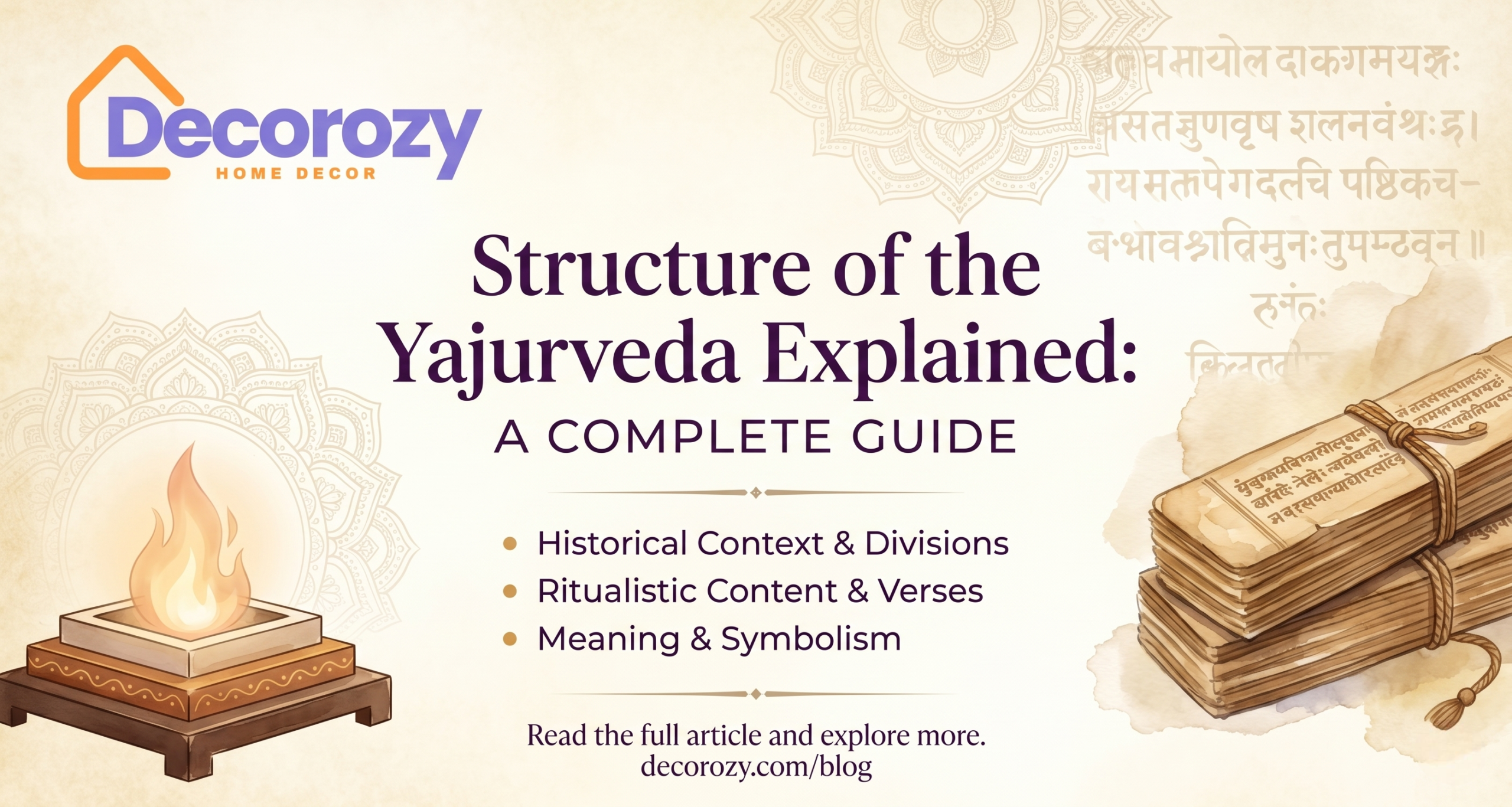
Structure of the Yajurveda Explained: A Complete Guide

The Complete Structure of the Yajurveda Explained

Welcome to Decorozy’s deep dive into ancient literature and wisdom. Today, we are getting the structure of the Yajurveda explained for modern researchers and spiritual enthusiasts.

Understanding this foundational Vedic text unlocks the hidden architecture of historical Hindu rituals and early spiritual discipline.

Quick Answer: The structure of the Yajurveda is primarily divided into two main branches: the Shukla (White) Yajurveda and the Krishna (Black) Yajurveda. The Shukla separates poetic mantras from prose explanations, while the Krishna presents an intertwined mixture of ritualistic verses and theological prose.

The Core Structure of the Yajurveda Explained

The Yajurveda serves as an ancient instructional manual for Vedic priests. It contains the precise liturgical formulas and chants required during complex fire rituals.

Unlike the Rigveda, which focuses purely on poetic praise, the Yajurveda prioritizes the practical, step-by-step application of sacred mantras.

To understand this text, we must look at how scholars have historically divided it. This fundamental split into two distinct formats is the most important architectural feature to grasp.

Why Having the Structure of the Yajurveda Explained Matters

Studying the structural layout of ancient Indian texts provides unparalleled insight into historical religious practices. It reveals how oral traditions were eventually codified.

It also showcases the evolution of human thought in ancient times. We see a clear transition from pure poetic worship to highly structured, rule-based spiritual ceremonies.

Furthermore, analyzing the Brahmanas (prose commentaries) within this structure reveals the deep philosophical foundations of later Hinduism.

Deep Dive into the Structure of the Yajurveda Explained: Shukla vs. Krishna

The Krishna Yajurveda (often called the Black Yajurveda) represents the older, unrefined collection of texts. Here, the instructional prose is heavily mixed with the actual ritual mantras.

Major surviving recensions of this Krishna branch include the Taittiriya, Maitrayani, Katha, and Kapisthala Samhitas.

Conversely, the Shukla Yajurveda (the White Yajurveda) represents a much later, systematic reorganization. It elegantly separates the core chanting mantras from the explanatory Brahmana texts.

The primary text for this Shukla branch is the Vajasaneyi Samhita. It is traditionally paired with the famous Shatapatha Brahmana, which provides the necessary ritual context.

Unlocking these ancient structural frameworks helps us appreciate the immense depth of Vedic traditions. For more insights into historical architecture, cultural design, and lifestyle optimization, keep exploring Decorozy.com.

FAQ Schema

  • Question 1: What are the two main parts of the Yajurveda?
  • Answer: The Yajurveda is divided into two primary sections: the Krishna (Black) Yajurveda, which mixes mantras with prose instructions, and the Shukla (White) Yajurveda, which clearly separates the poetic verses from the prose.
  • Question 2: What is the main purpose of the Yajurveda?
  • Answer: The primary purpose of the Yajurveda is to serve as a practical guidebook for ancient Vedic priests. It provides the exact liturgical mantras and step-by-step instructions needed for conducting complex religious rituals and fire sacrifices.
  • Question 3: Which Brahmana text is associated with the Shukla Yajurveda?
  • Answer: The Shatapatha Brahmana is the primary prose commentary associated with the Shukla Yajurveda. It offers profound theological and philosophical explanations for the ritual mantras found in the main text.

Leave a Reply

Your email address will not be published. Required fields are marked *