Decoding the Role of Priests in Yajurveda Rituals
The ancient Vedic traditions hold profound spiritual significance for historians and cultural enthusiasts alike. The ceremonial practices detailed in early Indian texts form the absolute core of these rites.
If you are exploring our rich spiritual heritage, understanding the role of priests in Yajurveda rituals is absolutely essential.
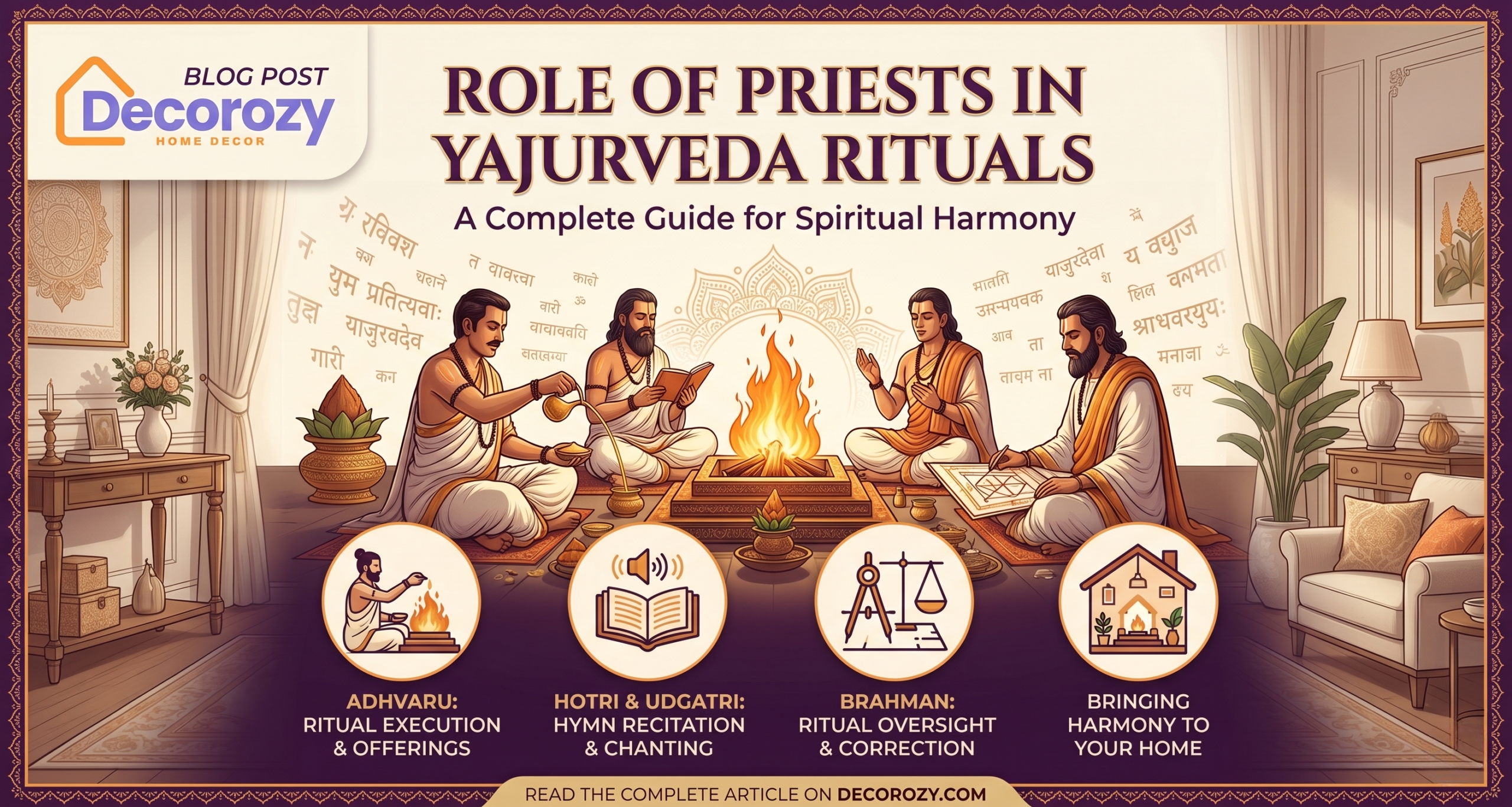
Quick Answer: The role of priests in Yajurveda rituals centers on the Adhvaryu, the chief priest responsible for the physical execution of sacrifices (Yajnas). They measure the altar, prepare sacred vessels, and chant prose mantras, ensuring the exact, flawless physical performance of ancient Vedic ceremonies.
The Essential Role of Priests in Yajurveda Rituals
The Yajurveda is primarily a comprehensive guidebook designed specifically for practicing Vedic priests. It focuses heavily on the practical mechanics and physical actions required for sacred ceremonies.
Unlike other historical Vedas, it contains prose formulas tailored for the actual performance of complex sacrifices. These texts are divided into the Krishna (Black) and Shukla (White) Yajurveda traditions.
Therefore, the role of priests in Yajurveda rituals is a highly specialized and demanding profession. It requires rigorous, lifelong training to ensure the flawless execution of these sacred rites.
PREMIUM COLLECTIONS
Elevate Your Home with Timeless Elegance
Discover handcrafted God idols, luxury home décor, wooden handicrafts, and pooja essentials designed to create a peaceful and beautiful living space.
🏡
Premium Home Décor Store
Browse our complete collection of premium décor products and handcrafted designs.
Visit
🛕
God Idols Collection
Premium handcrafted idols for home temples, offices, and gifting.
Explore
🌸
Lakshmi Idol Guide
Discover elegant Lakshmi idols symbolizing prosperity and abundance.
Read
💪
Hanuman Idol Guide
Premium Hanuman idols representing strength, courage, and devotion.
Discover
🎨
Animal Décor
Unique decorative figurines crafted to enhance modern interiors.
Browse
🎁
Exclusive Best Deals
Enjoy special discounts on bestselling home décor collections.
Save Now
👜
Handcrafted Bags
Stylish handmade bags designed for everyday elegance.
Shop
Bring Beauty & Positivity to Every Corner
Explore India’s finest handcrafted God idols, traditional décor, and premium home accessories—all carefully curated for your home.
Shop Premium Collection →
Why the Role of Priests in Yajurveda Rituals Matters
The precise execution of these ancient rituals was believed to maintain cosmic order and universal harmony. The Indo-Aryans viewed the Yajna (fire sacrifice) as the primary mechanism for sustaining the gods.
The Adhvaryu priest acts as the crucial physical bridge between the earthly realm and the divine forces. They must synchronize their physical movements perfectly with the chanted mantras of their fellow priests.
Any mistake in the ritual’s physical actions could render the entire sacrifice spiritually ineffective. This high-stakes environment highlights their vital importance in safeguarding the spiritual wellbeing of the community.
Detailed Analysis: The Adhvaryu and the Vedic Priesthood
In the traditional fourfold Vedic priesthood, the Adhvaryu directly represents the Yajurveda tradition. They handle all the tangible, physical components of the Shrauta rituals, acting as the ceremony’s operations manager.
Their duties include measuring the sacred sacrificial ground and meticulously building the intricate fire altar. They are also strictly responsible for offering physical oblations, such as ghee, directly into the sacred fire.
While the Hotri recites poetry and the Udgatri sings hymns, the Adhvaryu performs the critical manual labor. Above them all sits the Brahman priest, who silently oversees the process to correct procedural errors.
Understanding these ancient spiritual roles provides deep, valuable insight into Vedic history and complex cultural traditions. Explore more fascinating historical backgrounds and cultural design inspirations right here on Decorozy.com!
FAQ Schema
- Question 1: Who is the main priest in the Yajurveda?
- Answer: The primary priest associated with the Yajurveda is the Adhvaryu. They are responsible for the physical execution of the sacrifice, including building the fire altar, preparing vessels, and offering oblations.
- Question 2: What are the four main types of Vedic priests?
- Answer: The four principal priests in grand Vedic rituals are the Hotri (Rigveda), Adhvaryu (Yajurveda), Udgatri (Samaveda), and the overseeing Brahman (Atharvaveda), each managing different ritual elements.
- Question 3: Why is the Yajurveda often called the Veda of rituals?
- Answer: It is called the Veda of rituals because it serves as a highly detailed, practical guidebook. It contains the exact prose formulas and physical instructions required by priests for conducting intricate Vedic sacrifices.