The Role of Lakshmana in Ramayana: An Ultimate Symbol of Duty
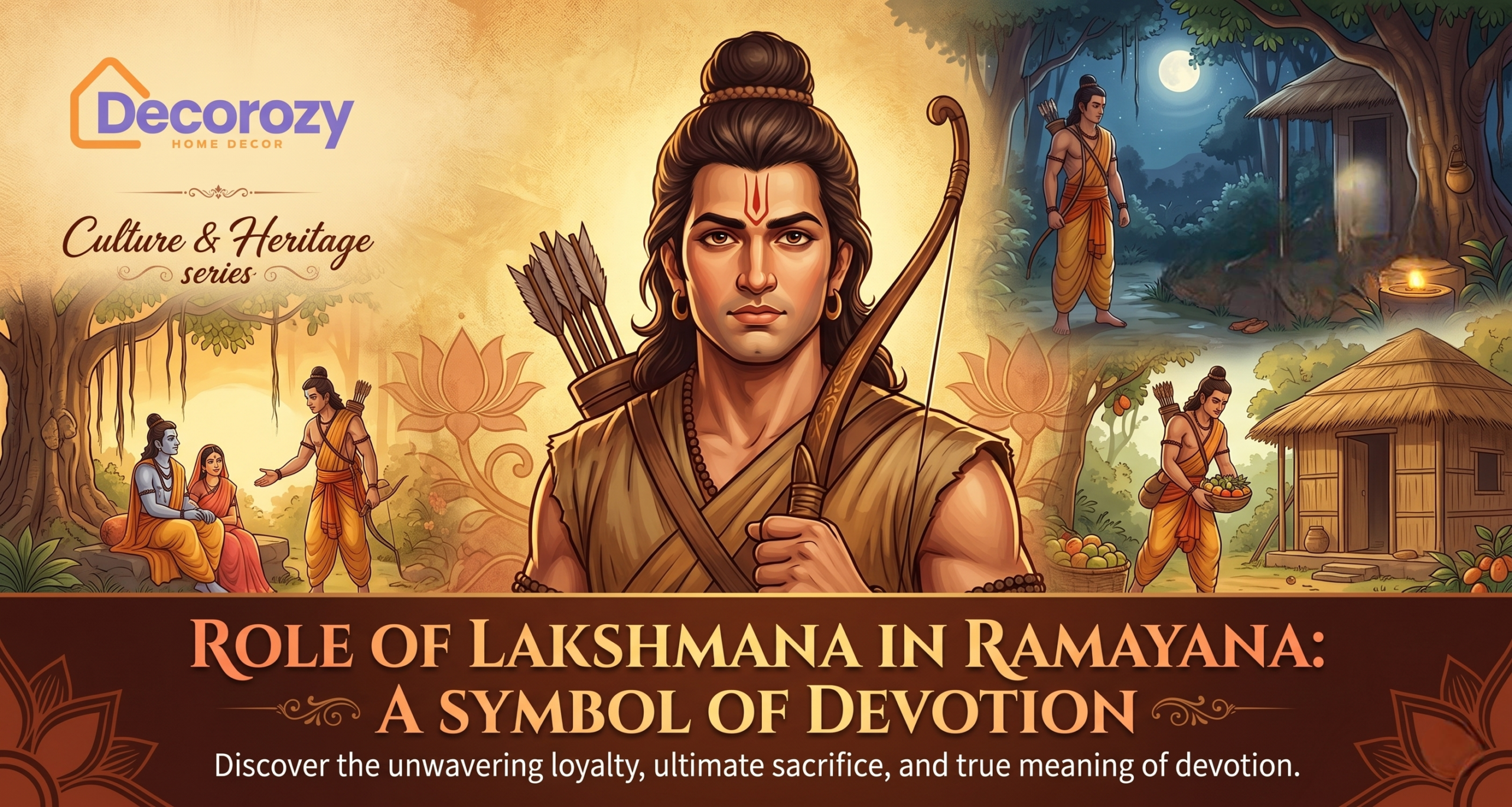
The ancient Indian epic holds many profound lessons, but understanding the role of Lakshmana in Ramayana offers timeless insights into brotherly devotion. As the younger brother of Lord Rama, Lakshmana’s life serves as a masterclass in sacrifice and unwavering loyalty. Let us explore his journey, his fiery spirit, and his enduring legacy.
Quick Answer: The role of Lakshmana in Ramayana is primarily defined by absolute devotion, sacrifice, and duty. He voluntarily abandoned royal comforts to serve Lord Rama and Sita during their 14-year exile, fiercely protecting them and defeating invincible warriors like Indrajit during the great war.
Understanding the Core Role of Lakshmana in Ramayana
Lakshmana represents the ultimate ideal of Seva, or selfless service, within Hindu mythology. Born to Queen Sumitra, he viewed his older brother, Sri Rama, not just as a sibling, but as the supreme lord.
Leaving his wife Urmila back in the kingdom of Ayodhya was a monumental personal sacrifice. This difficult choice highlights his unwavering commitment to duty over his own personal comfort and matrimonial bliss.
His presence in the perilous Dandaka forest ensured that Rama and Goddess Sita had a vigilant, uncompromising protector. Lakshmana famously gave up sleep for 14 years, staying awake continuously to guard their hermitage from demonic threats.
This period of exile tested his endurance, yet he never once complained about the harsh conditions. He built their shelters from raw materials, gathered daily food, and walked ahead to clear their path of thorns.
The Importance and Impact of the Role of Lakshmana in Ramayana
The role of Lakshmana in Ramayana was absolutely critical to the epic’s ultimate victory of Dharma over Adharma. He was the pragmatic voice of reason, the active problem-solver, and the fierce enforcer of justice.
When the demoness Surpanakha attacked Sita, it was Lakshmana who acted swiftly to neutralize the threat. His decisive, albeit aggressive, actions often served as the necessary catalyst pushing the epic’s narrative forward.
After Ravana abducted Sita, Lakshmana provided crucial emotional and physical support to a devastated Rama. His steady resolve and practical mindset helped mobilize the powerful Vanara army alongside Hanuman and King Sugriva.
During the great war in Lanka, Lakshmana was the only warrior capable of defeating Indrajit (Meghanada). This decisive victory crippled Ravana’s military strength, as Indrajit was arguably the most dangerous opponent on the battlefield.
A Detailed Analysis of His Sacrifices and Temperament
To truly comprehend his legacy, one must analyze his complex relationship with anger and righteousness. Unlike the deeply calm and stoic Rama, Lakshmana was quick to express righteous indignation.
This fiery temperament was not a flaw, but a necessary counterbalance to Rama’s pacifying nature. It protected his brother’s gentle disposition from being exploited by cunning adversaries during their long exile.
Even when critically wounded by the Shakti weapon, requiring the legendary Sanjeevani herb, his primary concern was never his own life. His sole anxiety was the grief his death would cause his beloved brother.
His dedication remains an unparalleled standard of familial loyalty, spiritual surrender, and martial prowess. He teaches us that true greatness often lies in supporting others from the shadows.
His silent suffering and monumental bravery are foundational pillars of this timeless spiritual epic. Lakshmana’s character proves that executing one’s duty requires profound selflessness, discipline, and unwavering courage.
Discover more fascinating mythological insights and elevate your spiritual understanding right here on Decorozy.com. Let the timeless tales of devotion inspire your everyday life!
FAQ Schema
- Question 1: Why did Lakshmana go to the forest with Rama?
- Answer: Lakshmana chose to accompany Rama into exile purely out of devotion and brotherly love. He could not bear to be separated from his older brother and felt it was his sacred duty to serve and protect him in the dangerous forest.
- Question 2: Who was Lakshmana’s wife and what was her sacrifice?
- Answer: Lakshmana’s wife was Urmila. Her sacrifice was immense, as she willingly stayed behind in Ayodhya for 14 years. According to legend, she took upon Lakshmana’s share of sleep so that he could remain continuously awake to protect Rama and Sita.
- Question 3: How was Lakshmana able to defeat Indrajit?
- Answer: Lakshmana defeated Indrajit after a fierce battle in Lanka. He was uniquely qualified to kill the demon prince because of a cosmic boon stating that only a man who had not slept, eaten, or looked at the face of a woman for 14 years could destroy him.
CUSTOMERS ALSO EXPLORED
Discover More Beautiful Collections
Explore premium handcrafted décor, divine idols, traditional pooja collections, and exclusive decorative products loved by customers across India.
🌸
Durga Maa Idols
Elegant Durga Maa statues crafted with fine detailing.
View Products →
🦚
Radha Krishna Idols
Graceful Radha Krishna idols symbolizing eternal love.
Shop Now →
🐄
Kamdhenu Cow Idol
Premium Kamdhenu Cow with Calf decorative idol.
View Details →
🛕
God Idols Collection
Discover our complete collection of premium God idols.
Explore More →
🔥
Today’s Best Deals
Save more on bestselling décor and spiritual collections.
Grab Offers →
Looking for Premium Home Décor?
Shop handcrafted God idols, elegant home décor, traditional handicrafts, and exclusive collections designed to enhance every space.
Visit Decorozy →