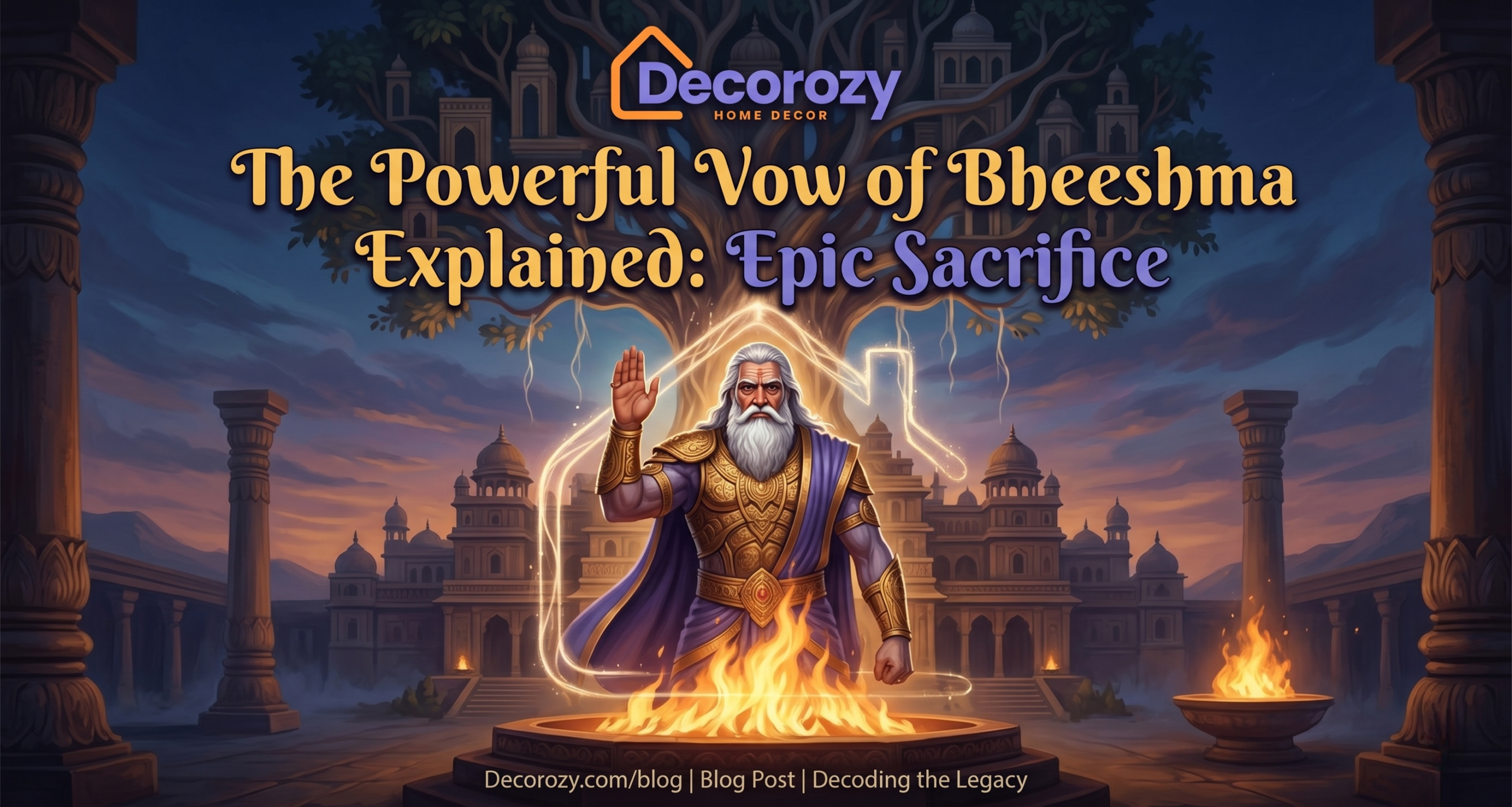
The Powerful Vow of Bheeshma Explained: Epic Sacrifice
Understanding the ancient Indian epic, the Mahabharata, requires analyzing its most foundational and dramatic moments. Today, we want to get the powerful vow of Bheeshma explained for our readers.
This singular, monumental act of sacrifice altered the destiny of the entire Kuru dynasty. Let us delve into the historical context and mythological significance of this legendary oath.
Quick Answer: The powerful vow of Bheeshma was an unbreakable oath of lifelong celibacy and eternal service to the Hastinapura throne. Taken by Prince Devavrata to secure his father’s marriage to Satyavati, this terrible oath earned him the title “Bheeshma,” meaning “He of the terrible vow.”
PREMIUM COLLECTIONS
Elevate Your Home with Timeless Elegance
Discover handcrafted God idols, luxury home décor, wooden handicrafts, and pooja essentials designed to create a peaceful and beautiful living space.
🏡
Premium Home Décor Store
Browse our complete collection of premium décor products and handcrafted designs.
Visit
🛕
God Idols Collection
Premium handcrafted idols for home temples, offices, and gifting.
Explore
🌸
Lakshmi Idol Guide
Discover elegant Lakshmi idols symbolizing prosperity and abundance.
Read
💪
Hanuman Idol Guide
Premium Hanuman idols representing strength, courage, and devotion.
Discover
🎨
Animal Décor
Unique decorative figurines crafted to enhance modern interiors.
Browse
🎁
Exclusive Best Deals
Enjoy special discounts on bestselling home décor collections.
Save Now
👜
Handcrafted Bags
Stylish handmade bags designed for everyday elegance.
Shop
Bring Beauty & Positivity to Every Corner
Explore India’s finest handcrafted God idols, traditional décor, and premium home accessories—all carefully curated for your home.
Shop Premium Collection →
The Origins: The Powerful Vow of Bheeshma Explained
Prince Devavrata was the rightful heir to the illustrious throne of Hastinapura. He was universally respected for his immense wisdom, martial prowess, and deep devotion to his father, King Shantanu.
Tragedy and desire intersected when King Shantanu fell deeply in love with a fisherwoman named Satyavati. However, her ambitious father imposed a strict, unyielding condition before allowing the marriage.
He demanded that only Satyavati’s future offspring could inherit the Kuru throne. This stipulation meant completely bypassing Devavrata’s legitimate and rightful claim as the crown prince.
Why The Powerful Vow of Bheeshma Explained True Dharma
To ensure his father’s happiness, Devavrata made the ultimate, selfless sacrifice. He voluntarily and publicly renounced his birthright to rule the kingdom of Hastinapura.
To absolutely guarantee that his future children would never contest Satyavati’s heirs, he took a terrifying oath. He swore absolute, lifelong celibacy, ensuring he would leave no royal lineage behind.
The heavens themselves reacted to this monumental act of filial piety and sacrifice. The gods rained down flowers and proclaimed him “Bheeshma,” forever cementing his legacy.
The Far-Reaching Consequences of the Oath
Bheeshma’s oath locked him into eternal servitude to the Kuru throne, regardless of who wore the crown. This boundless loyalty became both his greatest heroic strength and his deepest personal tragedy.
During the apocalyptic Kurukshetra war, his unbreakable vow forced him to fight for the corrupt Kauravas. He was ethically bound to battle against his beloved Pandavas to protect the ruling king.
This oath highlights the incredibly complex themes of dharma (righteous duty) in ancient Hindu philosophy. It brilliantly illustrates how even the most righteous vows can lead to devastating, unintended historical consequences.
The legend of Devavrata remains a defining cornerstone of Indian mythology and moral literature. His unwavering, iron-clad commitment to his word defines the very essence of personal sacrifice.
Explore more fascinating deep dives into history, mythology, and culturally inspired aesthetics right here at Decorozy.com. Elevate your space and enrich your mind with our expert insights today.
FAQ Schema
- Question 1: What does the name Bheeshma actually mean?
- Answer: The name Bheeshma translates directly to “He of the terrible vow” or “The fierce one.” It was bestowed upon Prince Devavrata by the gods after he swore an unbreakable oath of lifelong celibacy and renounced his birthright to the throne.
- Question 2: Why did Bheeshma take the vow of celibacy?
- Answer: Bheeshma took the vow of celibacy to completely eliminate any future political threat to the throne from his own descendants. This supreme sacrifice satisfied the fisherman chief’s condition, allowing Bheeshma’s father, King Shantanu, to marry Satyavati.
- Question 3: What boon did King Shantanu give Bheeshma for his sacrifice?
- Answer: Deeply moved by his son’s incredible sacrifice, King Shantanu granted Bheeshma the rare boon of “Ichcha Mrityu.” This powerful blessing meant that Bheeshma could choose the exact time and day of his own death, making him virtually immortal until he willed otherwise.