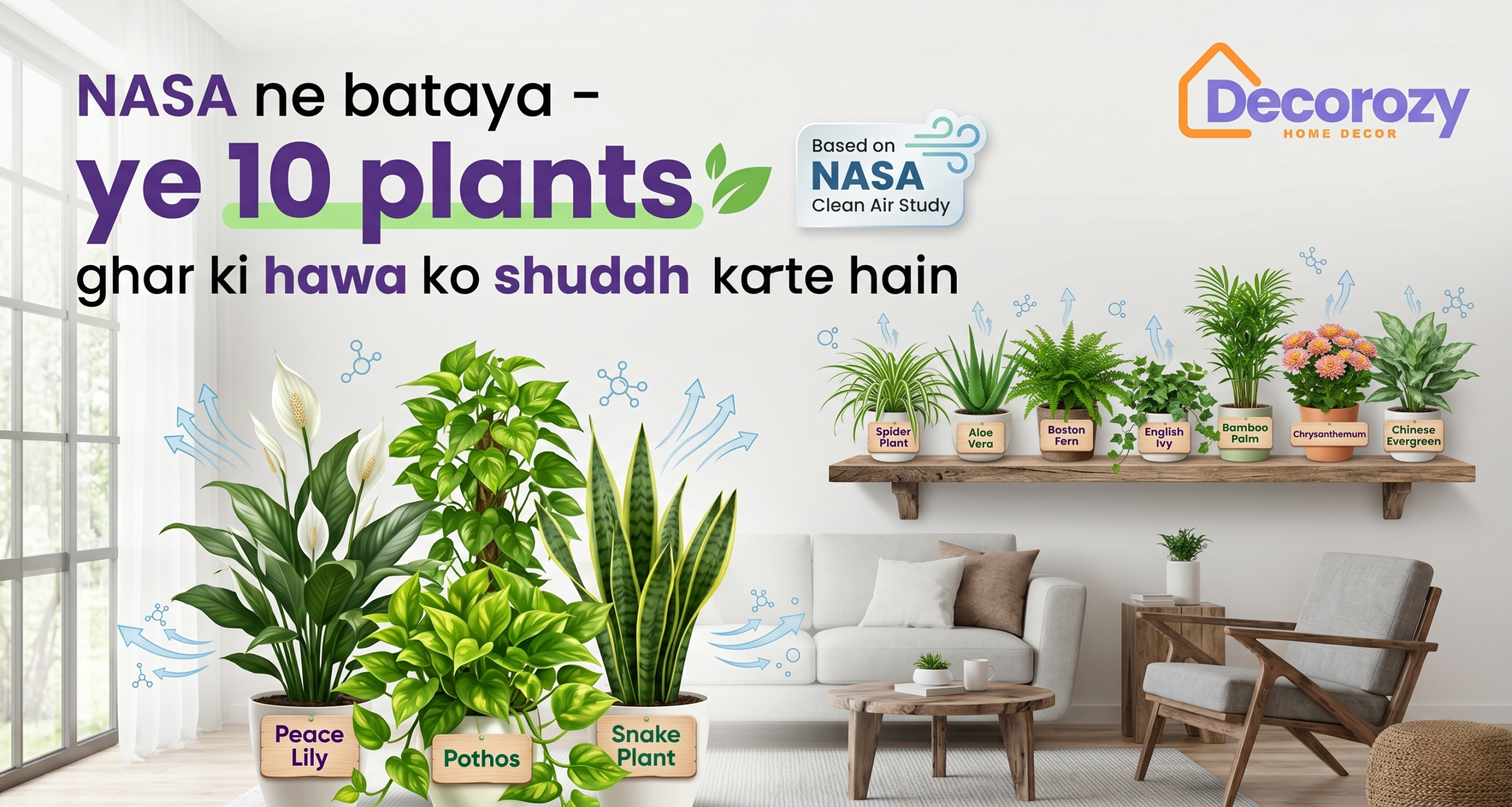
NASA ne bataya -ye 10 plants ghar ki hawa ko shuddh karte hain: A Complete Guide
Indoor air pollution is a massive, yet often invisible, threat to our daily health and wellbeing. Toxins from furniture, paints, and cleaning supplies can easily become trapped inside our poorly ventilated living spaces.
If you are looking for natural, effective solutions, you are not alone. It is a well-documented fact that NASA ne bataya -ye 10 plants ghar ki hawa ko shuddh karte hain.
By integrating these scientifically backed botanicals into your home decor, you can actively filter out harmful compounds. Let us explore the exact species recommended by space agency researchers.
Quick Answer: According to the famous NASA Clean Air Study, specific indoor plants naturally remove toxic agents like benzene, formaldehyde, and trichloroethylene from your home environment. Top air-purifying plants include the Snake Plant, Spider Plant, Peace Lily, Aloe Vera, and Golden Pothos.
YOU MAY ALSO LIKE
Discover More Premium Home Décor Collections
Browse our carefully selected handcrafted décor collections including God idols, spiritual accessories, handcrafted art, and luxury home decoration products.
Explore Exclusive Offers & New Arrivals
Discover handcrafted God idols, premium handicrafts, pooja essentials, wall décor, and luxury home accessories at special prices.
View Best Deals →
The Science: Why NASA ne bataya -ye 10 plants ghar ki hawa ko shuddh karte hain
In 1989, NASA conducted a groundbreaking study to find ways to clean the air in sealed space stations. The results were incredibly revealing for everyday homeowners.
Their research proved that certain houseplants act as natural, biological air filters. They absorb harmful volatile organic compounds (VOCs) through their leaves and roots.
This is exactly why NASA ne bataya -ye 10 plants ghar ki hawa ko shuddh karte hain. These plants do not just look beautiful; they are active workers in improving your indoor air quality.
Health Benefits When NASA ne bataya -ye 10 plants ghar ki hawa ko shuddh karte hain
The primary benefit of introducing these NASA-approved plants is a drastic reduction in indoor airborne toxins. This leads to healthier, cleaner air for your family to breathe.
Cleaner air can significantly reduce the occurrence of headaches, eye irritation, and respiratory issues. People who suffer from asthma or severe allergies often report massive improvements.
Furthermore, caring for indoor plants is proven to lower stress levels and boost overall mental health. A greener home environment fosters deep relaxation and increased daily focus.
Detailed Analysis: The 10 NASA-Approved Plants
1. Snake Plant (Sansevieria trifasciata) The Snake Plant is highly renowned for converting carbon dioxide into oxygen entirely at night. It is incredibly hardy and effectively filters out formaldehyde, xylene, and toluene.
2. Spider Plant (Chlorophytum comosum) Perfect for absolute beginners, the Spider Plant thrives in indirect sunlight with minimal watering. It is a powerhouse at battling carbon monoxide and xylene in the air.
3. Peace Lily (Spathiphyllum) This elegant plant produces beautiful white flowers while silently working to purify your room. It is highly effective at breaking down toxic gases like benzene and trichloroethylene.
4. Aloe Vera (Aloe barbadensis miller) Beyond its famous skin-healing properties, Aloe Vera is a fantastic air-purifying succulent. It continuously monitors your home’s air quality, developing brown spots when chemical levels are too high.
5. English Ivy (Hedera helix) English Ivy is scientifically proven to reduce airborne fecal matter particles and combat indoor mold. It is a beautifully cascading vine that looks perfect in elevated hanging baskets.
6. Bamboo Palm (Chamaedorea seifrizii) This tropical palm adds a lush, exotic feel to your interior while acting as a natural humidifier. It excels at filtering out formaldehyde from wooden furniture and carpets.
7. Rubber Plant (Ficus elastica) Featuring large, stunning burgundy leaves, the Rubber Plant is a brilliant indoor statement piece. Its large surface area allows it to absorb high volumes of airborne chemicals efficiently.
8. Boston Fern (Nephrolepis exaltata) Boston Ferns prefer high humidity and cool locations with indirect, dappled sunlight. They rank extremely high on NASA’s list for removing formaldehyde from indoor environments.
9. Golden Pothos (Epipremnum aureum) Often called Devil’s Ivy, the Golden Pothos is almost impossible to kill and grows rapidly. It actively clears the air of harmful volatile organic compounds like benzene and toluene.
10. Chinese Evergreen (Aglaonema) This plant produces lovely red berries and thrives perfectly in low-light conditions. As time passes, the Chinese Evergreen actually becomes more efficient at removing indoor air toxins.
Transforming your home into a fresh, breathable sanctuary is incredibly easy with these top-tier botanicals. For more expert tips on integrating stunning, healthy greenery into your interior design, explore our full home decor collections at Decorozy.com today!
FAQ Schema
- Question 1: How many indoor plants do I need to purify a room effectively?
- Answer: According to researchers, you should aim for at least one medium-sized indoor plant for every 100 square feet of living space to achieve noticeable air purification.
- Question 2: Which indoor plant produces the most oxygen at night?
- Answer: The Snake Plant (Sansevieria) and Aloe Vera are unique because they perform Crassulacean Acid Metabolism (CAM), allowing them to release oxygen throughout the night.
- Question 3: Are all air-purifying plants safe for pets?
- Answer: No, several air-purifying plants, such as the Peace Lily and English Ivy, are toxic to cats and dogs if ingested. Always verify a plant’s pet safety before purchasing.