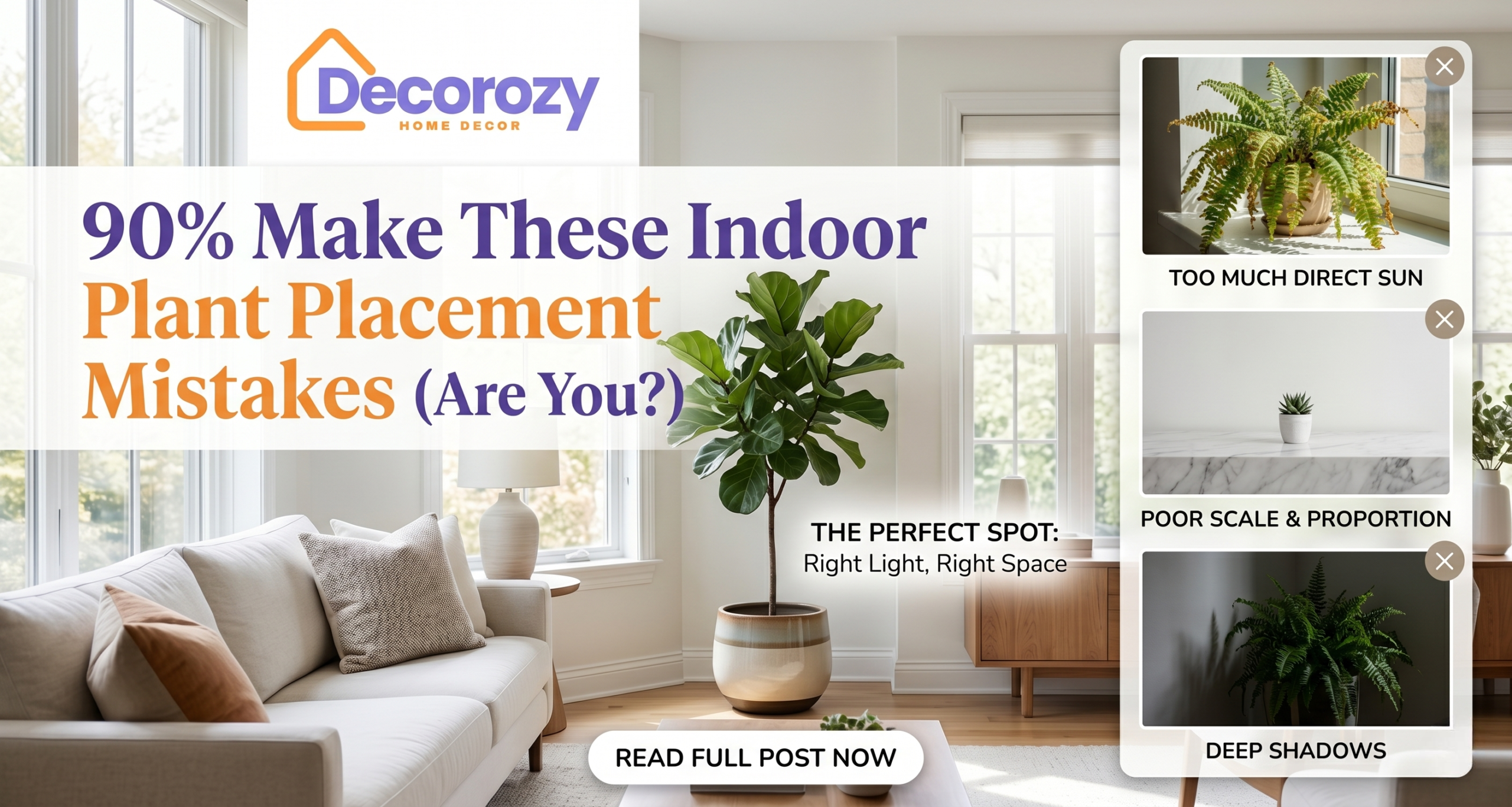
90% of People Make These Indoor Plant Placement Mistakes – Do You?
Did you know that most houseplants die simply because of poor positioning?
Many enthusiastic plant parents bring home beautiful greenery only to watch it slowly wilt away.
Finding the exact right spot is crucial for the survival of your indoor green companions.
Let’s explore the most common indoor plant placement mistakes and how you can easily fix them.
Quick Answer: The most common indoor plant placement mistakes include ignoring natural light needs, placing plants near AC vents, and overlooking humidity levels. To ensure plant survival, match the specific species to your home’s microclimates, keeping tropical plants away from drafty windows and hot radiators.
YOU MAY ALSO LIKE
Discover More Premium Home Décor Collections
Browse our carefully selected handcrafted décor collections including God idols, spiritual accessories, handcrafted art, and luxury home decoration products.
Explore Exclusive Offers & New Arrivals
Discover handcrafted God idols, premium handicrafts, pooja essentials, wall décor, and luxury home accessories at special prices.
View Best Deals →
The Biggest Indoor Plant Placement Mistakes You Are Making
Many plant owners buy a lush, tropical fern and place it in a completely dark corner.
This is one of the most fatal indoor plant placement mistakes you can make.
Plants need highly specific light levels to photosynthesize, grow, and survive indoors.
Without adequate light, leaves will drop, growth will stall, and the plant will eventually die.
Another massive error is putting plants near drafty doors, air conditioning units, or heating vents.
Rapid temperature changes and dry air can shock delicate houseplants almost instantly.
Crispy, brown leaf edges are a primary indicator that your plant is sitting in a bad draft.
Finally, ignoring the specific humidity needs of a plant is a guaranteed recipe for failure.
Why Avoiding Indoor Plant Placement Mistakes Matters
Avoiding these indoor plant placement mistakes saves you significant money and frustration over time.
Healthy, well-placed plants naturally purify the air and boost your home’s aesthetic appeal.
When you position a houseplant correctly from day one, it requires far less daily maintenance.
Proper placement drastically reduces the risk of pest infestations and prevents root rot.
A stressed plant in the wrong location is a magnet for spider mites and fungus gnats.
By getting the location right, you create a natural, thriving indoor oasis in your living space.
It transforms your home into the lush, magazine-worthy sanctuary you originally envisioned.
Detailed Analysis: How to Find the Perfect Spot
Always check the specific light and humidity requirements of your new plant before bringing it home.
South-facing windows offer bright, direct sunlight, making them perfect for succulents and cacti.
East or west-facing windows are the ideal environments for medium-light tropical plants like Monsteras.
If your room gets blinding afternoon sun, use sheer curtains to protect sensitive leaves from burning.
Group your humidity-loving plants, like Calatheas and Ferns, together in your bathroom or kitchen.
Alternatively, place them on pebble trays filled with water to create a localized humid microclimate.
Always observe your plants for the first few weeks after placing them in a new spot.
If they start leaning heavily toward the light, they need to be moved closer to the window.
Vastu and Feng Shui Considerations for Plant Positioning
Strategic plant placement isn’t exclusively about maximizing sunlight and managing humidity.
Many ancient traditions believe proper positioning brings positive energy, health, and wealth.
In both Vastu Shastra and Feng Shui, placing dead or dying plants in the home attracts negative energy.
Avoid placing sharp, thorny plants like cacti directly in your bedroom or near seating areas.
Instead, keep healthy, vibrant, upward-growing plants near your home’s entrance to invite good fortune.
Following these energetic guidelines ensures your home looks beautiful and feels incredibly welcoming.
Stop guessing and start properly optimizing your home’s precious green spaces today.
By understanding your plant’s specific needs, you can easily avoid these incredibly common errors.
For more elite interior styling and expert home decor tips, keep exploring our premium guides on Decorozy.com!
FAQ Schema
- Question 1: Where is the absolute best place to put indoor plants?
- Answer: The best place depends entirely on the plant species. Generally, bright, indirect sunlight near an east-facing window is ideal for most tropical houseplants. Always avoid placing them directly in the path of AC drafts and heating vents.
- Question 2: Can I successfully put indoor plants in dark corners of my house?
- Answer: Most plants will not survive in completely dark corners. However, ultra-resilient, low-light tolerant plants like Snake Plants or ZZ Plants can adapt to dimmer spaces. Consider using an LED grow light for completely windowless areas like interior bathrooms.
- Question 3: Is it bad for your health to keep plants in the bedroom?
- Answer: No, it is actually highly beneficial. Many specific plants release oxygen at night and actively filter indoor air pollutants. Snake plants, Aloe Vera, and Peace Lilies are excellent, low-maintenance choices for improving bedroom air quality.