Understanding the Philosophy of Yajurveda in Simple Words
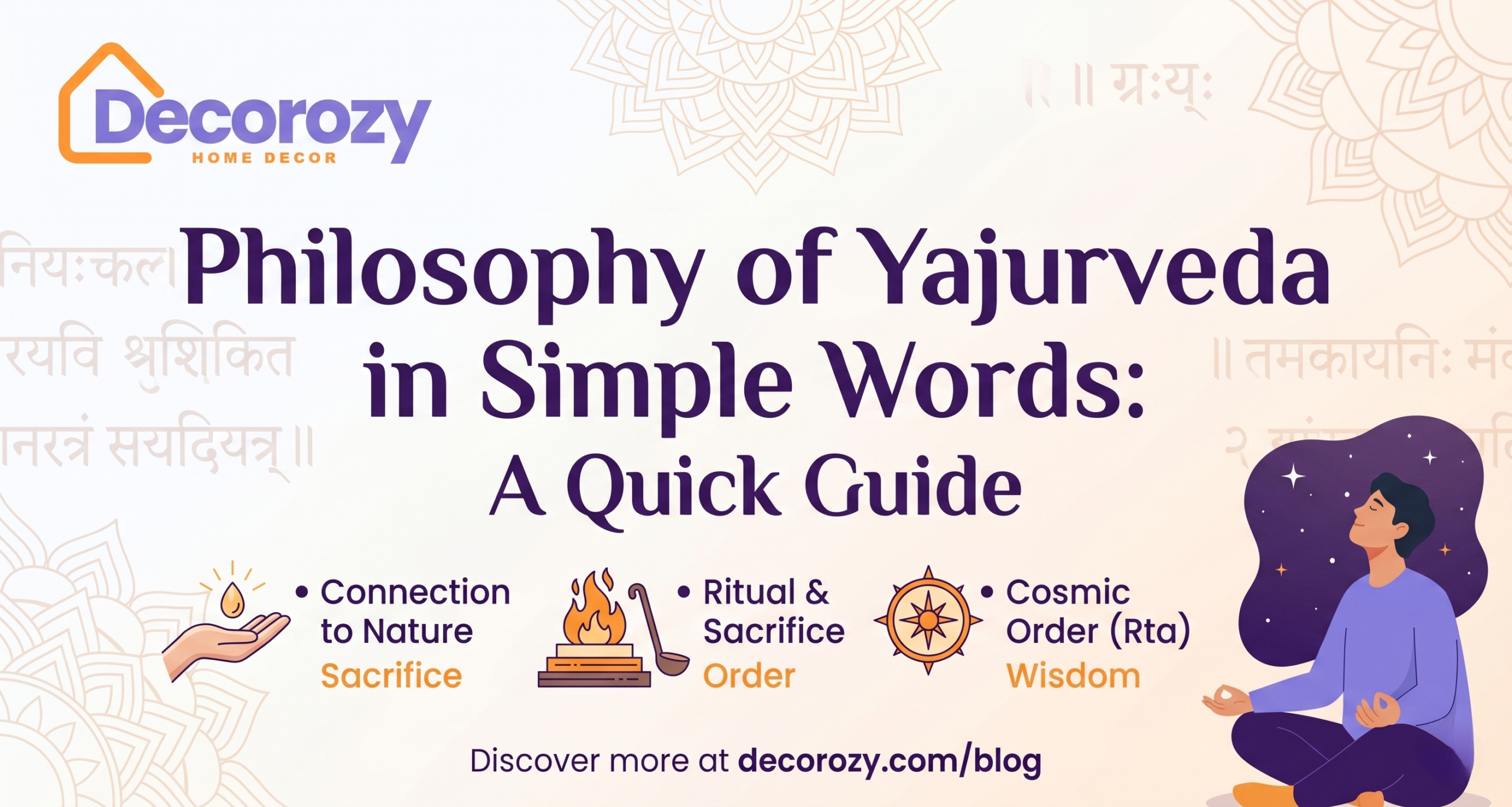
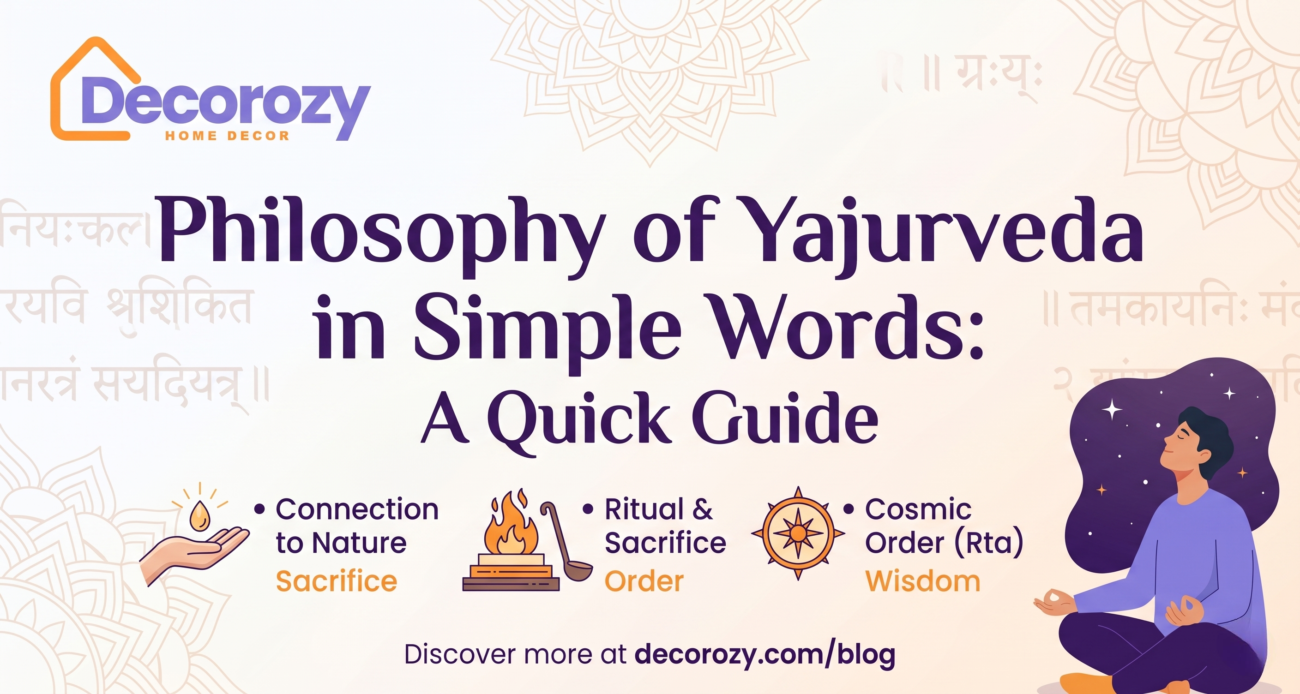
Exploring ancient texts can often feel overwhelming, but understanding the philosophy of Yajurveda in simple words is entirely possible.
As the second of the four sacred Vedas, this incredible text serves as an ancient guidebook for human conduct.
It moves beyond mere philosophical pondering, focusing deeply on the mechanics of daily action and conscious living.
Quick Answer: The philosophy of Yajurveda centers on “Karma” (action) and “Yajna” (selfless sacrifice). It teaches that performing our daily duties with absolute mindfulness and pure intention connects us directly to the cosmos, promoting both personal spiritual growth and universal harmony.
The Core Philosophy of Yajurveda in Simple Words Explained
To grasp the heart of this ancient text, we must look at its primary focus: action.
Unlike other texts that emphasize deep meditation or pure knowledge, the Yajurveda is known as the Veda of rituals.
It outlines the Karma Kanda, which translates to the path of action and ceremonial worship.
However, the physical rituals are heavily layered with deep psychological meaning.
Every chant, fire sacrifice (Yajna), and physical movement represents the surrender of the human ego to a higher power.
By systematically performing these structured duties, individuals learn discipline and focus.
Ultimately, the goal is to realize that every breath and movement is a spiritual act.
When we perform our daily duties without a selfish desire for the outcome, we align ourselves with cosmic laws.
Why the Philosophy of Yajurveda in Simple Words Matters Today
You might wonder how a thousands-of-years-old manual on rituals applies to modern life.
Translating the philosophy of Yajurveda in simple words reveals a highly relevant framework for modern mindfulness.
In our fast-paced world, we are often distracted, acting on autopilot without real intention.
The Yajurveda teaches us the immense power of intentionality.
When we view our daily tasks—whether it is our career, our family duties, or simple chores—as a “Yajna” or sacred offering, our mindset shifts.
We stop working purely for selfish gain and start working for the greater good.
This shift severely reduces anxiety, depression, and the modern crisis of a lack of purpose.
It grounds us, teaching us that spiritual enlightenment is not found by escaping the world, but by engaging with it fully and selflessly.
Applying Ancient Vedic Wisdom to Modern Living
Implementing this ancient Indian philosophy does not require you to perform complex fire rituals in your living room.
The true essence of the Yajurveda is internal discipline and pure intention.
Start by bringing intense focus to your daily morning routine.
Treat your first cup of coffee, your morning stretch, or your commute as a deliberate, mindful practice.
Dedicate your daily work to something larger than yourself, such as the well-being of your family or community.
This simple mental pivot transforms ordinary stress into spiritual strength.
By adopting this mindset, you invite a profound sense of peace and order into your environment.
For more insights on blending mindful living with beautifully curated environments, continue exploring our expert guides here on Decorozy.com.
FAQ Schema
- Question 1: What is the main message of the Yajurveda?
- Answer: The main message of the Yajurveda is that mindful, disciplined action (Karma) and selfless sacrifice (Yajna) are the primary pathways to connecting with the divine and maintaining harmony in the universe.
- Question 2: How many divisions does the Yajurveda have?
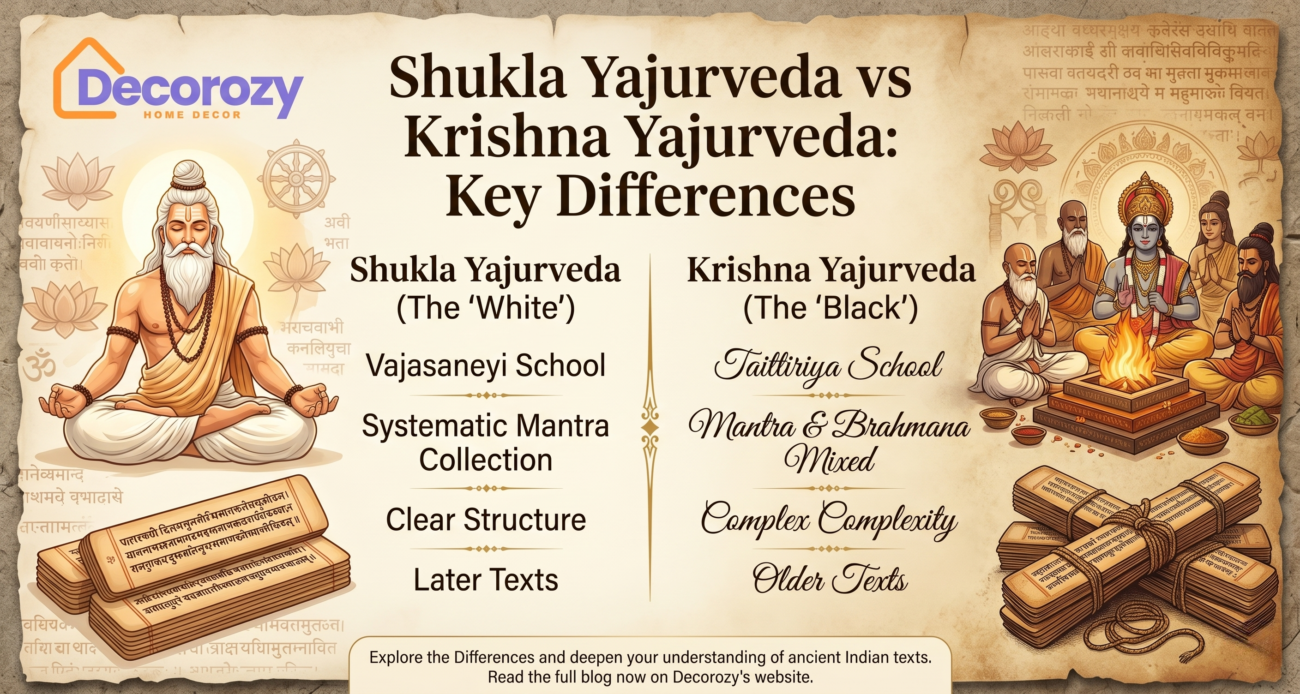
- Answer: The Yajurveda is traditionally divided into two primary sections: the Shukla (White) Yajurveda, which contains clear, distinct verses, and the Krishna (Black) Yajurveda, which features a more complex mixture of verses and prose.
- Question 3: How does Yajurveda differ from Rigveda?
- Answer: While the Rigveda is primarily a collection of hymns praising the divine, the Yajurveda acts as a practical guidebook, providing the exact prose, mantras, and procedures required to perform the rituals mentioned in the Rigveda.