Why Jagannath Has No Hands? Explore the Enchanting Story and Symbolism
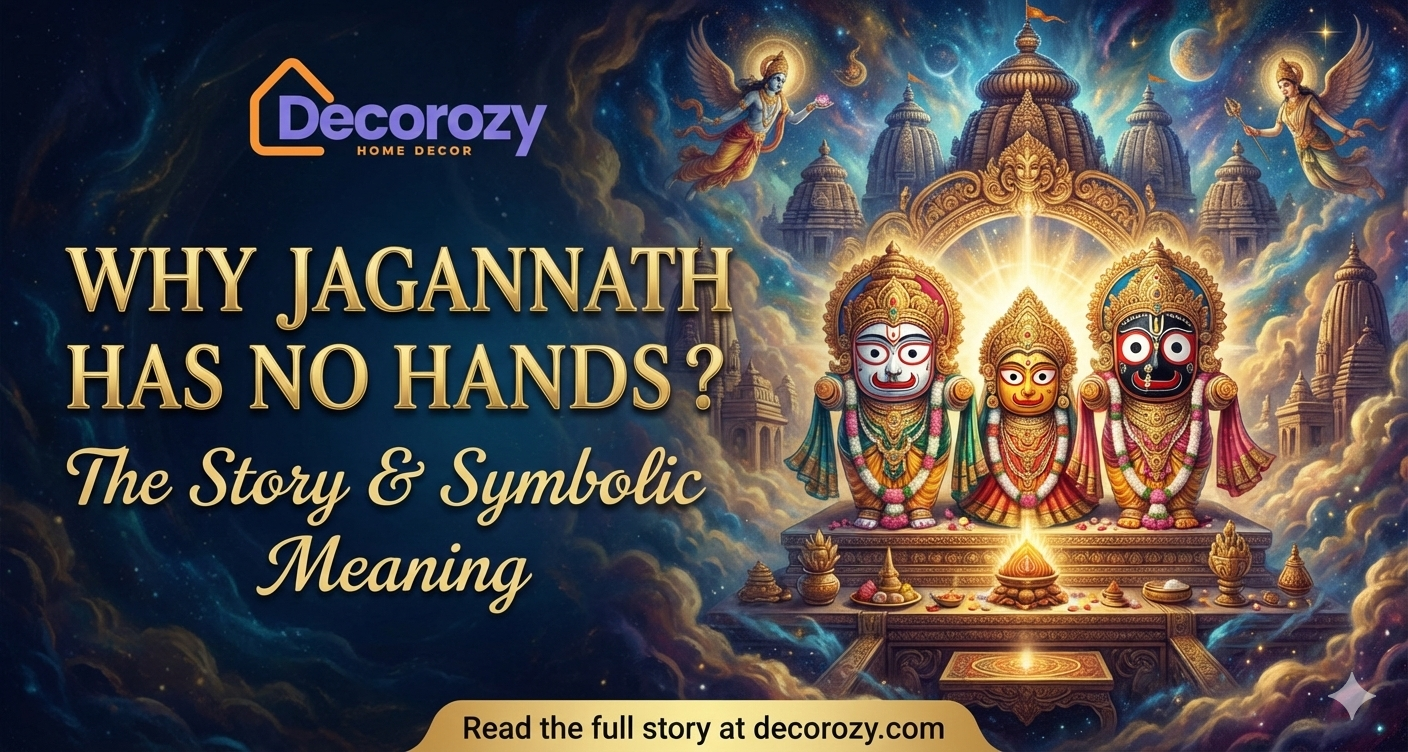
The sight of Lord Jagannath in the ancient city of Puri is one that stays with a devotee forever. Unlike the intricately carved, human-like idols of other Hindu deities, the “Lord of the Universe” appears in a form that is strikingly simple, wooden, and visibly incomplete. The most common question asked by visitors and spiritual seekers alike is: Why Jagannath has no hands?
Quick Answer: Why Jagannath Has No Hands?
Lord Jagannath has no hands due to a legend involving King Indradyumna and the divine architect Vishwakarma. The King broke a vow of silence by opening the temple doors prematurely, causing the sculptor to leave the idol unfinished. Symbolically, this represents God’s ability to protect and bless without physical limbs.
The Legend of King Indradyumna and the Unfinished Idol
The primary reason why Jagannath has no hands is rooted in a fascinating legend from the Puranas. King Indradyumna, a devout follower of Lord Vishnu, sought to manifest the Lord in a physical form after the original blue stone idol (Nila Madhava) disappeared.
Through divine guidance, the King was instructed to carve a new idol from a sacred log found floating in the sea. The celestial architect, Vishwakarma, arrived in the guise of an elderly carpenter to perform the task. However, he set one strict condition: he must work in total isolation for 21 days, and no one should open the temple doors until the work was complete.
Overcome by curiosity and pressure from his queen, the King opened the doors on the 15th day. Finding the sculptor gone and the idols of Jagannath, Balabhadra, and Subhadra without hands or feet, the King was devastated. However, a divine voice assured him that this “incomplete” form was intentional and perfect in its spiritual essence.
Spiritual Symbolism: Why Jagannath Has No Hands and Feet
Beyond the folklore, there are profound philosophical interpretations regarding why Jagannath has no hands. These meanings offer comfort and insight into the nature of the divine.
- Universal Reach: The absence of hands signifies that the Lord does not need physical limbs to accept offerings or grant blessings. He is an all-encompassing force that reaches every corner of the universe simultaneously.
- Beyond Human Limitation: While humans are bound by their physical bodies, Jagannath’s form reminds us that God is “Purna Brahma” (the Complete Brahman). His power is not derived from physical action but from pure consciousness and awareness.
- The Power of Drishti: Jagannath is characterized by large, unblinking eyes. This shifts the focus from “doing” (hands) to “seeing” (awareness). It signifies a God who watches over all creatures with equal compassion.
Cultural Impact and the Rath Yatra Connection
The unique form of the deity has shaped the entire culture of Odisha. During the annual Rath Yatra, or Chariot Festival, millions gather to pull the massive chariots of the siblings. This festival provides a beautiful answer to the “missing hands” dilemma.
Since the Lord has no hands to hold the reins of his chariot, the devotees themselves become His hands. The act of pulling the rope symbolizes a partnership between the human and the divine. It suggests that while God provides the path, humanity must provide the effort to move forward.
This “incomplete” form also promotes social equality. Because the idol does not look like a warrior or a king, he belongs to everyone—regardless of caste, status, or physical ability. He is a relatable deity who proves that being “different” does not mean being “broken.”
Conclusion: Finding Wholeness in Incompletion
The story of why Jagannath has no hands is a powerful lesson in faith. It teaches us that perfection is not always found in a finished shape, but in the devotion behind it. Whether you view the handless form as a result of an ancient legend or a symbol of universal love, Lord Jagannath remains a beacon of spiritual inclusion.
His large eyes continue to watch over the world, reminding us that even without hands to hold us, the divine is always there to support us.
Section 3: FAQ Schema (Voice Search Optimized)
Q1: Why is the idol of Lord Jagannath made of wood? Unlike most Hindu idols made of stone or metal, Jagannath is made of Neem wood (Daru). This symbolizes the temporary nature of the physical body. The idols are ritually replaced every 8 to 19 years in a ceremony called Nabakalevara, representing the cycle of rebirth and soul renewal.
Q2: What do the large eyes of Lord Jagannath signify? The large, round, unblinking eyes represent the Lord’s constant vigil over the universe. It symbolizes that God is ever-awake and aware of the joys and sorrows of all living beings, emphasizing divine sight over physical action.
Q3: Who are the other deities worshipped with Lord Jagannath? Lord Jagannath is worshipped alongside his elder brother, Balabhadra, and his younger sister, Subhadra. This trio is unique in Hindu worship as it emphasizes the importance of familial bonds and sibling unity within the spiritual realm.
Would you like me to generate a meta-description or social media snippets specifically for this post?