The Profound Similarities Between Jainism and Other Religions
The spiritual landscape of the world is a vibrant, colorful tapestry of diverse beliefs and ancient traditions. Yet, beneath the surface of unique rituals, many faiths share a beautifully intertwined philosophical foundation.
If you are exploring ancient Indian philosophy, understanding the similarities between Jainism and other religions is absolutely essential. This comparison reveals a fascinating web of shared human morality, ethical discipline, and cosmic understanding.
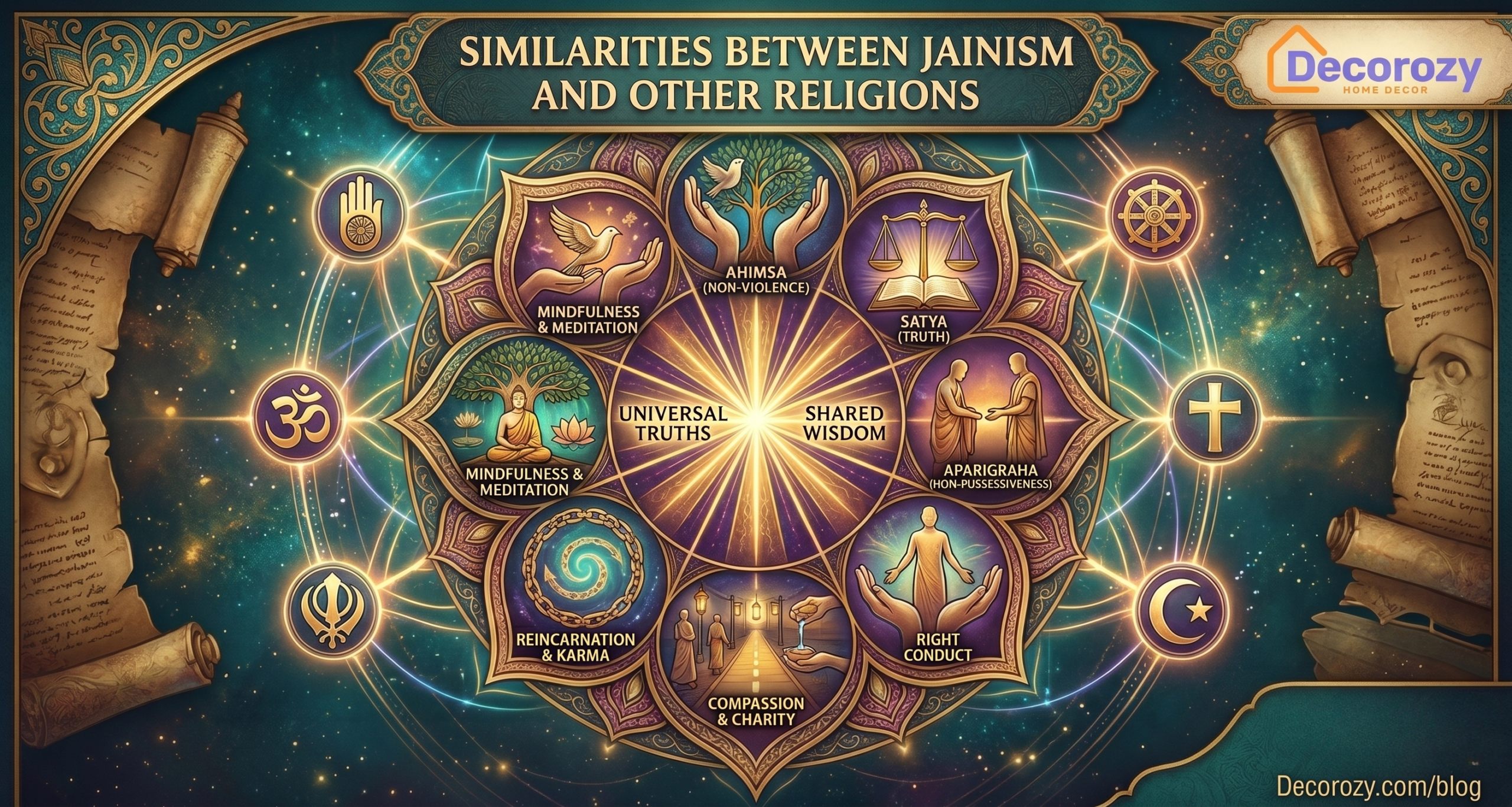
Quick Answer: The core similarities between Jainism and other religions include the belief in karma, the cycle of rebirth, and the pursuit of spiritual liberation. Alongside Hinduism and Buddhism, Jainism strongly emphasizes ethical living, ascetic disciplines, and the universal principle of Ahimsa (non-violence).
Unveiling the Similarities Between Jainism and Other Religions
When examining the spiritual traditions of the East, the overlapping boundaries are immediately apparent. Jainism grew in the same rich cultural soil as Hinduism and Buddhism.
Because of these shared geographical roots, they naturally adopted comparable worldviews. The foundational ideas of how the universe operates are strikingly aligned across these ancient paths.
One of the most defining similarities between Jainism and other religions is the shared vocabulary of the soul. Terms like Dharma, Samsara, and Moksha echo across multiple eastern texts and teachings.
The Shared Importance of Ethical Living
At the vibrant heart of Jainism lies Ahimsa, the practice of radical non-violence. This concept is not exclusive to Jain traditions; it powerfully resonates globally.
In Buddhism, the first precept is to abstain from taking life, reflecting a beautifully similar moral compass. Hinduism also praises Ahimsa as the highest virtue (Ahimsa Paramo Dharma), promoting a peaceful coexistence.
Even when comparing Jainism to Abrahamic faiths, striking ethical parallels emerge. The Ten Commandments in Christianity and Judaism strongly mirror Jainism’s five great vows (Mahavratas), particularly regarding truth-telling and rejecting theft.
Analyzing the Similarities Between Jainism and Other Religions on Karma
To truly grasp these ancient connections, we must look at the mechanics of the universe. The concept of Karma is a unifying thread tying the Eastern spiritual frameworks together.
In both Hinduism and Buddhism, Karma is the cosmic law of cause and effect. Jainism shares this belief but adds its own unique, colorful perspective by viewing Karma as actual physical matter binding to the soul.
Despite this subtle difference in mechanism, the ultimate goal remains universally the same. All three paths teach that shedding this karmic debt is the only way to achieve ultimate spiritual liberation.
The Pursuit of Ultimate Liberation
The ultimate attractive prize in these traditions is liberation from the painful cycle of rebirth. Jainism calls this Moksha or Kevala Jnana, a state of infinite bliss and absolute knowledge.
Hindus also seek Moksha, aiming to merge the individual soul with the universal divine consciousness. Buddhists strive for Nirvana, the blowing out of earthly desires and suffering.
While the exact definitions of the final spiritual destination vary, the journey is remarkably similar. It requires deep introspection, strict moral discipline, and a profound detachment from the material world.
By recognizing these deeply rooted connections, we can foster a more inclusive and harmonious worldview. The vibrant tapestry of human faith is bound together by these beautiful, shared universal truths.
Ready to transform your understanding of global cultures and elevate your spiritual journey? Explore more beautifully curated insights and deep philosophical dives right here on Decorozy.com!
Section 3: FAQ Schema
- Question 1: How is Jainism similar to Buddhism? Answer: Both Jainism and Buddhism originated in ancient India and reject the authority of the Vedas. They share core beliefs in reincarnation, karma, and the ultimate goal of achieving spiritual liberation through ethical living, meditation, and strict non-violence (Ahimsa).
- Question 2: What beliefs do Jainism and Hinduism share? Answer: Jainism and Hinduism share a fundamental belief in the cycle of birth and rebirth (Samsara) and the cosmic law of Karma. Both religions also emphasize the pursuit of Moksha (liberation) and hold Ahimsa as a highly revered moral virtue.
- Question 3: Are there similarities between Jainism and Christianity? Answer: While philosophically distinct, Jainism and Christianity share strong moral similarities. Both religions heavily emphasize ethical guidelines, such as honesty, rejecting theft, and leading a life of spiritual purity, prioritizing moral discipline over worldly materialism.
Discover More
Enhance Your Home with Divine Décor
Explore our curated collection of premium God idols, handmade décor, traditional handicrafts, and pooja essentials. Discover timeless designs crafted to bring elegance, spirituality, and positivity into your home.
Looking for premium handcrafted home décor? Explore our bestselling collections trusted by customers across India.
Shop Premium Collection →