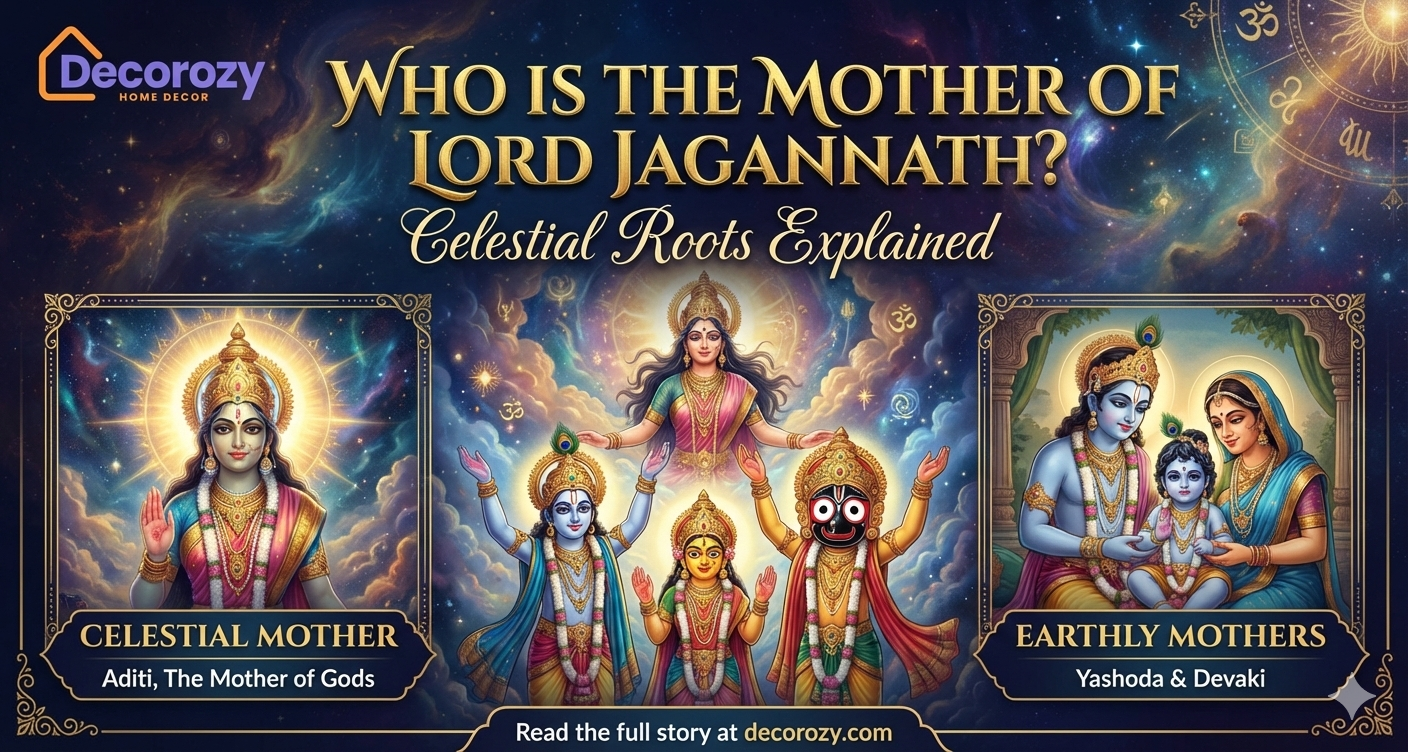
The mystery surrounding the divine lineage of the Lord of the Universe often leaves devotees in awe. While millions flock to Puri to witness the grand Rath Yatra, a central question remains: Who is the mother of Lord Jagannath?
Quick Answer: Who is the Mother of Lord Jagannath?
According to the sacred traditions of the Puri Temple, Queen Gundicha is considered the earthly mother of Lord Jagannath. As the wife of King Indradyumna, her pure devotion led to the deity’s manifestation. Spiritually, Mother Devaki is his birth mother, while Yashoda is his foster mother.
Queen Gundicha: The Earthly Mother of Lord Jagannath
In the cultural heart of Odisha, Queen Gundicha holds an irreplaceable position. She was the queen consort of King Indradyumna, the legendary monarch credited with establishing the Jagannath Temple. Tradition holds that the deities were born “out of her body and soul” during a period of intense spiritual fervor.
The Queen is not merely a historical figure but a symbol of maternal devotion. Her faith was so profound that it acted as the catalyst for the divine intervention that brought Lord Jagannath into his wooden form (Daru Brahma). This connection makes the abstract divinity of the “Lord of the World” feel deeply personal and relatable to human experience.
The Significance of the Gundicha Temple in Puri
The relationship between the deity and his mother is most visible during the annual Rath Yatra. During this festival, Lord Jagannath, along with siblings Balabhadra and Subhadra, leaves the main temple to visit the Gundicha Temple.
- The Natal Home: The journey to the Gundicha Temple is symbolic of the Lord returning to his birth home or his mother’s abode.
- A Week of Honor: For nine days, the deities reside at this garden house, where special rituals are performed to honor the Queen’s role in the divine saga.
- Universal Brotherhood: This tradition highlights the interplay between the celestial and the mortal, showing that even the Supreme Being honors the bond of motherhood.
Understanding the Mother of Lord Jagannath in Vedic Context
While Queen Gundicha is the “mortal mother” in the Puri tradition, the identity of the mother of Lord Jagannath expands when viewing him as an avatar of Lord Krishna.
- Mother Devaki: As Lord Jagannath is a form of Krishna, Devaki is recognized as his biological mother.
- Mother Yashoda: The childlike features of the idol—the large, innocent eyes and round face—are often said to reflect the Vatsalya Rasa (parental love) experienced by Yashoda in Vrindavan.
- The Shakti Connection: In the complex theology of the Puri temple, Lord Jagannath is also inextricably linked to Vimala Devi. Some scholars suggest that the installation of Goddess Subhadra represents the integration of Shaktism into the Vaishnavite tradition.
Conclusion: A Legacy of Devotion
The story of the mother of Lord Jagannath is a beautiful tapestry woven from royal history and celestial mystery. Whether through the lens of Queen Gundicha’s earthly sacrifice or Devaki’s divine role, the message remains the same: the Divine manifests in response to pure-hearted fervor.
By preserving these stories, we keep the rich heritage of the Jagannath tradition alive for future generations.
Are you looking to bring the blessings of the Lord into your home? Explore our collection of handcrafted idols and start your spiritual journey today!
FAQ: People Also Ask
1. Is Subhadra the mother of Lord Jagannath? No, Subhadra is the younger sister of Lord Jagannath and Lord Balabhadra. They are worshipped together as a “Holy Triad,” representing universal brotherhood and the sacred syllables of “AUM.”
2. Why does Lord Jagannath go to the Gundicha Temple? Lord Jagannath visits the Gundicha Temple during Rath Yatra to honor Queen Gundicha, his foster mother in the Puri tradition. This journey symbolizes a return to his roots and his affection for his devotees.
3. What is the significance of the wood used for the idols? The idols are made from special Neem wood known as Daru. This choice is rooted in the concept of Daru Brahma, signifying that the formless God has taken a physical, wooden form to be accessible to humanity.
Would you like me to help you draft a social media caption to promote this blog post?