Complete Gods of Hinduism List and Meaning: A Decorozy Guide
Delving into the spiritual world of India reveals a vibrant, colorful, and deeply profound culture. If you are searching for a comprehensive gods of Hinduism list and meaning, you have arrived at the perfect place.
Our beautifully structured guide at Decorozy.com breaks down these attractive and divine figures clearly. We aim to help you understand the rich tapestry of ancient Eastern philosophy.
Quick Answer: The gods of Hinduism list and meaning centers around Brahman, the ultimate, formless reality. Major deities include the Trimurti—Brahma (Creator), Vishnu (Preserver), and Shiva (Destroyer). Each god represents specific cosmic functions, virtues, and profound spiritual paths within the ancient Vedic tradition.
Understanding the Primary Gods of Hinduism List and Meaning
To truly appreciate the deep roots of Indian religion, we must explore its major mythological figures. Every comprehensive gods of Hinduism list and meaning begins with the supreme cosmic trinity.
These Indian gods manage the ongoing, eternal cycle of cosmic creation, preservation, and ultimate dissolution. Understanding their unique roles helps us grasp the very foundation of Hindu divinity.
When you study these divine figures, you uncover a colorful world of moral lessons and spiritual guidance. They offer an incredibly attractive framework for living a balanced, purposeful life.
The Trimurti: Essential Gods of Hinduism List and Meaning
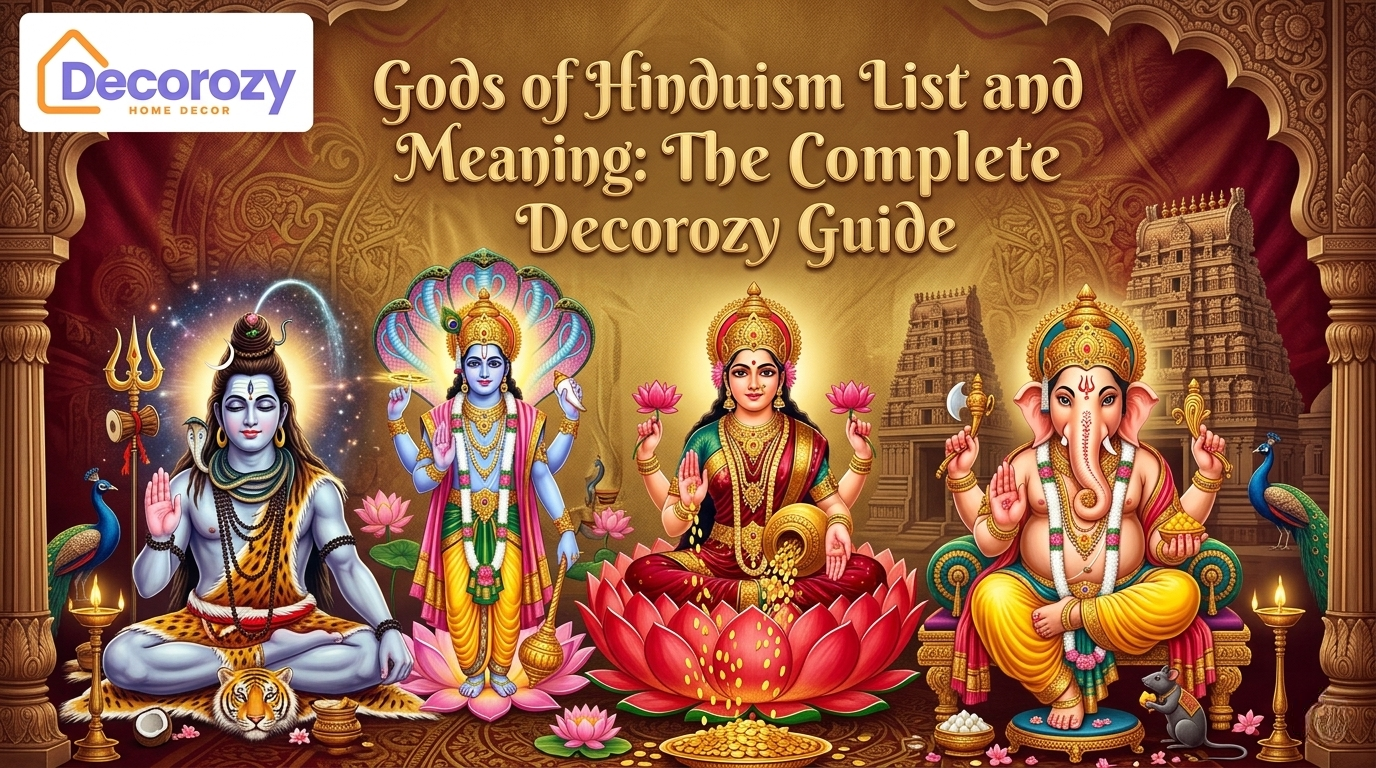
The concept of the Trimurti is absolutely central to understanding the universe’s ultimate rhythm. Our gods of Hinduism list and meaning proudly highlights Brahma, Vishnu, and Shiva as pillars of reality.
Brahma is revered as the cosmic creator, famously depicted emerging gracefully from a blooming lotus flower. Although rarely worshipped in daily household rituals, his role in birthing the universe remains absolute.
Vishnu acts as the ultimate preserver, a beautifully vibrant deity who descends as avatars to restore cosmic balance. His various incarnations, like Rama and Krishna, are among the most beloved and celebrated Hindu gods.
Shiva represents the vital, transformative force of destruction and profound spiritual awakening. Without his attractive, powerful cosmic dance, the universe cannot successfully make way for new creation.
Prominent Female Hindu Deities and Their Significance
You simply cannot study all Hindu gods without deeply honoring the powerful, radiant female deities. Known collectively as Devi or Shakti, these goddesses bring vibrant, colorful energy to the ancient pantheon.
Saraswati is the elegant goddess of knowledge, music, fine arts, and profound academic wisdom. She actively guides students, musicians, and creatives alike toward brilliant intellectual enlightenment.
Lakshmi stands as the radiantly attractive goddess of wealth, good fortune, and deep earthly prosperity. She is the divine consort of Vishnu, actively maintaining cosmic harmony and abundance alongside him.
Parvati, Durga, and Kali beautifully represent the various nurturing and fierce aspects of the supreme cosmic mother. They fiercely protect their devoted followers and destroy negative, evil forces across all universal realms.
Who Created All Hindu Gods? Unveiling Cosmic Origins
A frequent, thought-provoking question among spiritual seekers is: who created all Hindu gods? The profound answer lies within the ancient, deeply mystical texts of the Vedas and Upanishads.
In undeniable truth, every single deity is a direct manifestation of “Brahman,” the supreme cosmic energy. Brahman is the ultimate, infinite source from which all god forms miraculously emerge.
Therefore, when asking who created all Hindu gods, understand they are simply reflections of one boundless truth. They take on colorful, highly attractive forms so the human mind can easily comprehend the infinite.
The Symbolism Behind All Hindu Gods Names
Beyond the primary cosmic trinity, a complete directory of all Hindu gods names is incredibly vast and beautiful. Many regional, highly specific deities lovingly protect local towns, unique professions, and natural elements.
Ganesha, the highly attractive elephant-headed deity, is universally revered as the supreme remover of massive obstacles. He is always honored first in any important ritual, business venture, or new beginning.
Hanuman, the mighty monkey god, stands as the ultimate symbol of immense strength, devotion, and unwavering loyalty. His awe-inspiring tales in the Ramayana continue to inspire millions of dedicated followers daily.
Each name carries a deep linguistic and spiritual vibration, designed to elevate the human consciousness. Chanting these powerful names is a highly respected practice within traditional Hindu divinity.
The Ten Avatars of Vishnu Explained
To fully grasp the gods of Hinduism list and meaning, one must examine the fascinating concept of avatars. Whenever the world is threatened by darkness, Vishnu incarnates to save humanity and restore order.
These ten incarnations, known as the Dashavatara, beautifully showcase the evolution of life and human consciousness. They range from Matsya, the giant fish, to Kalki, the highly anticipated future warrior.
Krishna, the eighth beautiful avatar, delivered the Bhagavad Gita, a cornerstone text of profound Indian philosophy. Rama, the seventh avatar, exemplifies the absolute ideal of duty, honor, and righteous living.
These heroic figures are foundational to understanding how Hindu deities interact directly with the human world. Their epic stories are vibrant, highly attractive, and filled with timeless moral instruction.
Integrating Hindu Divinity into Your Space
Learning about these deeply spiritual figures offers a highly colorful and attractive worldview. Their vibrant imagery and profound symbolism make for incredibly inspiring home decor choices.
Many interior design enthusiasts beautifully incorporate statues of Ganesha or paintings of Lakshmi into their spaces. These elements invite incredibly positive, abundant, and peaceful energy into your modern daily life.
Let Decorozy.com continuously guide you further into these deeply rich cultural aesthetics. Embracing the divine artistry of these spiritual figures profoundly enhances our understanding of the world!
FAQ Schema
- Question 1: How many gods are there in Hinduism?
- Answer: While traditional texts often mention 330 million deities, these are largely symbolic manifestations of one supreme, formless reality known as Brahman. The core pantheon primarily consists of the Trimurti, the Tridevi, and their various divine avatars.
- Question 2: Who is the most powerful Hindu god?
- Answer: Hinduism does not strictly rank deities, as they all ultimately represent the exact same infinite cosmic reality. However, Shiva, Vishnu, and the Goddess Devi (Shakti) are widely worshipped as supreme, all-powerful beings by their respective dedicated sects.
- Question 3: Who created all Hindu gods?
- Answer: All Hindu gods are physical, form-based manifestations of Brahman, the ultimate, formless, and infinite cosmic energy. They were not created in a traditional, human sense, but rather emanated directly from this single, unified divine source.
Discover More
Enhance Your Home with Divine Décor
Explore our curated collection of premium God idols, handmade décor, traditional handicrafts, and pooja essentials. Discover timeless designs crafted to bring elegance, spirituality, and positivity into your home.
Looking for premium handcrafted home décor? Explore our bestselling collections trusted by customers across India.
Shop Premium Collection →