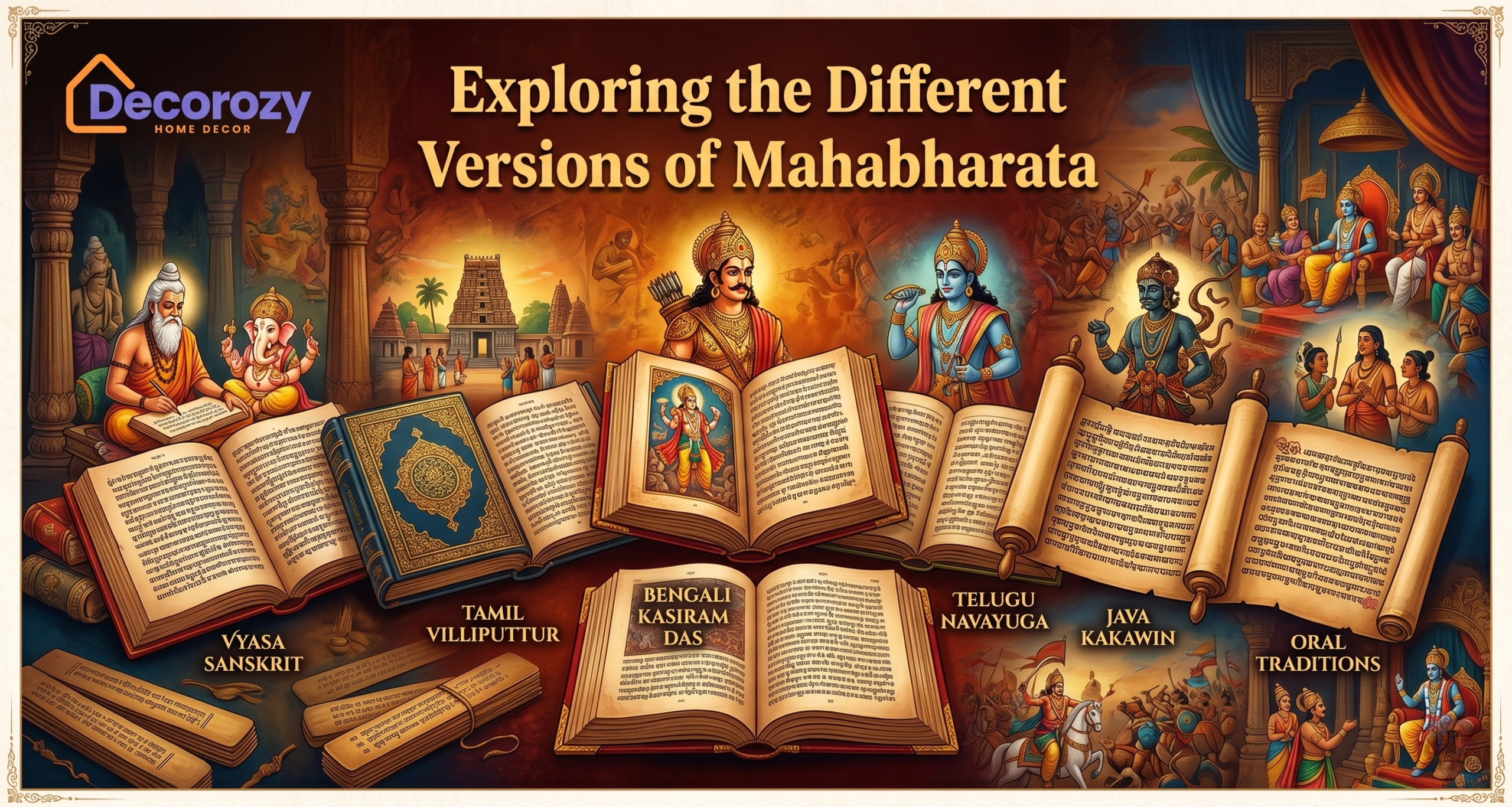
Exploring the Different Versions of Mahabharata: Ancient Aesthetics for Modern Home Decor
The epic saga of the Mahabharata is not just a tale of ancient kings and divine wars; it is a profound blueprint for cosmic balance and aesthetic harmony.
For centuries, this masterwork has influenced art, architecture, and spatial energy across the globe.
At Decorozy, we believe that understanding the different versions of Mahabharata can deeply enrich your approach to premium home decor.
By integrating the timeless themes of these ancient narratives, we can transform mundane living spaces into environments of profound tranquility and power.
Quick Answer: The different versions of Mahabharata, from Vyasa’s original Sanskrit text to regional adaptations like the Tamil Iramavataram variations or the Javanese Kakawin, share a core theme of cosmic balance (Dharma). Integrating these ancient principles of order, contrast, and narrative art into your home decor creates profound spatial harmony, aesthetic grounding, and a visually stunning environment.
Key Takeaways
Narrative Design: Different regional versions of the epic offer unique artistic motifs that can inspire bespoke wall decor and textiles.
Spatial Harmony: The core theme of Dharma (balance and order) translates directly into effective space planning and modern Vastu principles.
Global Influence: Indonesian and Southeast Asian variations of the epic introduce unique shadow-play (Wayang) aesthetics perfect for ambient lighting.
Premium Integration: Decorozy expertly bridges ancient wisdom with modern, space-saving luxury to elevate your home.
The Cultural Tapestry: Understanding the Core Variations
To truly harness the aesthetic power of the epic, we must first understand its vast, branching narrative tree.
The original text, attributed to Sage Vyasa, is a monumental work of classical Sanskrit that laid the foundation for Indian philosophy and art.
However, the story did not remain static; it traveled across mountains, rivers, and oceans, evolving with the cultures that embraced it.
Regional Masterpieces and Textural Inspiration
In India alone, the epic morphed into countless regional folk variations, each emphasizing different characters and aesthetic tones.
The Bhil Mahabharata, for example, grounds the epic in earthy, tribal motifs that beautifully inspire modern rustic decor.
Meanwhile, the Jain versions emphasize non-violence and asceticism, translating into minimalist, serene interior design choices.
The Southeast Asian Influence
Beyond the Indian subcontinent, the Mahabharata reached the shores of Indonesia, particularly Java and Bali.
Here, it birthed the highly stylized Wayang Kulit (shadow puppet) theater, an art form that deeply influences dramatic lighting and silhouette-based room decor.
These diverse interpretations provide a rich palette of design inspirations for the discerning homeowner.
The Content Mind Map
The Mahabharata Aesthetic Map
Vyasa’s Original Sanskrit
-> Inspires grand, symmetrical layouts and classical proportions.
-> Focuses on traditional materials like carved wood and brass.
Folk & Tribal Variations (e.g., Bhil)
-> Inspires earthy color palettes and terracotta textures.
-> Focuses on grounded, organic spatial energy.
Jain Interpretations
-> Inspires extreme minimalism and clutter-free zones.
-> Focuses on natural light and peaceful, meditative corners.
Southeast Asian (Javanese/Balinese)
-> Inspires dramatic ambient lighting and shadow play.
-> Focuses on intricate latticework and dark wood contrasts.
Comparative Aesthetics: How Narratives Influence Design
Understanding the distinct flavors of these versions allows us to curate highly specific moods within different rooms of your home.
Epic Version
Origin/Culture
Core Aesthetic Theme
Modern Decor Application
Recommended Decorozy Asset
The Critical Edition
Pan-Indian (Sanskrit)
Classical Symmetry, Grandeur
Formal living rooms, balanced seating, large focal artworks.
Expert Implementation: Translating Epic Narratives into Modern Decor
Transforming literary variations into physical space requires a master’s touch.
It is not about turning your home into a museum, but rather extracting the emotional and spatial essence of these tales.
Here is how you can apply the diverse themes of the Mahabharata to modern interior design, ensuring your space remains premium and functional.
The Concept of Indraprastha: The Illusion of Grandeur
One of the most famous architectural marvels in the Mahabharata is the palace of Indraprastha, built by the architect Mayasura.
The palace was renowned for its optical illusions, where water looked like solid ground and solid ground looked like water.
In modern interior design, especially in small apartments, we use similar principles to create the illusion of vast space.
Mastering Mirrors and Reflective Surfaces
Just as Indraprastha played with perception, you can strategically place large, premium mirrors from Decorozy to double the visual depth of a room.
Using high-gloss floor finishes or reflective ceiling panels can draw the eye upward and outward.
This is highly effective in compact living environments, making a small room feel like a grand hall.
The Kurukshetra Contrast: Balancing Dark and Light
The grand war of Kurukshetra is a study in absolute contrast: light versus dark, order versus chaos.
In the realm of home decor, applying this high-contrast philosophy yields incredibly striking results.
A room that perfectly balances deep, moody hues with brilliant, luminous accents feels both dramatic and anchored.
Implementing the Bold Aesthetic
Consider a living room with dark charcoal or indigo accent walls, representing the intensity of the epic’s climax.
Offset this darkness with brilliant gold or brass accents—perhaps a striking Decorozy chandelier or metallic wall sconces.
This deliberate juxtaposition creates a dynamic energy that keeps the space visually engaging without being overwhelming.
The Forest Exile (Vanavas): Bringing Nature Indoors
A significant portion of the epic takes place during the Pandavas’ twelve-year exile in the forest.
This phase represents a return to nature, grounding, and spiritual reset.
For modern urban dwellers, incorporating the “Vanavas” aesthetic means embracing biophilic design principles.
Cultivating an Organic Sanctuary
To achieve this, blur the lines between indoors and outdoors.
Use expansive windows, raw wood finishes, and an abundance of indoor plants positioned in elegant Decorozy planters.
Earthy tones like moss green, terracotta, and sandy beige will transform a stressful city apartment into a tranquil woodland retreat.
Wayang Kulit: The Art of Dramatic Lighting
Taking a cue from the Indonesian versions of the epic, the shadow puppet theater (Wayang) teaches us the profound impact of indirect lighting.
It proves that what you leave in the shadows is just as important as what you illuminate.
Proper lighting design can completely alter the emotional resonance of a room.
Crafting Silhouette and Shadow
Instead of relying on harsh overhead lights, layer your illumination.
Use intricately carved screens or patterned lampshades from Decorozy to cast beautiful, moving shadows against blank walls.
This creates a deeply intimate, mysterious, and luxurious atmosphere, perfect for evening entertainment or relaxation.
Dharma and Spatial Organization: The Minimalist Approach
At its heart, the Mahabharata is a discourse on Dharma—the universal principle of order, duty, and balance.
When applied to interior architecture, Dharma is the ultimate argument for decluttering and purposeful organization.
A chaotic, messy room represents Adharma (imbalance), which disrupts mental peace.
Functional Beauty and Hidden Storage
To maintain Dharma in your home, every object must have a purpose and a place.
Utilize Decorozy’s smart, space-saving furniture with hidden storage compartments.
By keeping surfaces clear and ensuring a logical flow of movement through the room, you align your physical space with the cosmic order of the ancient texts.
The Psychological Impact of Narrative Decor
Why does framing your interior design around ancient narratives work so effectively?
Humans are fundamentally wired for storytelling; we respond deeply to spaces that have a conceptual backbone.
When your decor choices are rooted in the diverse versions of the Mahabharata, your home gains a silent, powerful resonance.
Creating Conversation Spaces
A living room designed around the vibrant contrasts of the Tamil street theater traditions naturally becomes a hub of energy.
The bold colors and dynamic layouts encourage lively conversation and social interaction.
It is the perfect setting for hosting guests and showcasing your unique aesthetic sensibilities.
Designing Zones of Introspection
Conversely, a bedroom styled after the Jain interpretations of the epic will prioritize profound silence and minimalism.
Soft, muted tones, luxurious but simple Decorozy linens, and an absence of visual clutter create a sanctuary for rest.
This deliberate zoning ensures that your home caters to all aspects of your daily life.
Elevating Your Brand Aesthetic with Decorozy
Whether you are drawn to the opulent grandeur of the original Sanskrit epic or the earthy textures of folk adaptations, execution is key.
Achieving a premium look requires high-quality materials, impeccable craftsmanship, and an eye for detail.
This is where your partnership with Decorozy becomes essential.
Sourcing the Right Elements
We specialize in curating home decor pieces that perfectly bridge the gap between historical weight and modern elegance.
From intricately designed wall art that subtly references epic motifs to sleek, modern furniture that provides structural balance.
Decorozy is your premier destination for infusing your living spaces with legendary aesthetic power.
A Cohesive Vision
Do not simply buy disparate items; curate a cohesive vision.
Use the different versions of the Mahabharata as your conceptual guide to select rugs, lighting, and centerpieces that speak the same visual language.
With Decorozy’s extensive catalog, building a harmonious, narrative-driven home has never been easier or more luxurious.
Frequently Asked Questions (FAQs)
Q1: How can I incorporate the Mahabharata theme into a small apartment without it looking cluttered? A: Focus on the minimalist principles found in Jain adaptations or the “Vanavas” (forest exile) aesthetic. Use a few high-impact, narrative-inspired pieces from Decorozy—like a single piece of striking wall art or a carved room divider—while keeping the rest of the space clean, uncluttered, and organized with smart storage.
Q2: Which colors are best for a bedroom inspired by these ancient texts? A: For a bedroom, draw inspiration from the themes of peace and grounding. Opt for earthy, organic tones inspired by the forest exile narratives—soft sage greens, muted terracottas, and warm sandy beiges. Pair these with high-quality, breathable textiles from Decorozy for ultimate tranquility.
Q3: Does narrative-driven design work with modern, minimalist furniture? A: Absolutely. The contrast between sleek, modern furniture and rich, culturally significant decor pieces is incredibly striking. A minimalist Decorozy sofa serves as the perfect neutral canvas to highlight a beautifully patterned, epic-inspired rug or an intricate, shadow-casting floor lamp.
Q4: How do the Indonesian versions of the epic influence interior lighting? A: The Javanese and Balinese interpretations, famous for their Wayang Kulit shadow puppetry, emphasize the beauty of silhouettes and indirect light. You can replicate this premium look by using patterned lampshades, backlit wall panels, and warm ambient lighting to create depth and drama in any room.
Q5: Can I mix different regional aesthetics of the Mahabharata in one house? A: Yes, but it is best to assign different themes to different zones. Let the vibrant energy of the South Indian variations inspire your living and entertainment areas, while the minimalist, serene interpretations guide the design of your bedrooms and meditation spaces for perfect spatial harmony.
Discover More
Enhance Your Home with Divine Décor
Explore our curated collection of premium God idols, handmade décor, traditional handicrafts, and pooja essentials. Discover timeless designs crafted to bring elegance, spirituality, and positivity into your home.