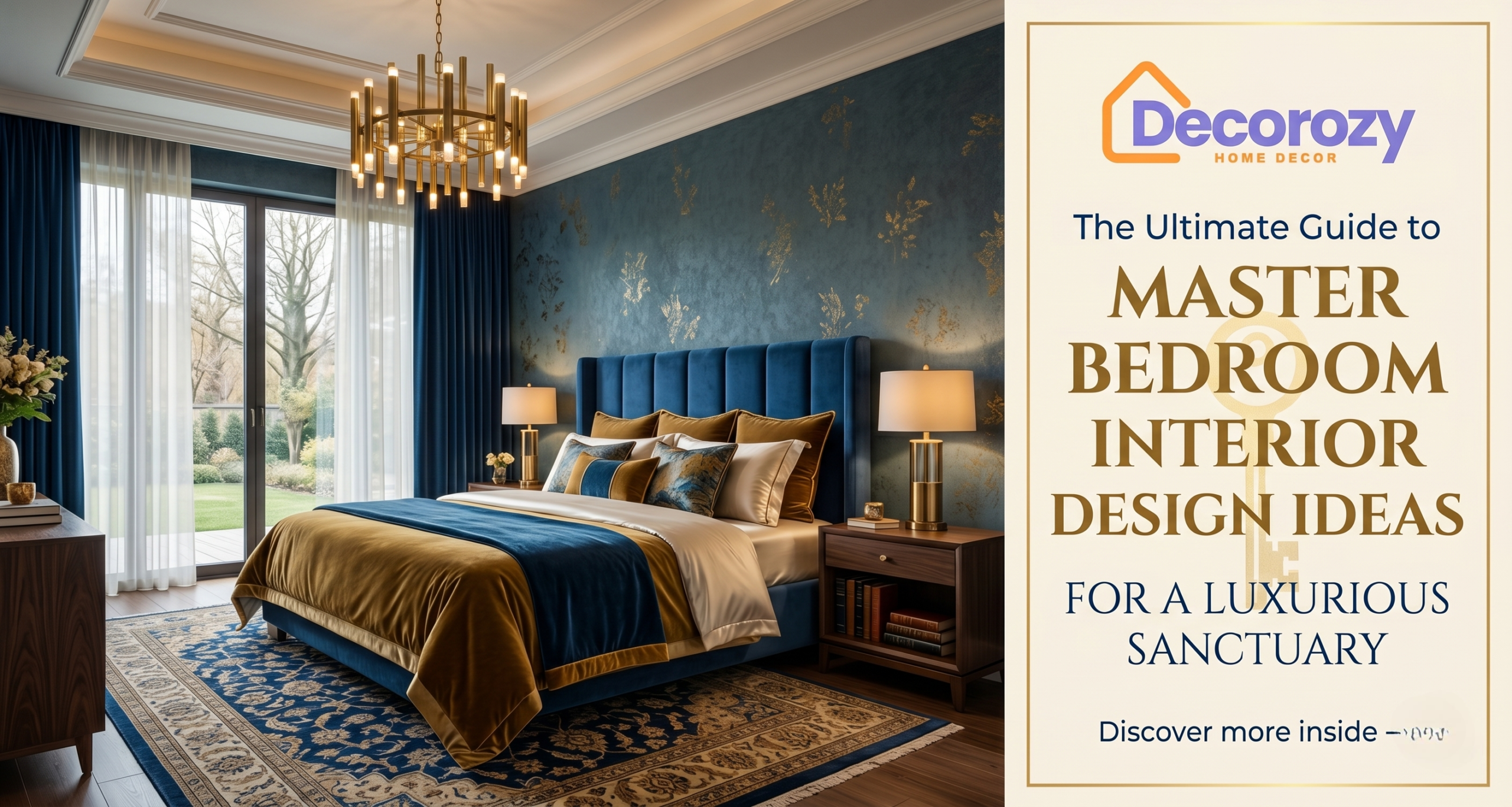
The Ultimate Guide to Master Bedroom Interior Design Ideas for a Luxurious Sanctuary
Transforming your sleeping space into a personalized haven is the ultimate goal of premium home curation. Your master bedroom is more than just a place to rest; it is the ultimate sanctuary where daily stress dissolves and rejuvenation begins. At Decorozy, we understand that achieving this balance requires a delicate fusion of architectural awareness, premium materials, and intentional aesthetics.
Designing this space demands an understanding of spatial dynamics, light layering, and textural harmony. When executed correctly, master bedroom interior design ideas elevate your daily routine from mundane to magnificent. We believe that every element, from the tactile sensation of your rug to the ambient glow of your wall sconces, must serve a functional and aesthetic purpose.
This comprehensive guide will walk you through the most advanced, expert-level strategies for redesigning your primary suite. Whether you are building from scratch or renovating an existing layout, these insights will help you craft a room that mirrors the sophistication of a five-star luxury hotel, deeply rooted in the Decorozy standard of living.
Quick Answer: The most effective master bedroom interior design ideas focus on spatial harmony, blending a calming color palette with functional furniture placement. By prioritizing layered lighting, high-quality textiles, acoustic control, and curated premium decor, you can instantly transform an ordinary room into a luxurious, restorative personal sanctuary.
Key Takeaways
Establish a focal point, typically the bed and headboard wall, to anchor the entire room’s design narrative.
Implement a three-tiered lighting strategy (ambient, task, and accent) to control mood and functionality.
Leverage Decorozy’s premium decorative accents to inject personality without cluttering the spatial flow.
Prioritize tactile comfort through high-thread-count linens, plush area rugs, and textured wall treatments.
Optimize storage solutions to maintain a minimalist, visually quiet environment essential for deep sleep.
The Foundation of Modern Master Bedroom Interior Design Ideas
The foundation of any successful interior design project begins with understanding the spatial geometry of the room. Before selecting paint colors or purchasing furniture, you must analyze the architectural bones of your master bedroom. Traffic flow is paramount; a well-designed room allows for at least 30 to 36 inches of clearance around the sides and foot of the bed.
Once the layout is optimized, the focus shifts to creating a cohesive visual language. This involves selecting a design aesthetic—whether it be modern, transitional, minimalist, or classic elegance—and adhering to its principles consistently. Every piece of furniture, wall treatment, and decorative accessory must communicate with one another to build a unified atmosphere.
Color psychology plays an outsized role in the bedroom. Because the primary function of the room is rest, interior experts universally recommend leaning toward soothing, low-arousal colors. However, “calming” does not mean “boring.” Deep, moody tones can be just as relaxing as airy neutrals when paired with the right lighting and reflective surfaces.
The Content Mind Map
Master Bedroom Ecosystem
Spatial Planning -> Anchor the bed on the longest uninterrupted wall; maintain 36-inch pathways.
Color & Psychology -> Utilize low-chroma hues like sage, muted navy, or warm taupe for a restorative biometric response.
Lighting Architecture -> Combine ceiling ambient fixtures with bedside task sconces and architectural LED accents.
Tactile Layering -> Mix matte woods, soft linens, bouclé upholstery, and brushed metal hardware for sensory depth.
Curated Decor -> Integrate Decorozy statement pieces, such as sculptural vases and abstract wall art, to finalize the aesthetic.
Comparative Analysis of Master Bedroom Styles
Choosing the right aesthetic direction is crucial. Below is a definitive comparison of the most popular and enduring design styles for premium master suites.
To truly master your bedroom interior, you must look beyond basic furniture placement and delve into the granular details of environmental design. True luxury is felt just as much as it is seen. The following sections break down the advanced tactics used by top-tier interior architects to create world-class sleeping quarters.
Perfecting the Color Palette and Wall Treatments
The walls of your master bedroom act as the canvas for your entire design. While flat paint is standard, modern design demands texture. Consider installing a bespoke accent wall behind the bed using fluted wood paneling, grasscloth wallpaper, or a Venetian plaster finish. These materials absorb light beautifully and add immense depth to the room.
When selecting paint, consider the room’s natural light exposure. North-facing rooms benefit from warm undertones to counteract the cool, bluish natural light. Conversely, south-facing rooms can handle cooler tones like crisp grays and crisp blues, as they receive ample warm sunlight throughout the day.
Never underestimate the ceiling—often referred to as the “fifth wall.” Painting the ceiling a shade lighter or darker than the walls, or applying a subtle wallpaper, can dramatically alter the perception of space. A dark ceiling can make a large, cavernous room feel intimate, while a high-gloss reflective ceiling can bounce light and expand a smaller footprint.
Masterful Lighting Design: The Three-Tier System
Lighting is the most powerful tool in an interior designer’s arsenal. A single overhead light is the enemy of a relaxing bedroom. Instead, you must implement a three-tiered lighting system. First is ambient lighting, which provides general illumination. This is typically achieved through recessed ceiling lights on dimmer switches or a central statement chandelier.
The second tier is task lighting, essential for reading or getting dressed. Bedside lighting has evolved from standard table lamps to hardwired wall sconces or low-hanging pendant lights. This not only looks highly bespoke but also frees up valuable surface area on your nightstands for Decorozy decorative accents or your current reading material.
The third tier is accent lighting, which creates mood and highlights architectural features. Think LED strip lighting installed beneath a floating bed frame to create a cinematic glow, or picture lights illuminating premium artwork. Always ensure your bedroom bulbs are in the 2700K to 3000K color temperature range for a warm, inviting, and sleep-inducing glow.
The Art of Textile Layering and Bedding
Your bed is the undeniable focal point of the master suite, and how you dress it dictates the room’s entire vibe. High-end design dictates a layered approach. Start with foundational linens—percale cotton for a crisp, cool feel, or sateen for a silky, warmer touch.
Introduce a duvet or coverlet that introduces subtle texture. Fold it down halfway to reveal the contrasting sheets beneath. At the foot of the bed, drape a chunky knit throw or a faux fur blanket to add an inviting, lived-in aesthetic. This visual weight anchors the bed and makes it look immensely plush.
Window treatments are equally critical for both aesthetics and sleep hygiene. Layering is key here as well. Install blackout roller shades mounted inside the window frame for total darkness, paired with floor-to-ceiling sheer curtains on the outside. The sheers soften the room’s edges and filter harsh daytime sunlight, maintaining privacy without sacrificing natural light.
Flooring Solutions and Rug Placement
The first thing your feet touch in the morning sets the tone for the day. Hardwood flooring remains the gold standard for luxury master bedrooms due to its timeless appeal and ease of cleaning. Wide-plank European oak or deep walnut finishes provide a stunning contrast to soft bedroom textiles.
However, hardwood must be softened with a generously sized area rug. The rule of thumb for master bedrooms is that the rug should be large enough so that at least two feet of it extends beyond the sides and foot of the bed. For a King-size bed, a 9×12 foot rug is generally the minimum required to achieve this luxurious, expansive look.
If you prefer wall-to-wall carpeting for maximum acoustic dampening and warmth, opt for low-VOC, high-pile wool or a subtle patterned nylon. A premium carpet pad is non-negotiable; the pad is what actually provides the plush, cloud-like feeling beneath your feet, elevating the entire experience of the space.
Optimizing Storage for Visual Silence
Clutter is the ultimate destroyer of a relaxing atmosphere. A master bedroom must feature robust, invisible storage solutions. Free-standing wardrobes are being replaced by custom-built closets that blend seamlessly into the room’s architecture. Consider floor-to-ceiling cabinetry painted in the same color as the walls to camouflage its bulk.
Your nightstands should also prioritize closed storage. While open-shelf nightstands look beautiful in magazines, they quickly become dumping grounds for cords, books, and daily detritus. Opt for nightstands with at least two deep drawers to keep the visual field clean and unobstructed.
Utilize the space at the foot of the bed. A stylish upholstered storage bench or a sleek modern trunk provides the perfect place to store extra blankets and decorative pillows at night. This keeps the room tidy and adds another layer of seating and texture to the spatial layout.
Integrating Technology Seamlessly
The modern master bedroom must accommodate technology without letting it dominate the aesthetic. If you choose to have a television in the room, consider a frame TV that doubles as high-end artwork when not in use, or house it within a custom motorized cabinet at the foot of the bed that conceals the screen entirely.
Smart home integration should be invisible but highly functional. Install motorized window shades that sync with your morning alarm, allowing natural light to wake you gently. Use smart dimmers and voice-controlled lighting systems to adjust the room’s ambiance from your bed without needing to reach for multiple switches.
Ensure your nightstands are equipped with integrated charging stations or recessed outlets hidden behind the furniture. Managing cord clutter is a hallmark of high-end design. The goal is to have all the conveniences of modern living completely hidden from plain sight, maintaining the illusion of an unplugged, analog retreat.
The Final Layer: Curating with Decorozy
Once the architecture, furniture, and textiles are in place, the final step is personalization through curated decor. This is where your master bedroom truly gains its soul. Avoid over-accessorizing; instead, select a few large, impactful pieces. A single, oversized piece of abstract art above the bed is far more sophisticated than a clutter of small frames.
Incorporate natural elements to breathe life into the room. A tall, sculptural indoor tree in a dark corner or a trailing plant on a high shelf adds vital organic energy. House these botanicals in premium, minimalist planters from the Decorozy collection to maintain aesthetic consistency.
Finally, style your surfaces with intention. A beautiful ceramic vase from Decorozy on the dresser, a curated stack of hardcover design books, and a signature scented candle on a marble tray are all you need. These small, deliberate touches transform a beautifully furnished room into a deeply personal, flawlessly designed sanctuary.
Are you ready to elevate your sleeping space into a realm of unmatched luxury? Explore our exclusive collection of premium home accents, transformative wall art, and elegant decor pieces designed to bring your ultimate master bedroom vision to life. Visit Decorozy.com today to shop the looks featured in this guide and start curating your personal sanctuary.
Frequently Asked Questions (FAQs)
Q1: What is the best color to paint a master bedroom for better sleep? A: The best colors for promoting sleep are cool, muted tones like soft sage green, dusty blue, and warm charcoal gray. These colors lower heart rates and reduce visual stimulation, signaling to your brain that it is time to rest.
Q2: How large should a rug be under a king-size bed? A: For a king-size bed, you should use at least a 9×12 foot rug. This ensures that the rug extends beautifully outward from the sides and the foot of the bed, providing a soft landing space when you step out in the morning.
Q3: What are the essential lighting fixtures needed in a master bedroom? A: A well-designed bedroom requires three types of lighting: ambient (a central ceiling fixture or recessed lights), task (bedside reading sconces or lamps), and accent (subtle LED strips or picture lights to highlight decor).
Q4: How can I make a small master bedroom look more luxurious and spacious? A: To make a small bedroom feel larger, use a monochromatic color scheme, install floor-to-ceiling window drapery to draw the eye upward, and utilize large mirrors to bounce natural light around the room. Minimize floor clutter by using wall-mounted floating nightstands.
Q5: Where should a mirror be placed in a master bedroom? A: A full-length mirror is best placed near the closet or dressing area for practical use. However, to maximize light and space, position a large framed mirror opposite or adjacent to a window to reflect the outdoors and amplify the room’s natural light.