How to Set Up a Puja Room for Positive Energy: The Ultimate Decorozy Guide
Creating a spiritual sanctuary within your home is more than just a design choice; it is an invitation for peace, prosperity, and divine tranquility.
At Decorozy, we understand that modern home interior design must flawlessly blend with ancient wisdom to create a balanced living environment.
Learning how to set up a puja room for positive energy is the cornerstone of cultivating a harmonious, spiritually uplifting household.
Quick Answer: To set up a puja room for positive energy, locate it in the northeast corner (Ishan Vanya) of your home. Use light, soothing wall colors, ensure idols face the east or west, and incorporate natural brass, wood, and fresh flowers to maximize spiritual vibrations and Vastu compliance.
Key Takeaways
Optimal Placement: The Northeast direction is highly sacred and ideal for cultivating uninterrupted divine energy.
Color Psychology: Soft whites, pale yellows, and light blues reflect light and promote deep meditative states.
Material Matters: Use natural materials like teak wood, marble, and premium Decorozy brassware to ground the space.
Clutter-Free Zone: Positive energy flows best in minimalist, highly organized spaces devoid of unnecessary items.
The Vastu Shastra Foundations of a Sacred Space
When considering how to set up a puja room for positive energy, Vastu Shastra provides the ultimate architectural roadmap.
The ancient Indian science of architecture emphasizes the alignment of spatial geometry with natural forces.
By following these energetic principles, your puja room becomes a powerful vortex of positive vibrations.
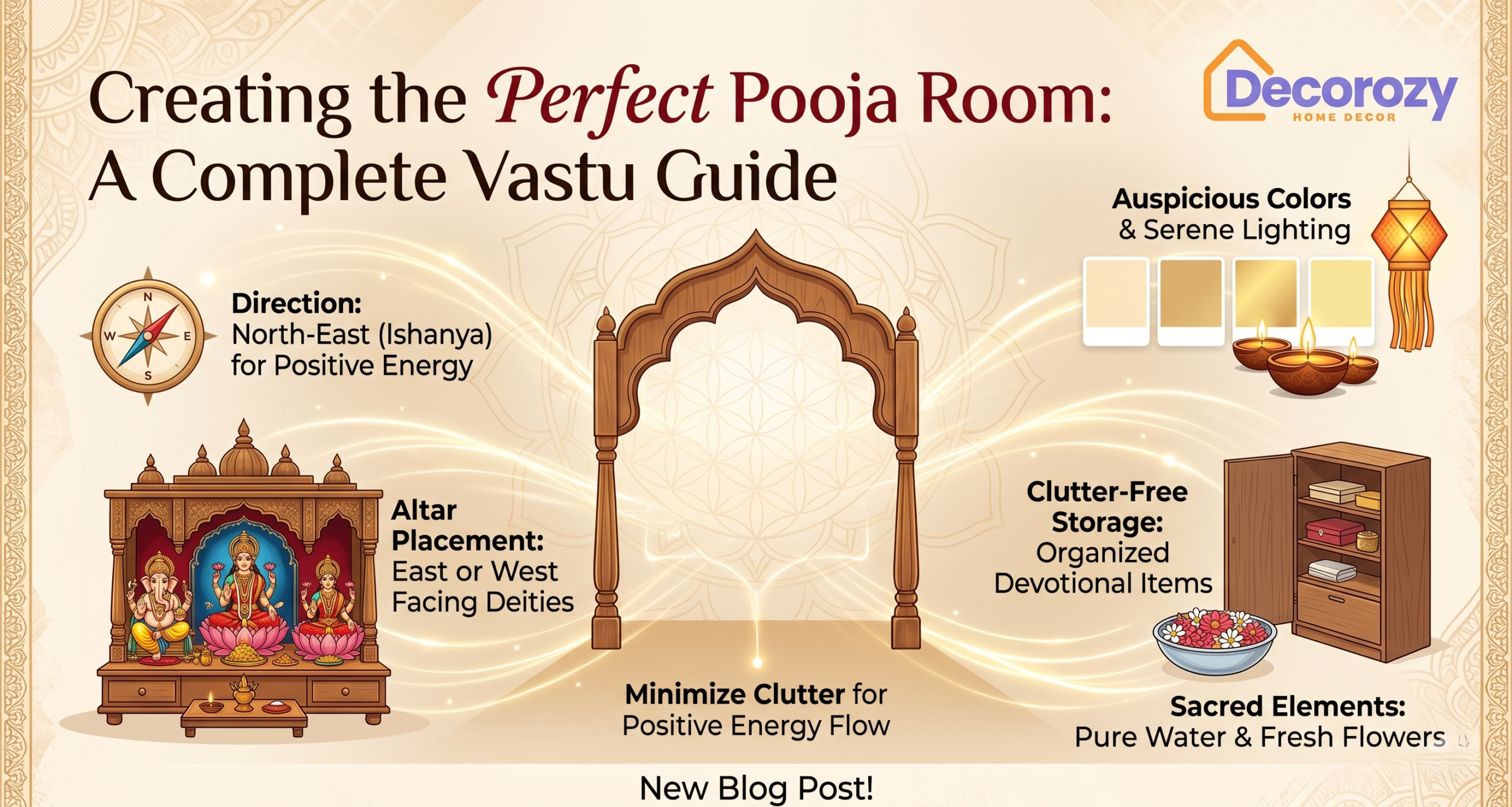
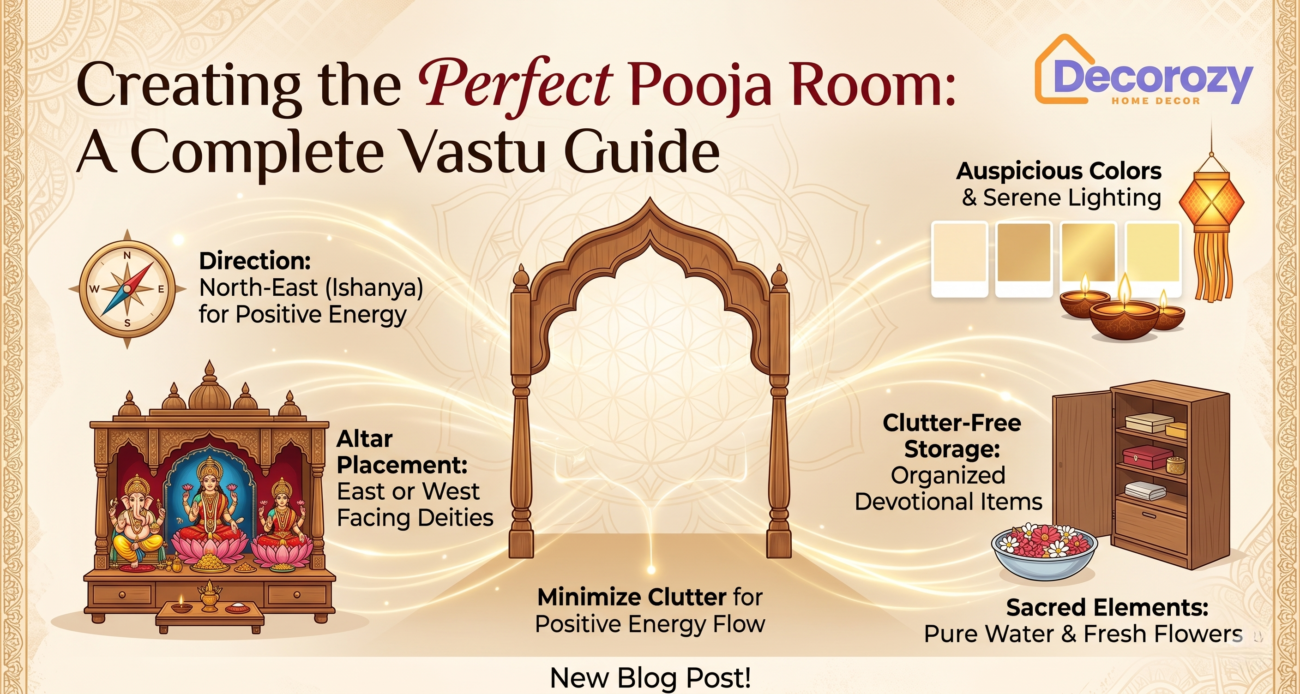
The most critical factor is the directional alignment of the room itself.
The Northeast corner, governed by the element of water and ruled by Lord Shiva, is universally recommended for spiritual practices.
If the Northeast is unavailable, the East or North directions serve as powerful alternatives for your Decorozy-styled mandir.
The Content Mind Map
Puja Room Positive Energy Optimization
Directional Alignment -> Northeast (Ishan Vanya) for maximum spiritual resonance.
Idol Placement -> Elevated above the ground, facing East or West, never facing each other.
Color Palette -> Soft, reflective colors; avoiding dark shades like black or heavy grey.
Lighting & Aura -> Soft ambient lighting combined with traditional oil lamps (diyas).
Choosing the right materials and colors is vital for reflecting light and maintaining a high vibrational frequency in your sacred space.
Feature / Element
Highly Recommended (High Energy)
Avoid (Energy Draining)
Decorozy Styling Tip
Base Material
Teak Wood, Sheesham, White Marble
Glass, Iron, Synthetic Plastics
Use carved wooden mandirs with marble bases.
Wall Colors
White, Cream, Pale Yellow, Light Blue
Black, Dark Brown, Deep Red
Opt for soft pastel wallpapers with subtle mandalas.
Lighting
Warm LEDs, Natural Sunlight, Brass Diyas
Harsh white fluorescent, Neon lights
Layer lighting with Decorozy brass pendant lamps.
Flooring
Marble, Natural Stone, Ceramic Tiles
Carpets (absorbs dust/energy), Dark Wood
Keep floors bare, using washable Decorozy cotton mats.
Expert Implementation: Idol Placement and Sacred Geometry
The physical placement of your deities dictates the flow of positive energy throughout your entire home.
Never place idols directly on the floor. They should be elevated on a wooden platform or marble slab.
Ensure that the idols are positioned a few inches away from the wall to allow energy to circulate freely around them.
When you sit to pray, you should ideally face the East or North to absorb the magnetic energies of the earth.
Consequently, the idols should be placed facing the West or South to meet your gaze harmoniously.
Furthermore, Vastu dictates that deities should never face each other, as this can create conflicting energy currents.
Avoid placing broken idols or torn pictures in the puja room, as they act as spiritual blockages.
Keep the idols proportionate to the room size; ideally, they should not exceed nine inches in height for a home mandir.
Designing the Doors and Threshold
The entrance to your puja room acts as a spiritual filter, keeping negative energy out.
Vastu highly recommends a two-door entry for the mandir, preferably made of high-quality wood.
Ensure the doors have a small threshold at the bottom; this physical barrier is believed to prevent crawling insects and ground-level negative energies from entering.
The doors should open outwards or fold smoothly, never scraping the floor or making creaking sounds.
The Role of Natural Elements
A true Decorozy aesthetic relies heavily on the integration of nature into modern home decor.
In a puja room, the five elements (Pancha Bhoota) must be represented to create total cosmic balance.
Fire is represented by the daily lighting of the diya, preferably using a heavy Decorozy brass lamp.
Water should be kept in a small copper or silver vessel, refreshed daily, to absorb negative ions.
Earth is represented by the fresh flowers and sandalwood paste offered to the deities.
Air is purified through the use of natural incense, dhoop, or pure camphor.
Finally, Space is honored by keeping the center of the puja room completely empty and open.
Harmonizing the Space with Decorozy Decor Solutions
Transforming a simple corner into a breathtaking spiritual haven requires the right decorative touch.
Begin by addressing the flooring and seating arrangements for your daily meditation.
Decorozy offers a premium range of handcrafted, breathable cotton floor mats (asans) designed specifically for long periods of sitting.
Avoid synthetic rugs, as they can interfere with the grounding of electromagnetic energies during your prayers.
For the walls, consider incorporating subtle, sacred geometry or subtle Om motifs in gold or silver finishes.
Wall decor for small puja rooms should be minimal; a beautifully framed, high-resolution canvas of your primary deity is sufficient.
Intelligent Storage for a Clutter-Free Mind
Clutter is the ultimate enemy of positive energy in any interior design scheme.
A puja room often accumulates old flowers, matchboxes, incense packets, and religious texts.
Implement smart, concealed storage solutions beneath the main mandir platform to house these items.
Decorozy’s custom wooden storage boxes are perfect for keeping raw materials out of sight while maintaining an elegant aesthetic.
Keep the sacred texts wrapped in clean, red or yellow silk cloths and stored respectfully on a higher shelf.
Ensure the dustbin is kept strictly outside the puja room boundaries.
The Importance of Sound and Acoustic Vibrations
Positive energy is carried through sound waves, making acoustic management crucial.
Hang a small, pure brass bell (Ghanti) at the entrance of the puja room.
Ringing the bell before entering clears the mind of worldly thoughts and disrupts stagnant energy in the room.
The sharp, resonant sound of a high-quality Decorozy bell creates an auspicious aura instantly.
You can also install a small, hidden Bluetooth speaker to softly play morning mantras or classical instrumental music.
What to Strictly Avoid in Your Puja Room
To preserve the sanctity and positive energy of your puja space, certain placements must be rigorously avoided.
Never set up a puja room under a staircase, as the heavy foot traffic overhead compresses the spiritual energy.
The mandir should not share a wall with a bathroom or be located directly opposite a toilet door.
If your home layout is restrictive, use heavy curtains or wooden partitions to create a distinct boundary.
Avoid keeping photos of deceased ancestors inside the main puja shrine; they should be placed on a separate wall, ideally facing South.
Do not use the puja room to store money, jewelry, or heavy household items, as this introduces materialistic anxiety into a spiritual zone.
The Decorozy Daily Cleansing Ritual
Setting up the room is only the first step; maintaining the positive energy requires daily dedication.
Start your morning by wiping the mandir surfaces with a clean, dedicated cloth dipped in water mixed with a pinch of turmeric or sea salt.
Remove all dried flowers and stale offerings from the previous day immediately.
Light a fresh cotton wick in your Decorozy brass diya using pure cow ghee or sesame oil.
The continuous, flickering light of the diya is considered the physical manifestation of divine presence and purity.
Burn high-quality, natural incense or sage to clear the air of any lingering low-frequency energies.
Elevate Your Spiritual Space with Decorozy
Creating a Vastu-compliant, aesthetically pleasing puja room transforms the entire atmosphere of your home.
By aligning with ancient directional wisdom and utilizing premium, natural materials, you invite lasting peace and prosperity.
Remember, the ultimate goal is to create a space that instantly calms your mind the moment you step into it.
Ready to upgrade your home’s spiritual center?
Explore the exclusive Decorozy collection of brassware, mandir decor, and premium seating mats today.
Visit Decorozy.com to discover elegant, space-saving solutions that perfectly blend modern living with timeless devotion.
Frequently Asked Questions (FAQs)
Q1: Which direction is best for a puja room according to Vastu? A: The Northeast direction (Ishan corner) is universally considered the most auspicious and powerful location for a puja room, as it is associated with spiritual growth and divine energy.
Q2: What colors should I paint my puja room? A: Opt for soothing, light-reflective colors such as pure white, cream, pale yellow, or soft light blue. Avoid dark, heavy colors like black, dark grey, or deep red.
Q3: Can I keep my puja room in the bedroom? A: It is generally not recommended to have a puja room in the master bedroom. If unavoidable due to space constraints, ensure it is in the Northeast corner and keep it covered with a curtain when not in use.
Q4: How should idols be placed in the mandir? A: Idols should be elevated on a platform, placed slightly away from the walls, and should ideally face West or South so that the worshipper faces East or North while praying.
Q5: What is the best material for a home mandir? A: Natural materials hold the highest energetic frequency. Teak wood, Sheesham wood, and high-quality marble are the best choices for constructing a sacred home mandir.