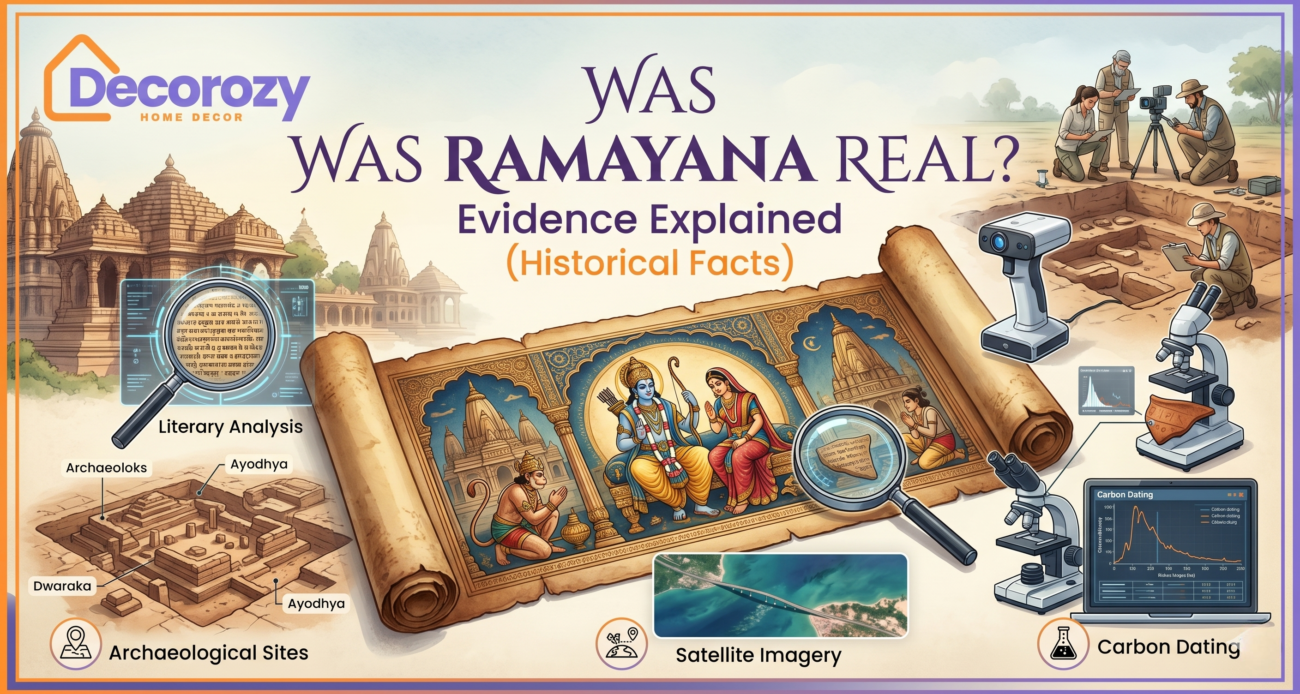
Was Ramayana Real? Evidence Explained by Historians
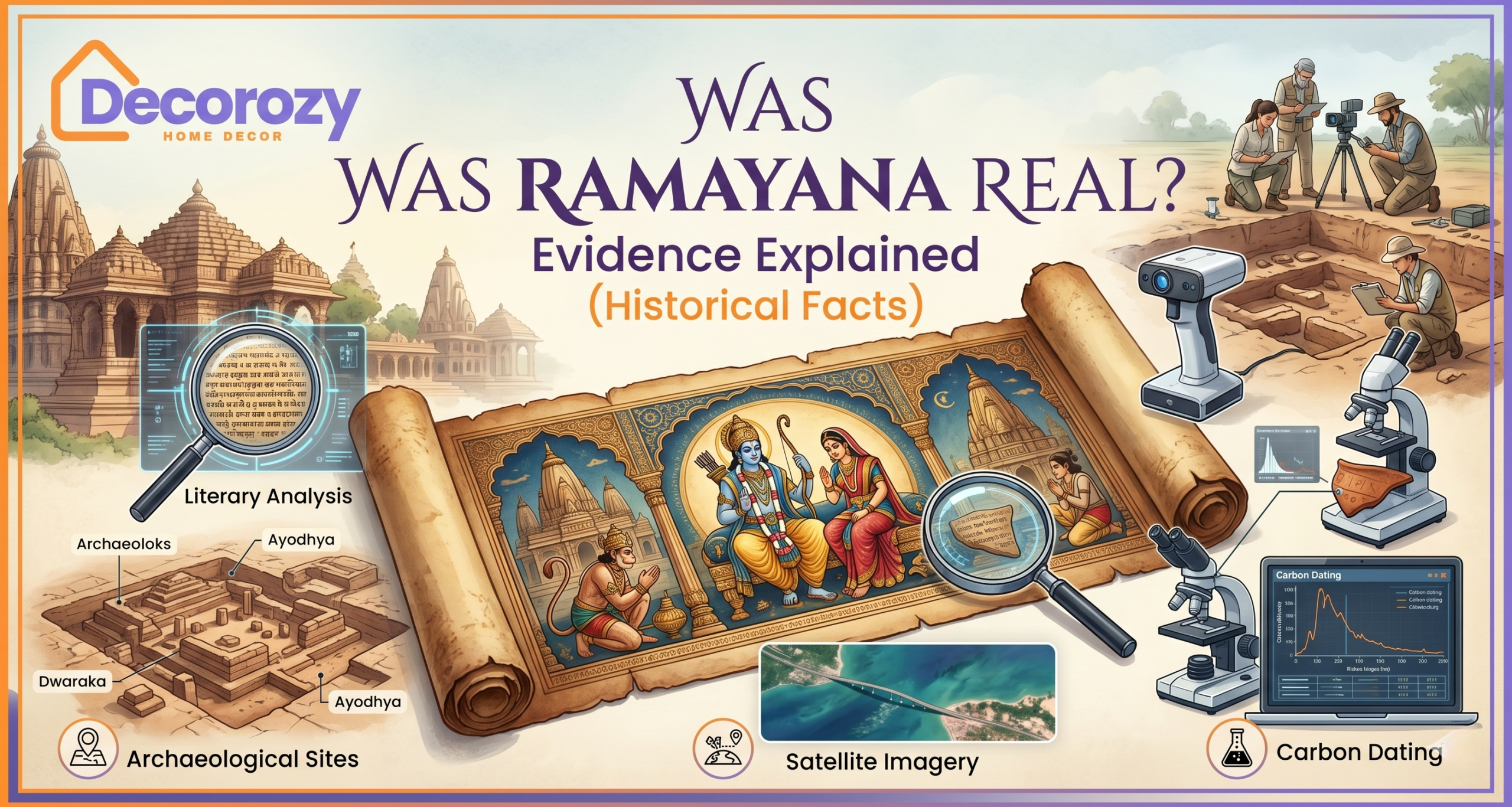
The epic of Lord Rama has shaped Indian culture, values, and literature for thousands of years. But modern historians, scientists, and scholars constantly debate its factual accuracy. If you are asking, was Ramayana real? Evidence explained below will shed light on the truth behind this ancient Indian epic.
Quick Answer: The historicity of the Ramayana is supported by a mix of archaeological findings, astronomical dating, and precise geographical mapping. While some supernatural elements are mythological additions, physical evidence like the Ayodhya excavations and the Ram Setu structure suggest the core epic is based on real historical events.
Was Ramayana Real? Evidence Explained Through Archaeology
The most compelling clues regarding the historicity of the Ramayana come from modern archaeological excavations. The Archaeological Survey of India (ASI) has conducted extensive research across the subcontinent.
Former ASI Director B.B. Lal led major digs in Ayodhya, uncovering ancient brick pillar bases and cultural artifacts. These remnants date back centuries and suggest a large, sophisticated settlement.
These physical findings align remarkably well with the structural and civic descriptions mentioned in the original Valmiki Ramayana. They prove that Ayodhya was a flourishing ancient civilization.
Was Ramayana Real? Evidence Explained via Astronomical Dating
Beyond digging into the earth, researchers have looked to the stars to verify ancient Indian history. The Valmiki text contains incredibly precise records of planetary positions during key events.
Researchers using modern planetarium software have mapped these exact star constellations and eclipses. They discovered that these alignments are incredibly rare and mathematically accurate.
These astronomical markers indicate that the events of the Ramayana likely occurred around 5000 BCE. This proves the text was grounded in real-time observations, not just imagination.
Mapping the Epic: Geographical Evidence Uncovered
Valmiki’s ancient text provides a highly accurate geographical map of the Indian subcontinent. The route taken by Lord Rama during his exile matches real-world topography perfectly.
Locations explicitly mentioned, such as the Dandakaranya forest, Kishkindha, and the coastal regions of southern India, still exist today. Their descriptions in the epic match modern botanical and geological surveys.
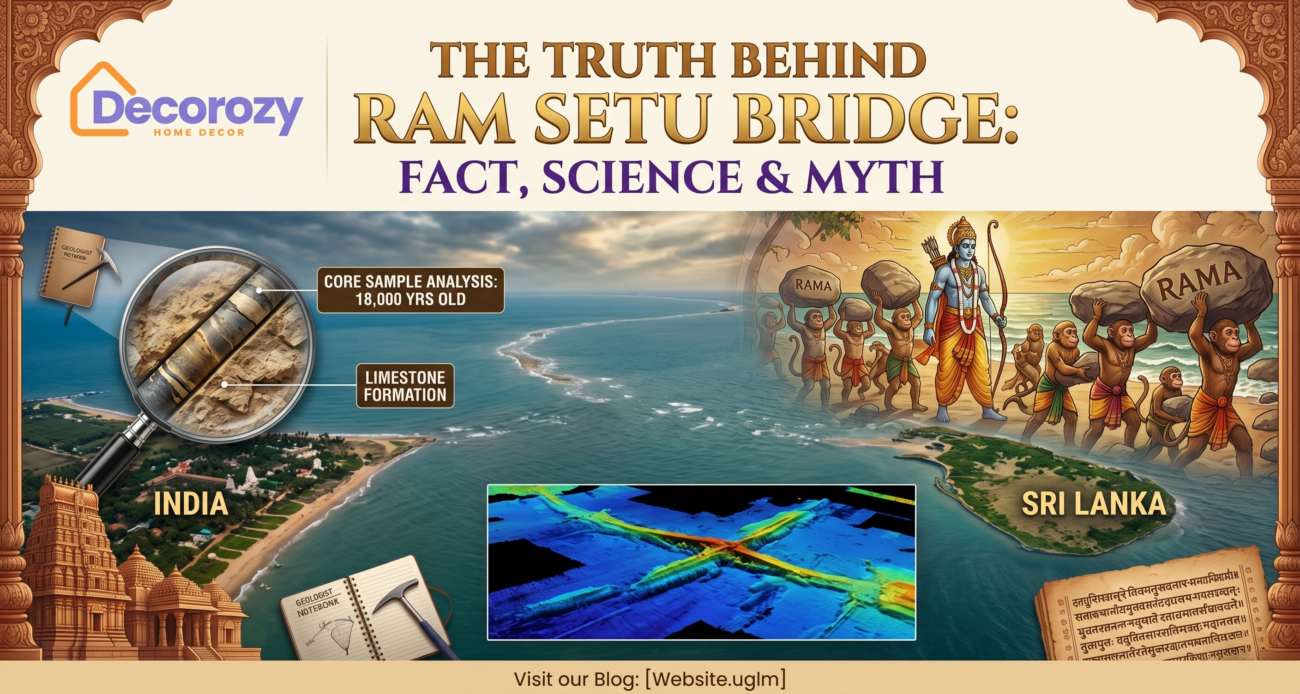
Furthermore, the limestone shoals of Ram Setu in the Palk Strait precisely match the bridge described in the narrative. Geological studies confirm these shoals have distinct, ancient physical characteristics.
The debate over the epic’s historical accuracy continues to evolve as science uncovers new data. While oral traditions added magical elements over centuries, the core geography, timelines, and structures remain highly credible. Discover more fascinating historical deep dives, lifestyle tips, and cultural insights right here at Decorozy.com!
FAQ Schema
- Question 1: Is there any scientific proof that the Ramayana happened?
- Answer: Yes, scientific proof includes astronomical dating of specific planetary alignments mentioned in the text. Additionally, geological mapping of Ram Setu reveals a chain of limestone shoals that perfectly matches the location of the epic’s bridge.
- Question 2: Did the Archaeological Survey of India find evidence in Ayodhya?
- Answer: Yes, ASI excavations in Ayodhya revealed ancient pillar bases, artifacts, and structural remains. These findings scientifically confirm the presence of a massive, ancient settlement dating back thousands of years.
- Question 3: Is present-day Sri Lanka the actual Lanka mentioned in the Ramayana?
- Answer: Modern researchers believe present-day Sri Lanka closely matches the geographical descriptions in the epic. Specific locations like Ashok Vatika and certain mountain terrains still hold botanical evidence aligning exactly with the ancient story.