Your living environment directly dictates your physical health and emotional well-being. If you constantly feel drained or stressed at home, your interior design choices might be the hidden culprit.
By strategically implementing home decor ideas for healthy living, you can turn any standard room into a restorative wellness sanctuary. Modern interior design goes far beyond mere aesthetics and visual appeal.
Today, smart design focuses on improving indoor air quality, supporting circadian rhythms, and reducing daily anxiety. Let us explore how to engineer your home for optimal health.
Quick Answer: Effective home decor ideas for healthy living focus on maximizing natural light, incorporating air-purifying indoor plants, utilizing non-toxic materials, and minimizing visual clutter. By integrating biophilic design and ergonomic furnishings, you create a stress-reducing environment that actively supports physical and mental wellness.
The Foundation of Home Decor Ideas for Healthy Living
A healthy home starts with the foundational elements of your space. Before adding decorative accents, evaluate the air flow and lighting in your primary living areas.
Stagnant air and poor lighting can lead to lethargy and disrupted sleep patterns. Prioritize opening windows daily to flush out indoor pollutants and introduce fresh oxygen.
You should also position heavy furniture away from HVAC vents. Proper air circulation prevents the buildup of mold, dust mites, and other harmful allergens that compromise respiratory health.
Furthermore, maximizing natural sunlight is absolutely crucial for your daily vitality. Natural light regulates your body’s internal clock, known as the circadian rhythm.
Implementing Home Decor Ideas for Healthy Living in Every Room
Applying home decor ideas for healthy living requires a tailored approach for different zones in your house. What works in a home office may not suit a bedroom environment.
In your bedroom, focus entirely on sleep hygiene and relaxation. Invest in blackout curtains to block artificial street lights, ensuring deep, uninterrupted REM sleep.
Transitioning to the living room, prioritize social connection and comfort. Arrange seating to encourage face-to-face conversation rather than pointing all furniture directly at a television screen.
For the home office, ergonomics take center stage for long-term physical health. An adjustable standing desk paired with a lumbar-supporting chair prevents chronic back pain and posture degradation.
Biophilic Design: Bringing Nature Indoors
Biophilic design is a revolutionary concept that connects human beings to the natural environment. Incorporating nature into your decor is a proven method for lowering cortisol levels.
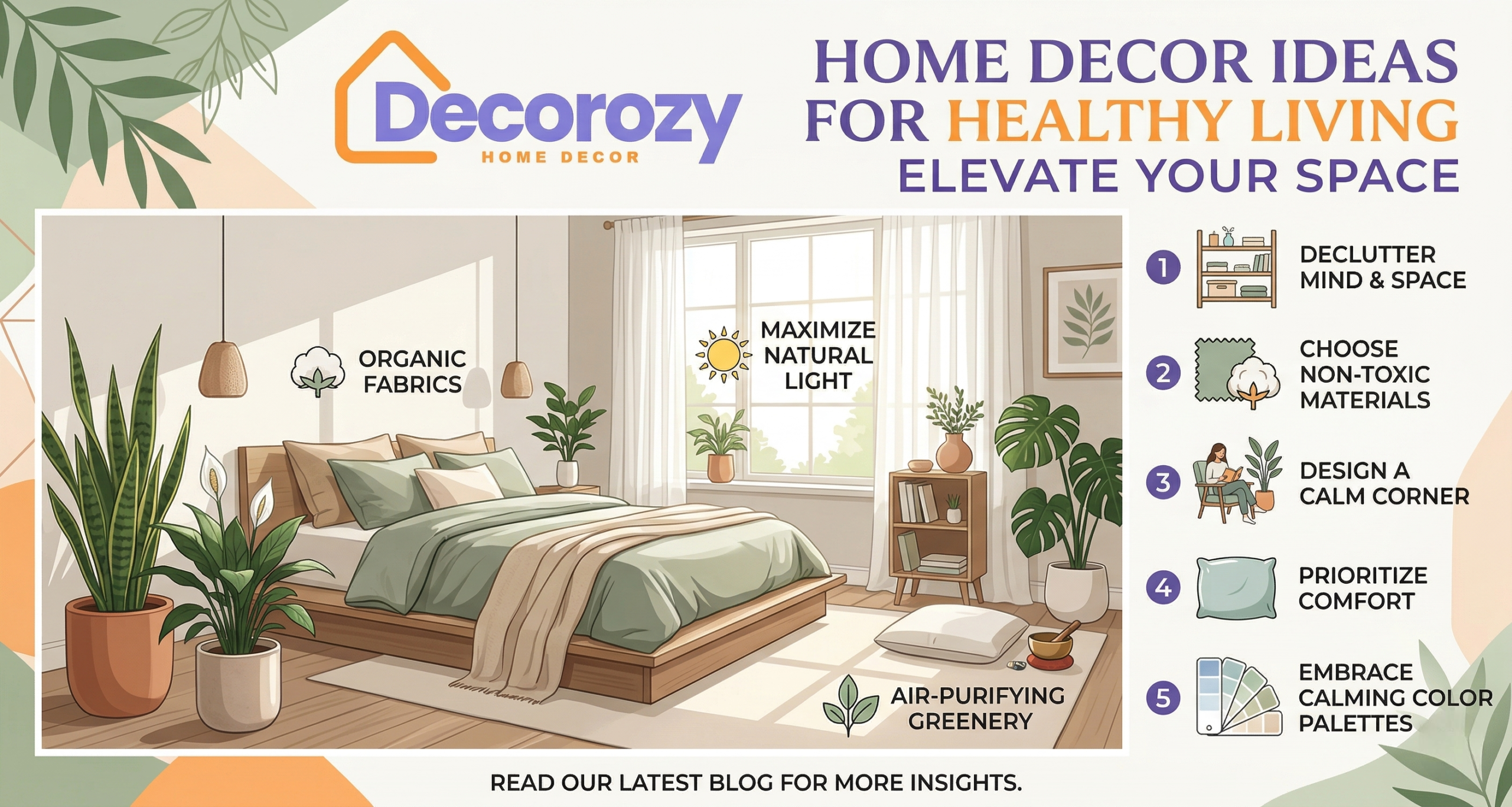
The easiest way to adopt this strategy is through indoor houseplants. Plants like the Snake Plant and Peace Lily actively filter volatile organic compounds (VOCs) from your indoor air.
If you lack a green thumb, consider utilizing natural textures instead. Integrating raw wood, bamboo, stone, and natural clay introduces an organic, grounding feel to your living space.
Even introducing water features, like a small tabletop fountain, provides soothing acoustic benefits. The sound of running water masks disruptive urban noises and promotes deep relaxation.
Choosing Non-Toxic Materials and Furnishings
Many conventional home furnishings silently off-gas toxic chemicals into your home for years. Formaldehyde and flame retardants are frequently hidden in sofas, carpets, and pressed-wood furniture.
To combat this, actively seek out organic and sustainable materials. Choose rugs made from natural fibers like wool, jute, or organic cotton instead of synthetic, chemical-treated materials.
When repainting a room, always select low-VOC or zero-VOC paint options. These eco-friendly paints eliminate the toxic fumes that cause headaches and trigger asthma symptoms.
Pay close attention to your bedding and upholstery as well. GOTS-certified organic linens ensure you are not absorbing pesticide residue through your skin while you sleep.
Color Psychology for Emotional Well-being
The color palette of your home significantly influences your daily mood and energy levels. High-contrast, saturated colors can overstimulate the brain and induce feelings of restlessness.
For a calming atmosphere, lean into muted, nature-inspired color schemes. Soft sage greens, dusty blues, and warm earth tones naturally lower the heart rate and calm the nervous system.
Save vibrant colors like red, orange, or bright yellow for small accent pieces. These energetic hues are best utilized in active spaces like the kitchen or a home gym.
By applying color psychology thoughtfully, you can passively manage your emotional state. A well-chosen color palette acts as a silent therapist in your home environment.
Decluttering: The Minimalist Approach to Stress
Visual clutter is directly linked to cognitive overload and chronic stress. When your eyes scan a messy room, your brain registers unfinished tasks, preventing true relaxation.
Adopt intentional minimalism by keeping only items that serve a distinct functional or emotional purpose. Hidden storage solutions, like ottomans with compartments, are essential for maintaining clean surfaces.
Regularly audit your possessions and donate items that no longer align with your lifestyle. A streamlined, organized home drastically reduces daily friction and decision fatigue.
Remember that open space is just as valuable as the furniture itself. Allowing rooms to breathe creates a sense of freedom, clarity, and peace within your home.
Your home should act as your personal battery charger, not a drain on your resources. By applying these science-backed strategies, you guarantee a healthier, happier lifestyle for you and your family. Explore more transformative design strategies and premium eco-friendly furnishings at Decorozy.com today!
FAQ Schema
- Question 1: How does interior design affect mental health?
- Answer: Interior design deeply impacts mental health by influencing mood, stress levels, and cognitive function. Elements like natural lighting, intentional color palettes, and decluttered spaces reduce anxiety and promote psychological comfort.
- Question 2: What are the best indoor plants for air purification?
- Answer: The best indoor plants for air purification include Spider Plants, Snake Plants, Peace Lilies, and Boston Ferns. These species are scientifically proven to absorb harmful toxins like formaldehyde and benzene from indoor air.
- Question 3: How can I make my bedroom healthier?
- Answer: Make your bedroom healthier by upgrading to an organic, non-toxic mattress, using blackout curtains to support natural circadian rhythms, and keeping electronics out of the room to reduce blue light exposure before sleep.