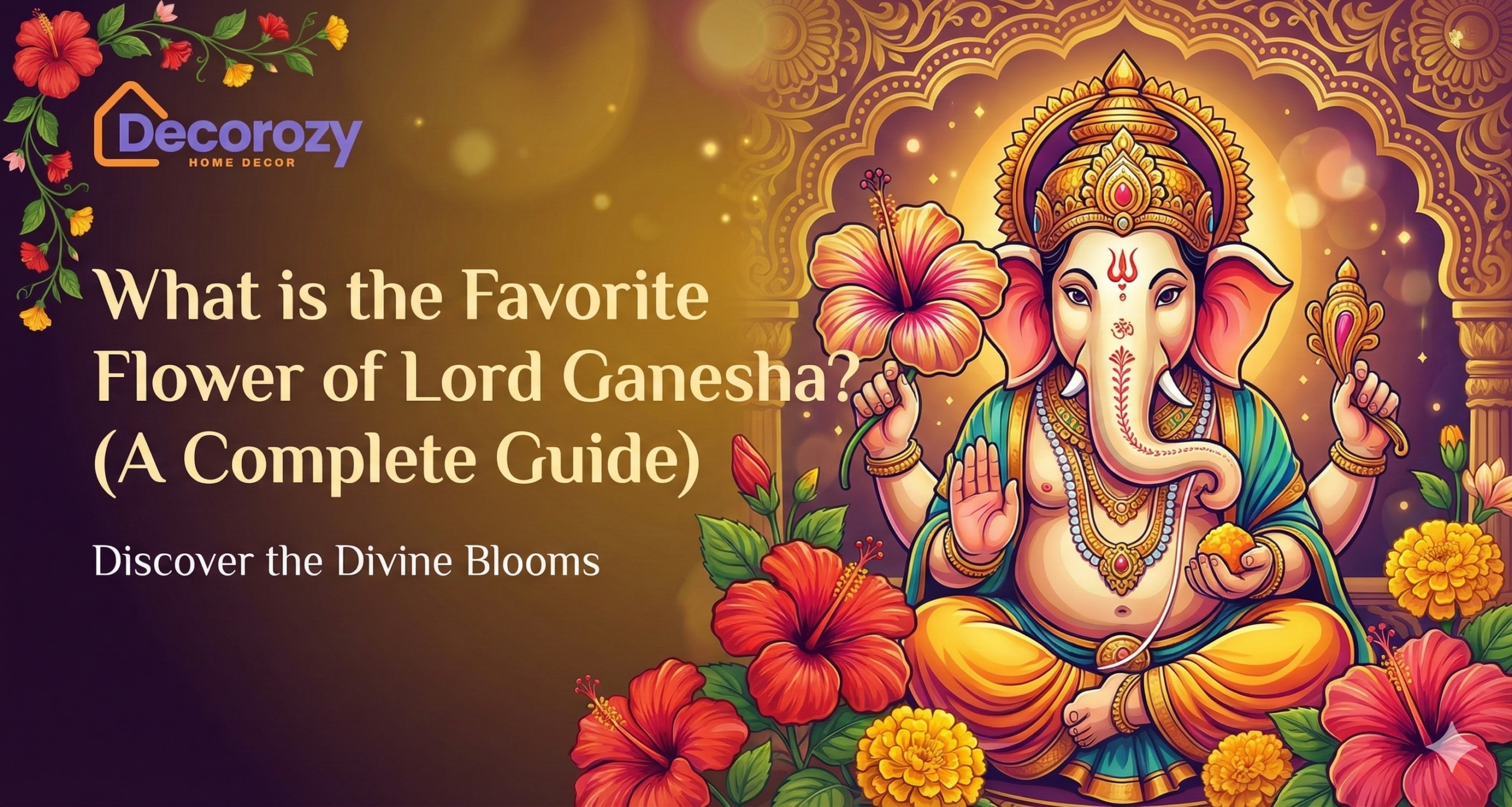
Flowers are the soul of any Hindu pooja, radiating positive spiritual energy and divine fragrance. When you prepare your pooja room, selecting the right offerings becomes paramount to your spiritual success.
Every deity resonates with specific cosmic vibrations, and offering the favorite flower of Lord Ganesha ensures your prayers reach him instantly. Devotees worldwide seek to understand which specific blooms please the remover of obstacles.
If you want to invite immense prosperity, health, and peace into your home, knowing exactly what to place at his feet is crucial. Let us explore the divine significance behind these beautiful botanical offerings.
Quick Answer: The absolute favorite flower of Lord Ganesha is the Red Hibiscus, also known as Japakusuma. Its vibrant red color symbolizes immense power, dynamic energy, and cosmic strength. Offering this sacred bloom during puja actively removes obstacles, attracts positive vibrations, and guarantees spiritual prosperity.
Understanding the Favorite Flower of Lord Ganesha: The Red Hibiscus
Lord Ganesha is the Pranava Swarupa, the physical incarnation of the primal cosmic sound AUM. Before commencing any spiritual or worldly endeavor, he is the first deity we invoke.
Red flowers are astrologically associated with the planet Mars and the Moon, carrying highly potent spiritual frequencies. Because of this powerful celestial connection, the red hibiscus stands unmatched as the favorite flower of Lord Ganesha.
In ancient Sanskrit texts, the hibiscus is revered as Japakusuma. Offering this radiant bloom is a definitive strategy for overall prosperity and the complete eradication of life’s daily obstacles.
When you adorn your Ganesha murti with fresh hibiscus, the petals act as spiritual conductors. They draw the specific sattwic (pure) energies of the deity directly into your household environment.
Benefits of Offering the Favorite Flower of Lord Ganesha
Presenting the favorite flower of Lord Ganesha is not merely a symbolic tradition; it is a highly calculated spiritual practice. The vibrant color and distinct scent actively draw the deity’s divine attention.
When you offer the red hibiscus with deep devotion and sacrifice, you immediately elevate the positive spiritual energies in your home. Lord Ganesha is easily pleased by this specific offering, responding with abundant blessings.
Devotees who consistently offer his preferred blooms report profound shifts in their personal and professional lives. These blessings often manifest as robust health, financial stability, and continuous success in complex endeavors.
Furthermore, integrating these brilliant red flowers into your daily rituals significantly enhances the visual divinity of your space. It transforms an ordinary room into a deeply energized, sacred sanctuary.
Detailed Analysis: Other Sacred Flowers for Ganesh Puja
While the hibiscus reigns supreme, several other sacred blooms carry immense spiritual weight when offered to Lord Ganesha. Utilizing a variety of these flowers creates a highly comprehensive and potent puja experience.
Marigold (Genda Phool): The yellow and saffron marigold is another powerful favorite. Its golden hue represents the sun’s energy, pure prosperity, and deep spiritual healing. Devotees offer thick marigold garlands to invite wealth and maintain good health.
Gokarna (Clitoria Ternatea): Also known as the blue pea, this vibrant blue flower is highly auspicious. It is specifically offered to Lord Ganesha by devotees seeking blessings for an early, successful marriage.
Parijata (Night-flowering Jasmine): Often called the heavenly bloom, Parijata flowers fall to the ground by dawn. Offering these highly fragrant, delicate flowers guarantees divine blessings and ensures that children achieve great success in life.
Sevanthi (Chrysanthemum): These vibrant yellow flowers are incredibly effective at neutralizing negative energies. Offering Sevanthi during Ganesh Chaturthi is a proven traditional method for banishing the evil eye and protecting your household.
Durva Grass (Bermuda Grass): No Ganesh puja is complete without Durva grass. Offering exactly 21 blades of this sacred grass balances cosmic vibrations, cools the deity’s energy, and is absolutely essential for removing deep-rooted life obstacles.
A Strict Warning on Tulsi: While highly revered in Hinduism, Tulsi (Holy Basil) must never be offered to Lord Ganesha. According to ancient scriptures, a mutual curse exists between them, making Tulsi an explicitly forbidden offering in Ganesh rituals.
Enhance your spiritual journey and create a mesmerizing divine space with premium pooja decor. Visit Decorozy.com today to discover our exclusive collection of spiritual home accessories and elevate your daily worship experience!
Section 3: FAQ Schema
- Question 1: Why does Lord Ganesha like the red hibiscus flower? Answer: Lord Ganesha loves the red hibiscus because its vibrant red color is astrologically associated with Mars and the Moon. The flower symbolizes immense power, dynamic energy, and cosmic strength, which perfectly aligns with his role as the remover of obstacles.
- Question 2: Which flowers should you never offer to Lord Ganesha? Answer: You must never offer Tulsi (Holy Basil) to Lord Ganesha. According to Hindu mythology, there is a mutual curse between Lord Ganesha and Tulsi, making it strictly forbidden for his puja. Flowers like Ketaki are also traditionally avoided.
- Question 3: Why is Durva grass essential for Ganesh Puja? Answer: Durva grass is essential because it balances cosmic vibrations and cools Lord Ganesha’s energy. Offering exactly 21 blades of Durva represents the purity of mind, body, and speech, and is highly effective at removing deep-rooted obstacles from your life.