Understanding Hinduism vs Other Religions: A Comparative Overview
When exploring global theology, the comparison of Hinduism vs other religions offers a fascinating glimpse into human spirituality. It reveals completely different approaches to life, the afterlife, and the divine.
Whether you are studying ancient philosophies or simply curious about global belief systems, understanding these differences is crucial. The way we perceive the divine shapes cultures, traditions, and even the way we design our living spaces.
Quick Answer: Hinduism is a decentralized, polytheistic, and pantheistic dharmic religion focused on the cyclical concepts of karma, dharma, and reincarnation. In stark contrast, Abrahamic faiths like Christianity and Islam are strictly monotheistic, relying on central texts, historical prophets, and a linear concept of time and salvation.
The Core Philosophy of Hinduism vs Other Religions
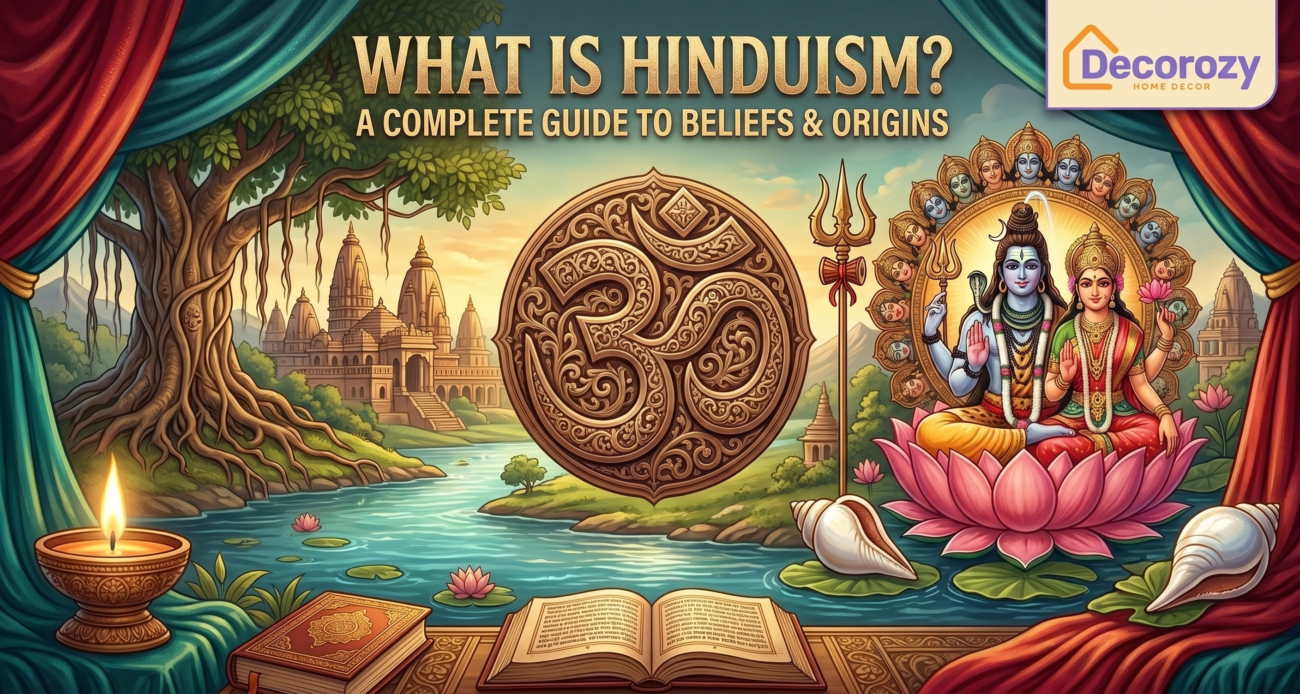
To grasp the true essence of spirituality worldwide, we must first define whether the correct term is the religion Hindu or Hinduism. Officially, the faith is known as Hinduism, while a practitioner is called a Hindu.
Hinduism stands apart because it does not trace its origins to a single founder. Instead, it is a synthesis of various Indian cultures and traditions. It is the oldest and largest of the dharmic religions, which also include Buddhism, Jainism, and Sikhism.
Unlike Abrahamic traditions, Hinduism embraces a pluralistic view of the divine. You can worship one deity, many deities, or the formless universe itself. This flexibility is rarely found when comparing Hinduism vs other religions that demand strict adherence to one specific doctrine.
The Landscape of Different Religions in India
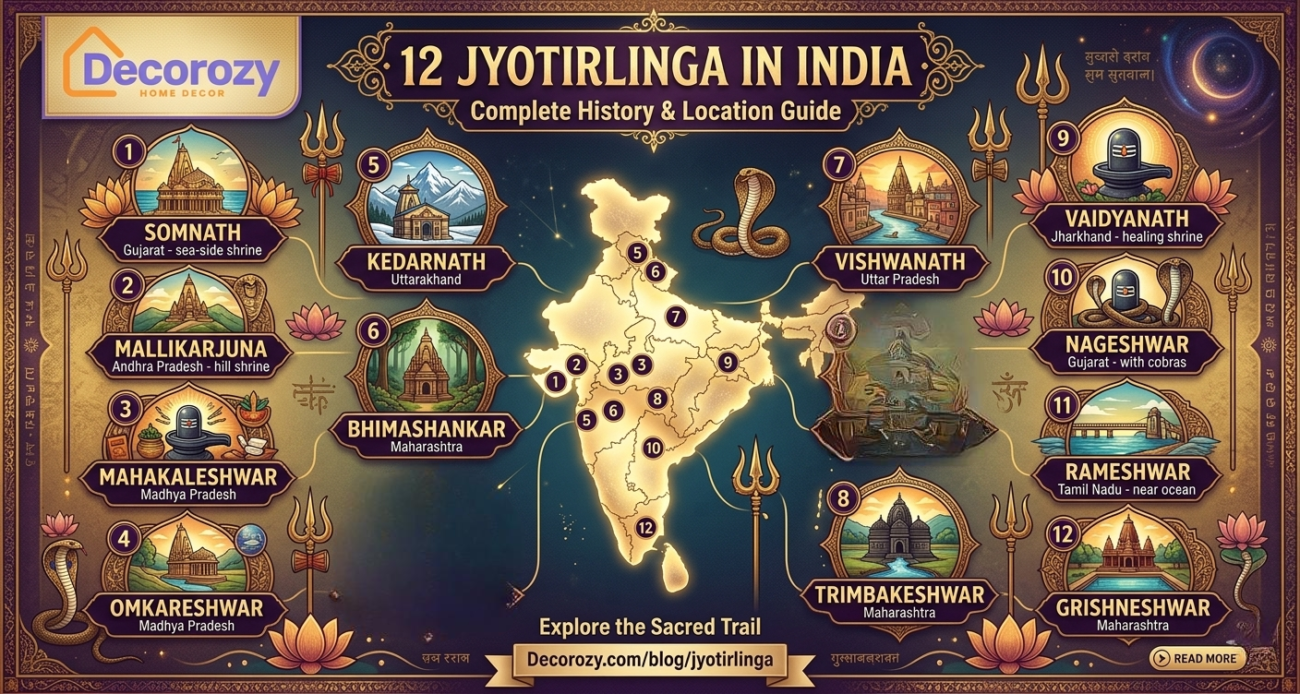
The dynamic of the Hindu religion in India is deeply intertwined with the nation’s history and daily life. India is a true melting pot of faith, showcasing a remarkable diversity of spiritual practices.
When you look at the different religions in India, Hinduism represents the majority, but it thrives alongside vibrant minority populations. The interactions between the Hindu Muslim Christian communities have profoundly shaped the region’s art, architecture, and cultural festivals.
Every major religion name in India carries its own distinct historical footprint. The peaceful, and sometimes complex, coexistence of these faiths makes the Indian subcontinent one of the most spiritually rich regions on earth.
Key Differences Between Hinduism and Christianity
When analyzing Hinduism and Christianity, the theological contrasts become incredibly clear. Christianity operates on a linear timeline: creation, a single earthly life, and eternal salvation or damnation.
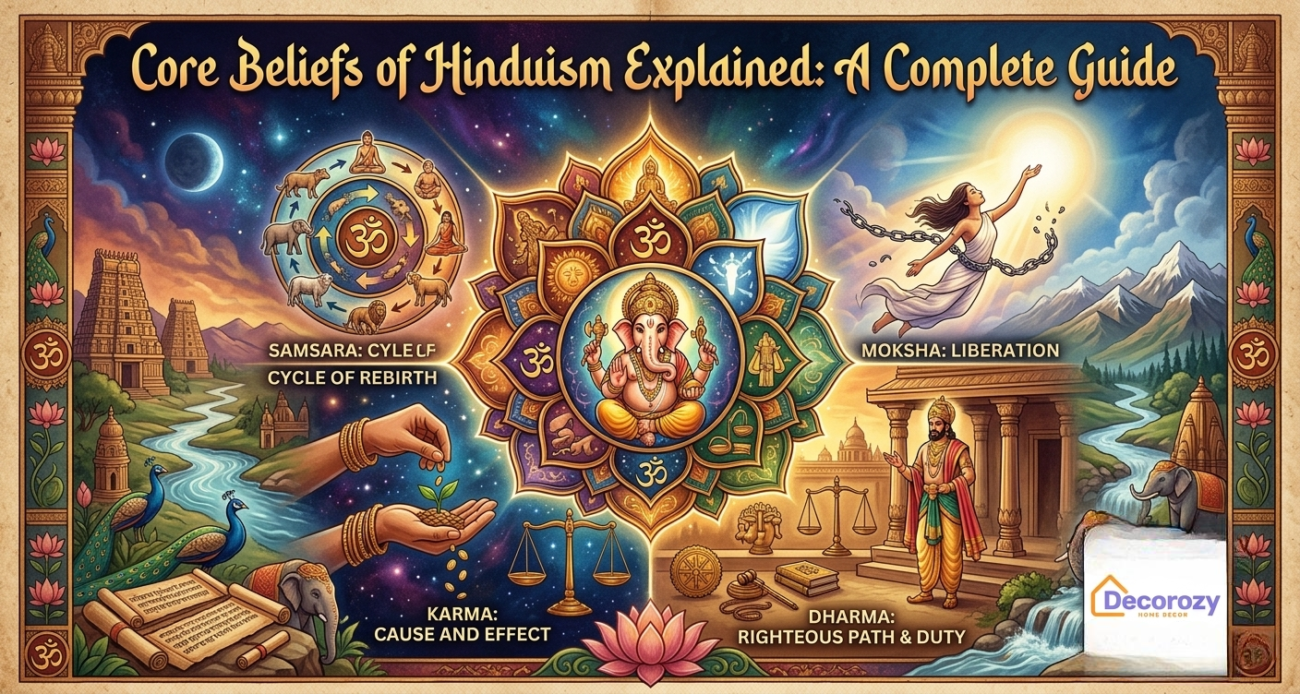
Hinduism, however, operates on a cyclical timeline. The soul experiences continuous reincarnation (samsara) until achieving ultimate liberation (moksha).
Furthermore, the Hindu Christian dialogue often centers on the nature of God. Christianity is strictly monotheistic, worshiping one God in three persons (the Trinity). Hinduism is broadly pantheistic and henotheistic, seeing the divine reality (Brahman) manifested in countless forms and deities.
The Cultural Impact on Lifestyle and Home
The comparison of Hinduism vs other religions goes far beyond ancient texts; it directly influences how we live today. Our spiritual beliefs shape our daily routines, our values, and the environments we cultivate.
For instance, the emphasis on peace, nature, and sacred geometry in dharmic religions often inspires mindful interior design. A dedicated space for reflection or prayer brings a sense of calm and purpose to a busy household.
Whether your inspiration comes from eastern philosophy or western traditions, creating a beautiful, serene home is a universal desire.
Bring harmony into your living space today. Explore our exclusive collections of calming, spiritually-inspired home aesthetics at Decorozy.com. Elevate your environment and turn your house into a true sanctuary of peace.
FAQ Schema
- Question 1: Is the correct term religion Hindu or Hinduism?
- Answer: The correct term for the religion itself is Hinduism. The term “Hindu” refers to a person who practices Hinduism or identifies with its cultural and spiritual traditions.
- Question 2: What are the main dharmic religions?
- Answer: The main dharmic religions are Hinduism, Buddhism, Jainism, and Sikhism. These faiths all originated in the Indian subcontinent and share core concepts like karma, dharma, and reincarnation.
- Question 3: What is the main difference between Hinduism and Christianity?
- Answer: The main difference is that Christianity is a monotheistic religion with a linear view of life, focusing on one earthly existence followed by salvation. Hinduism offers a cyclical view of life, focusing on continuous reincarnation (samsara) until spiritual liberation (moksha) is achieved.