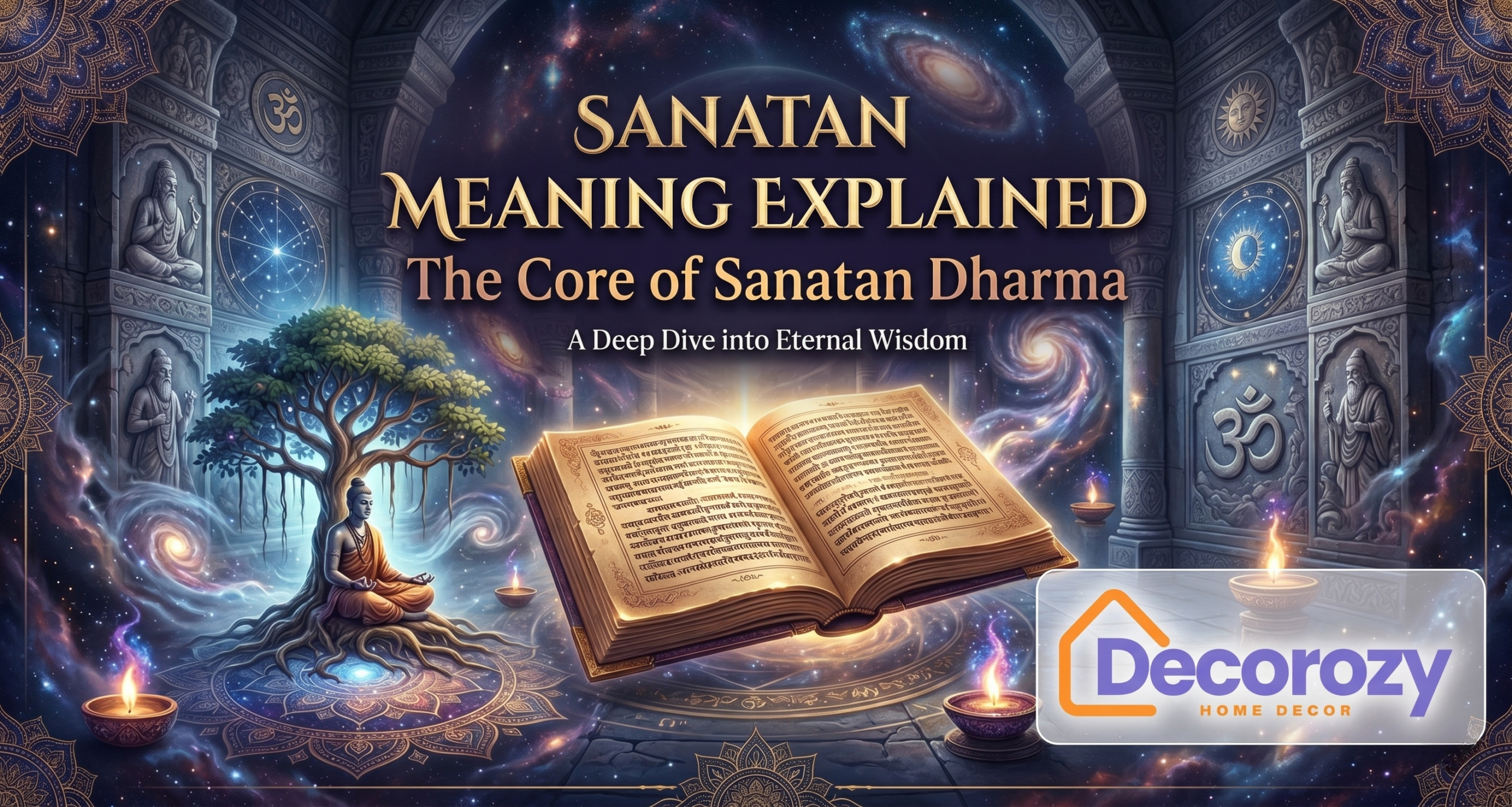
Sanatan Meaning Explained: A Complete Guide
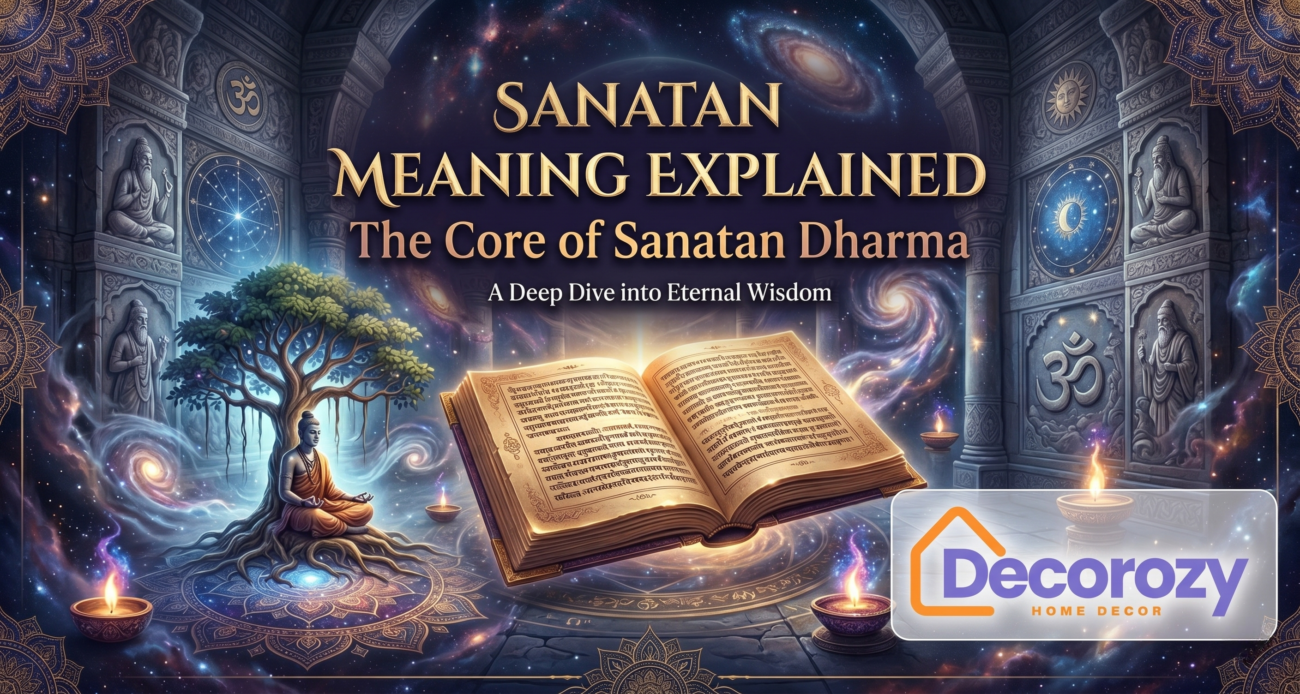
Are you seeking clarity on the true Sanatan meaning? You are certainly not alone in this spiritual quest.
Millions of people worldwide are searching for the authentic roots of ancient Eastern philosophies.
Understanding the Sanatan meaning is the first step toward grasping one of the world’s oldest surviving spiritual traditions.
Quick Answer: Sanatan means “eternal,” “ageless,” or “without beginning or end” in ancient Sanskrit. When combined as Sanatan Dharma, it refers to the eternal cosmic laws, universal duties, and spiritual practices that sustain reality, forming the foundational philosophy of what is commonly known today as Hinduism.
The True Sanatan Meaning in English
To fully grasp what is the meaning of Sanatan, we must look at its linguistic roots.
The word originates from ancient Sanskrit, a classical language of India.
The most accurate Sanatan meaning in English translates directly to “that which has no beginning and no end.”
It describes something perpetual, everlasting, and deeply woven into the fabric of the universe.
Therefore, when we say Sanatan, we are talking about universal truths that transcend human history.
Unlike modern concepts that change with time, what is Sanatan remains constant and unwavering.
Understanding the Sanatan Dharma Meaning
Now that we know Sanatan means eternal, we must explore the second half of the phrase: Dharma.
Dharma is often loosely translated as “religion,” but its true definition is “duty,” “righteousness,” or “cosmic law.”
Therefore, the complete Sanatan Dharma meaning is “the eternal natural law” or “the eternal way of living.”
It is not merely a set of rules, but a comprehensive guide to living in harmony with the universe.
Sanatan Dharma explains how human beings can align their actions with the supreme cosmic order.
This philosophy encourages individuals to seek truth, practice non-violence, and fulfill their worldly and spiritual duties.
Core Principles: What is Sanatan at its Heart?
At its core, Sanatan Dharma is built upon several foundational pillars that guide human existence.
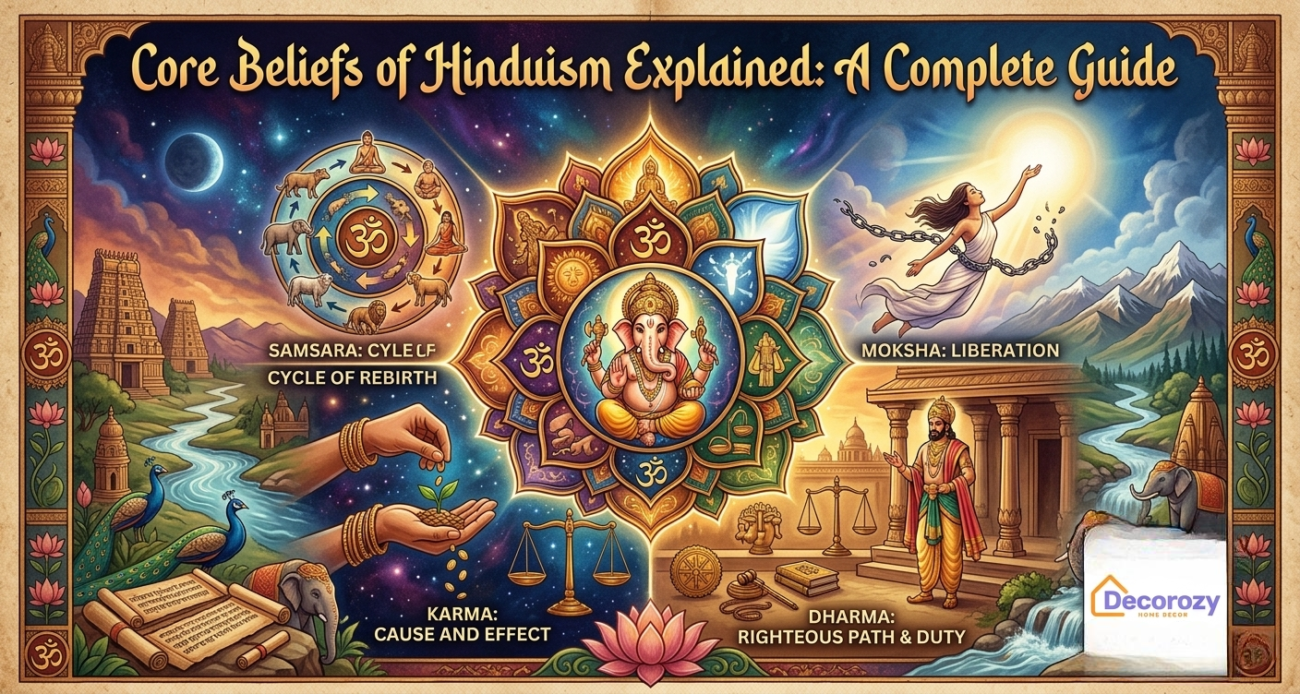
The first principle is Karma, the universal law of cause and effect.
Every action, thought, and intention generates a corresponding reaction in this life or the next.
Another vital concept is Samsara, the continuous cycle of birth, death, and rebirth.
The ultimate goal for a practitioner is Moksha, which is liberation from this endless cycle.
Achieving Moksha requires deep self-realization and a profound understanding of the Sanatan meaning.
The Everlasting Relevance of the Sanatan Meaning
You might wonder why the Sanatan meaning matters in our fast-paced, modern world.
The answer lies in its universal approach to human well-being and mental peace.
Because Sanatan means eternal, its teachings on mindfulness, meditation, and ethical living are timeless.
They offer a perfect antidote to the stress and materialism of contemporary society.
By embracing the Sanatan Dharma meaning, individuals can find a balanced, purpose-driven life.
Thank you for exploring this profound topic with us. For more insightful articles on lifestyle, philosophy, and creating a balanced life, keep reading Decorozy.com!
FAQ Schema
- Question 1: What is the meaning of Sanatan?
- Answer: The meaning of Sanatan originates from Sanskrit and translates to “eternal,” “everlasting,” or “without beginning or end.” It refers to universal truths and cosmic principles that exist beyond time and human creation.
- Question 2: What is the Sanatan meaning in English?
- Answer: The closest Sanatan meaning in English is “eternal” or “ageless.” When used in the context of Sanatan Dharma, it translates to the “Eternal Religion” or the “Eternal Law” that governs the universe.
- Question 3: What is the Sanatan Dharma meaning?
- Answer: The Sanatan Dharma meaning refers to the eternal duties, virtues, and cosmic laws that sustain reality. It is the original, authentic name for the spiritual framework and way of life that is widely known today as Hinduism.