Core Beliefs of Hinduism Explained: A Complete Overview
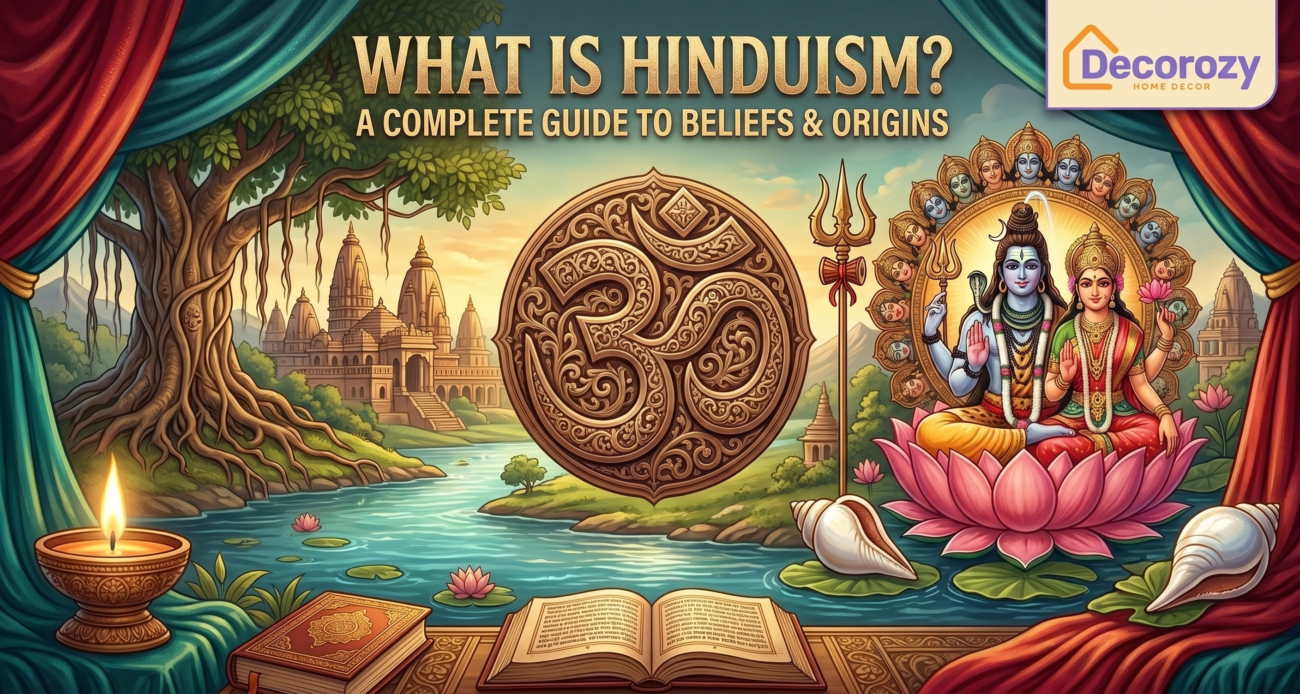
Understanding the world’s oldest surviving spiritual tradition can feel incredibly complex and overwhelming. Getting the core beliefs of hinduism explained properly requires looking beyond the beautiful, vibrant rituals to see the profound philosophy underneath. This colorful and attractive spiritual path offers timeless wisdom for modern life.
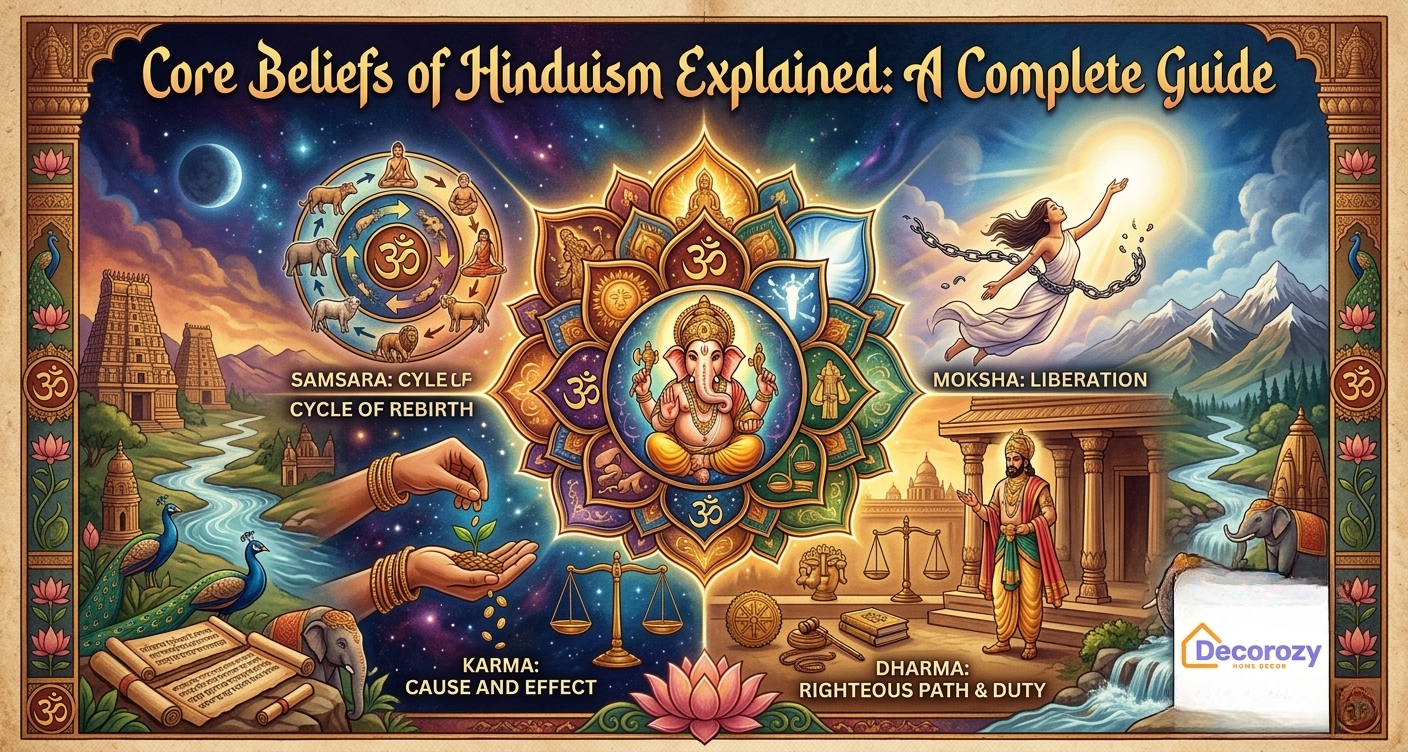
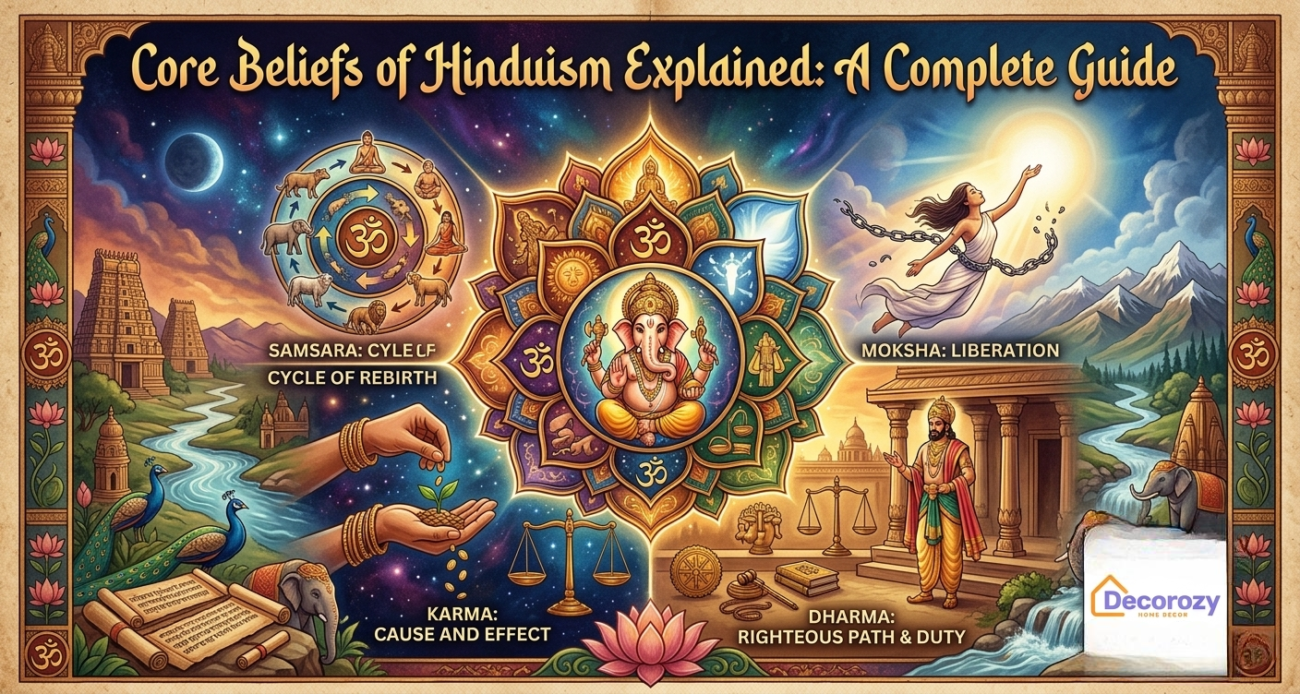
Quick Answer: The core beliefs of Hinduism center on Brahman (the supreme universal soul), Atman (the individual soul), karma (cause and effect), samsara (the cycle of rebirth), and moksha (liberation). It is a diverse religion emphasizing dharma (righteous living) and personal spiritual discovery over rigid dogma.
The Core Beliefs of Hinduism Explained: What is Hindu Philosophy?
To truly grasp the Hindu religion, we must first understand that it is not a single, unified system of thought. Instead, Hinduism is a diverse family of philosophies, traditions, and practices originating in ancient India.
If you are asking “what is hindu at its very core?”, the answer lies in the pursuit of truth. Followers believe in a singular, underlying reality called Brahman, which manifests in countless colorful and attractive deities.
These hinduism beliefs embrace the idea that there are many paths to the divine. Whether through devotion, knowledge, or selfless action, the religion hindu tradition accommodates various ways to achieve spiritual growth.
When learning about hindu practices, the concept of reincarnation, or samsara, is absolutely foundational. Your current life is shaped by your past actions (karma), and your present choices dictate your future experiences.
The Vibrant Hindu Values and Why They Matter Today
Hindu values are deeply rooted in the concept of Dharma, which refers to duty, ethics, and cosmic order. Living a dharmic life means making choices that sustain balance within yourself and society.
These ethical guidelines are not just ancient history; they are highly relevant in our modern, fast-paced world. Practicing non-violence (ahimsa), truthfulness (satya), and compassion creates a deeply attractive and harmonious lifestyle.
For those exploring the hindu meaning of life, the ultimate goal is Moksha. This represents complete liberation from the cycle of rebirth and a beautiful union with the supreme reality.
Understanding these principles makes it easier to appreciate the rich tapestry of Hinduism in India today. From massive festivals to quiet, daily temple offerings, these values dictate the rhythm of life for millions.
Detailed Analysis: The Core Beliefs of Hinduism Explained in Practice
How do these ancient concepts translate into daily rituals and modern worship? The practice of the Hindu religion is incredibly diverse, reflecting a highly personal approach to the divine.
In countless households, daily puja (worship) brings families together to honor specific deities. This colorful practice involves offering light, water, and beautiful flowers to cultivate a daily connection with the divine.
Hinduism in India also emphasizes the importance of sacred texts, such as the Vedas, Upanishads, and the Bhagavad Gita. These texts provide authoritative, philosophical frameworks that guide believers through life’s most difficult moral dilemmas.
Ultimately, the beauty of Hinduism lies in its profound flexibility and inclusivity. It encourages continuous self-inquiry, allowing each individual to discover their own unique spiritual path while remaining connected to a global community.
Conclusion: From the ancient concepts of karma to the colorful, daily rituals of modern devotees, this tradition offers a profoundly beautiful way of life. By understanding these timeless principles, we gain a deeper respect for one of humanity’s most attractive spiritual traditions. Explore more insightful cultural guides and home inspiration right here on Decorozy.com!
FAQ Schema
- Question 1: What are the main beliefs of the Hindu religion?
- Answer: The main beliefs include the existence of a supreme universal spirit (Brahman), the cycle of reincarnation (samsara), the law of cause and effect (karma), and the ultimate goal of spiritual liberation (moksha).
- Question 2: What is the true Hindu meaning and origin?
- Answer: The word “Hindu” originally referred to the people living near the Indus River. Today, the Hindu meaning encompasses a vast, diverse family of religious and philosophical traditions native to the Indian subcontinent.
- Question 3: How is Hinduism in India practiced today?
- Answer: Hinduism in India is practiced through a vibrant mix of daily home worship (puja), temple visits, massive colorful festivals like Diwali, yoga, meditation, and adherence to dharmic principles in everyday life.