What is Hinduism? A Complete Guide to Origins and Beliefs
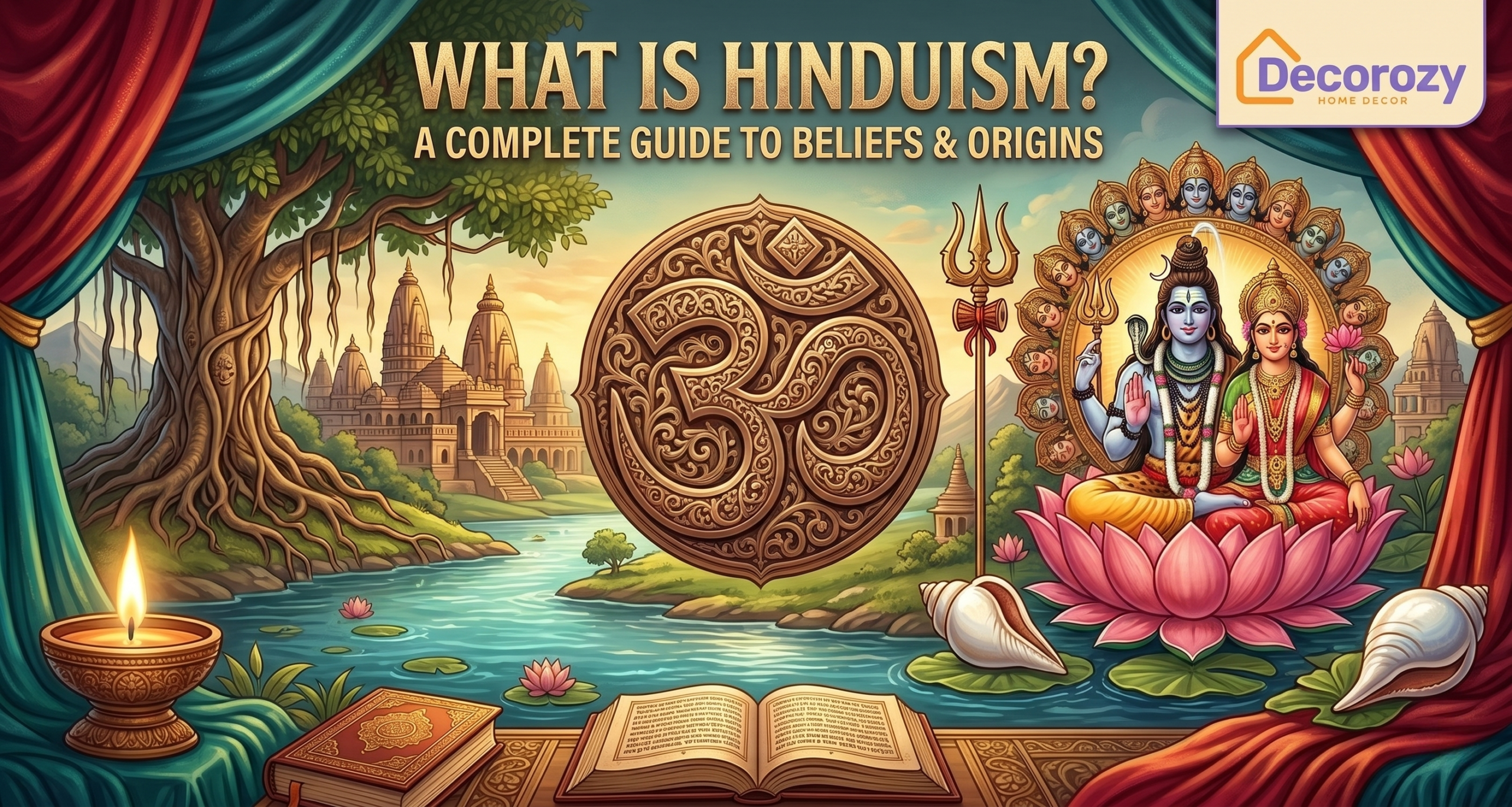
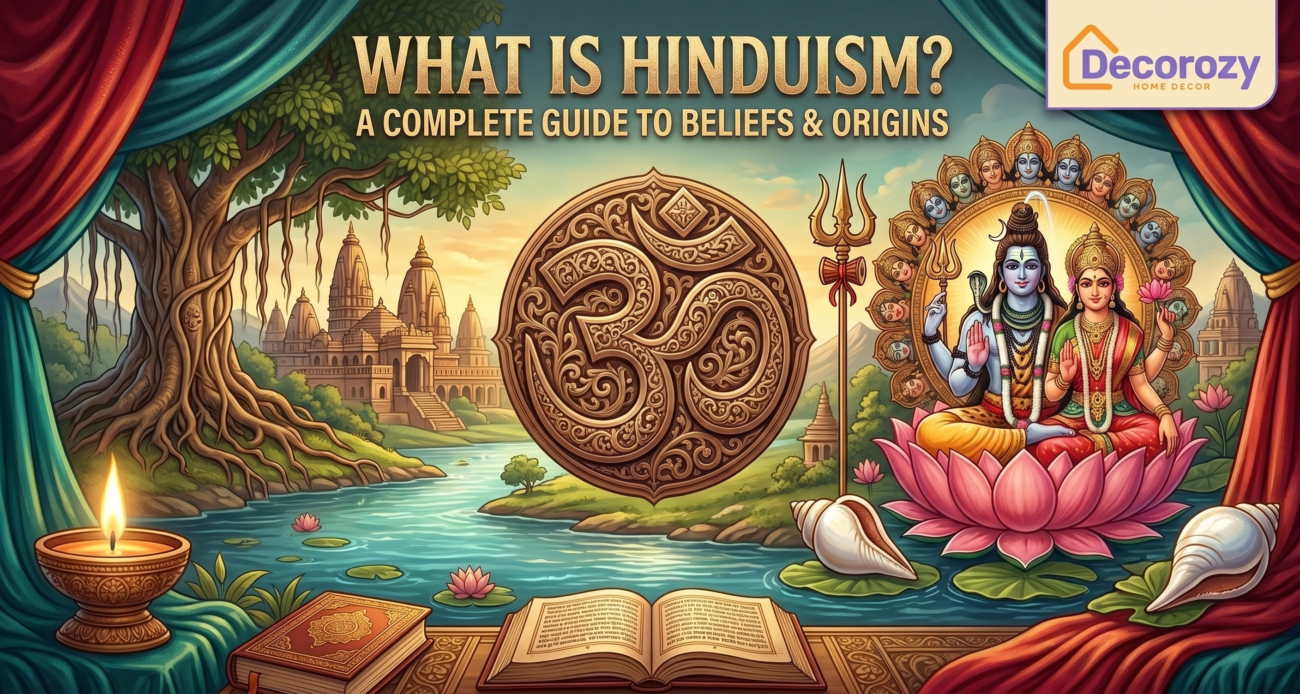
Understanding exactly what is Hinduism can seem complex to those unfamiliar with Eastern traditions. It stands proudly as the world’s oldest major religion still practiced today.
This comprehensive guide dives deep into Hinduism, unraveling its profound mysteries and global impact. We will explore its vast history, rich traditions, and foundational philosophies.
Quick Answer: Hinduism is a diverse, ancient religion originating in India, characterized by beliefs in reincarnation (samsara), karma, and the pursuit of ultimate liberation (moksha). It embraces multiple deities representing one supreme reality, Brahman, and emphasizes righteous living, duties (dharma), and deep spiritual devotion.
The Core Hinduism Beliefs Explained
To fully grasp the religion Hindu, one must first understand its highly flexible foundational tenets. Unlike many Western faiths, it has no single prophet or central governing authority.
Instead, Hinduism beliefs comprise a vast, interconnected web of philosophical schools and daily practices. Central to this ancient faith is the concept of Brahman, the ultimate, unchanging reality.
Practitioners believe that the individual soul, known as the Atman, is eternal and indestructible. The ultimate spiritual goal is to realize the profound unity between Atman and Brahman.
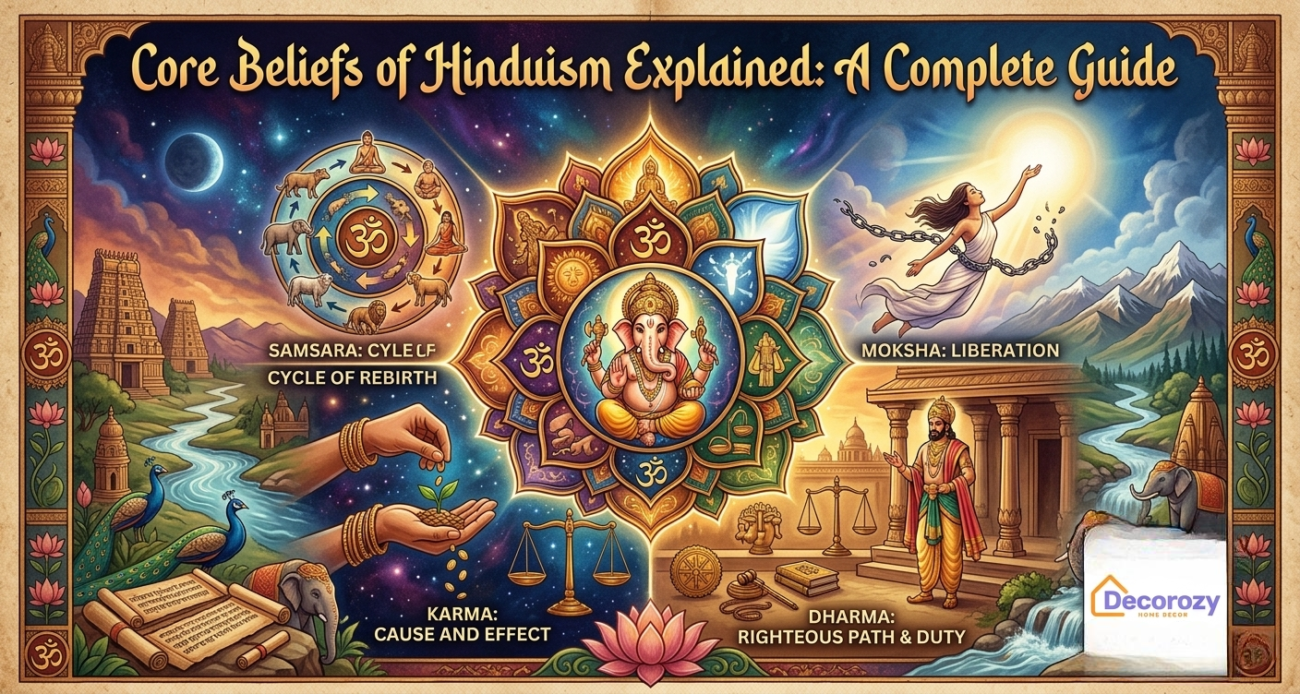
Another fundamental pillar among Hinduism beliefs is the universal law of Karma. Every action, thought, and ethical decision directly shapes an individual’s future experiences.
This natural law ties directly into the continuous cycle of birth, death, and rebirth, known as Samsara. Souls are reborn in various physical forms based entirely on their accumulated Karma.
The ultimate escape from this endless cycle of reincarnation is called Moksha. Achieving Moksha brings eternal peace, wisdom, and complete union with the divine spirit.
Exploring Hinduism Origin and History
Tracing the exact Hinduism origin is a fascinating historical journey through ancient time. Its deepest roots date back thousands of years to the advanced Indus Valley Civilization.
The religion evolved significantly and formalized during the transformative Vedic period in India. Ancient sages composed the Vedas, which remain the most authoritative and sacred texts.
These sacred texts laid the precise groundwork for complex rituals, mantras, and philosophical inquiries. Over centuries, these elite ideas blended seamlessly with various local and regional traditions.
This brilliant synthesis created the incredibly rich tapestry we now recognize as Hindu culture. It remains a living tradition that continually adapts while fiercely preserving its ancient core.
Throughout history, various dynamic reform movements have also heavily shaped the modern faith. For instance, the founder of Veda Samaj sought to promote vital social reform and equality.
Inspired by earlier movements, these progressive groups fought against rigid caste systems and blind superstitions. They successfully highlighted the dynamic, highly evolving nature of the spiritual tradition.
The Hindu View of Life and Bhakti Thought
The Hindu view of life is fundamentally holistic, deeply integrated, and highly practical. It recognizes four primary goals, known as the Purusharthas, for a perfectly fulfilled existence.
These essential goals include Dharma (righteousness), Artha (prosperity), Kama (pleasure), and Moksha (spiritual liberation). Balancing these four pursuits leads directly to a harmonious, joyful, and meaningful life.
A highly significant evolution in this ancient worldview was the rapid rise of Bhakti thought. Bhakti emerged as a powerful, popular movement emphasizing intense, deeply personal devotion.
Rather than relying solely on complex priestly rituals, Bhakti thought made the divine highly accessible to all. Everyday devotees could now cultivate a direct, loving, and intimate relationship with their chosen deity.
This inclusive movement deeply influenced traditional Indian art, classical poetry, and mesmerizing music. It remains a vibrant, beating heart and a joyful expression within modern Hindu culture.
Whether pursued through quiet meditation, selfless action, or pure devotion, the spiritual paths are many. The final destination, however, always remains the ultimate realization of universal truth.
Embark on your personal spiritual learning journey with Decorozy.com today. Explore more fascinating insights into ancient philosophies and elevate your understanding of rich global traditions!
FAQ Schema
- Question 1: What are the main beliefs of Hinduism?
- Answer: The main beliefs of Hinduism revolve around the concepts of Brahman (the supreme reality), Atman (the eternal soul), Karma (cause and effect), Samsara (the cycle of reincarnation), and Moksha (ultimate spiritual liberation).
- Question 2: Who is the original founder of Hinduism?
- Answer: Unlike many other major world religions, Hinduism has no single founder. It is a synthesis of various Indian cultures, philosophies, and traditions that have evolved together over thousands of years.
- Question 3: What is the Hindu view of life?
- Answer: The Hindu view of life focuses on achieving a balance between four core goals known as the Purusharthas: Dharma (moral duty), Artha (economic prosperity), Kama (emotional pleasure), and Moksha (spiritual liberation).