Exploring the Sacred 12 Jyotirlinga in India: A Divine Pilgrimage
Embarking on a spiritual journey across the 12 Jyotirlinga in India is a profound experience for millions of devotees worldwide. These ancient shrines are not just architectural marvels; they represent the absolute cosmic power of Lord Shiva.
Quick Answer: The 12 Jyotirlinga in India are sacred shrines dedicated to Lord Shiva, where he is worshipped as a radiant pillar of light. Located across the country, from Kedarnath in the Himalayas to Rameshwaram in the south, these temples offer immense spiritual liberation, karmic cleansing, and profound inner peace.
The Core Concept of the 12 Jyotirlinga in India
In Hindu mythology, Lord Shiva is the supreme transformer within the Trimurti. A Jyotirlinga represents his manifestation as an infinite, self-radiant pillar of cosmic light.
Unlike standard Shiva Lingas established by human devotion, these twelve specific shrines are believed to be “Swayambhu” or self-manifested. They mark the exact geographical coordinates where Shiva’s divine light pierced the earth.
Visiting the 12 Jyotirlinga in India is known as the Dwadasa Jyotirlinga Yatra. This sacred circuit spans diverse topographies, unifying the Indian subcontinent through a shared spiritual heritage.
Spiritual Benefits and Importance of the Pilgrimage
Undertaking this sacred pilgrimage is believed to completely cleanse a soul of its accumulated karmic debts. Devotees travel thousands of miles to experience the unique vibrational frequency of each shrine.
Ancient Vedic texts declare that praying at these specific locations grants “Moksha,” or liberation from the eternal cycle of birth and death. The divine aura of these temples provides unparalleled mental clarity and inner strength.
Beyond spiritual enlightenment, these sites offer a profound connection to nature. Whether situated by crashing oceans, deep within dense forests, or atop snow-capped mountains, they promote holistic well-being.
Detailed Analysis: Locations of the 12 Jyotirlinga in India
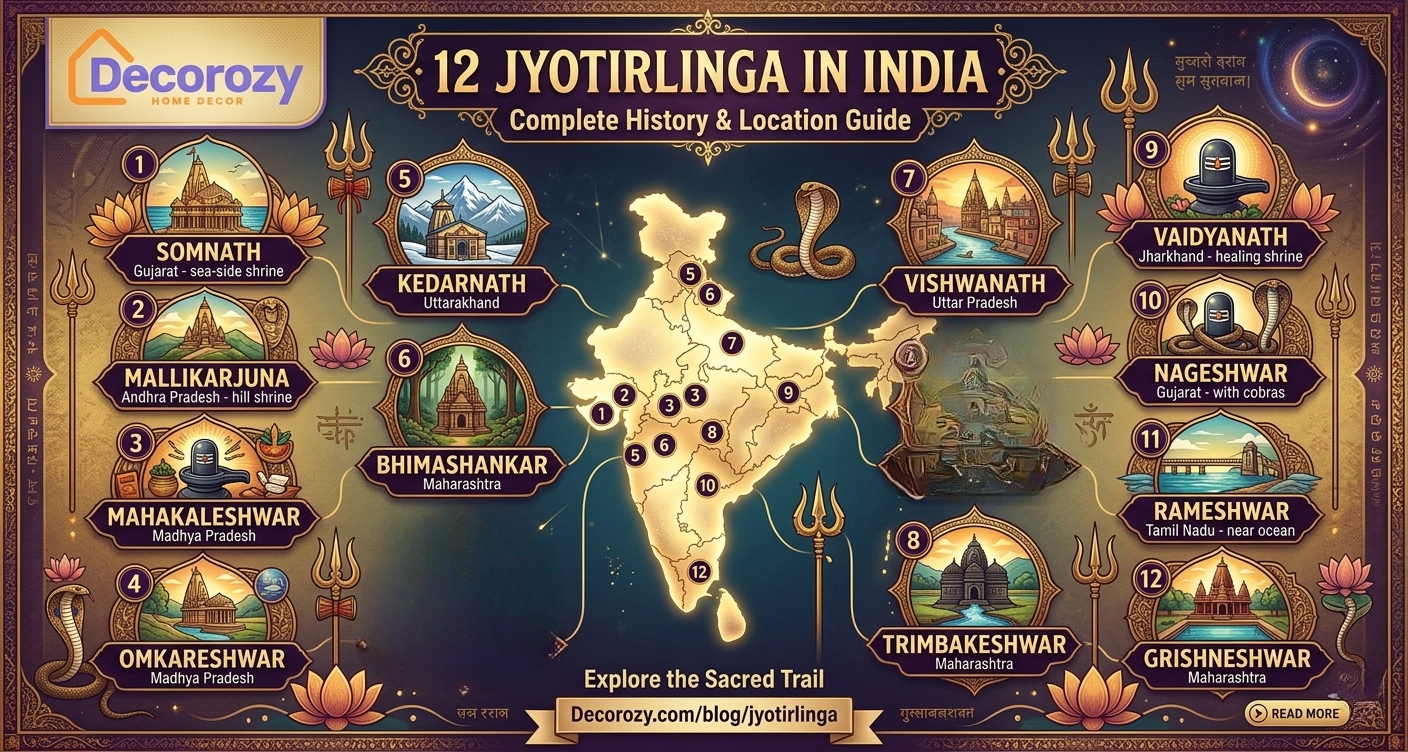
1. Somnath Jyotirlinga (Gujarat)
Located in Prabhas Patan near Veraval, Somnath is globally recognized as the first of the twelve sacred shrines. Historically, it has withstood multiple invasions, continuously rising from its ruins as a symbol of eternal faith. According to the Puranas, the Moon God (Chandra) built this temple in pure gold to thank Lord Shiva for lifting a debilitating curse. The majestic temple sits right on the coastline of the Arabian Sea.
2. Mallikarjuna Jyotirlinga (Andhra Pradesh)
Perched upon the picturesque Shri Parvata hill in Srisailam, this temple is a dual shrine. It is the only location where Lord Shiva (Mallikarjuna) and Goddess Parvati (Bhramaramba) are worshipped together as a Jyotirlinga and a Shakti Peetha. The shrine is surrounded by the lush Nallamala forests and the flowing Krishna River. It offers a deeply tranquil environment for rigorous meditation and spiritual retreat.
3. Mahakaleshwar Jyotirlinga (Madhya Pradesh)
Situated in the ancient city of Ujjain, Mahakaleshwar is fiercely unique because its central lingam faces south, symbolizing Lord Shiva’s mastery over death (Mahakaal). This temple is globally famous for its daily “Bhasma Aarti,” a powerful morning ritual where sacred ash is offered to the deity. It remains one of the most energetically charged pilgrimage centers in the country.
4. Omkareshwar Jyotirlinga (Madhya Pradesh)
Nestled on the serene Mandhata island in the Narmada River, the geographical layout of this location naturally forms the sacred Hindu symbol “Om” (ॐ). Legend states that Lord Shiva appeared here to bless the celestial Devas during a cosmic battle against destructive forces. The soothing river waters make it a highly meditative sanctuary.
5. Kedarnath Jyotirlinga (Uttarakhand)
Located at a staggering altitude of 3,583 meters in the Garhwal Himalayas, Kedarnath represents the absolute pinnacle of devotional endurance. It is a crucial stop in the revered Chota Char Dham Yatra. Rooted in the Mahabharata epic, this shrine was established by the Pandavas seeking absolution after the Kurukshetra war. The snow-clad peaks provide an awe-inspiring backdrop to this resilient temple.
6. Bhimashankar Jyotirlinga (Maharashtra)
Hidden deep within the Sahyadri hills of the Pune district, Bhimashankar serves as both a spiritual hub and a thriving wildlife sanctuary. It marks the precise origin of the sacred Bhima River. The mythological lore states that Lord Shiva manifested here to permanently eradicate the powerful demon Tripurasura. The surrounding Bhorgiri forest offers an incredibly raw and grounding spiritual experience.
7. Kashi Vishwanath Jyotirlinga (Uttar Pradesh)
Located in Varanasi, the oldest continually inhabited city in the world, Kashi Vishwanath stands on the western banks of the holy Ganges. It is widely considered the ultimate destination for spiritual liberation. Hindu philosophy dictates that breathing one’s last breath in Kashi guarantees immediate salvation. The vibrant, chaotic, yet profoundly holy atmosphere of the city draws millions of seekers annually.
8. Trimbakeshwar Jyotirlinga (Maharashtra)
Situated near Nashik at the source of the Godavari River, Trimbakeshwar is architecturally and philosophically unique. The central linga features three distinct faces representing Brahma, Vishnu, and Mahesh. Due to continuous ritualistic water offerings, the linga is slowly eroding, powerfully symbolizing the universal truth of impermanence. Devotees frequently visit to perform specific ancestral rituals to clear generational karma.
9. Vaidyanath Jyotirlinga (Jharkhand)
Located in Deoghar and affectionately known as Baba Dham, Vaidyanath is universally revered as the supreme temple of divine healing. Devotees flock here seeking cures for severe physical and mental ailments. The temple’s origins are tied to the demon king Ravana, who was tricked into leaving the linga on the ground here. Shiva assumed the role of a “Vaidya” (divine physician) to cure him, hence the name.
10. Nageshwar Jyotirlinga (Gujarat)
Positioned near the ancient city of Dwarka, Nageshwar is revered as the ultimate protector against all forms of evil and dark energies. The temple features a massive, awe-inspiring seated idol of Lord Shiva. According to scripture, Lord Shiva rescued his fierce devotee Supriya from the tyrannical demon Daruka at this exact spot. The constant coastal breeze from the Arabian Sea adds to the shrine’s calming energy.
11. Rameshwar Jyotirlinga (Tamil Nadu)
Located on the southernmost tip of India on Rameswaram Island, this spectacular temple bridges Shaivism and Vaishnavism. It is a mandatory stop for anyone completing the pan-India Char Dham pilgrimage. Historical texts state that Lord Rama constructed this linga from coastal sand to worship Shiva after defeating Ravana. The temple is globally celebrated for housing the longest ornately carved corridor in the world.
12. Grishneshwar Jyotirlinga (Maharashtra)
Located near the magnificent, UNESCO-listed Ellora Caves in Aurangabad, Grishneshwar is the final destination on the traditional Dwadasa Jyotirlinga circuit. Its name translates directly to the “Lord of Compassion.” The temple honors the unfaltering devotion of a woman named Kusuma, whose murdered son was miraculously resurrected by Lord Shiva’s grace. The South Indian architectural style of the temple is visually breathtaking.
How to Plan Your Sacred Pilgrimage
Executing a journey to all twelve shrines requires careful logistical planning, as they are spread across diverse geographical terrains. Many devotees choose to break the yatra into regional segments over several years.
Timing your visit is crucial for the optimal experience. Traveling during the holy month of Shravan (July-August) or on Maha Shivratri guarantees an intensely vibrant, high-energy spiritual atmosphere.
For those who cannot physically travel, you can still invite this profound, colorful, and attractive divine energy into your home. Ensure your living spaces reflect your inner peace and devotion.
At Decorozy.com, we specialize in curating an elite aesthetic for your sacred spaces. Explore our exclusive collection of spiritually inspired decor, premium Shiva idols, and intricate frames to keep the divine presence visually attractive and powerfully close to your heart.
FAQ Schema
- Question 1: How many Jyotirlingas are there in India, and what is their significance?
- Answer: There are exactly 12 Jyotirlingas in India. They are highly significant because they are believed to be self-manifested (Swayambhu) shrines where Lord Shiva physically appeared as an infinite pillar of cosmic light, offering spiritual liberation to devotees.
- Question 2: Is it possible to visit all 12 Jyotirlingas in a single trip?
- Answer: While possible, visiting all 12 Jyotirlingas in a single trip takes several weeks of continuous travel due to the vast geographical distances between them, ranging from the high Himalayas in the North to the coastal tip of South India.
- Question 3: Which is the oldest Jyotirlinga in India?
- Answer: Somnath Jyotirlinga, located in Prabhas Patan, Gujarat, is universally recognized by ancient scriptures and historians as the first and oldest of the 12 sacred Jyotirlinga shrines in India.