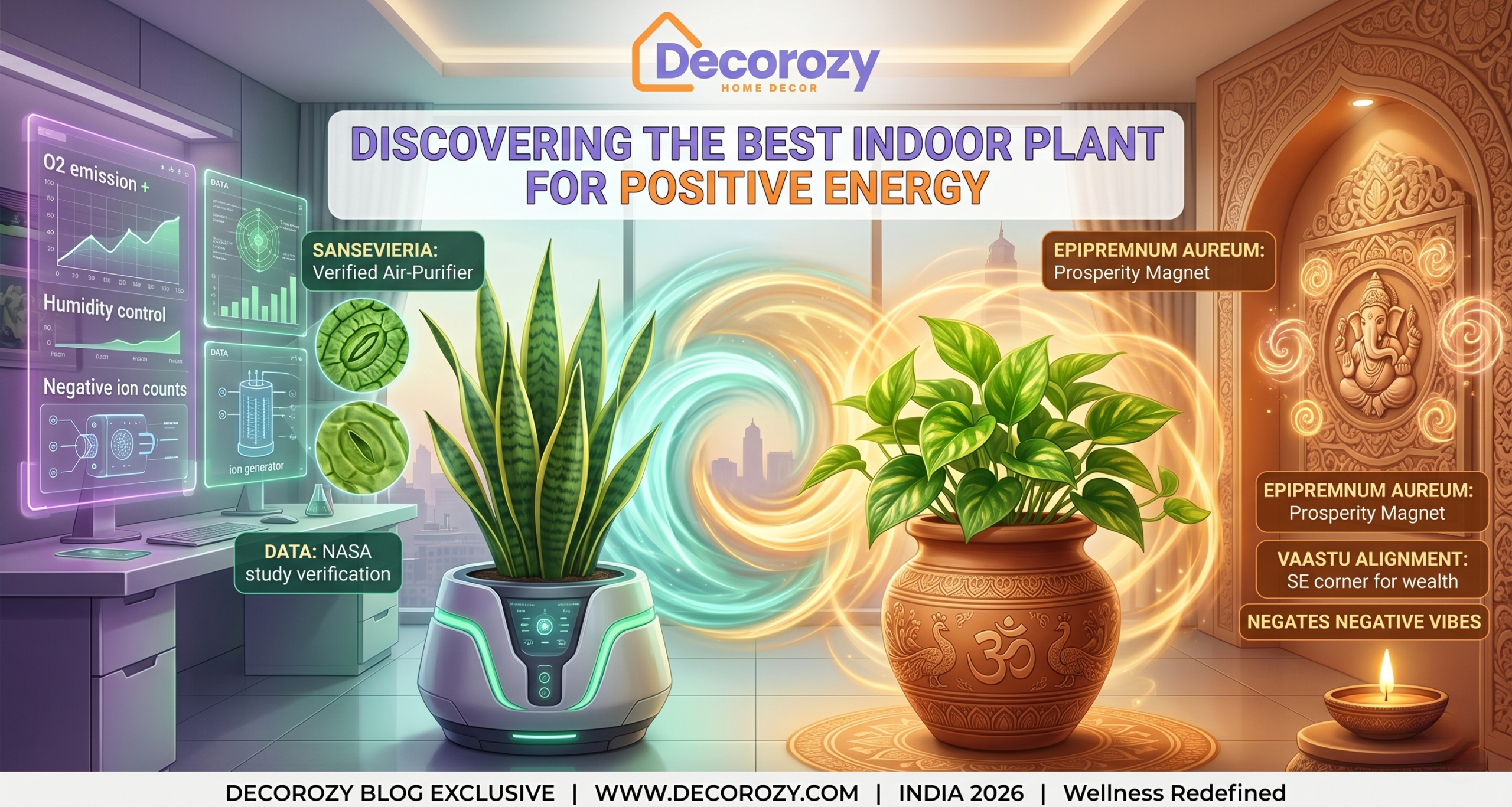
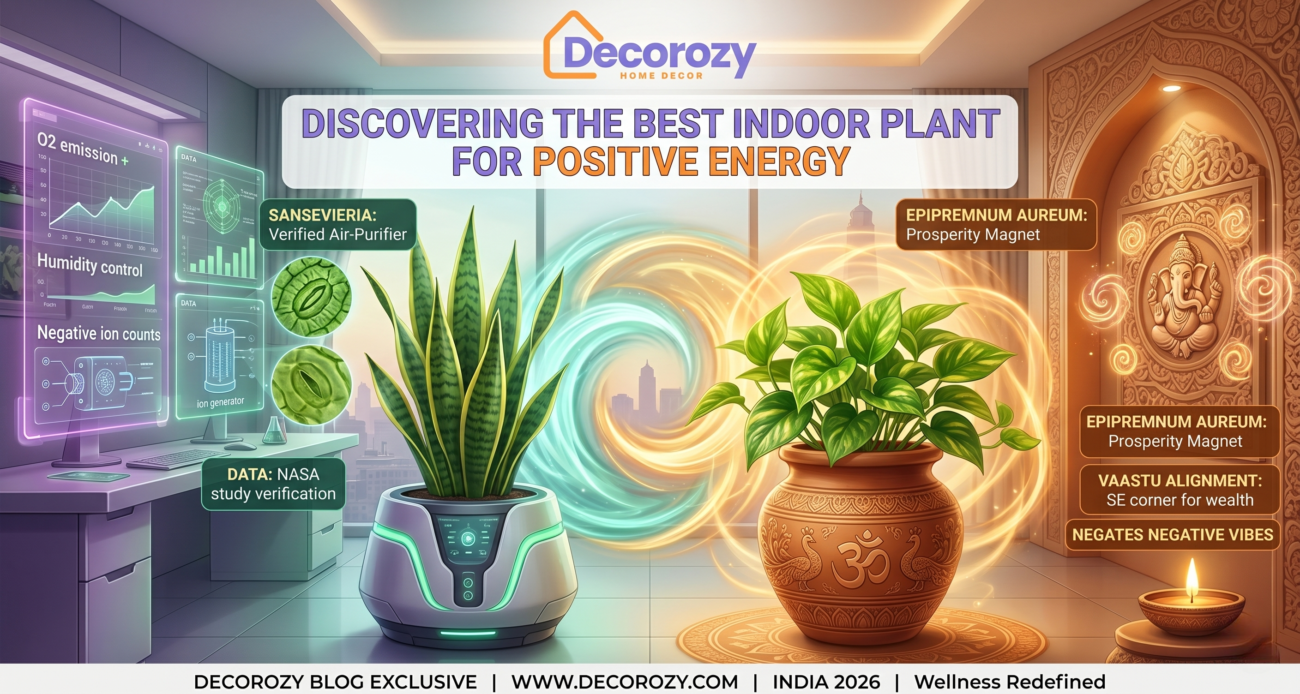
Discovering the Best Indoor Plant for Positive Energy: Science vs. Myth
Creating a truly luxurious and inviting home goes far beyond selecting the right furniture or perfect color palette. At Decorozy, we believe that premium interior design must also prioritize the atmosphere, mood, and energetic resonance of your living space.
The integration of botanical elements into our daily environments has long been celebrated by designers and holistic practitioners alike. However, when searching for the absolute best indoor plant for positive energy, we are often met with a fascinating crossroads.
We find ourselves navigating the ancient wisdom of energetic design and the modern empirical evidence of botanical science. Which plants truly elevate the vibration of a room, and which simply offer a beautiful visual anchor?
Quick Answer: The best indoor plant for positive energy is the Peace Lily (Spathiphyllum). Scientifically, it drastically improves indoor air quality by neutralizing VOCs, which lowers stress hormones. Mythologically, it represents tranquility in Feng Shui, making it the perfect botanical centerpiece for a harmonious, elegantly styled home.
Key Takeaways
Dual Benefits: The most effective plants combine scientifically proven air-purifying qualities with historically revered energetic properties.
Air Quality Equals Energy: Science shows that cleaner air leads to better cognitive function and lower anxiety, translating to what we feel as “positive energy.”
Ancient Wisdom Holds Truth: Practices like Feng Shui and Vastu Shastra intuitively recognized the psychological benefits of biophilic design centuries ago.
Styling Matters: Pairing high-energy plants with premium Decorozy ceramic and brass planters amplifies their aesthetic and energetic impact.
Strategic Placement: Where you place your plant is just as critical as the species you choose for maximizing both growth and vibrational flow.
The Foundation of Biophilic Design: Bridging Two Worlds
The quest to find the best indoor plant for positive energy requires us to look through two distinct lenses: the mythological and the scientific. Both perspectives ultimately aim for the same goal—creating a sanctuary that feels safe, inspiring, and deeply restorative.
In premium interior design, we refer to this as biophilic design. This is the architectural and interior styling approach that seeks to connect building occupants more closely to nature. Biophilic spaces are undeniably more relaxing and luxurious.
From a mythological standpoint, ancient philosophies like Feng Shui from China and Vastu Shastra from India have dictated spatial arrangements for millennia. These practices categorize plants based on their ability to attract ‘Chi’ or ‘Prana’—the vital life forces.
Conversely, modern science approaches “positive energy” through the measurable metrics of human biology. Environmental psychologists and botanists study how foliage reduces cortisol levels, lowers blood pressure, and physically filters toxins from our breathing zones.
The Content Mind Map
The Phenomenon of Positive Energy in Plants
Mythological Interpretations
Feng Shui: Focusing on the Bagua map, rounded leaves for wealth, and upward growth for success.
Vastu Shastra: Emphasizing directional placement (East/North) and specific sacred species like Tulsi or Bamboo.
Scientific Realities
Phytoremediation: The process where plant roots and leaves absorb harmful volatile organic compounds (VOCs).
Psychological Impact: The visual presence of fractal patterns in leaves triggering neurological calm and focus.
Comparative Analysis: Science vs. Myth in Popular Plants
To truly understand which greenery belongs in your curated Decorozy home, we must evaluate the top contenders. Below is a comprehensive breakdown of how the most popular plants stack up when comparing ancient lore to modern science.
Plant Species (Botanical Name)
Mythological “Positive Energy” Benefit
Scientific “Positive Energy” Reality
Ideal Decorozy Styling Approach
Jade Plant (Crassula ovata)
Attracts massive wealth, financial success, and prosperity when placed at the entrance.
Thrives on neglect, reduces stress via low maintenance; releases oxygen at night (CAM photosynthesis).
Placed in a heavy, geometric brass planter on a minimalist entryway console.
Snake Plant (Sansevieria)
Protective energy; cuts through negative Chi with its sword-like, upright leaves.
Top-tier air purifier (NASA validated); removes formaldehyde and benzene; excellent for sleep environments.
Housed in a tall, textured stone-finish floor pot in the master bedroom corner.
Peace Lily (Spathiphyllum)
Promotes deep spiritual healing, emotional peace, and conflict resolution in the home.
Increases room humidity by up to 5%, soothing dry throats; vigorously removes airborne mold spores.
Displayed in a sleek, matte black ceramic pot on a living room side table.
Golden Pothos (Epipremnum aureum)
Cleanses stagnant energy; attracts continuous, flowing wealth and happiness.
Cascading from a premium Decorozy macrame or metallic hanging planter.
Holy Basil (Ocimum tenuiflorum)
Highly sacred in Vastu; destroys negative forces and brings divine blessing.
Emits a natural aroma containing eugenol, which has proven anti-anxiety and antimicrobial properties.
Placed in a terracotta or glazed clay pot on an Eastern-facing kitchen windowsill.
Deep Dive: Decoding the Top Contenders
When you are investing in the aesthetic and atmospheric quality of your home, selecting the best indoor plant for positive energy is a deliberate curatorial act. Let us explore the nuanced benefits of these botanical investments.
The Peace Lily: The Ultimate Harmonizer
The Peace Lily frequently tops the list for those seeking a tranquil, elegant environment. Its lush, dark green foliage beautifully contrasts with its striking white spathes, offering a highly sophisticated visual profile.
Scientifically, the Peace Lily was a star performer in the famous NASA Clean Air Study. It actively pulls ammonia, benzene, and formaldehyde from the air. Breathing cleaner air immediately reduces physiological stress, which humans interpret as “good energy.”
Mythologically, its white flower represents the white flag of surrender, bringing an end to household conflicts. Placing a Peace Lily in the bedroom or living room is said to cultivate a serene, loving atmosphere.
The Snake Plant: The Architectural Protector
Also known as Mother-in-Law’s Tongue, the Snake Plant is a staple in high-end, contemporary interior design. Its strong, vertical lines make it an architectural masterpiece that perfectly complements modern, minimalist decor.
From a scientific perspective, the Snake Plant utilizes Crassulacean Acid Metabolism (CAM). This rare biological trait allows it to absorb carbon dioxide and release fresh oxygen during the night, making it the ultimate bedroom plant for energetic rejuvenation.
In the realm of myth, Feng Shui practitioners revere the Snake Plant as a fierce protector. Its pointed leaves are believed to act as energetic swords, slicing through stagnant or toxic energy and shielding the home’s inhabitants from harm.
The Jade Plant: The Magnet for Abundance
No luxury home is complete without the subtle, succulent elegance of the Jade Plant. With its thick, woody stems and coin-shaped leaves, it resembles a miniature, ancient tree, bringing a sense of grounded permanence to any space.
Scientifically, the psychological benefit of the Jade Plant lies in its ease of care. High-maintenance plants can induce anxiety, but the hardy Jade thrives with minimal intervention, offering the psychological reward of successful plant parenthood without the stress.
Mythologically, this is the quintessential “Money Plant.” The rounded leaves symbolize coins and accumulated wealth. It is traditionally placed near the front door of a home or business to welcome prosperity and financial positive energy inside.
Expert Implementation: Styling Plants for Maximum Impact
Knowing the best indoor plant for positive energy is only half the battle. To truly elevate your space, you must integrate these plants seamlessly into your home’s design narrative using premium accessories.
The Living Room: Creating a Vibrant Social Hub
The living room is the energetic heart of the home. Here, you want to foster lively, warm, and welcoming energy. Large, statement plants are ideal for this space.
Consider a majestic Ficus Lyrata (Fiddle Leaf Fig) or a towering Bird of Paradise. While they require bright light, their massive, vibrant leaves create a stunning focal point.
House these architectural giants in Decorozy’s oversized, handcrafted ceramic floor planters. The juxtaposition of organic greenery against polished, premium materials creates a dynamic, high-vibration aesthetic.
The Bedroom: Cultivating a Restorative Sanctuary
The bedroom must be a sanctuary optimized for rest and cellular repair. The energy here should be soft, calming, and deeply purifying.
This is the perfect domain for the Snake Plant and the Aloe Vera. Because they release oxygen at night, they actively contribute to a better, deeper sleep cycle—the biological foundation of positive energy.
Style these plants on nightstands or floating shelves using Decorozy’s minimalist, matte-finish pots. Stick to muted, earthy tones like terracotta, sage, or soft stone to avoid visually overstimulating the brain before sleep.
The Home Office: Stimulating Focus and Success
In the workspace, positive energy translates to focus, creativity, and the attraction of success. The environment must be invigorating but not distracting.
The Golden Pothos and the Jade Plant excel here. The Pothos provides a lush, trailing aesthetic that softens the hard angles of desks and monitors, while the Jade Plant subtly invites prosperity into your professional endeavors.
Elevate your deskscape by placing these plants in Decorozy’s metallic, brass, or copper desktop planters. The reflective surfaces bounce light around the room, symbolizing the bright, expanding energy of your career.
The Verdict: Merging Science, Myth, and Style
Ultimately, the debate between science and myth is beautifully resolved when we realize they are simply different languages describing the same phenomenon. The best indoor plant for positive energy is one that purifies your air while resonating with your personal aesthetic.
Whether you are drawn to the mystical wealth-attracting properties of the Jade Plant or the scientifically proven toxin-filtering abilities of the Peace Lily, the real magic happens in the execution.
By thoughtfully selecting your greenery and housing it in exquisite, premium planters from Decorozy, you do more than decorate. You actively curate a living, breathing sanctuary that radiates health, luxury, and undeniably positive energy.
Transform your home’s energetic footprint today by exploring Decorozy’s exclusive collection of artisanal planters, designed to bring out the absolute best in your botanical companions.
Frequently Asked Questions (FAQs)
Q1: What is the most scientifically proven plant for removing indoor toxins? A: According to the NASA Clean Air Study, the Peace Lily and the Florist’s Chrysanthemum are among the top performers, proven to remove a wide spectrum of toxins including benzene, formaldehyde, and trichloroethylene from the air.
Q2: Which plant is best for attracting wealth according to Feng Shui? A: The Jade Plant (Crassula ovata) and the Money Tree (Pachira aquatica) are the most highly regarded. Their round, coin-like leaves are believed to accumulate wealth, especially when placed in the wealth corner (southeast) of a room.
Q3: Can indoor plants actually improve my mental health? A: Yes. Scientific studies in environmental psychology confirm that the visual presence of plants reduces cortisol (the stress hormone), lowers blood pressure, and improves overall mood through our innate biological connection to nature (biophilia).
Q4: Are there any plants considered “bad energy” in interior design? A: In Feng Shui, plants with sharp, spiky leaves (like certain cacti) are sometimes thought to create “Sha Chi” or harsh, attacking energy. However, scientifically, as long as a plant is healthy and well-cared for, it contributes positively to the environment.
Q5: How does the planter impact the energy of the plant? A: Both aesthetically and energetically, the planter matters. Premium, natural materials like those used in Decorozy collections (ceramic, brass, terracotta) ground the plant. A beautiful planter elevates the visual joy the plant brings, enhancing the overall positive vibration of the room.