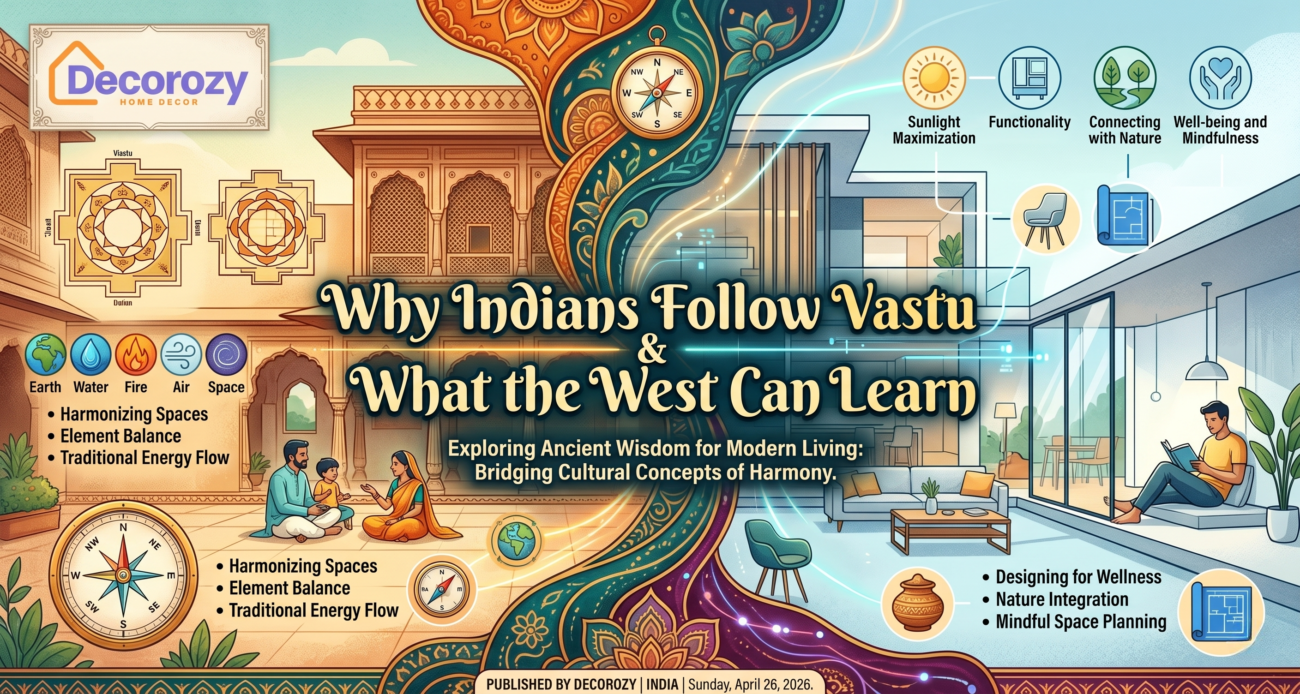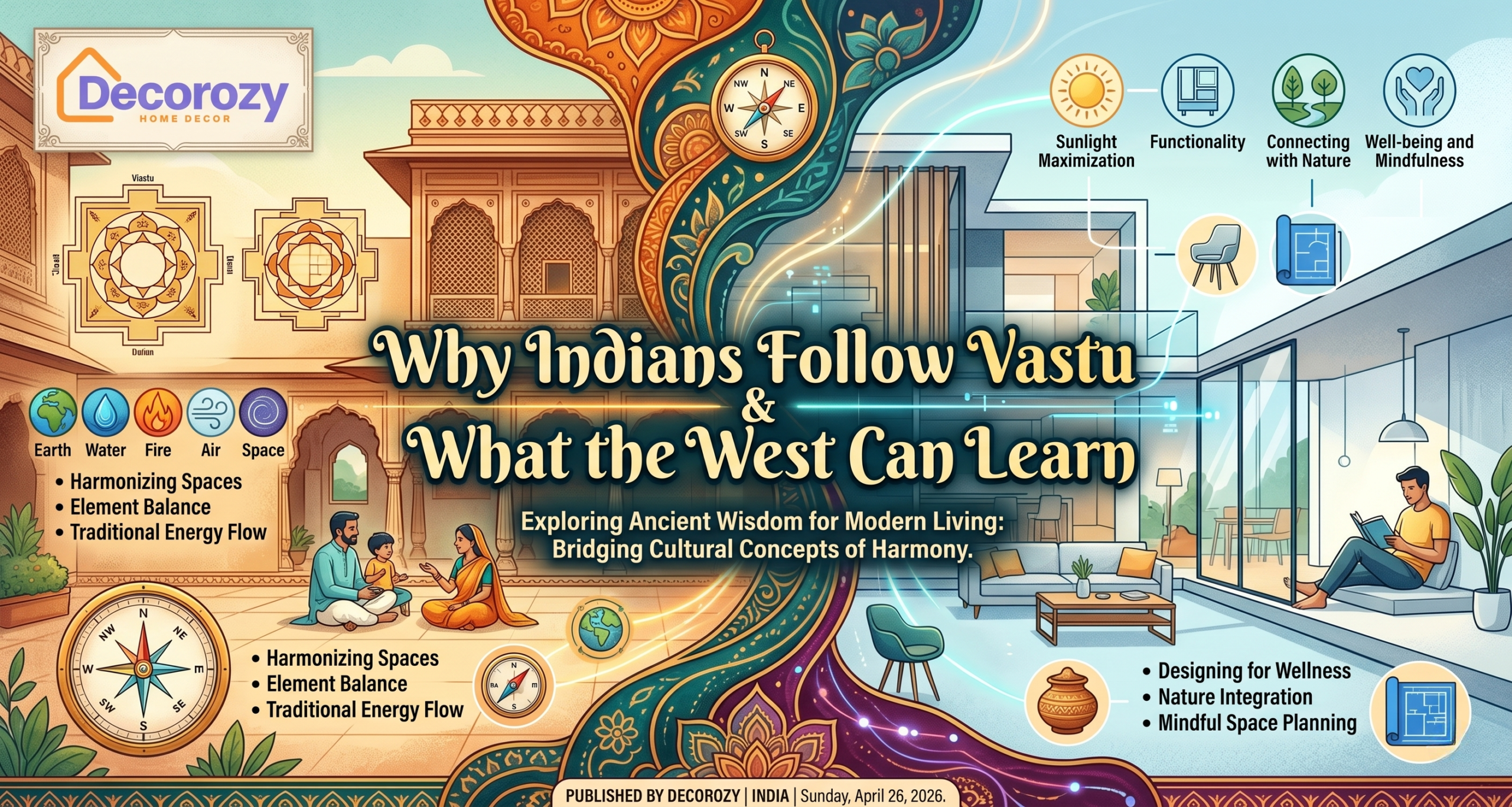




Why Indians Follow Vastu & What the West Can Learn

Why Indians Follow Vastu & What the West Can Learn

Why Indians Follow Vastu and What the West Can Learn

Ever wondered how ancient architecture directly influences modern psychological well-being? The answer lies in the mastery of spatial harmony.

Understanding why Indians follow Vastu and what the West can learn reveals a fascinating bridge between ancient wisdom and cutting-edge home design.

Quick Answer: Indians follow Vastu Shastra to harmonize living spaces with natural elements, solar energy, and magnetic fields, promoting health and prosperity. The West can learn to integrate these eco-friendly, directional, and spatial alignment principles to create balanced, sustainable, and stress-free modern homes.

The Core Philosophy: Why Indians Follow Vastu

Vastu Shastra translates directly to the “science of architecture.” It is a profound Indian system integrating spatial geometry with natural laws.

This philosophy meticulously balances the five vital elements: earth, water, fire, air, and space. It ensures positive energy flows seamlessly throughout a property.

By analyzing these principles, we understand why Indians follow Vastu. It aligns their homes with the Earth’s magnetic fields and solar cycles.

This conscious alignment is not merely superstition; it is a calculated approach to maximizing the natural environment’s benefits.

The Scientific Benefits Behind Why Indians Follow Vastu

Beyond spiritual beliefs, Vastu is deeply rooted in environmental science and climatology.

Proper directional alignments maximize natural sunlight, ensuring optimal cross-ventilation and naturally reducing household energy consumption.

For example, placing the kitchen in the southeast harnesses the sun’s antibacterial morning rays, promoting hygiene.

This strategic placement minimizes daily stress, improves circadian sleep cycles, and fosters a significantly healthier domestic environment.

Adapting Ancient Wisdom: What the West Can Learn

Modern Western architecture often prioritizes rapid construction and aesthetic trends over environmental psychology. There is immense value in bridging this gap.

By studying Vastu, global architects can adopt biophilic design more effectively. Integrating central open spaces (the Brahmasthan) drastically improves indoor air quality.

Western designers can also implement Vastu’s directional rules for bedroom placements. Aligning sleeping positions with magnetic north enhances restorative sleep and reduces anxiety.

Ultimately, incorporating spatial harmony isn’t just about honoring tradition; it’s about optimizing your daily living experience for peak wellness.

Ready to transform your home’s energy and aesthetic? Explore our beautifully curated, harmonized home decor collections at Decorozy.com today!

FAQ Schema

  • Question 1: Is Vastu Shastra scientifically proven?
  • Answer: Yes, many core Vastu principles align perfectly with modern environmental science. They focus on securing optimal sunlight, ensuring cross-ventilation, and aligning human habitation with natural magnetic fields to support physical and mental health.
  • Question 2: Can Western homes easily apply Vastu principles?
  • Answer: Absolutely. Western homes can seamlessly integrate Vastu by optimizing room directions, minimizing physical clutter, and balancing the five natural elements to improve domestic energy flow and psychological comfort.
  • Question 3: Does Vastu really affect mental health and stress levels?
  • Answer: Yes. By maximizing natural light, promoting ventilation, and organizing space efficiently, Vastu reduces psychological friction. This creates a calming, balanced environment that is highly conducive to long-term mental well-being.

Leave a Reply

Your email address will not be published. Required fields are marked *