What Happens If You Place Tulsi In The Wrong Direction? A Vastu Guide
Many homeowners wonder what happens if you place tulsi in the wrong direction when setting up their indoor or outdoor spaces. According to ancient Vastu Shastra principles, improper placement of this sacred plant can severely disrupt the energy flow within your home.
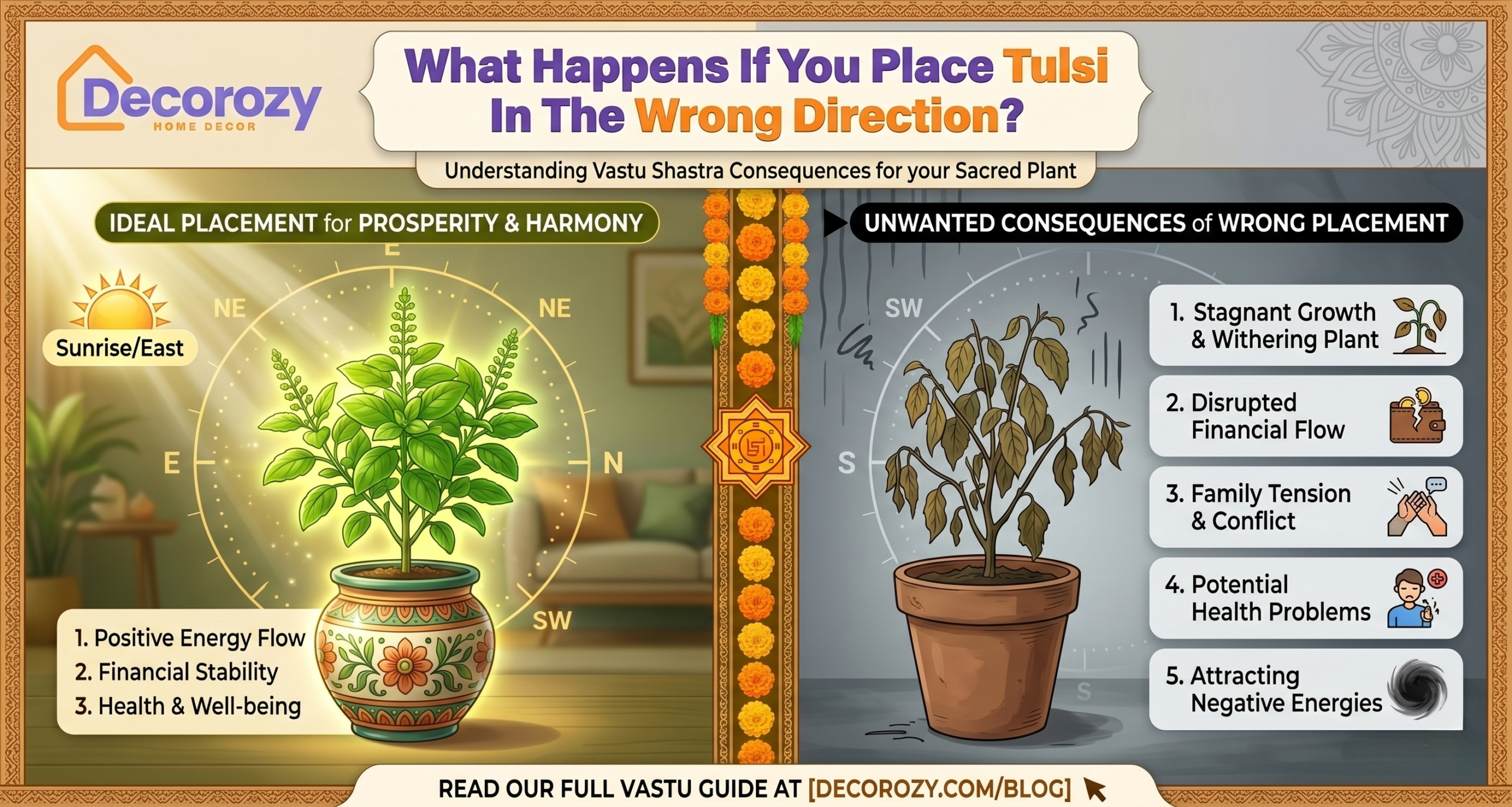
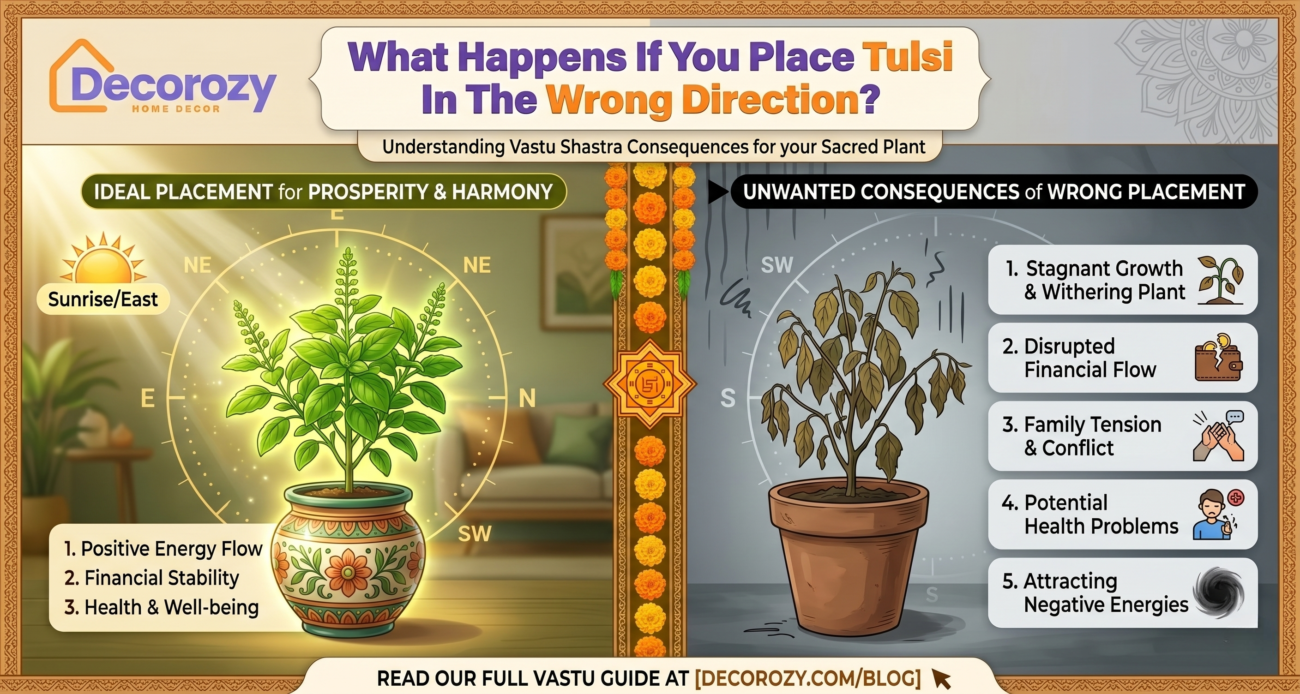
Quick Answer: Placing a Tulsi plant in the wrong direction, particularly the South or South-West, can attract negative energy, cause financial instability, and create family discord according to Vastu. The ideal placement is strictly the North, North-East, or East direction to ensure positive vibrations and prosperity.
Understanding What Happens If You Place Tulsi In The Wrong Direction
In Vastu Shastra, the holy basil plant is considered a powerful generator of positive cosmic energy.
Its placement directly influences the spiritual, mental, and financial well-being of the entire household.
When exploring what happens if you place tulsi in the wrong direction, the primary concern is severe energy blockage.
Placing the plant in the South, traditionally associated with the deity of death (Yama), is highly discouraged by experts.
This incorrect alignment can lead to continuous health issues and unexpected financial losses for the family.
The Vastu Effects of Incorrect Tulsi Placement
Beyond the South, the South-West direction is equally detrimental for the sacred basil plant.
Vastu experts state that a South-West placement can spark regular conflicts and misunderstandings among family members.
It disrupts the baseline harmony of the house, creating a constant atmosphere of tension and emotional stress.
Additionally, placing the plant in a dark, unventilated corner stunts its physical growth and vitality.
A drying or decaying Tulsi is considered an ominous sign, reflecting a direct drain on the home’s overall prosperity.
Avoiding What Happens If You Place Tulsi In The Wrong Direction
To successfully avoid what happens if you place tulsi in the wrong direction, always choose the North, North-East, or East.
The North is associated with Kubera, the god of wealth, effectively inviting financial prosperity into your space.
The North-East (Ishan Kona) is the most auspicious zone, promoting spiritual growth, clarity, and deep mental peace.
Ensure the area immediately surrounding the plant is impeccably clean, well-lit, and free from clutter or garbage bins.
Never place the plant near thorny bushes, brooms, or footwear, as this instantly neutralizes its positive aura.
Practical Tips for Nurturing Your Holy Basil
Beyond directional placement, the physical care of your plant is crucial for maintaining its potent Vastu benefits.
Ensure it receives adequate natural sunlight (at least 6-8 hours daily) and moderate, consistent watering.
Always plant it in a clean, earthen pot rather than synthetic plastic containers for better grounding and energy flow.
Prune dried leaves regularly, as dead plant matter naturally attracts stagnant, negative energy.
By combining optimal physical care with correct spatial placement, you maximize the plant’s spiritual and environmental benefits.
Understanding the fundamental Vastu principles behind plant placement is essential for curating a harmonious, prosperous home. Always respect these spatial energy dynamics to keep your household thriving. For more expert tips on home decor, Vastu optimization, and indoor gardening, explore our comprehensive guides at Decorozy.com today!
FAQ Schema
- Question 1: Can we keep the Tulsi plant on the balcony?
- Answer: Yes, you can keep a Tulsi plant on the balcony, provided it faces the North, North-East, or East direction. Ensure the balcony receives ample sunlight and remains perfectly clean to attract positive energy and maintain strict Vastu compliance.
- Question 2: What should I do if my Tulsi plant dries up completely?
- Answer: If your Tulsi plant dries up, do not keep it in the house, as dead plants attract negative energy. Respectfully dispose of it in a flowing river, lake, or bury it in clean soil, and promptly replace it with a new, healthy plant.
- Question 3: Is it okay to plant Tulsi directly in the ground?
- Answer: According to Vastu Shastra, it is highly recommended to plant Tulsi in a dedicated earthen pot or on a raised platform (Tulsi Chaura). This elevates its sacred status and keeps it safe from accidental foot traffic and impurities.