The Sacred Connection Between Tulsi and Lord Vishnu Fully Explained
Hindu mythology is deeply enriched by profound tales of unwavering devotion and divine grace. Among these ancient narratives, the connection between Tulsi and Lord Vishnu stands out as a cornerstone of spiritual practice.
For countless generations, the holy basil plant has occupied a supreme place in Vedic traditions and daily household rituals. Understanding this fascinating mythological bond offers profound insights into both ancient scriptures and modern mindful living.
Quick Answer: The connection between Tulsi and Lord Vishnu originates from ancient Hindu scriptures where Tulsi, a devoted worshipper, was granted a divine boon. Pleased by her supreme devotion, Lord Vishnu declared that his worship would never be complete without the offering of sacred Tulsi leaves.
Understanding the Connection Between Tulsi and Lord Vishnu
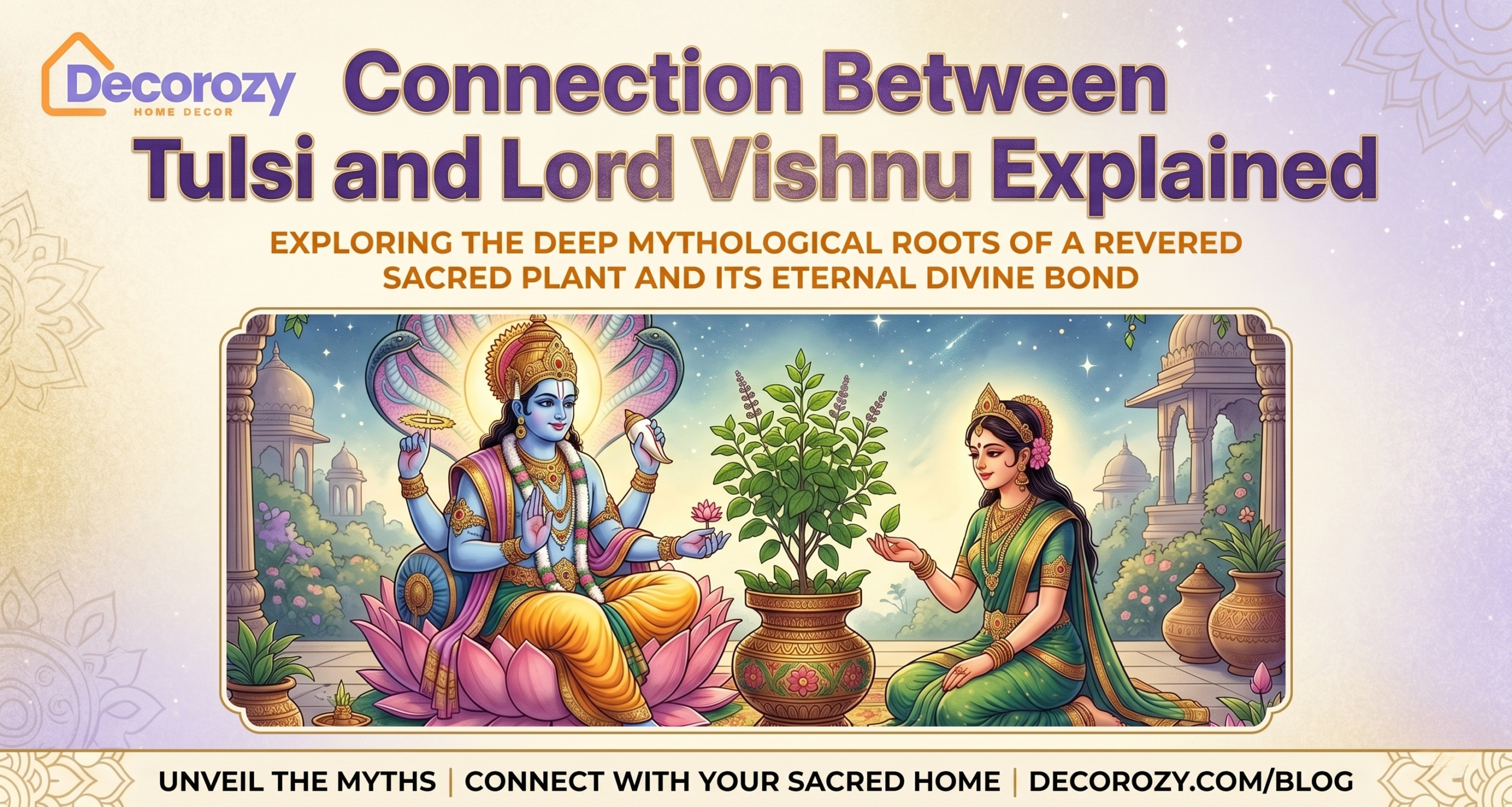
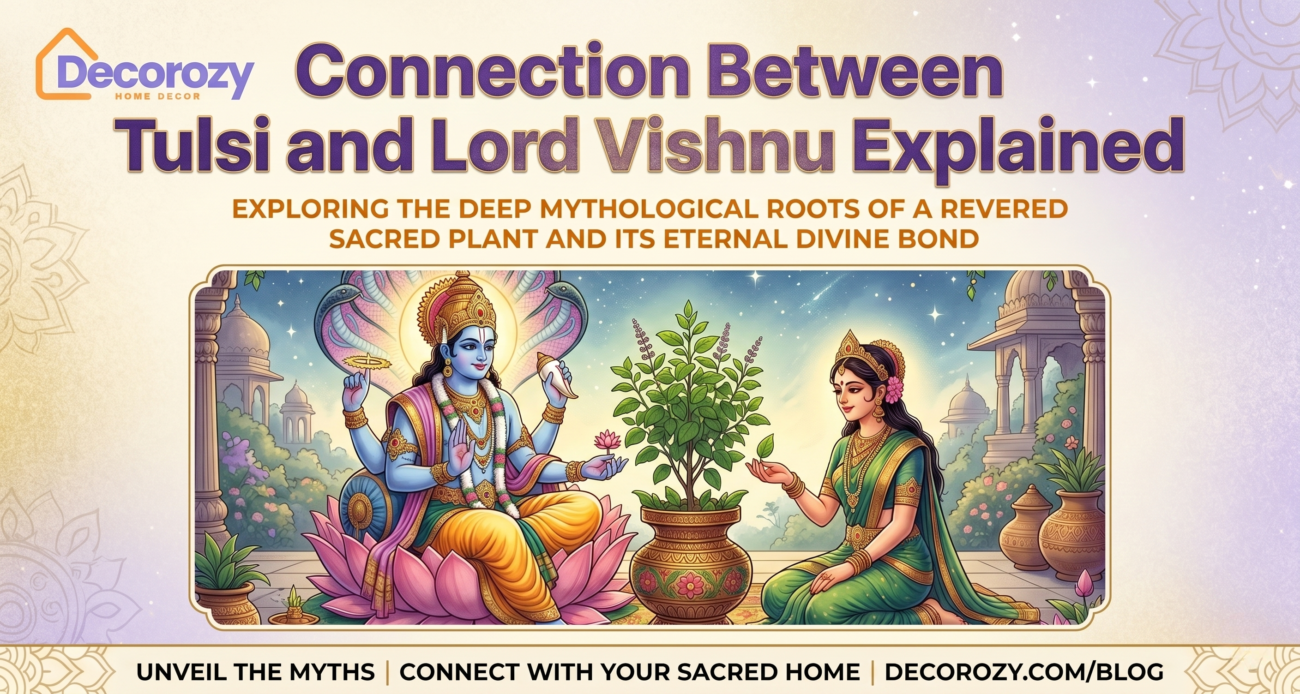
The origin story of this divine bond begins in ancient Puranic texts with the legend of the demon king Jalandhara and his wife, Vrinda. Vrinda was an ardent devotee of Lord Vishnu, and her unwavering chastity created an invincible shield of protection around her husband.
Because of her pure devotion, the gods were entirely unable to defeat Jalandhara in cosmic battles. To restore universal balance and protect the heavens, Lord Vishnu took the painful step of disguising himself as Jalandhara, effectively breaking Vrinda’s vow of chastity.
Realizing she had been deceived by the deity she worshipped, a heartbroken Vrinda cursed Lord Vishnu to turn into the black Shaligram stone. Deeply moved by her supreme devotion and immense grief, Lord Vishnu accepted her curse with immense grace.
In return, he blessed her to be immortalized and reborn as the holy Tulsi plant. He proclaimed that she would forever remain closest to his heart, forging an eternal spiritual bond.
Why the Connection Between Tulsi and Lord Vishnu Matters Today
In contemporary Hindu households, this sacred mythology directly translates into essential daily rituals. The holy basil remains an absolute prerequisite for any religious ceremony dedicated to the preserver of the universe.
Because of Vishnu’s eternal vow, offering a single, freshly plucked Tulsi leaf is believed to please him more than the most lavish feasts. It represents ultimate purity, total surrender, and a direct channel to divine blessings.
Furthermore, this spiritual relationship is celebrated annually through the magnificent festival of Tulsi Vivah. This vibrant ceremony involves the ritualistic marriage of the Tulsi plant to the Shaligram stone, symbolizing the union of the soul with the supreme being.
Tulsi Vivah also holds significant cultural importance across India. It officially marks the end of the dark monsoon months and ushers in the highly auspicious Hindu wedding season.
How to Honor This Divine Bond in Daily Worship
To properly honor this ancient spiritual legacy, devotees must cultivate a healthy holy basil plant in a clean, elevated, and sacred space. A dedicated courtyard, eastern-facing window, or sunlit balcony works best to ensure the plant thrives.
It is customary to water the plant early every morning while chanting traditional Vedic mantras dedicated to Lord Vishnu. Lighting a pure ghee lamp near the plant every evening is a powerful practice that dispels household negativity and invites lasting peace.
When harvesting leaves for daily prayer offerings, one must always do so gently and only after taking a purifying bath. This ensures the energetic purity of the offering remains entirely intact for the deity.
Finally, devotees must strictly avoid plucking these sacred leaves on Sundays, during eclipses, or on the fasting day of Ekadashi. Respecting these specific cosmic timings honors the living sanctity of the plant itself.
The Synergistic Health and Spiritual Benefits
Beyond its captivating mythological importance, the holy basil offers remarkable Ayurvedic and physiological advantages. It acts as a potent natural adaptogen, actively helping the human body manage and reduce daily physiological stress.
Consuming a few leaves steeped in warm water dramatically boosts the immune system and promotes excellent respiratory health. It serves as a highly effective, time-tested natural remedy for seasonal colds, persistent coughs, and viral infections.
On a purely energetic level, the mere presence of the plant purifies the surrounding environment. It naturally cleanses the aura of your living space, aligning perfectly with Lord Vishnu’s cosmic role as the ultimate preserver and protector.
The eternal bond between the holy basil and the supreme deity is a beautiful testament to the transformative power of devotion. By integrating these sacred practices, you invite profound spiritual harmony and physical well-being into your daily life. Explore more inspiring insights into spiritual decor, ancient traditions, and mindful living on Decorozy.com today!
FAQ Schema
- Question 1: Why is Tulsi dear to Lord Vishnu?
- Answer: Tulsi is dear to Lord Vishnu because of her past life as Vrinda, a steadfast devotee. Pleased by her unwavering purity and devotion, Vishnu blessed her to become the sacred Tulsi plant, making her an essential and eternal part of his daily worship.
- Question 2: Can we offer Tulsi leaves to Lord Shiva?
- Answer: No, Tulsi leaves are traditionally not offered to Lord Shiva. According to Hindu scriptures, Tulsi is exclusively sacred to Lord Vishnu and his various avatars, whereas Bilva (Bael) leaves are strictly reserved for the worship and rituals of Lord Shiva.
- Question 3: What is the cultural significance of Tulsi Vivah?
- Answer: Tulsi Vivah is a sacred Hindu festival that re-enacts the ceremonial marriage between the Tulsi plant and Lord Vishnu in his Shaligram form. It spiritually signifies the end of the monsoon season and marks the auspicious beginning of the traditional wedding season.