Yajurveda vs Samaveda vs Rigveda: Understanding Ancient Texts
Welcome to Decorozy’s deep dive into ancient wisdom. When exploring Hindu scriptures, understanding the nuances of Yajurveda vs Samaveda vs Rigveda is absolutely essential. These profound texts form the foundational bedrock of Vedic literature and philosophy.
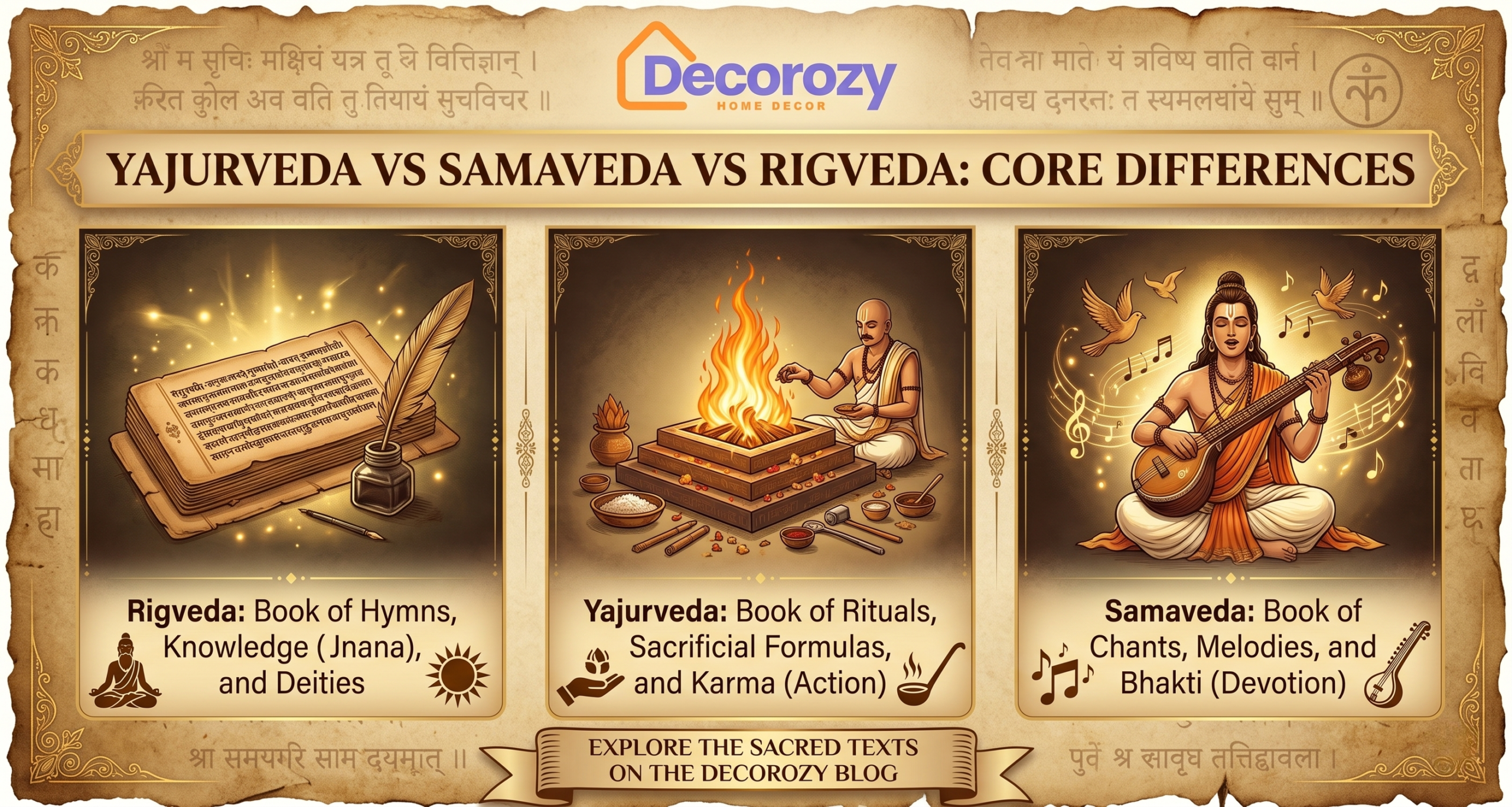
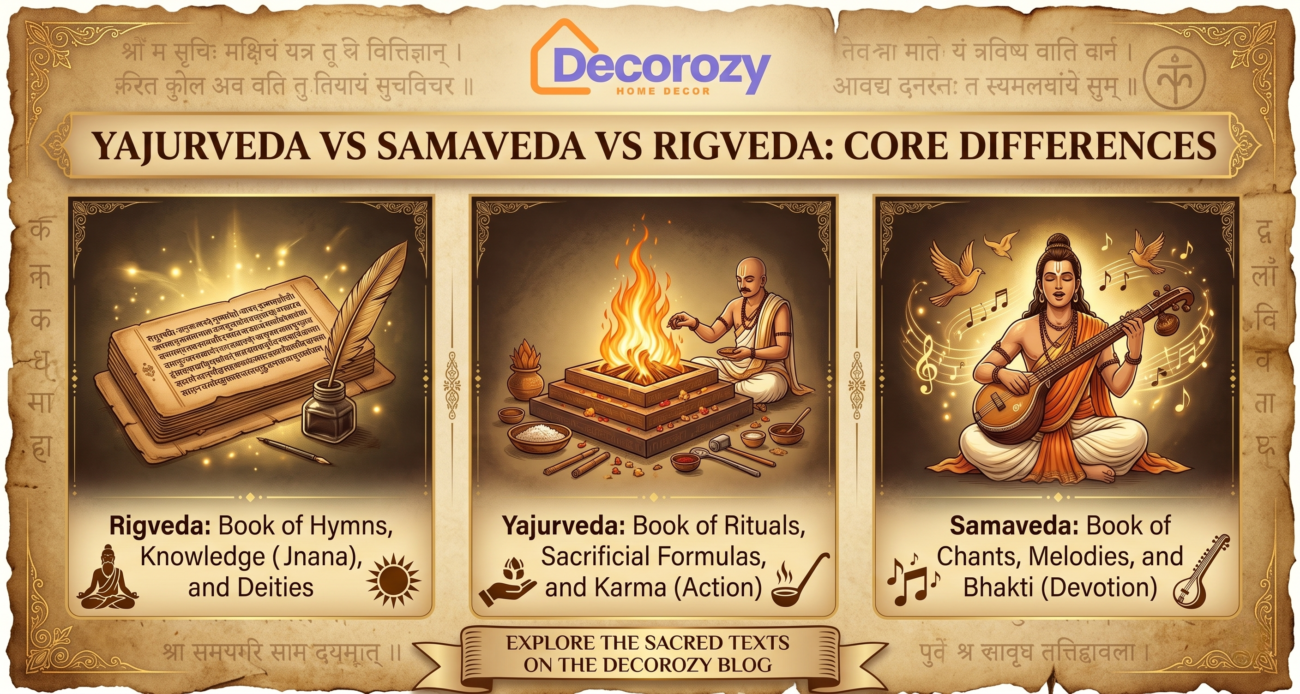
Quick Answer: The Rigveda is the oldest text, focusing on poetic hymns praising deities. The Samaveda translates these hymns into musical chants and melodies. The Yajurveda serves as a practical guidebook, detailing the specific rituals and mantras required for ancient Vedic sacrifices.
Core Concept: Yajurveda vs Samaveda vs Rigveda Explained
To grasp the foundation of Vedic literature, we must look at this primary triad of scriptures. Each ancient text serves a highly specialized and distinct purpose in historical rituals.
The Rigveda acts as the foundational source of spiritual knowledge. It contains over a thousand hymns dedicated to various natural forces, cosmic deities, and philosophical inquiries.
Conversely, the Samaveda focuses strictly on the musicality of devotion. It masterfully reshapes Rigvedic verses into structured, rhythmic chants for ancient priests to sing during ceremonies.
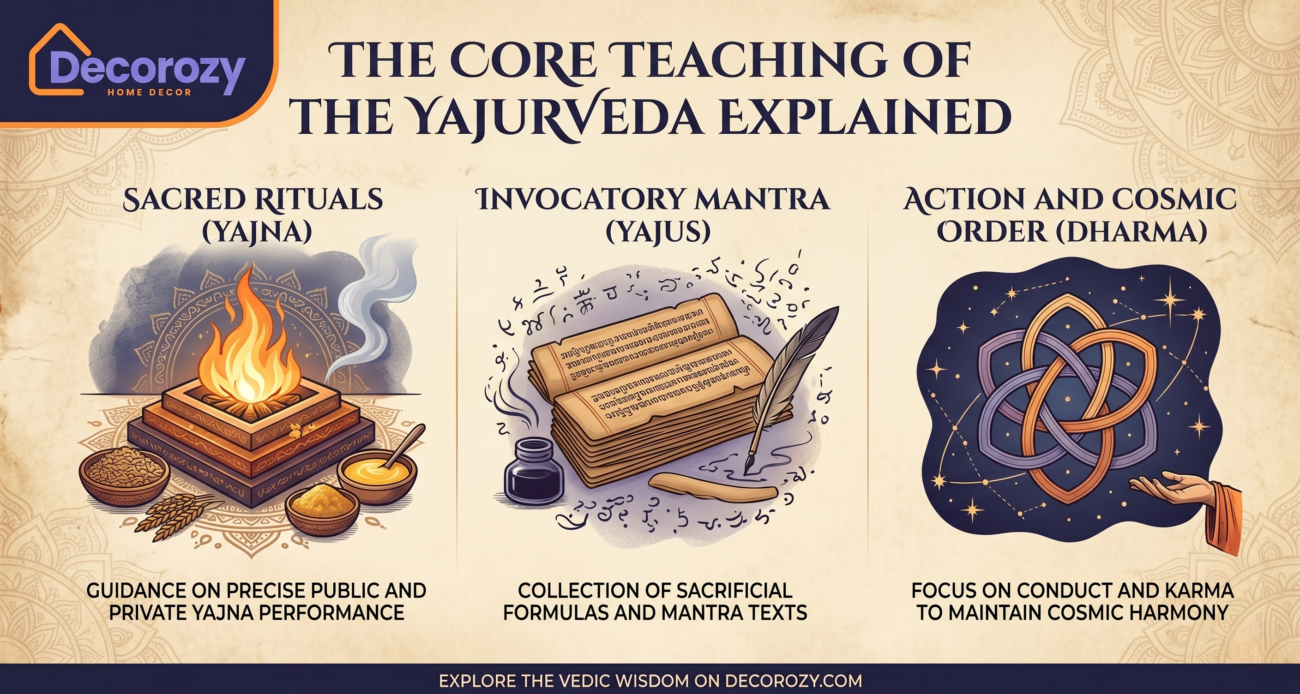
Finally, the Yajurveda brings practical, actionable application to these spiritual verses. It provides exact formulas, measurements, and procedures for conducting complex religious ceremonies.
Why Comparing Yajurveda vs Samaveda vs Rigveda Matters
Studying the distinct differences between Yajurveda vs Samaveda vs Rigveda reveals the evolution of human spirituality. It clearly illustrates how early societies organized their beliefs and communal duties.
The Rigveda provides critical historical insights into early Indo-Aryan culture. It remains an indispensable primary source for global historians, archaeologists, and linguists alike.
The Samaveda represents the world’s earliest known structured musical tradition. It actively laid the crucial groundwork for classical Indian music systems that are still practiced today.
The Yajurveda highlights the immense importance of precision and order in ancient rituals. It demonstrates how early communities structured their social, spiritual, and civic responsibilities.
Detailed Analysis: Exploring the Texts
Let us break down the specific structural characteristics of each text. The Rigveda is highly organized into ten distinct books, which are historically known as Mandalas.
These Mandalas contain rich poetry that relies heavily on complex metaphors. They reflect a deep, contemplative reverence for nature, human existence, and the broader cosmos.
The Samaveda is significantly shorter and relies almost entirely on the Rigveda. However, its intense focus on melody (Saman) creates a completely different, deeply immersive spiritual experience.
The Yajurveda is uniquely split into two distinct parts: the White (Shukla) and the Black (Krishna). The Black includes theological commentary mixed alongside the verses, while the White cleanly separates them.
Understanding these ancient Sanskrit texts vastly enriches our appreciation for historical wisdom. Each Veda plays a necessary, complementary role in the broader tapestry of Hindu philosophy.
For more authoritative insights into historical concepts and lifestyle inspiration, explore our extensive library here at Decorozy.com. Join our community and elevate your knowledge today!
FAQ Schema
- Question 1: Which is the oldest among the three Vedas?
- Answer: The Rigveda is universally recognized as the oldest of the Vedas, composed roughly between 1500 and 1000 BCE. It serves as the foundational text from which the other Vedas draw heavily.
- Question 2: What is the main difference between the Rigveda and Samaveda?
- Answer: While the Rigveda is a massive collection of original poetic hymns meant to be recited, the Samaveda takes those exact hymns and converts them into musical melodies and chants for specific rituals.
- Question 3: Why is the Yajurveda divided into two separate parts?
- Answer: The Yajurveda is divided into the Black (Krishna) and White (Shukla) traditions based on formatting. The Black Yajurveda mixes sacrificial formulas with explanatory commentary, whereas the White Yajurveda keeps them separated.