The Language of Yajurveda and Its Importance in Ancient History
Understanding ancient scriptures unlocks the hidden structural foundations of early human history, philosophy, and spiritual evolution.
Among the four primary Vedas, the texts guiding sacred ceremonial rituals hold a remarkably unique position in historical literature.
Exploring the language of Yajurveda and its importance reveals profound insights into how early societies organized their most critical spiritual practices.
Quick Answer: The language of Yajurveda is Vedic Sanskrit, featuring a unique blend of poetic mantras and structured prose. Its importance lies in being the definitive guidebook for ancient sacrificial rituals, detailing the precise formulas required by priests to perform sacred ceremonies successfully.
Demystifying the Language of Yajurveda and Its Importance
The linguistic structure of this ancient text represents a fascinating transitional phase in the evolution of classical Indian languages.
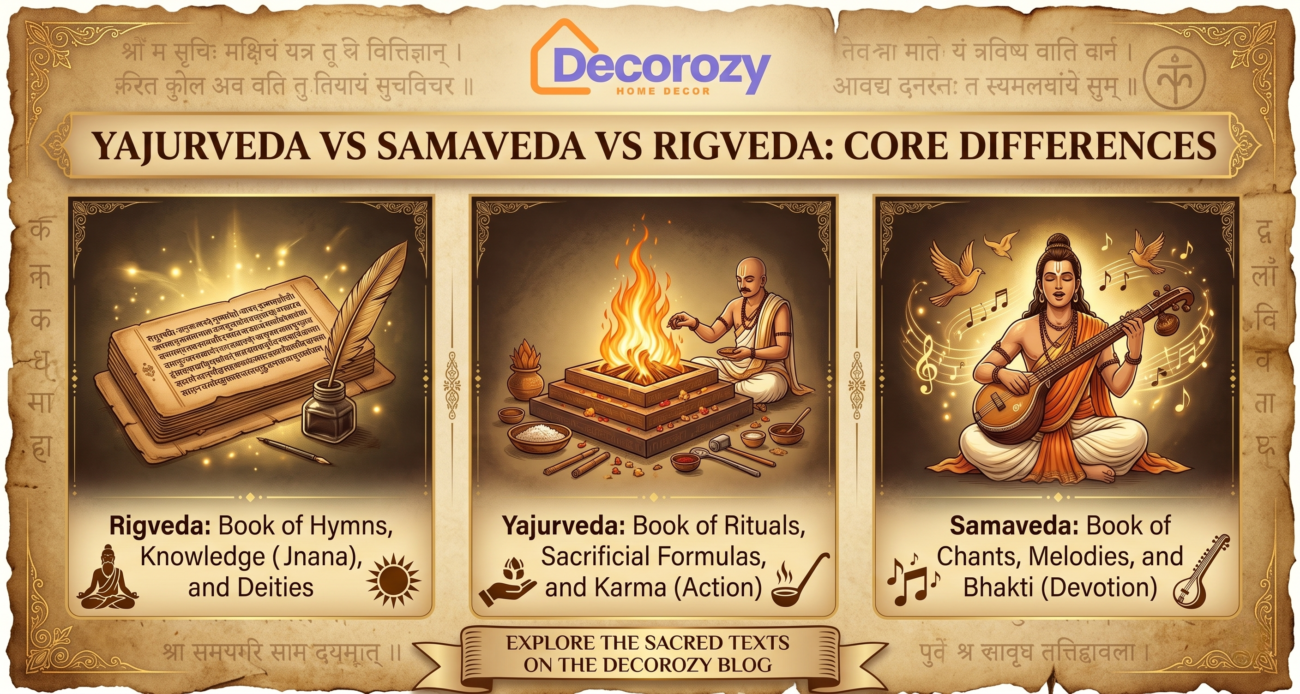
Unlike the Rigveda, which is entirely poetic, this text introduces a highly structured form of early prose alongside its metrical verses.
This specific dialect of Vedic Sanskrit was designed less for artistic expression and more for absolute, functional precision.
Every syllable was crafted to be spoken aloud during complex ceremonies by the Adhvaryu, the chief officiating priest.
Understanding the language of Yajurveda and its importance requires recognizing that these words were considered inherently powerful and transformative.
The prose sections, known as the Brahmanas, provide detailed theological explanations for the verses, creating a comprehensive manual for action.
This linguistic shift marks the moment when oral tradition began to require strict, instructional documentation to maintain accuracy.
Why the Language of Yajurveda and Its Importance Matters Today
You might wonder why a centuries-old manual of rituals holds any relevance in our modern, fast-paced world.
The answer lies in how these texts shaped the organizational frameworks, discipline, and philosophical thought of early human civilization.
By detailing the exact geometry of altars and the timing of offerings, the text fostered early advancements in mathematics and astronomy.
The language of Yajurveda and its importance cannot be overstated when examining the birth of systematic, procedural thinking.
Furthermore, this Veda is divided into two distinct collections: the Shukla (White) and the Krishna (Black) Yajurveda.
The Shukla emphasizes a clear separation between the instructional prose and the chanting verses, highlighting a drive toward organized clarity.
The Krishna blends the two together, offering a raw, integrated look at how these rituals were actively taught and passed down.
Studying these divisions helps modern linguists and historians map the geographical and cultural shifts of ancient populations.
A Detailed Analysis of Vedic Sanskrit Rituals
To truly grasp the weight of these texts, we must look at how the language functioned as a living, performative tool.
In the context of the Yajurveda, language was not merely descriptive; it was an active participant in the physical world.
The exact pronunciation, meter, and tone of the Vedic Sanskrit mantras were believed to directly influence the cosmos and nature.
This belief required a highly sophisticated understanding of phonetics, acoustics, and human vocalization.
The resulting linguistic discipline laid the foundational groundwork for later, highly advanced Sanskrit grammatical systems.
Today, the echoes of this structured approach can still be seen in how we organize, document, and execute complex modern procedures.
By preserving the exact words of their ancestors, the authors of the Yajurveda ensured their cultural identity survived millennia.
Ultimately, the structural harmony found in these ancient texts reminds us of the timeless human desire for order and meaning.
Whether designing a physical space or constructing a philosophical framework, the principles of balance and precision remain universal.
Discover more ways to bring structured harmony, mindful design, and intentional living into your daily life by exploring the expert resources at Decorozy.com.
FAQ Schema
- Question 1: What language is the Yajurveda written in?
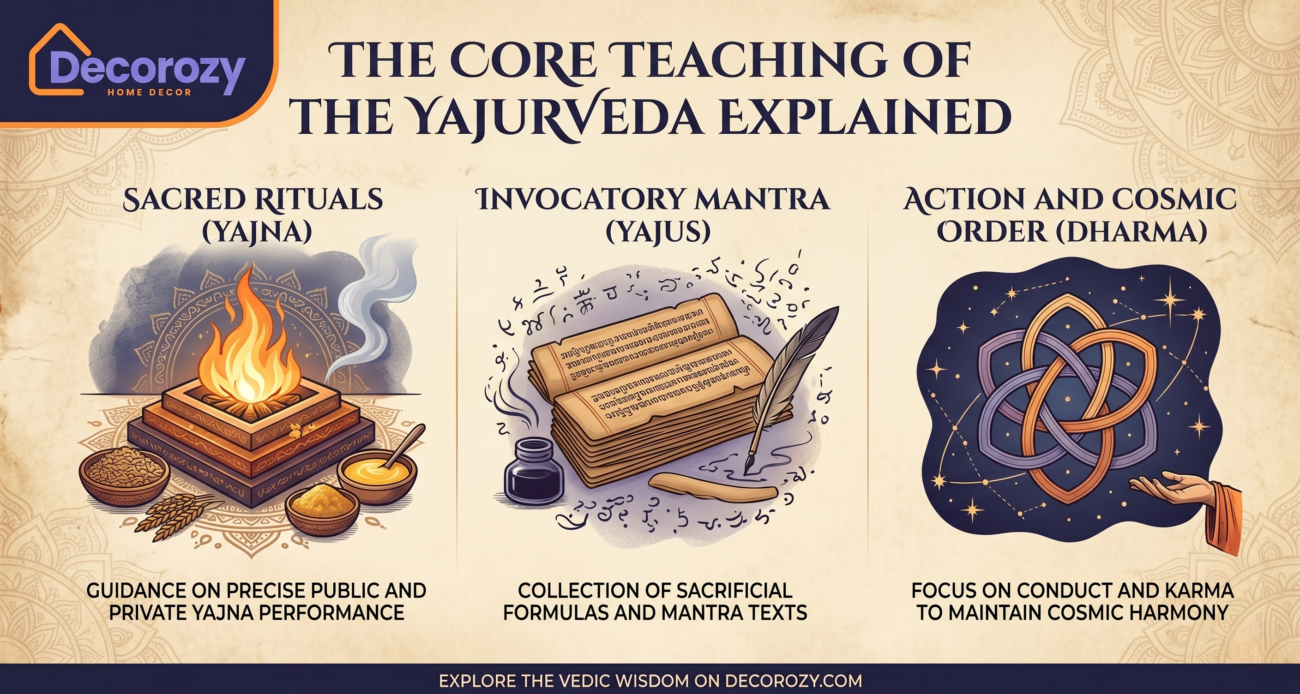
- Answer: The Yajurveda is written in Vedic Sanskrit. Uniquely among the earliest Vedas, it contains both metrical verses (mantras) and instructional prose detailing how to perform specific rituals.
- Question 2: What is the primary purpose and theme of the Yajurveda?
- Answer: The main purpose of the Yajurveda is to serve as a practical guidebook for priests. It contains the exact sacrificial formulas, prayers, and instructions needed to execute complex religious ceremonies.
- Question 3: What are the two main branches of the Yajurveda?
- Answer: The Yajurveda is divided into the Shukla (White) Yajurveda and the Krishna (Black) Yajurveda. The White separates the mantras from the explanations, while the Black intermingles the verses with the prose commentary.