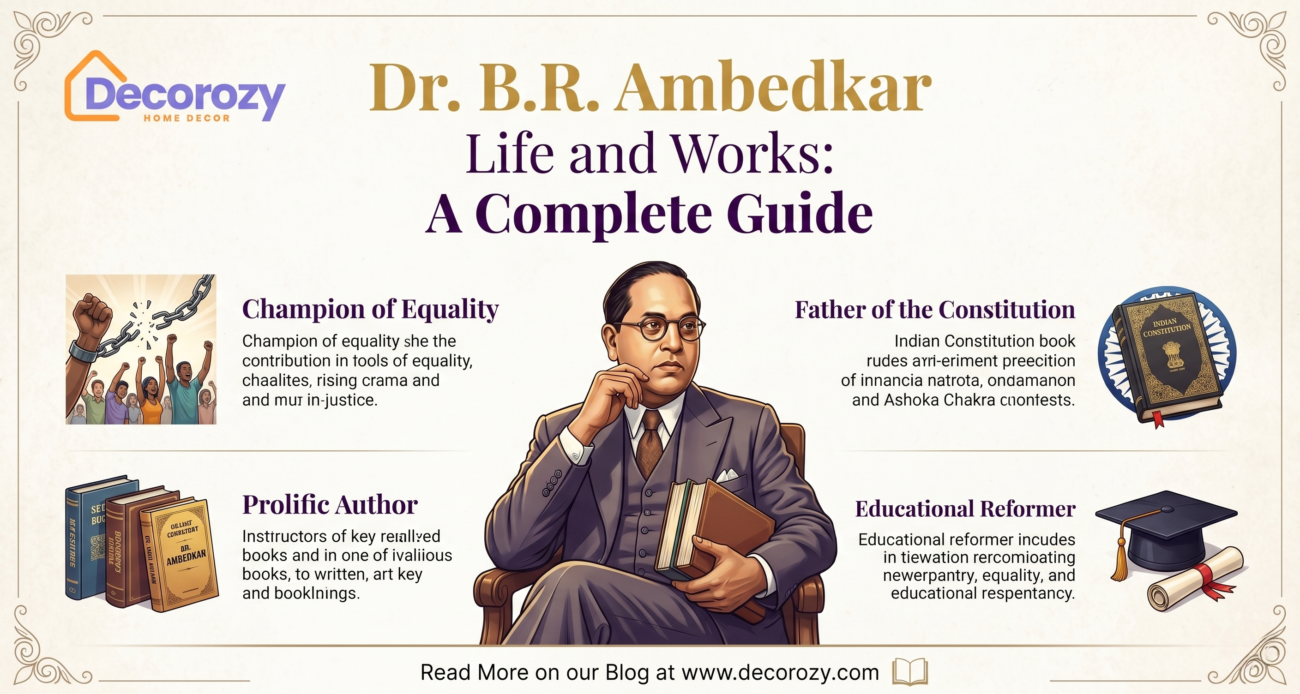
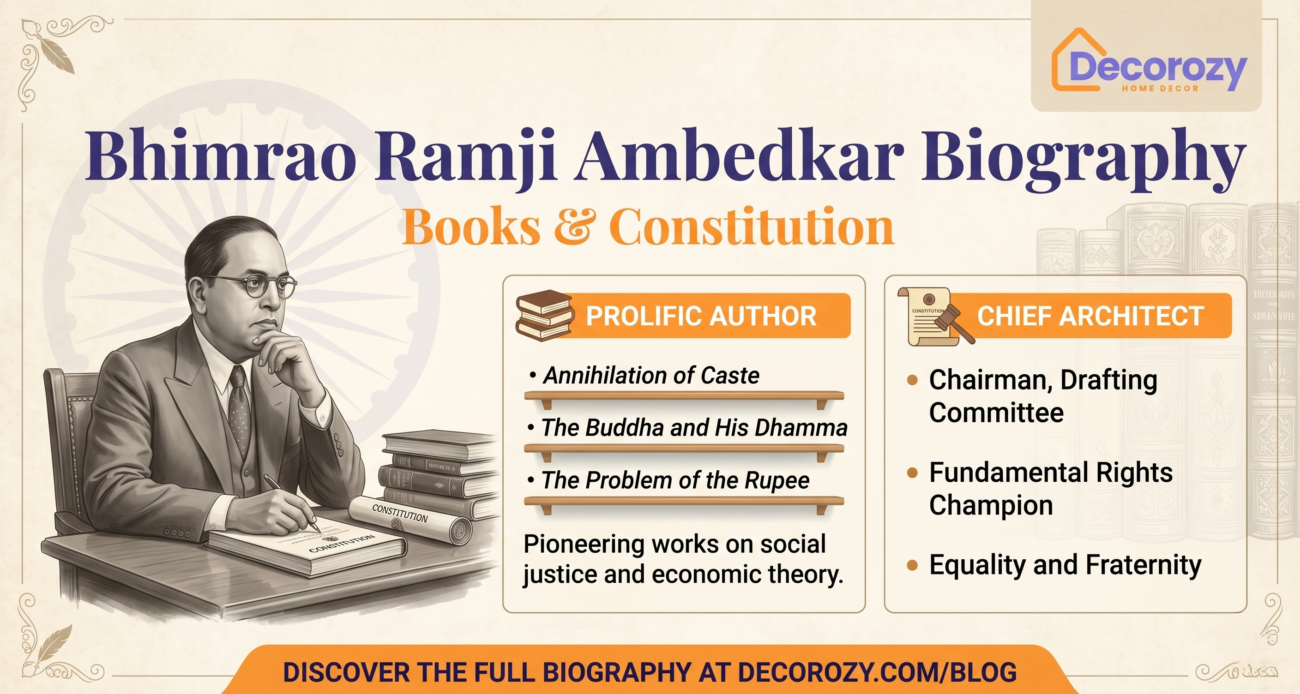
Dr. B.R. Ambedkar Life and Works: Legacy of a Visionary
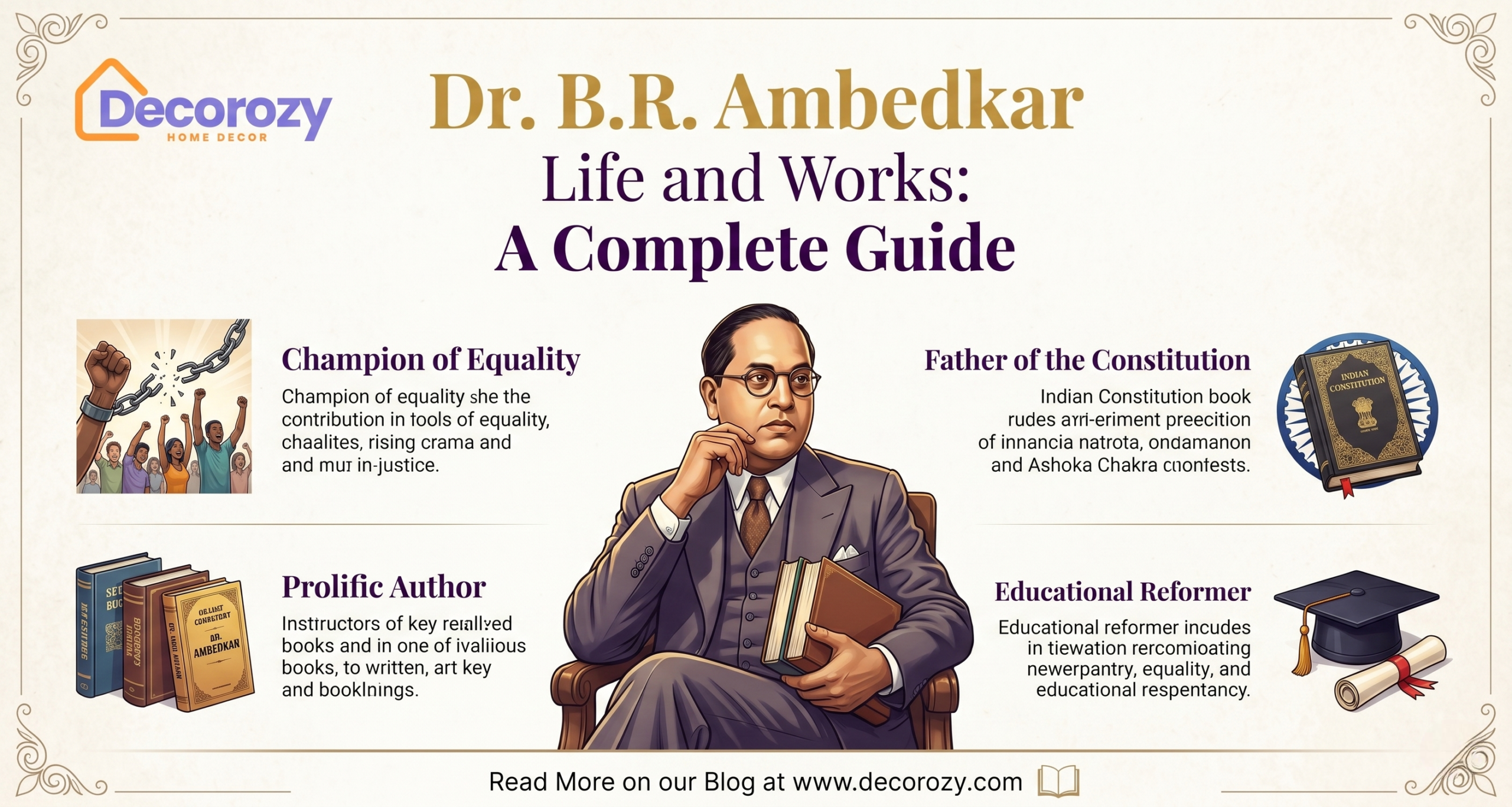
Understanding the monumental Dr. B.R. Ambedkar life and works is essential for grasping the foundation of modern India.
His relentless fight against social discrimination fundamentally shaped the democratic framework of the world’s largest republic.
As a visionary leader, economist, and legal scholar, his legacy continues to inspire millions globally.
Quick Answer: Dr. B.R. Ambedkar was a profound Indian jurist, economist, and social reformer who chaired the Drafting Committee of the Indian Constitution. His life and works focused on eradicating social inequality, advocating for Dalit rights, and establishing a democratic, egalitarian society.
Understanding Dr. B.R. Ambedkar Life and Works
Born on April 14, 1891, Bhimrao Ramji Ambedkar faced severe societal discrimination from a very young age.
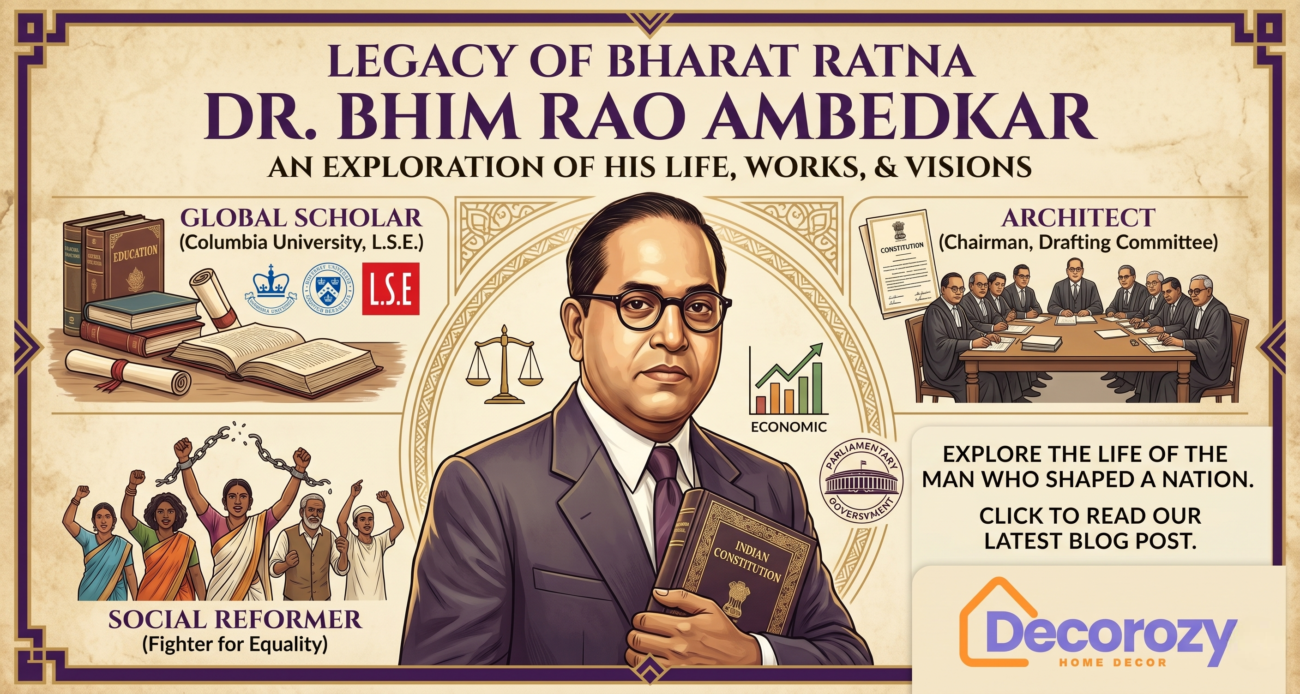
Despite these immense hurdles, he successfully pursued higher education at Columbia University and the London School of Economics.
This stellar academic background laid the critical intellectual groundwork for his future political and social activism.
Dr. B.R. Ambedkar life and works are largely characterized by a continuous struggle against the oppressive caste system.
He organized pivotal movements, such as the historic Mahad Satyagraha in 1927, demanding equal access to public water sources.
These grassroots campaigns were highly effective in mobilizing marginalized communities and demanding basic human rights.
His journey from a socially ostracized student to independent India’s first Minister of Law and Justice is historically unprecedented.
Ambedkar recognized early on that true political freedom was entirely meaningless without profound social and economic equality.
The Importance of Dr. B.R. Ambedkar Life and Works in Modern India
The profound impact of Dr. B.R. Ambedkar life and works is most visible in the Constitution of India.
As Chairman of the Drafting Committee, he ensured robust constitutional guarantees for civil liberties and fundamental freedoms.
He pioneered the inclusion of affirmative action policies to uplift and empower historically disadvantaged communities.
Furthermore, Ambedkar was a brilliant economist who played a foundational role in establishing the Reserve Bank of India (RBI).
His conceptualization of the RBI was based directly on the economic guidelines he presented to the Hilton Young Commission.
This economic foresight helped stabilize the nation’s financial framework during its critical formative years.
He was also a fierce early advocate for women’s rights, drafting the comprehensive Hindu Code Bill.
Although it faced fierce conservative opposition, this legislative push fundamentally transformed India’s legal landscape regarding inheritance and marriage.
Detailed Analysis: Major Publications and Political Milestones
To fully comprehend his unmatched intellect, one must examine his extensive literary and political contributions.
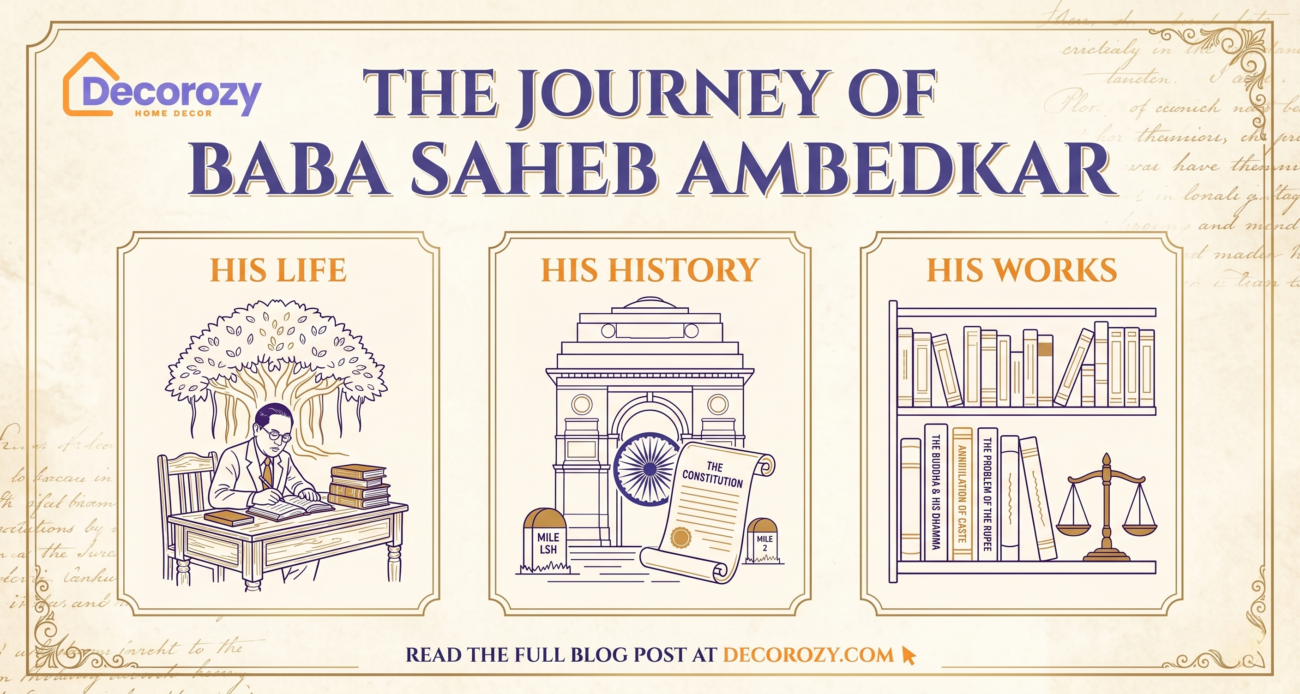
His seminal text, Annihilation of Caste (1936), remains a masterful, data-driven critique of social hierarchies and religious orthodoxy.
In this work, he argued meticulously that inter-caste marriages were the only true mechanism for dismantling rigid caste barriers.
Ambedkar also formed several vital political entities, including the Independent Labour Party and the Scheduled Castes Federation.
These organizations were highly instrumental in securing direct political representation for laborers and oppressed classes.
His political strategy consistently focused on empowering the marginalized through constitutional, non-violent, and democratic means.
In 1956, marking a final ideological shift, Ambedkar embraced Buddhism alongside hundreds of thousands of his followers.
This mass conversion was a profound political statement and a final rejection of the inequalities embedded in the traditional social order.
The unparalleled legacy of Dr. B.R. Ambedkar serves as an enduring guiding light for social justice and democratic integrity.
His visionary blueprints for a fair and equitable society remain highly relevant and necessary in today’s global landscape.
For more insights on historical icons and thoughtful structural designs, continue exploring our expert articles right here on Decorozy.com.
FAQ Schema
- Question 1: What are the main works of Dr. B.R. Ambedkar?
- Answer: Dr. B.R. Ambedkar’s main works include drafting the Indian Constitution and writing influential books like “Annihilation of Caste,” “The Untouchables,” and “The Problem of the Rupee.” His efforts revolutionized Indian legal, social, and economic frameworks.
- Question 2: Why is Dr. B.R. Ambedkar called the Father of the Indian Constitution?
- Answer: He is called the Father of the Indian Constitution because he served as the Chairman of the Drafting Committee. He meticulously designed the constitutional framework, ensuring fundamental rights, structural equality, and strict protections for marginalized communities.
- Question 3: What was the primary goal of Dr. B.R. Ambedkar’s life?
- Answer: The primary goal of Dr. B.R. Ambedkar’s life was to annihilate the caste system and secure social, economic, and political equality for marginalized classes in India. He dedicated his career to empowering the oppressed through systemic legal reform.