If you are exploring the roots of ancient Vedic traditions, you might wonder why is the Yajurveda important in Hinduism. This ancient scripture is the backbone of traditional spiritual practices.
The ancient texts of India are vast and complex, yet they offer unparalleled insight into human spirituality. Understanding this specific Veda unlocks the practical application of ancient religious philosophy.
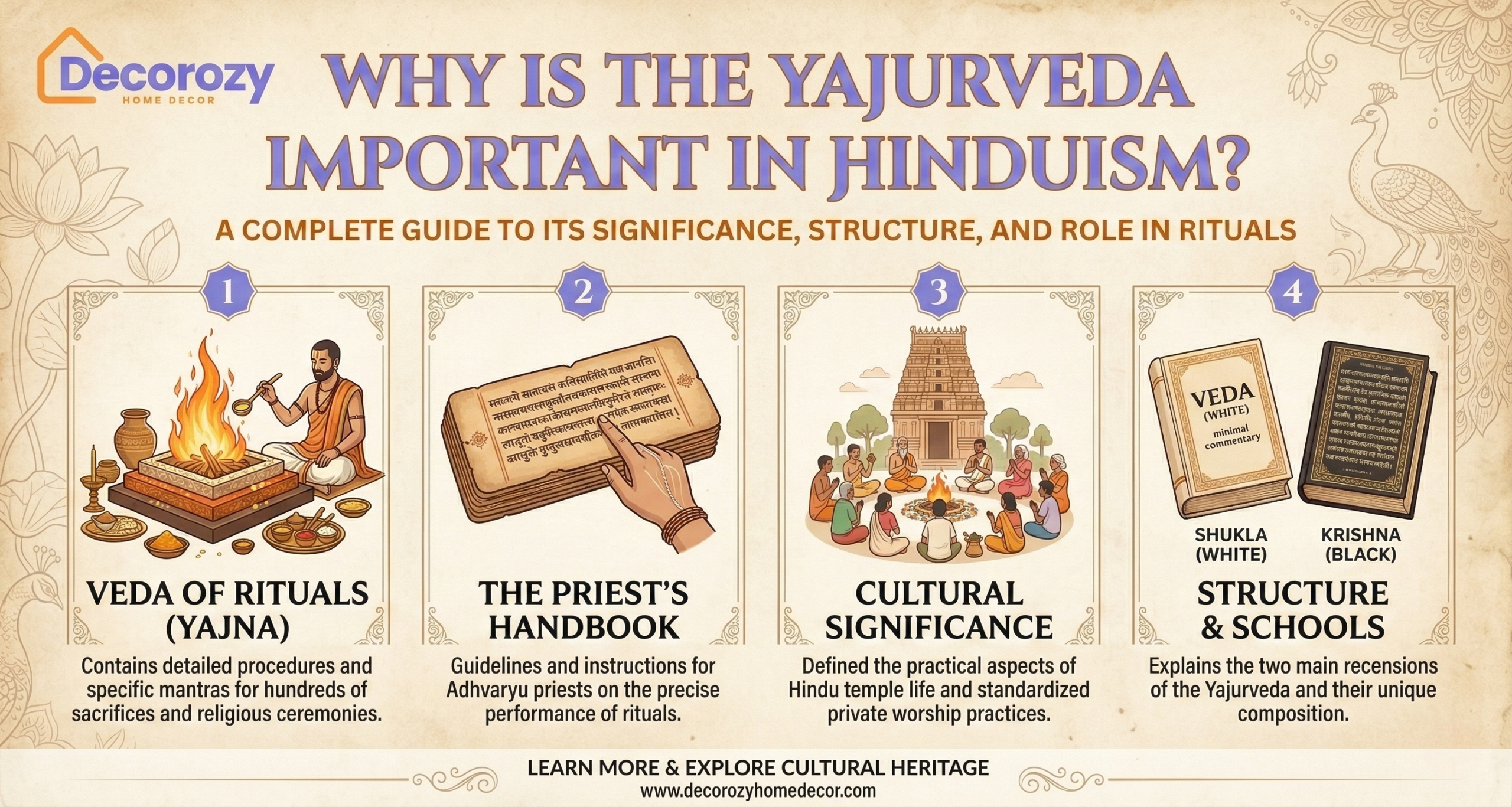
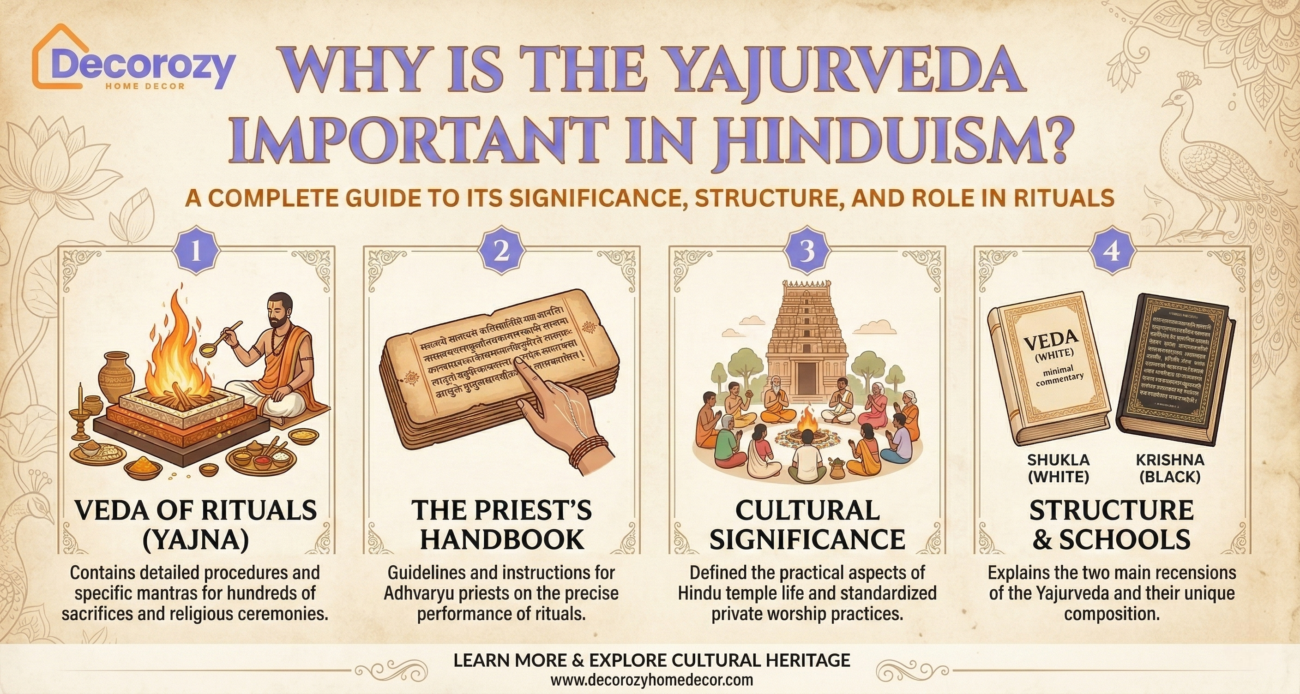
Quick Answer: The Yajurveda is vital in Hinduism because it serves as the ultimate guidebook for Vedic rituals and sacrifices (Yajnas). It provides the exact prose mantras and procedural formulas priests need to perform ceremonies, acting as a bridge between spiritual devotion and practical religious execution.
Core Concepts: Why is the Yajurveda Important in Hinduism’s Rituals?
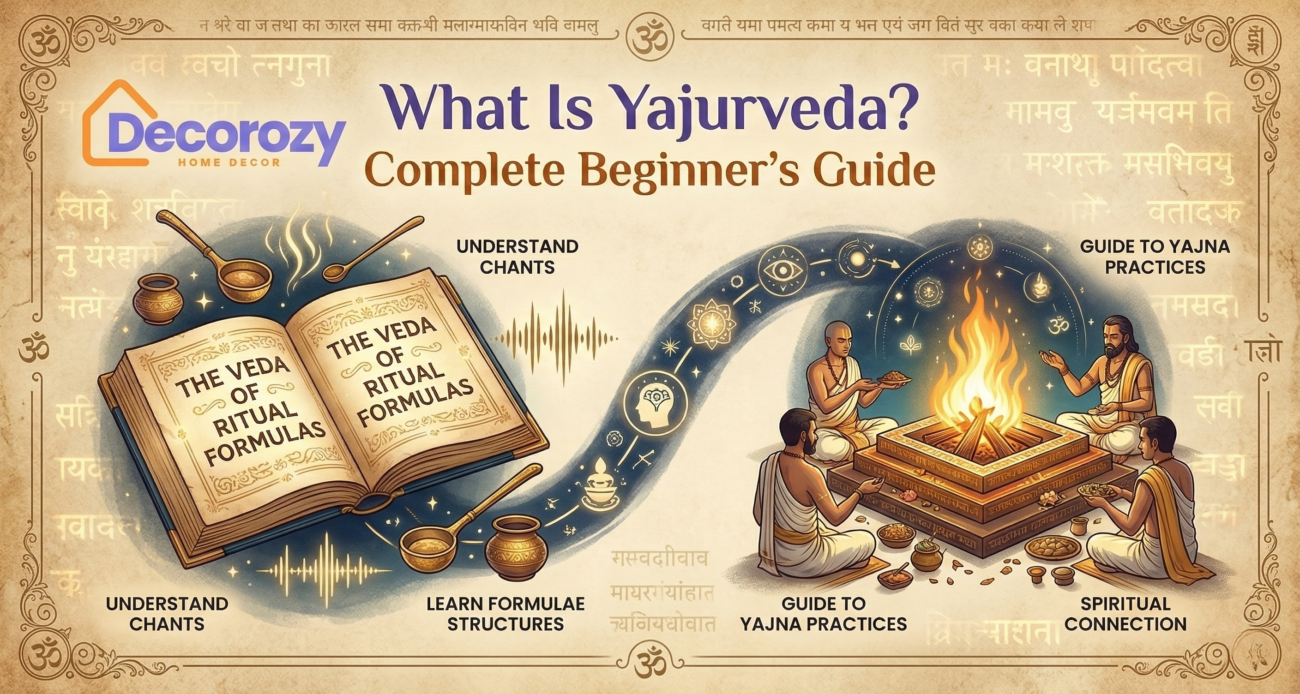
To fully understand why is the Yajurveda important in Hinduism’s rituals, we must look at its fundamental purpose. It is traditionally known as the “Veda of prose mantras.”
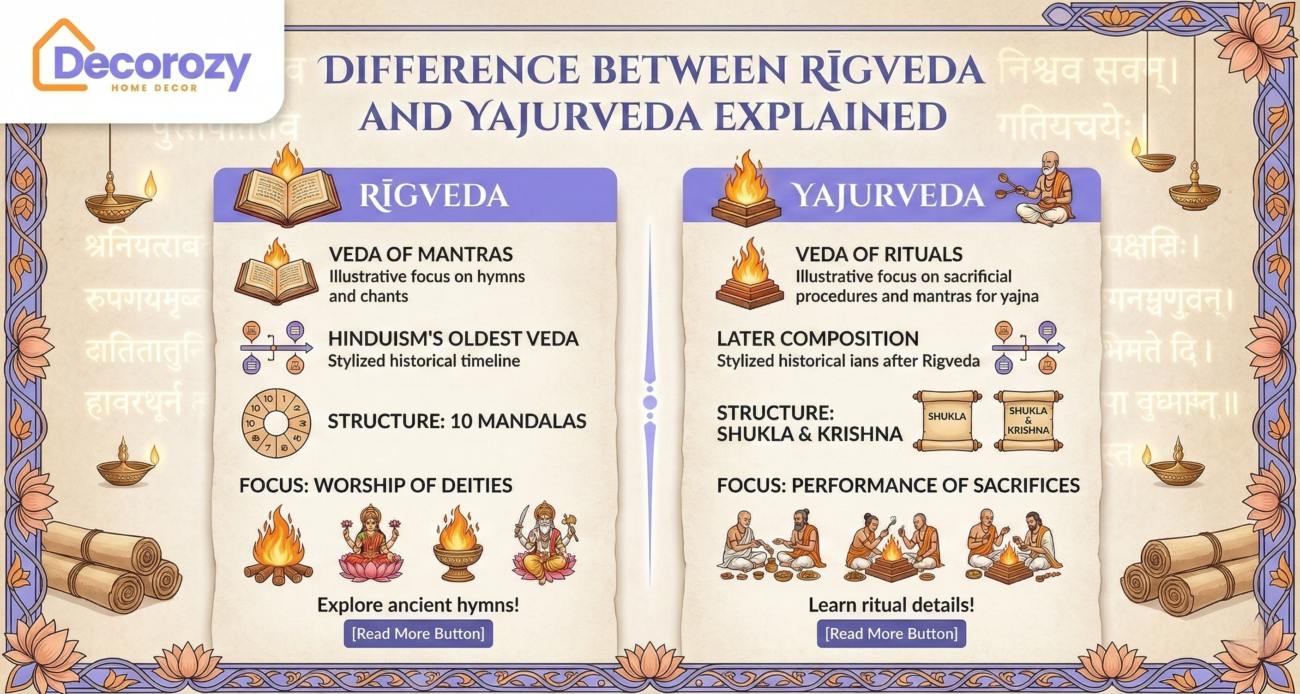
While the Rigveda focuses on poetic hymns of praise, the Yajurveda is highly pragmatic. It is a compilation of precise ritual offering formulas.
These formulas were specifically designed to be chanted by the Adhvaryu, the priest responsible for the physical details of a sacrifice. Without this text, the structured execution of ancient Yajnas would not have been possible.
The Two Branches: Shukla and Krishna
The text is divided into two primary recensions: the Shukla (White) Yajurveda and the Krishna (Black) Yajurveda. This division is crucial for Vedic scholars.
The Shukla Yajurveda contains purely the instructional mantras and formulas. It presents the chants in a clear, highly organized format.
Conversely, the Krishna Yajurveda blends the instructional mantras with prose commentary and theological explanations. This integrated approach helped priests understand both the “how” and the “why” of the rituals.
The Role of the Adhvaryu Priest
In ancient Vedic religion, ceremonies required a team of specialized priests. The Adhvaryu was the priest who actually performed the manual labor of the sacrifice.
They measured the sacrificial ground, built the altars, and prepared the ritual vessels. The Yajurveda was their specific manual, ensuring every physical action matched the spiritual intention.
The Spiritual and Historical Importance of Yajurveda in Hinduism
Beyond mere mechanics, the historical importance of Yajurveda in Hinduism cannot be overstated. It marks a significant shift in ancient Indian spirituality.
During the early Vedic period, religious focus was heavily centered on chanting hymns. The emergence of the Yajurveda signaled a transition toward highly structured, institutionalized religious ceremonies.
It standardized how society interacted with the divine. By creating a unified system of rituals, it helped bind diverse ancient communities under a shared spiritual framework.
Connecting the Material and Divine Realms
The Yajnas (fire sacrifices) detailed in this text were not just empty actions. They were believed to maintain cosmic order (Rta).
Offerings placed into the sacred fire (Agni) were transported directly to the deities. The Yajurveda ensured this sacred transaction was performed flawlessly.
Foundation for Later Philosophical Texts
The text also serves as the foundation for some of the most profound philosophical thought in human history. Several major Upanishads are embedded within its layers.
The Brihadaranyaka Upanishad, one of the oldest and most important philosophical texts, is found in the Shukla Yajurveda. It introduces foundational concepts like Karma, rebirth, and the nature of the self (Atman).
Detailed Analysis: How the Yajurveda Shapes Modern Hindu Practices
You might ask how an ancient ritual manual impacts modern life. The legacy of the Yajurveda is still highly visible today.
Many of the mantras chanted during modern Hindu weddings, housewarmings (Griha Pravesh), and funeral rites are directly sourced from this Veda. The cadence and structure of these modern ceremonies echo ancient protocols.
Preservation of Sanskrit Phonetics
The oral transmission of this Veda over millennia is a marvel of human memory. It helped preserve the precise phonetics and grammar of ancient Vedic Sanskrit.
Priests used complex mnemonic techniques to memorize the text perfectly. This ensured that the tonal frequencies of the mantras remained unchanged across generations.
Integration with Daily Life
Finally, it bridges the gap between high philosophy and daily devotion. It provided tangible actions people could take to seek divine favor, health, and prosperity.
By grounding lofty spiritual concepts in physical actions, it made religion accessible. This practical approach is a key reason the religion has endured for millennia.
Are you looking to create a space that reflects tranquility, groundedness, and spiritual harmony? Bringing the ancient principles of balance into your modern life starts with your environment. Discover our curated collections at Decorozy.com to transform your home into a sanctuary of peace today.
FAQ Schema
- Question 1: What is the main theme of the Yajurveda?
- Answer: The main theme of the Yajurveda is the precise execution of religious rituals, ceremonies, and sacrifices (Yajnas). It contains the specific prose mantras and procedural formulas required by ancient Vedic priests to conduct sacred rites and interact with the divine.
- Question 2: How many types of Yajurveda are there?
- Answer: There are two primary branches of the text: the Shukla (White) Yajurveda, which contains only the ritual mantras in a clear format, and the Krishna (Black) Yajurveda, which weaves the instructional mantras together with prose commentary and theological explanations.
- Question 3: Are there Upanishads associated with the Yajurveda?
- Answer: Yes, several of Hinduism’s most influential philosophical texts are associated with it. The most notable include the Brihadaranyaka Upanishad, the Isha Upanishad, and the Taittiriya Upanishad, which explore deep concepts such as the nature of reality, the soul (Atman), and the law of Karma.