



Why Fire Rituals Are Important in Yajurveda: A Deep Dive

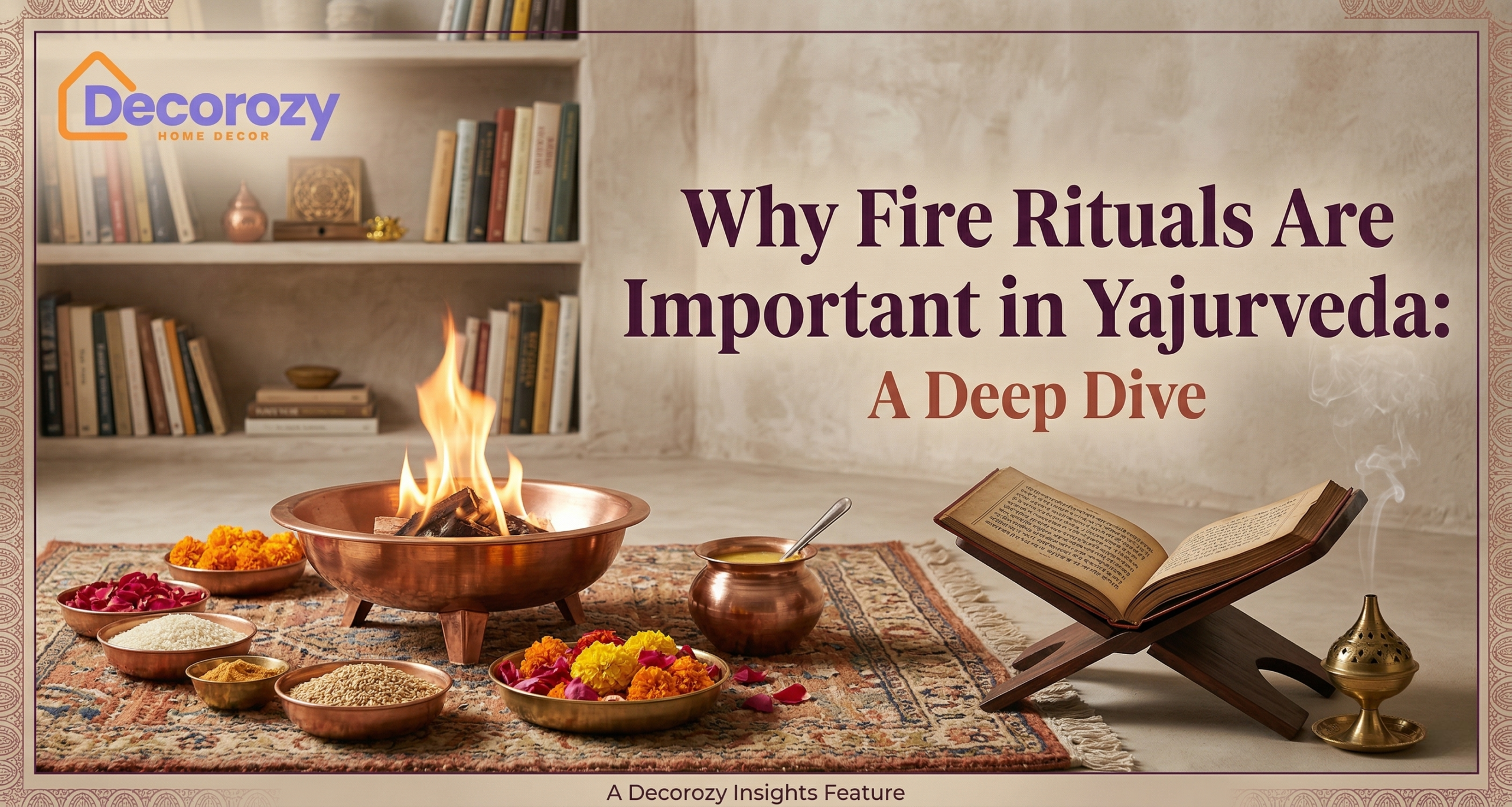
Why Fire Rituals Are Important in Yajurveda: A Deep Dive

Ancient Vedic texts hold profound wisdom, but many spiritual seekers often wonder exactly why fire rituals are important in Yajurveda. At Decorozy, we explore how these sacred ceremonies form the very backbone of ancient Indian spiritual and cultural practices.

Quick Answer: Fire rituals in the Yajurveda act as a cosmic bridge between humanity and the divine. By offering oblations into the sacred fire (Agni), practitioners purify their environment, maintain universal harmony, and deliver prayers directly to higher celestial realms for spiritual awakening.

The Core Philosophy Behind Why Fire Rituals Are Important in Yajurveda

The Yajurveda is fundamentally a comprehensive guidebook for conducting complex spiritual ceremonies. It differs from the Rigveda by focusing heavily on the practical application of prose mantras.

It provides the precise structural blueprints required by ancient priests to perform a Yajna (fire sacrifice). Every chant and physical movement is mathematically and spiritually calculated.

In this tradition, fire is personified as Lord Agni. Agni is revered not just as an element, but as the divine messenger connecting the physical and spiritual worlds.

Spiritual and Cosmic Benefits of Vedic Yajnas

A major reason these rituals hold such weight is their vital role in maintaining cosmic balance. Vedic philosophy dictates that these ceremonies sustain the natural order of the universe, known as Rta.

By offering nourishing items like ghee, grains, and medicinal herbs into the fire, practitioners give back to the universe. This cycle of giving and receiving ensures planetary harmony and agricultural abundance.

Furthermore, the sacred smoke generated during a Yajna actively purifies the surrounding physical atmosphere. The combustion of specific medicinal woods acts as an ancient, natural fumigation process.

Detailed Analysis: Why Fire Rituals Are Important in Yajurveda for Modern Seekers

Beyond ancient tradition, the psychological impact of participating in these fire rituals is profoundly relevant today. The sensory experience anchors the wandering human mind.

Chanting rhythmic Yajurvedic mantras while focusing intently on the flickering flames induces deep meditative states. It allows modern practitioners to quickly bypass daily anxieties.

Ultimately, this focused intention helps individuals burn away internal impurities, ego, and negative karmic cycles. The external fire becomes a powerful mirror for the internal fire of consciousness.

Incorporating the profound wisdom of the Yajurveda into your spiritual journey offers timeless, grounding benefits. Whether you are studying ancient texts or simply seeking inner peace, understanding these rituals is entirely transformative. Explore more deep dives into spiritual history and mindful living right here on Decorozy.com!

FAQ Schema

  • Question 1: What is the main purpose of the Yajurveda?
  • Answer: The primary purpose of the Yajurveda is to serve as a practical guidebook for Vedic priests. It contains the specific prose mantras and step-by-step instructions required to perform ancient fire rituals correctly.
  • Question 2: Who is the main deity of fire in Vedic rituals?
  • Answer: Agni is the primary deity of fire in traditional Vedic rituals. He is considered the essential divine messenger who carries physical offerings and spiritual prayers from humans directly to the celestial gods.
  • Question 3: Can a Yajna physically purify the environment?
  • Answer: Yes, according to Vedic sciences, burning specific herbs, clarified butter (ghee), and sacred woods during a Yajna releases medicinal properties. This specific smoke is believed to cleanse the air and neutralize environmental toxins.

Leave a Reply

Your email address will not be published. Required fields are marked *