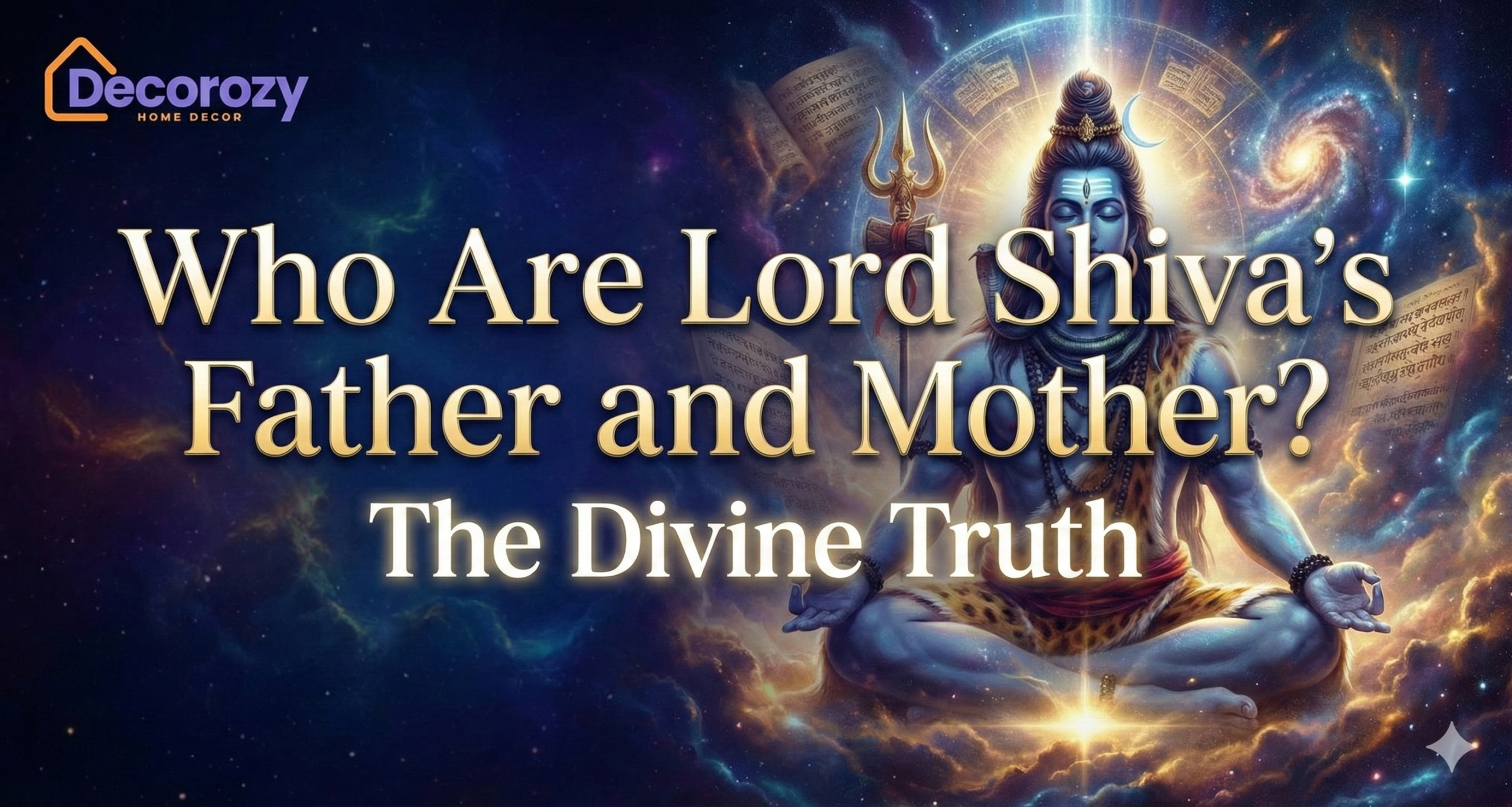
When exploring the vast depths of Hindu mythology, devotees and scholars alike often arrive at a singular, fascinating question: who are Lord Shiva’s father and mother? As a core pillar of the Shaivite tradition, Lord Shiva is a figure of immense cosmic power and mystery.
While the other supreme deities of the Trimurti have specific origin stories, Shiva’s lineage is delightfully complex. Understanding his true origins requires looking beyond human biology and diving deep into ancient philosophy.
Quick Answer: According to Hindu mythology, Lord Shiva does not have physical parents. He is considered “Swayambhu” (self-created) and “Anadi” (without beginning or end). However, symbolically, Goddess Durga (Prakriti or Nature) is often revered as his mother, while Shiva transcends traditional paternity altogether.
The Cosmic Truth: Who Are Lord Shiva’s Father and Mother?
To grasp the origins of the Destroyer in the holy Trimurti, we must understand the concept of “Anadi.” This ancient Sanskrit term signifies an entity that possesses no starting point and no conventional birth.
Because Lord Shiva is Anadi, he exists outside the human boundaries of life and death. He is a self-manifested cosmic force, meaning he brought himself into existence to maintain the balance of the universe.
The mystery of his lineage is highlighted in a famous Puranic legend involving a conversation with a wandering sage. When asked about his father, Shiva playfully named Lord Brahma.
When pressed about his grandfather, he named Lord Vishnu. Finally, when asked to reveal his great-grandfather, Shiva declared that he himself was his own great-grandfather, highlighting his eternal, cyclical nature.
Ancient Texts Reveal: Who Are Lord Shiva’s Father and Mother?
While Shiva is fiercely independent of biological birth, certain scriptures provide philosophical answers to his parentage. In spiritual contexts, Prakriti—the abstract embodiment of mother nature—is credited as his mother.
According to the Srimad Bhagavad Gita (Chapter 14, Verses 3-5), the three primary cosmic virtues (gunas) originate directly from Goddess Durga. Therefore, Goddess Durga, representing Prakriti, is symbolically accepted as the cosmic mother who nurtured his divine energy.
The story of the Jyotirlinga further cements his parentless supreme status. When Lord Brahma and Lord Vishnu argued over who was superior, a massive, infinite column of fire suddenly appeared between them.
Neither Brahma (soaring as a swan) nor Vishnu (digging as a boar) could find the fire’s beginning or end. This infinite flame was Lord Shiva himself, proving he is a timeless entity devoid of a traditional creator.
The Significance of Shiva’s Parentless Cosmic Role
Lord Shiva’s lack of traditional parentage is essential to his role within the universe. As the Lord of Destruction and Renewal, he must remain completely detached from worldly ties and physical boundaries.
His self-existent nature allows him to oversee the cyclical destruction of the universe objectively. When everything else vanishes at the end of time, Shiva will remain, untouched and absolute.
This is why millions of devotees worship him as the “Adi-Dev” or the First God. His eternal presence provides comfort, offering divine protection that transcends the temporary nature of human life.
Conclusion
The inquiry into Lord Shiva’s lineage ultimately leads us to a profound spiritual truth. He is a Swayambhu deity who governs the cosmic forces of destruction and rebirth without the limitations of human parentage.
While scriptures symbolically point to Prakriti or Goddess Durga as a maternal life force, Shiva remains the unvanquishable, eternal supreme being. Want to dive deeper into the mysteries of the Trimurti? Share this post with your fellow spiritual seekers or leave a comment below with your favorite mythological tale!
Section 3: FAQ Schema
- Q: Does Lord Shiva have parents? A: In the traditional human sense, Lord Shiva does not have biological parents. He is known as a “Swayambhu” (self-manifested) entity. However, in Hindu philosophy, the cosmic energy of nature, known as Prakriti or Goddess Durga, is symbolically considered his mother.
- Q: Who was born first, Shiva, Brahma, or Vishnu? A: According to the Shaivite tradition, Lord Shiva existed before everything else and will exist after the universe is destroyed. The legend of the infinite fire column (Jyotirlinga) demonstrates that Shiva’s existence precedes and transcends both Lord Brahma and Lord Vishnu.
- Q: How many children does Lord Shiva have? A: Lord Shiva is most famously known to have three children: Lord Ganesha, Lord Kartikeya (Murugan), and Goddess Ashokasundari. However, various regional texts and Puranas suggest he has up to eight divine offspring, including Ayyappa and Jalandhar, who manifested through different cosmic events.