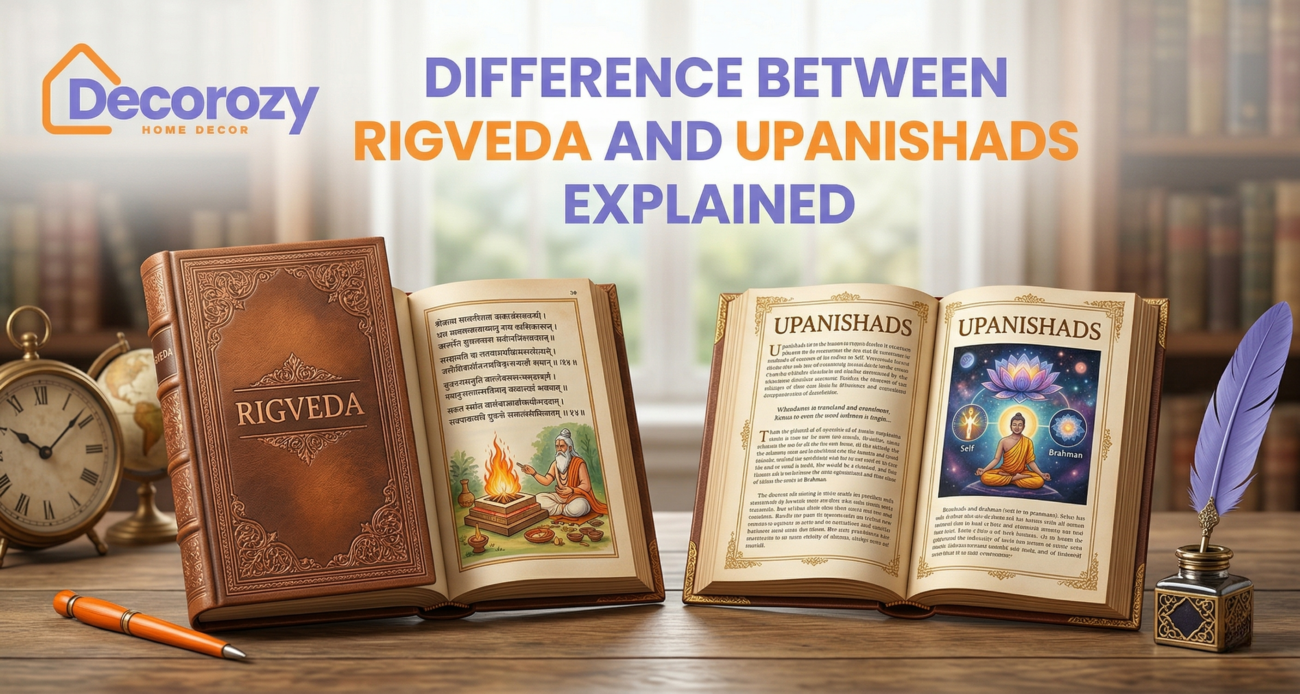
Ancient texts offer a fascinating window into the minds, cultures, and spiritual practices of our ancestors. For those diving into Eastern philosophy, one prominent question often arises: exactly what is the Rigveda?
This foundational scripture is more than just an old book; it is the bedrock of early Indian civilization. Understanding its origins is essential for anyone interested in history, linguistics, or world religions.
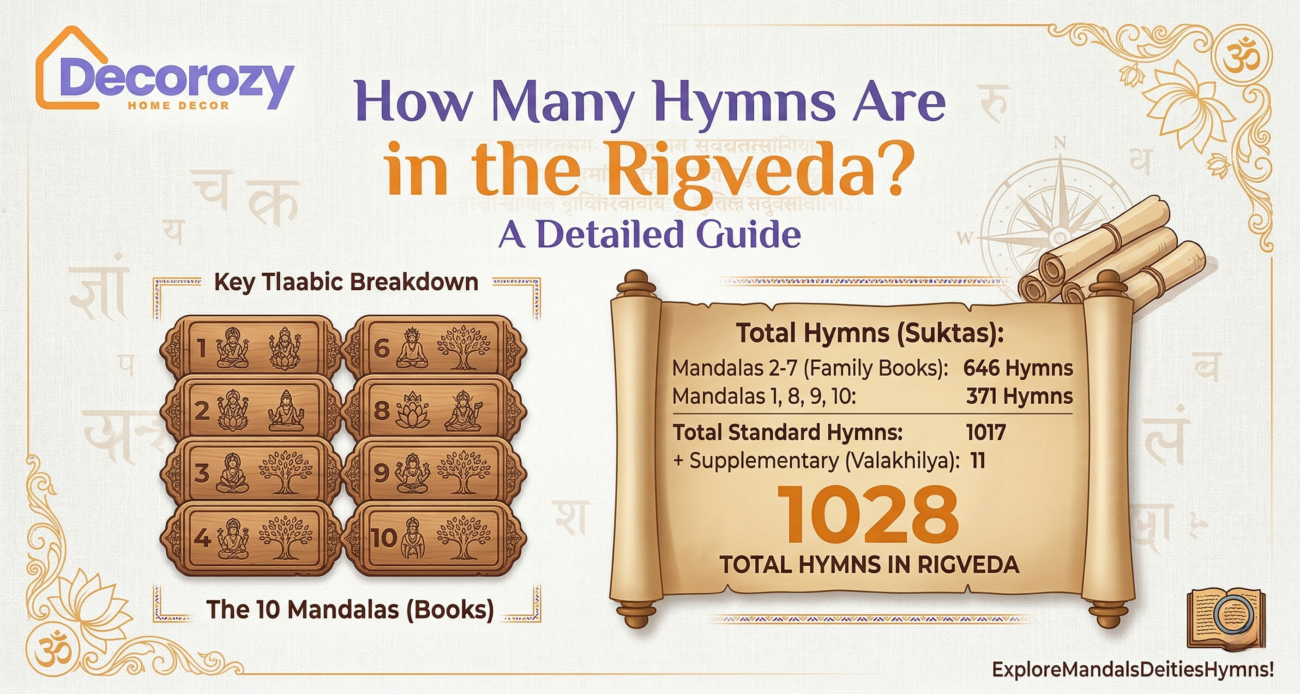
Quick Answer: The Rigveda is the oldest known Vedic Sanskrit text and the foundational scripture of Hinduism. Composed roughly between 1500 and 1200 BCE, it features a massive collection of 1,028 hymns dedicated to ancient deities, detailing early spiritual rituals, cosmic philosophy, and ancient societal structures.
Understanding What is the Rigveda: The Core Concept
To truly grasp what the Rigveda is, we must look at its place within the broader Vedic tradition. It is the first and most important of the four Vedas, which are the sacred texts of ancient India.
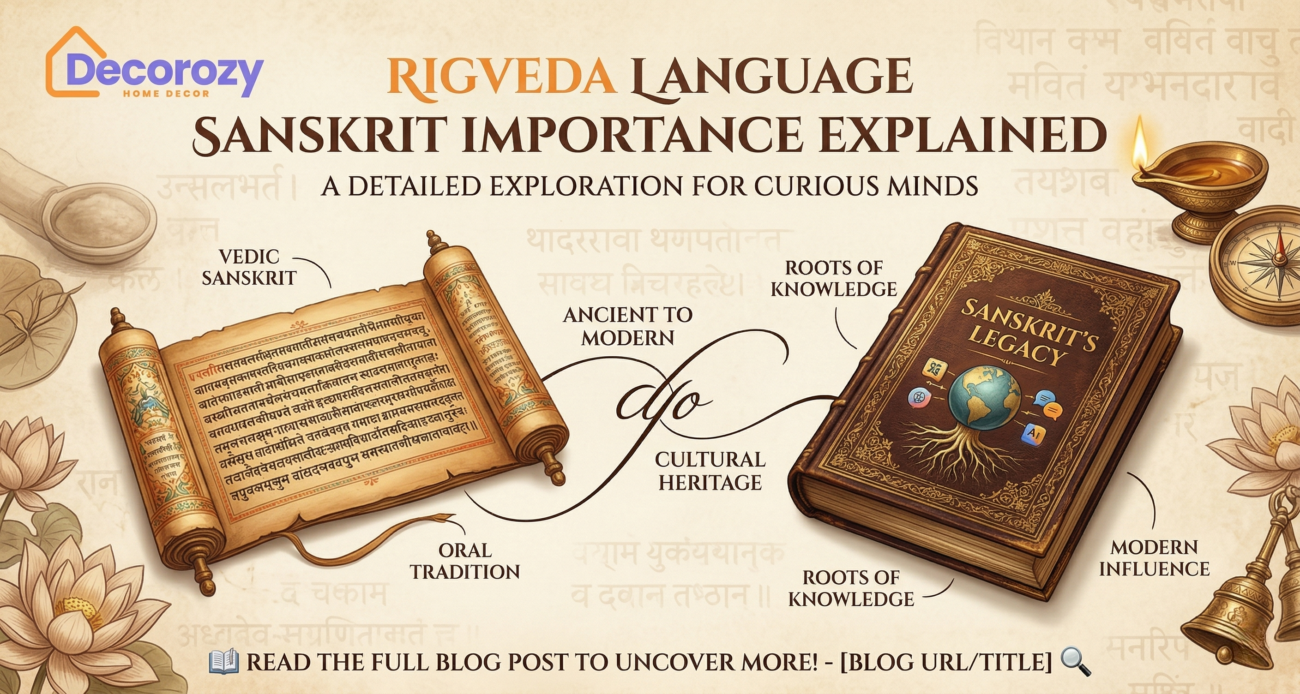
The word “Rigveda” roughly translates to “the knowledge of verses of praise.” It was composed in an ancient form of Sanskrit, long before writing systems were commonly used in the region.
Because of this, the text was preserved through a highly sophisticated oral tradition. Generations of sages memorized the precise syllables and tones, passing the knowledge down flawlessly for centuries.
These hymns were primarily sung during sacred rituals. They served as invocations to the gods, asking for protection, prosperity, and success in daily life.
Why the Rigveda Matters: Historical and Cultural Importance
The historical value of the Rigveda cannot be overstated. It is one of the oldest extant texts in any Indo-European language.
Linguists rely heavily on the Rigveda to trace the evolution of languages across Europe and Asia. Its vocabulary and grammar provide critical clues about human migration and shared ancient heritage.
Culturally, it laid the spiritual groundwork for what would eventually evolve into modern Hinduism. The concepts of cosmic order (Rita) and early philosophical inquiries are rooted here.
Furthermore, it offers historians an unparalleled glimpse into the daily life of the early Indo-Aryans. The verses describe their chariots, weaponry, agricultural practices, and societal organization.
Detailed Breakdown: What is the Rigveda Structure and Themes?
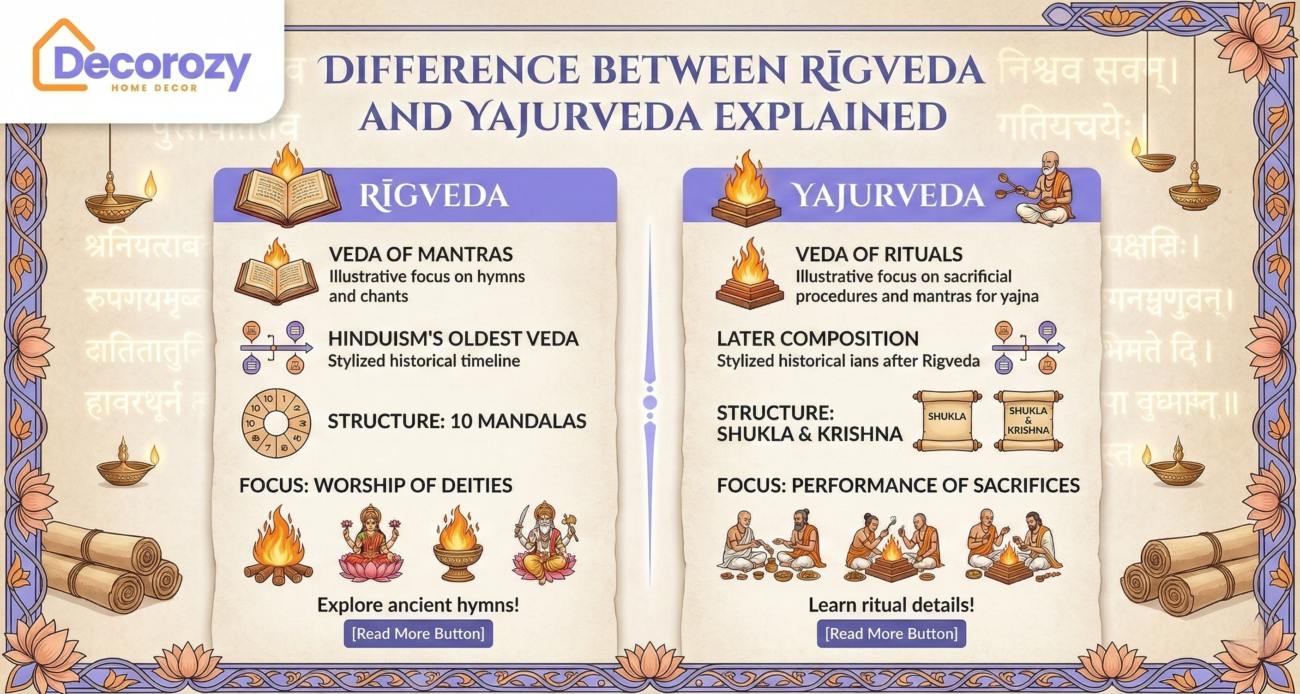
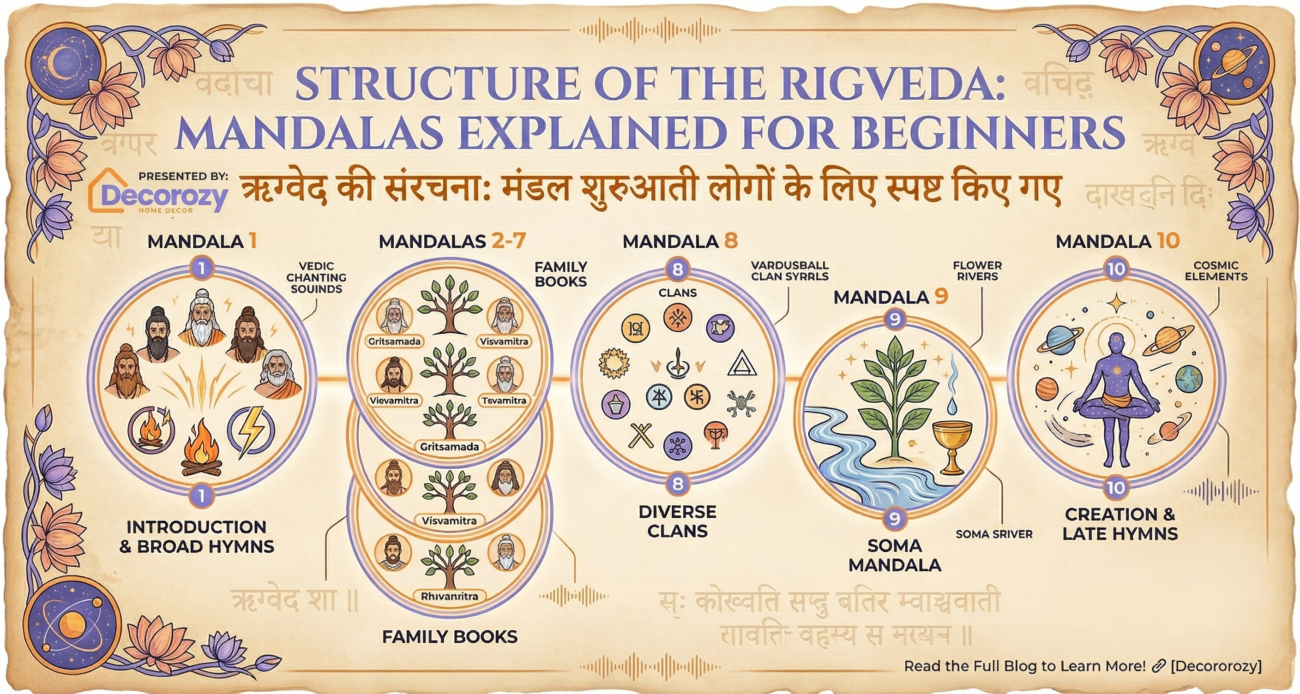
When analyzing what the Rigveda contains, its organizational structure is highly methodical. The text is divided into ten books, which are known as Mandalas.
Each Mandala is a compilation of hymns, or “Suktas,” which are further broken down into individual verses. Books two through seven are the oldest sections, often attributed to specific families of sages.
The themes of the Rigveda heavily revolve around nature worship and cosmic powers. Agni (the god of fire), Indra (the king of gods and storms), and Soma (a sacred plant) are the most frequently invoked deities.
The final Mandala features the famous Nasadiya Sukta (Hymn of Creation). This specific hymn shifts from ritualistic praise to profound philosophical questioning about the origins of the universe.
By studying these verses, beginners can appreciate the intellectual depth of ancient societies. The text moves fluidly from practical, earthly desires to profound metaphysical contemplation.
Thank you for exploring this ancient text with us. For more deep dives into history, philosophy, and lifestyle optimization, continue exploring the expert resources available right here at Decorozy.com!
Section 3: FAQ Schema
- Question 1: Who wrote the Rigveda?
- Answer: The Rigveda does not have a single author. It was composed by multiple ancient sages, known as Rishis, over several centuries and was preserved through a strict oral tradition before being written down.
- Question 2: What is the main message of the Rigveda?
- Answer: The primary message of the Rigveda centers on praising divine cosmic forces, upholding the universal order (Rita) through rituals, and exploring early philosophical questions about creation and human existence.
- Question 3: How old is the Rigveda?
- Answer: While exact dating is debated by scholars, the core of the Rigveda is generally believed to have been composed during the early Vedic period, roughly between 1500 BCE and 1200 BCE.