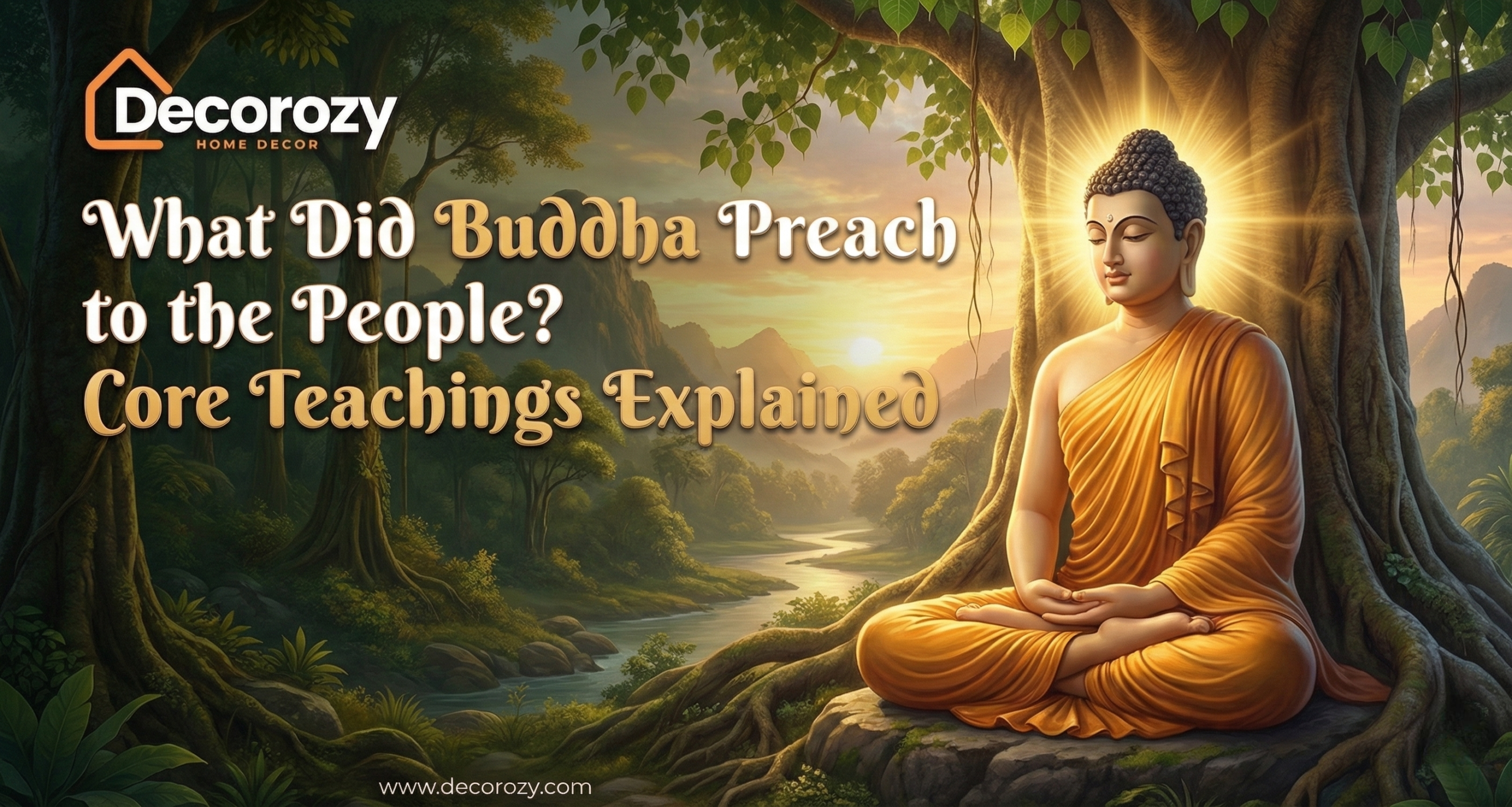
For thousands of years, seekers of inner peace have asked a fundamental question: what did Buddha preach to the people? The teachings of Siddhartha Gautama continue to resonate deeply in our modern, fast-paced world.
Understanding his profound wisdom can transform how we approach our daily lives. From ancient historical roots to practical modern applications, uncovering the essence of his message is a journey toward lasting tranquility.
Quick Answer: What did Buddha preach to the people? Buddha primarily preached the Four Noble Truths and the Eightfold Path. His core teachings emphasize acknowledging human suffering, recognizing that insatiable craving causes this suffering, and achieving ultimate liberation (Nirvana) through mindful, compassionate, and highly disciplined living.
Understanding What Did Buddha Preach to the People
At the very heart of Buddhist philosophy lies the profound wisdom of the Four Noble Truths. These foundational principles offer a highly structured, transformative perspective on the nature of human existence.
The First Truth states that life inherently involves suffering and dissatisfaction. The Second Truth identifies the root cause of this suffering: our relentless cravings and attachments born from a lack of self-awareness.
The Third Truth provides hope, revealing that we can break this cycle of suffering by eliminating our cravings. Finally, the Fourth Truth outlines the actionable solution: the Noble Eightfold Path, a practical guide to meditation, mindfulness, and ethical living.
The Lasting Impact of What Did Buddha Preach to the People
Embracing these ancient teachings offers immense benefits for the modern soul. By practicing mindfulness, we can detach from fleeting desires and find genuine solace in the present moment.
Buddha’s emphasis on compassion and self-awareness helps individuals navigate life’s inevitable challenges with grace. Instead of being trapped in a web of anxiety, practitioners learn to cultivate a profound sense of inner harmony.
Furthermore, these teachings encourage us to accept the beauty of impermanence. Recognizing that all things change allows us to release destructive attachments and embrace a life of deeper meaning and joy.
Detailed Analysis: The History and Path to Enlightenment
To fully grasp these teachings, we must look at the remarkable history of the Buddha. Born as a prince in the ancient kingdom of Kapilavastu, Siddhartha Gautama renounced his royal privileges to seek the ultimate truth.
His encounters with aging, sickness, and death sparked an intense desire to understand human emancipation. After years of extreme physical austerity failed to yield answers, he discovered the “Middle Way”—a perfect balance between self-indulgence and self-mortification.
He eventually achieved supreme enlightenment under the sacred Bodhi tree in Bodh Gaya. Piercing through the veils of illusion, he attained Nirvana, unlocking the secrets of reality that he would spend the rest of his life sharing with the world.
Are you ready to invite a sense of profound tranquility into your own environment? Explore our curated collection of spiritual and calming home aesthetics at Decorozy.com to reflect the peace you cultivate within.
Section 3: FAQ Schema
- Question 1: Who was the Buddha? Answer: The Buddha, originally born as Prince Siddhartha Gautama in the 6th century BCE, was a spiritual leader and teacher. The title “Buddha” translates to “the awakened one,” representing his achievement of supreme enlightenment.
- Question 2: Where did Buddha attain enlightenment? Answer: Gautama Buddha attained supreme enlightenment under the sacred Bodhi tree in Bodh Gaya. This site is located in the serene landscape of present-day Bihar, India, and remains a major pilgrimage destination.
- Question 3: What are the Four Noble Truths? Answer: The Four Noble Truths are the foundation of Buddhism. They state that suffering exists, craving is the root cause of suffering, it is possible to end suffering, and the Eightfold Path is the method to achieve this liberation.