


Was Pushpak Vimana the First Airplane? Myth vs. Fact

Was Pushpak Vimana the First Airplane? Myth vs. Fact

History enthusiasts and mythology lovers frequently ask, was pushpak vimana the first airplane? This captivating question bridges the gap between ancient Indian epics and modern aviation marvels.

Today, we will dive deep into historical texts, scientific analysis, and cultural lore to separate fact from brilliant fiction.

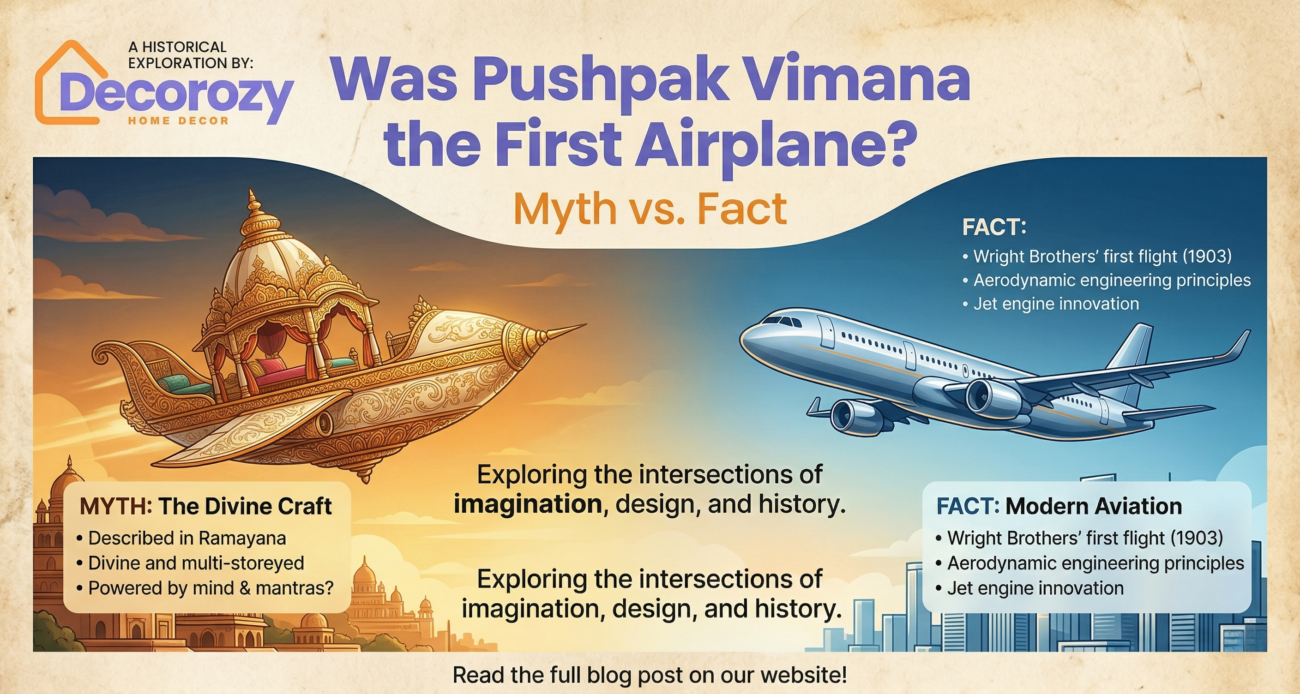
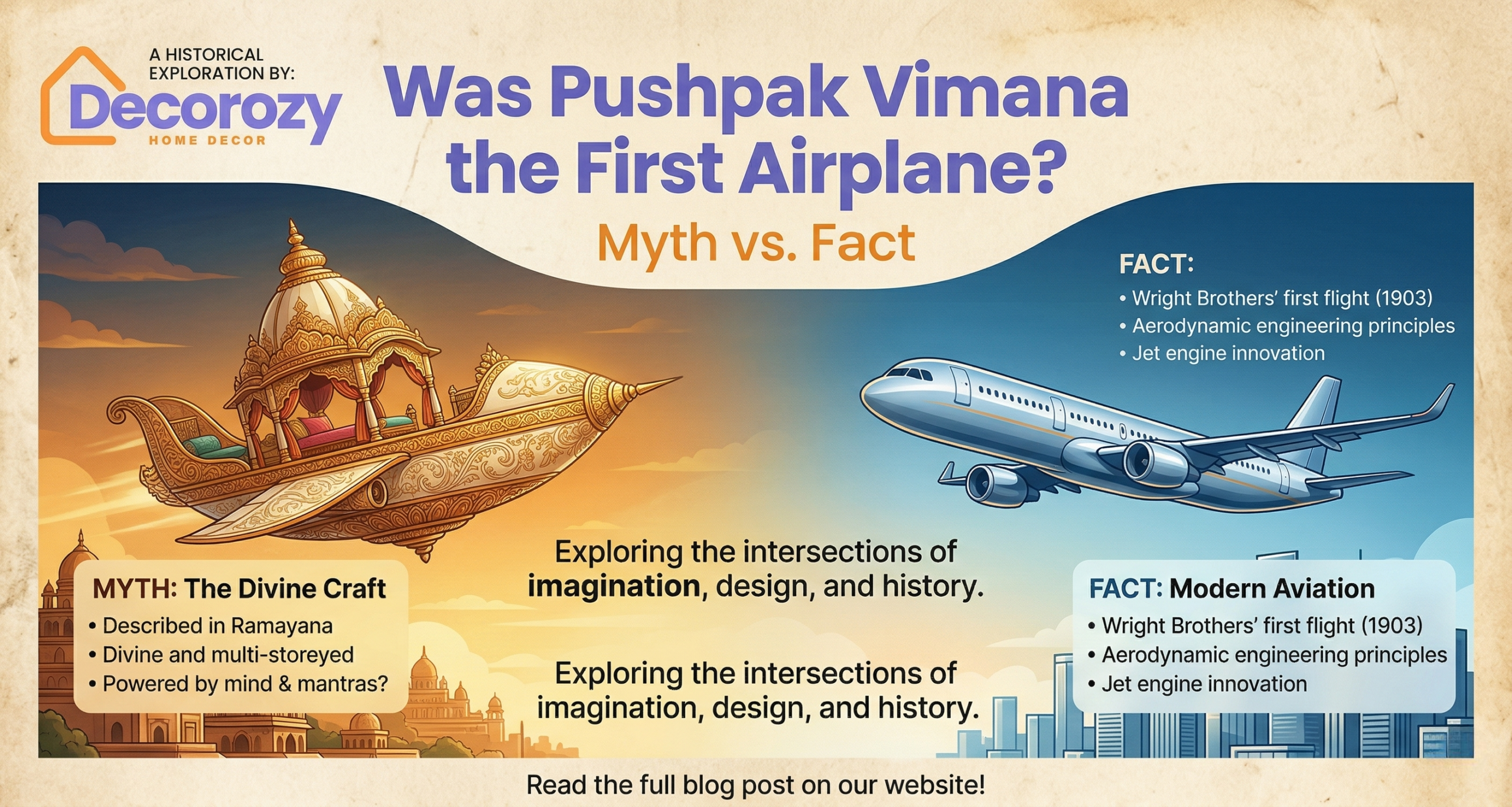
Quick Answer: No, the Pushpak Vimana was not the first airplane. It is a mythological flying chariot described in the ancient Hindu epic, the Ramayana. The first successfully flown, powered, and controlled historical airplane was invented by the Wright brothers in 1903.

Was Pushpak Vimana the First Airplane in Historical Texts?

To understand the origins of this claim, we must look at the ancient Sanskrit epic, the Ramayana. The text describes a magnificent, flying palace called the Pushpak Vimana.

According to the lore, it was crafted by Vishwakarma, the celestial architect. It originally belonged to Kubera, the god of wealth, before the demon king Ravana stole it.

The descriptions are breathtaking. The Vimana could reportedly travel at the speed of thought. It could also expand or shrink depending on the number of passengers.

However, these descriptions point toward magical and divine properties rather than mechanical engineering. It was a vehicle of the gods, powered by mantras and mysticism, not combustion and aerodynamics.

The Science: Why Asking “Was Pushpak Vimana the First Airplane” is Flawed

In recent decades, claims have surfaced suggesting ancient Indians possessed advanced aerospace technology. Much of this centers around an early 20th-century text called the Vaimanika Shastra.

This text details complex schematics for various ancient flying machines. However, asking if this proves was pushpak vimana the first airplane requires rigorous scientific scrutiny.

In 1974, researchers at the Indian Institute of Science (IISc) in Bangalore conducted a definitive study on the Vaimanika Shastra. Their findings were conclusive.

The engineers determined that the crafts described in the text were aerodynamically unviable. The propulsion systems and materials mentioned could not have supported actual flight.

Therefore, while the texts show incredible imagination, they do not serve as historical blueprints for functional aviation.

The Cultural Significance of Ancient Vimanas

While it was not a historical airplane, the Pushpak Vimana remains a vital piece of cultural history. It showcases the incredible visionary capacity of ancient Indian scholars.

Thousands of years before the Wright brothers, humans were already dreaming of conquering the skies. The concept of the Vimana serves as ancient science fiction.

Just as modern sci-fi inspires today’s technology, ancient myths reflect humanity’s timeless desire to push boundaries. We can appreciate the myth without rewriting scientific history.

If you love blending ancient inspirations with modern living, explore our unique design collections at Decorozy.com today!

FAQ Schema

  • Question 1: Who invented the Pushpak Vimana according to mythology?
  • Answer: In Hindu mythology, Vishwakarma, the master architect of the gods, created the Pushpak Vimana. It was originally gifted to Lord Brahma, who then gave it to Kubera.
  • Question 2: Did ancient India have actual flying machines?
  • Answer: No. There is no archaeological or scientific evidence to suggest ancient India had functional, mechanical flying machines. Vimanas are considered brilliant mythological concepts.
  • Question 3: Who invented the first real airplane?
  • Answer: Orville and Wilbur Wright, known as the Wright brothers, invented and flew the first successful motor-operated airplane on December 17, 1903, in Kitty Hawk, North Carolina.

Leave a Reply

Your email address will not be published. Required fields are marked *