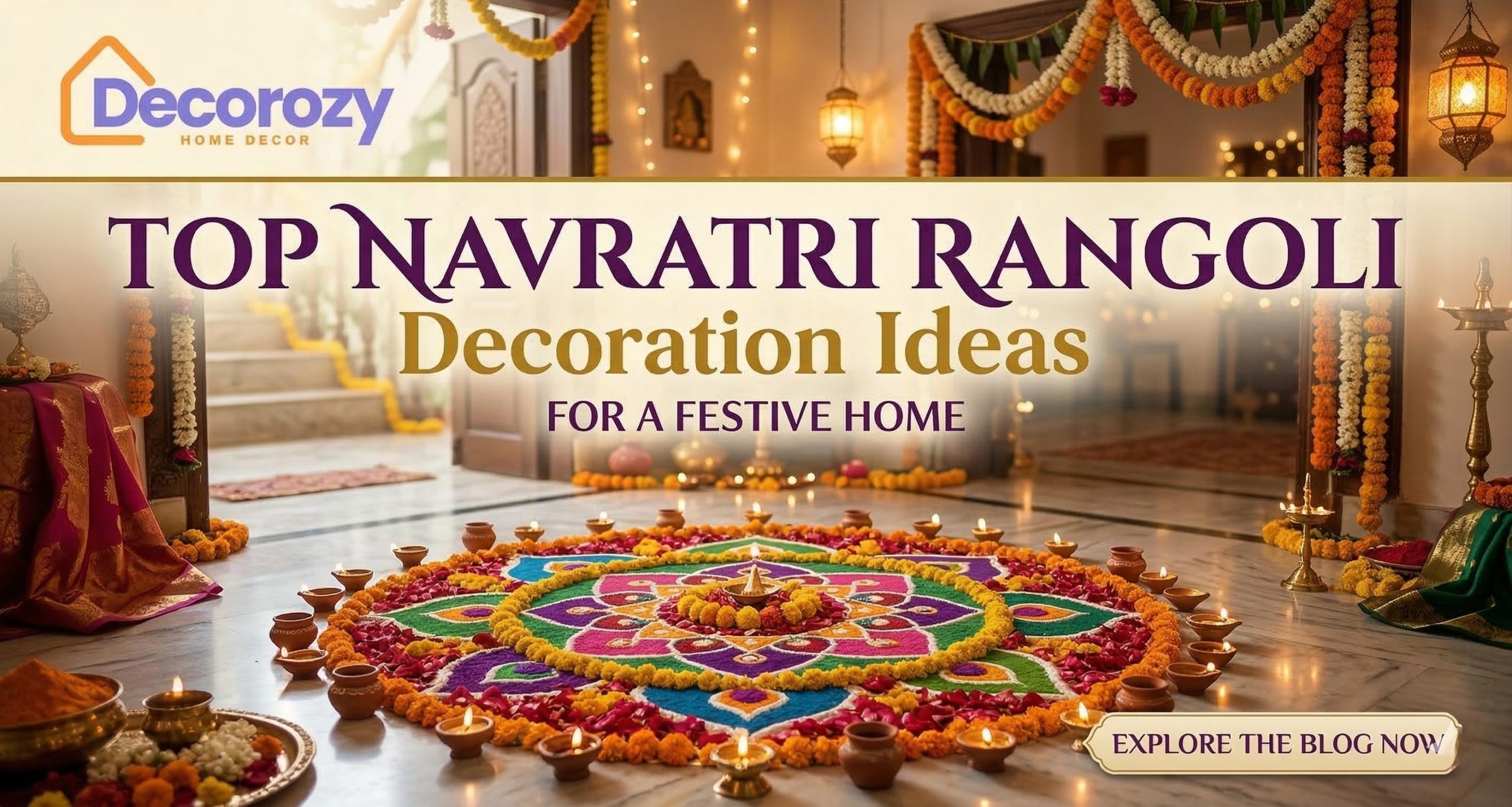
Navratri is a vibrant celebration of devotion, spiritual energy, and profound artistic expression.
To set the perfect festive tone, exploring unique navratri Rangoli decoration ideas is absolutely essential for your modern home.
A well-crafted design not only elevates your exterior aesthetics but also invites auspicious, divine energy into your living space.
Quick Answer: The best navratri Rangoli decoration ideas include vibrant Maa Durga face designs, traditional Navratri kolam patterns, and colorful flower petal arrangements. Incorporating thematic elements like Dandiya stick figures, Kalash motifs, and the nine specific Navratri colors ensures an auspicious, visually stunning festive entrance.
The Cultural Significance of Navratri Rangoli Decoration Ideas
Rangoli is far more than just a temporary floor decoration; it is a deeply rooted cultural tradition.
Implementing thoughtful navratri Rangoli decoration ideas symbolizes a warm, reverent welcome to Goddess Durga.
Historically, these intricate geometric patterns were engineered to ward off negative energy and foster a harmonious ambiance.
In modern architectural styling, a stunning Durga Puja rangoli bridges the gap between ancient rituals and contemporary decor.
Families gather to create these beautiful motifs, transforming the home entrance into a collaborative focal point of festive joy.
The visual impact of a vibrant garba rangoli instantly amplifies the celebratory mood for guests, relatives, and neighbors alike.
Trending Navratri Rangoli Decoration Ideas for 2026
Staying continuously updated with current aesthetic trends is crucial for highly impactful festive home styling.
This season, the top navratri Rangoli decoration ideas emphasize a distinct blend of eco-friendly materials and hyper-detailed thematic elements.
For instance, a complex Maa Durga face rangoli remains a highly sought-after centerpiece, demanding artistic precision and bold pigmentation.
Another massive design trend is the incorporation of dynamic Dandiya rangoli designs that capture the festival’s rhythmic, kinetic energy.
By utilizing brightly colored powders to sketch dancing figures, you create a lively, action-oriented visual masterpiece.
Additionally, utilizing a dedicated flower rangoli crafted with marigolds and fresh rose petals offers a fragrant, highly sustainable alternative.
How to Execute Flawless Navratri Rangoli Decoration Ideas
Strategic execution is everything when it comes to producing high-quality, professional-grade festive floor art.
To systematically perfect your navratri Rangoli decoration ideas, always start with a meticulously clean, dry, and flat surface.
Using a subtle white chalk outline ensures perfect symmetry before you commit to applying your vibrant powders or floral layers.
For beginners, leveraging geometric traditional Navratri kolam grids can dramatically simplify the overall design process.
Always work systematically from the center outwards to prevent the accidental smudging of your carefully placed, intricate colors.
Finally, strategically accentuating your finished piece with beautifully lit terracotta diyas adds unmatched visual warmth and traditional elegance.
Elevating your festive home decor requires calculated strategy, creativity, and the right aesthetic inspiration. By integrating these top-tier design concepts, your entrance will undoubtedly stand out this festive season. Discover more expert home styling tips and premium decor essentials exclusively at Decorozy.com.
FAQ Schema
- Question 1: Which colors are most auspicious for Navratri Rangoli?
- Answer: The most auspicious colors correspond to the nine specific days of Navratri, heavily featuring vibrant red, royal blue, yellow, green, and orange. Incorporating these traditional, highly saturated hues actively attracts positive energy and honors Goddess Durga.
- Question 2: How can I effectively make my flower rangoli last longer?
- Answer: To significantly extend the life of your flower rangoli, use fresh, unbruised petals and lightly mist them with cold water. Keeping the design in a shaded, cool area away from direct sunlight also prevents rapid wilting and discoloration.
- Question 3: What makes traditional Kolam designs different from regular Rangoli?
- Answer: A traditional Navratri kolam relies on a precise mathematical grid of dots connected by continuous, symmetrical white lines. Unlike freehand Rangoli, Kolam is highly structured and is typically drawn using pure rice flour rather than synthetic colored powders.