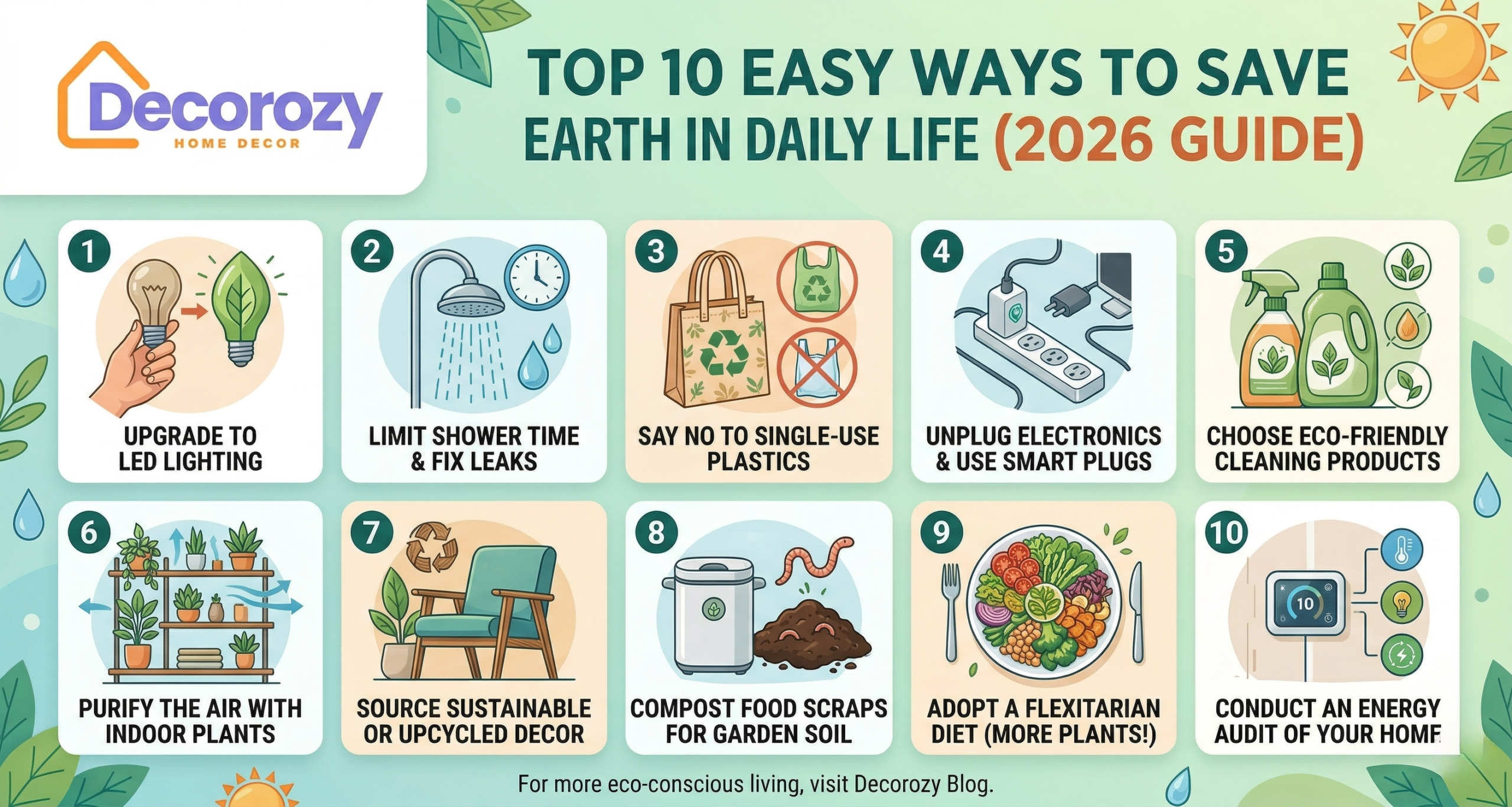
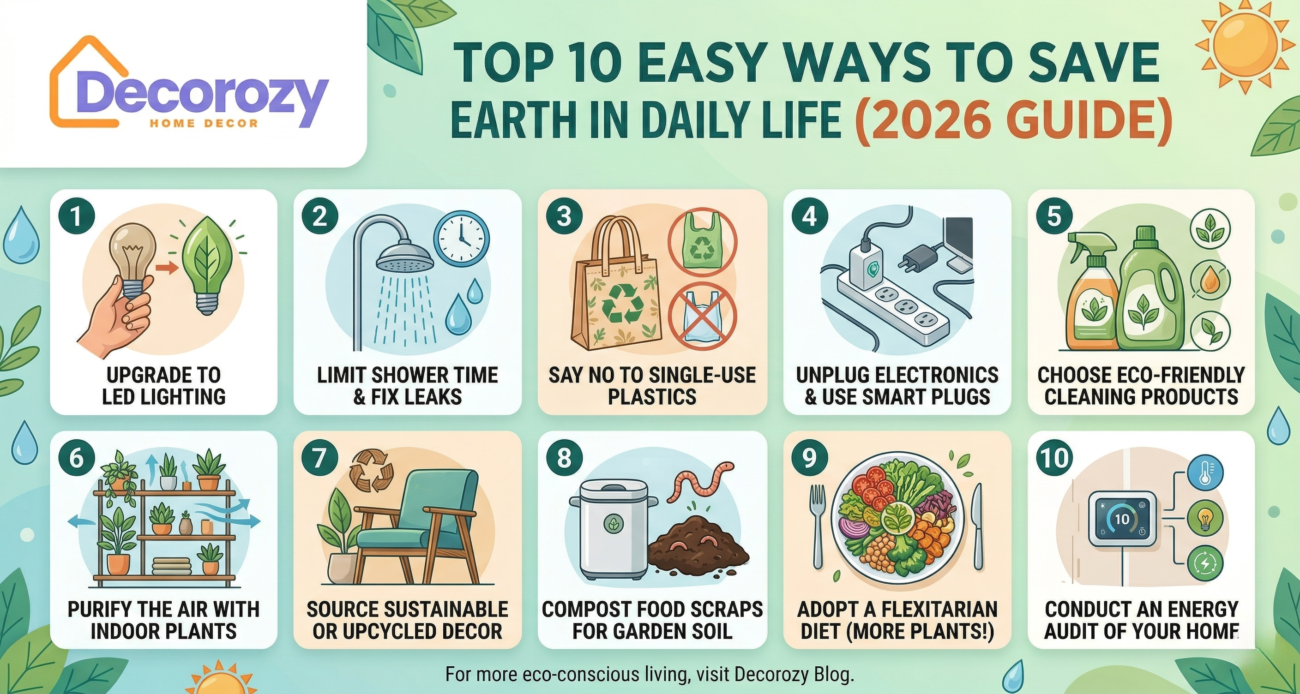
Are you looking to reduce your environmental impact but feel overwhelmed by where to start? Implementing the top 10 easy ways to save earth in daily life is much simpler than you might think.
Small, consistent changes in our daily routines can collectively create a massive positive impact on our planet’s future. By making mindful choices today, we actively protect natural resources for tomorrow.
Quick Answer: To save the Earth daily, conserve water and electricity, reduce single-use plastics, recycle properly, and switch to reusable items. Additionally, eating less meat, composting food waste, driving less, planting trees, and supporting sustainable brands significantly lower your overall carbon footprint.
Understanding the Top 10 Easy Ways to Save Earth in Daily Life
Environmental conservation does not always require drastic, sweeping lifestyle overhauls. Real change begins at home with small, manageable actions.
By focusing on practical, everyday habits, you can drastically cut down on personal waste and energy consumption. Consistency is the secret to making these sustainable habits stick over time.
True sustainable living starts right in your living room and kitchen through mindful consumption. Every time you flip a light switch or discard packaging, you have a choice to make.
Why These Easy Ways to Save Earth in Daily Life Matter
Adopting eco-friendly habits actively protects global biodiversity and finite natural resources. Our daily actions directly influence the health of vital ecosystems worldwide.
Furthermore, minimizing waste reduces greenhouse gas emissions, combating the acceleration of climate change directly. Every piece of plastic avoided is a victory for our oceans.
Additionally, sustainable choices often lead to significant financial savings for your household over time. Using less water and power translates to lower utility bills month after month.
10 Actionable Steps to Protect Our Planet
1. Conserve Energy at Home Turn off lights, fans, and appliances when you leave a room to instantly reduce your power consumption. Unplugging electronics prevents “phantom energy” drain, saving you money while reducing reliance on fossil fuels.
2. Switch to Reusable Alternatives Ditch single-use plastic grocery bags and water bottles for high-quality reusable cloth bags and stainless steel containers. This simple swap cuts household waste and keeps dangerous microplastics out of marine environments.
3. Reduce Water Waste Fix leaky faucets promptly and opt for shorter showers to conserve our planet’s most precious natural resource. Running the dishwasher and washing machine only with full loads maximizes water efficiency.
4. Implement a Strict Recycling System Sort your paper, glass, and plastics meticulously according to your local municipal guidelines. Proper recycling diverts tons of salvageable materials away from overflowing landfills every single year.
5. Embrace a Plant-Based Diet Reducing your meat consumption even one or two days a week lowers your carbon and water footprints dramatically. The agricultural industry is a leading driver of global greenhouse gas emissions and deforestation.
6. Start Composting Kitchen Scraps Turn organic food waste like coffee grounds and vegetable peels into nutrient-rich soil for your garden. Composting prevents organic matter from rotting in landfills, which releases harmful methane gas into the atmosphere.
7. Choose Sustainable Transportation Make a conscious effort to walk, bike, carpool, or utilize public transit whenever your schedule permits. Leaving the car at home directly cuts down on harmful vehicle emissions and local air pollution.
8. Support Eco-Friendly Brands Vote with your wallet by actively purchasing from companies committed to sustainable, transparent, and ethical manufacturing practices. Supporting green businesses forces larger corporations to adopt better environmental standards.
9. Plant Trees and Native Greenery Adding native plants and trees to your property improves local air quality and supports vital pollinator populations like bees. Trees act as natural carbon sinks, absorbing harmful carbon dioxide from the surrounding environment.
10. Educate and Advocate Share your newly formed sustainable habits with friends, family, and colleagues to multiply your positive environmental impact. Community-led initiatives drive the larger systemic changes required to protect our planet.
The Global Impact of Your Daily Eco-Friendly Choices
When millions of individuals adopt these simple habits, the cumulative effect alters global consumption metrics. Less demand for disposable goods forces a shift toward a circular economy.
Your daily choices send powerful signals to global markets and policymakers about what consumers truly value. Sustainable living is a powerful form of modern environmental activism.
Overcoming Challenges to Sustainable Living
Transitioning to a greener lifestyle can initially feel inconvenient or slightly more expensive. However, investing in reusable, durable items pays off financially and environmentally in the long run.
Start by integrating just one or two of these methods into your routine before tackling the entire list. Gradual implementation ensures that these eco-friendly practices become permanent, lifelong habits.
Adopting these habits is a vital step toward building a sustainable future for generations to come. Explore more eco-friendly home living tips and sustainable interior design ideas at Decorozy.com today!
FAQ Schema
- Question 1: What is the easiest way to help the environment every day?
- Answer: The absolute easiest way is to reduce your personal energy and water consumption. Simply turning off unnecessary lights, unplugging devices, and taking shorter showers creates an immediate, measurable positive impact.
- Question 2: Does home recycling actually make a difference?
- Answer: Yes, proper recycling significantly reduces the urgent need for raw, virgin material extraction. It saves massive amounts of manufacturing energy and keeps hazardous materials out of local landfills and oceans.
- Question 3: How does reducing meat consumption save the earth?
- Answer: Industrial meat production requires vast amounts of fresh water and land while producing incredibly high greenhouse gas emissions. Eating less meat drastically lowers your personal carbon footprint and conserves natural resources.