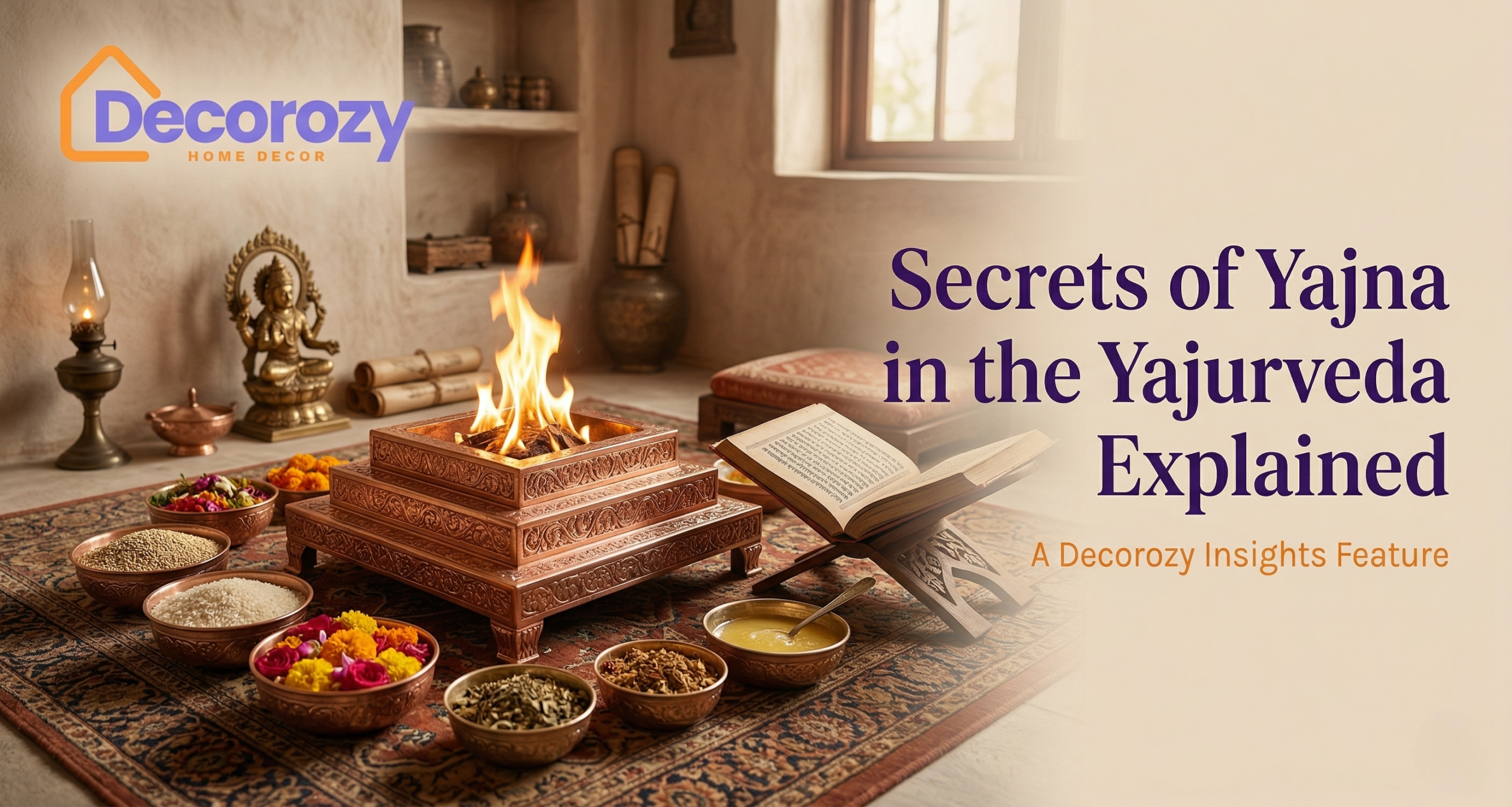
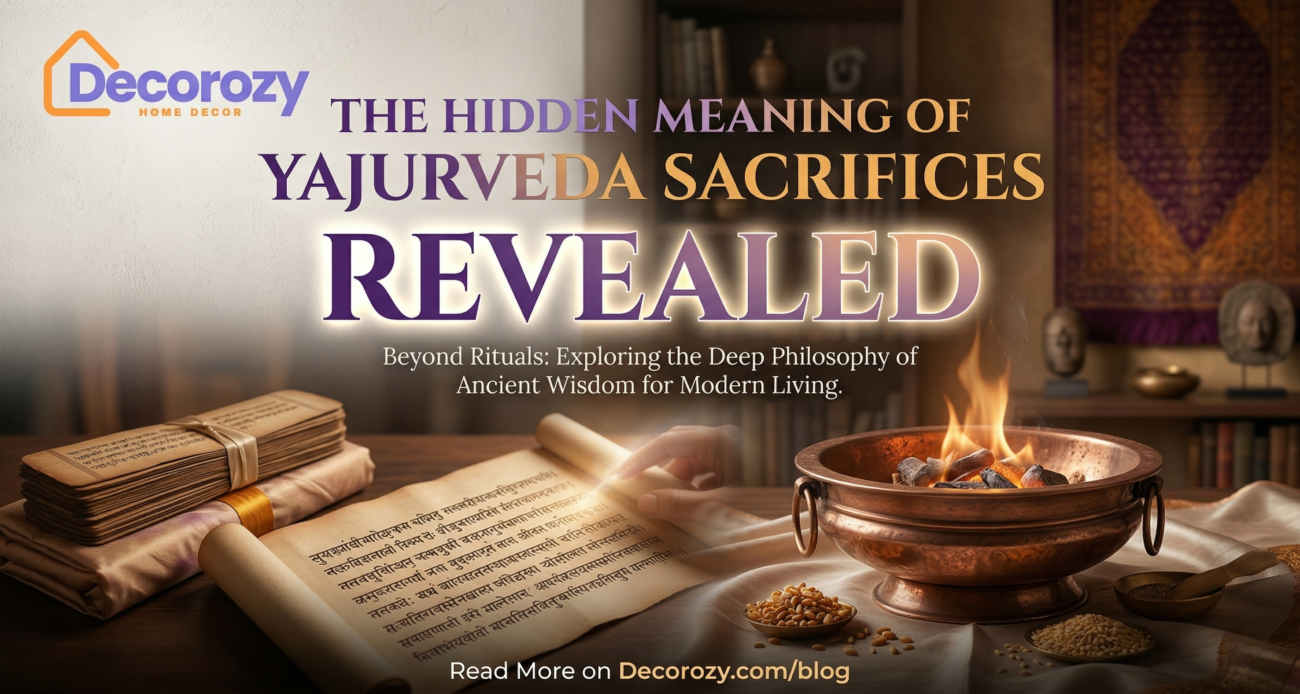
Welcome to Decorozy.com, where we explore the intersection of ancient wisdom and modern living. Today, we are getting the secrets of yajna in the Yajurveda explained to uncover its profound spiritual mechanics.
Quick Answer: The Yajurveda explains Yajna not merely as a fire ritual, but as a cosmic micro-representation of the universe’s creation. It details precise mantras and geometric altar constructions, acting as a spiritual technology designed to harmonize human consciousness with divine environmental forces.
The Core Concept: Secrets of Yajna in the Yajurveda Explained
To truly grasp the secrets of yajna in the Yajurveda explained, one must look beyond the physical flames of the ritual. The Yajurveda acts as the ultimate, authoritative guidebook for Vedic priests executing these ceremonies.
It provides the precise prose and functional mantras required for conducting complex fire sacrifices. These rituals are engineered to serve as the vital energetic link between the microcosm of humanity and the macrocosm of the universe.
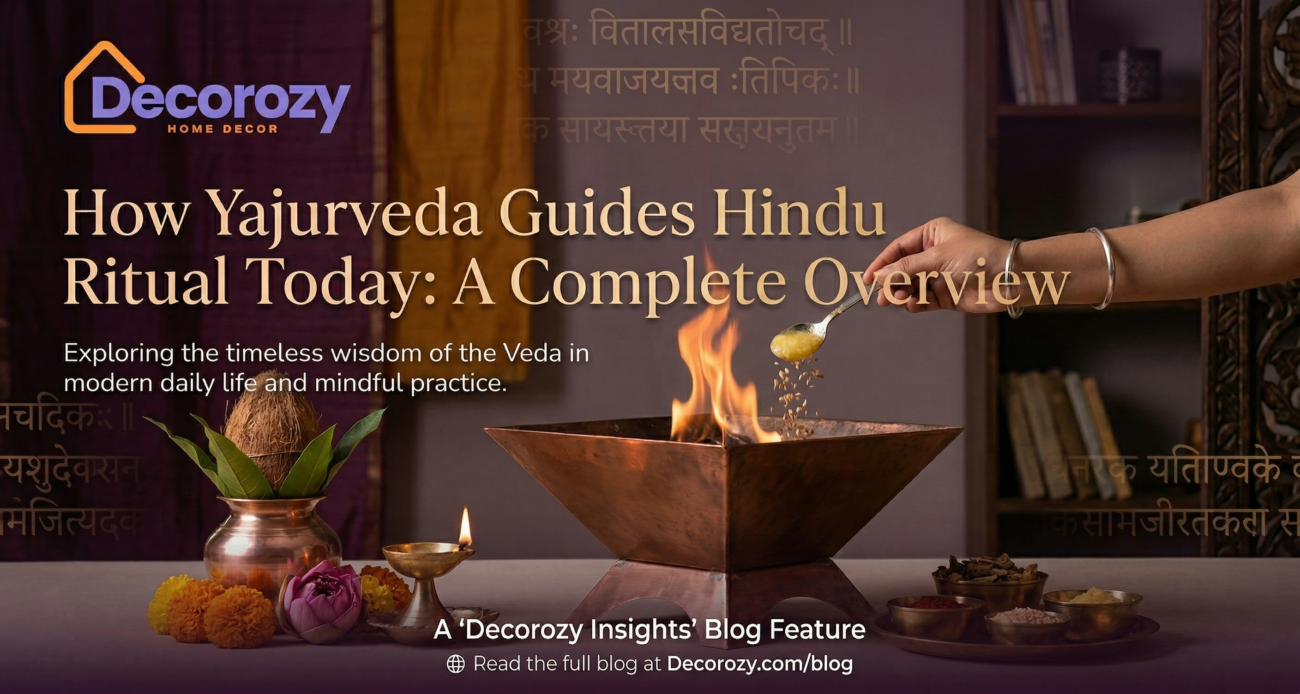
The offerings, or Ahuti, poured into the sacred fire (Agni) represent the conscious surrender of the human ego. This physical act is designed to simultaneously purify the surrounding environment and elevate the mind of the practitioner.
Why Understanding the Secrets of Yajna in the Yajurveda Explained Matters
Decoding the secrets of yajna in the Yajurveda explained reveals highly practical benefits for modern spiritual seekers. These ancient practices were systematically engineered to create profound psychological and environmental shifts.
The rhythmic chanting of Yajurvedic mantras creates specific acoustic vibrations in the atmosphere. These precise sound frequencies are utilized to calm the human nervous system and promote deep, focused meditative states.
Furthermore, the medicinal herbs and clarified butter (ghee) burned during the ritual release purifying elements into the air. This ancient method of atmospheric cleansing remains highly relevant and beneficial in our modern, polluted world.
A Detailed Analysis of Yajurvedic Ritual Architecture
A critical aspect of the Yajurveda is the complex geometry involved in constructing the Vedi (sacred fire altar). This construction is not arbitrary; it is an exact, rule-based mathematical science.
The Shulba Sutras, which are mathematical appendices attached to the Vedas, detail precise measurements for these brick altars. Each specific shape—whether a simple square or a complex falcon—corresponds to a targeted cosmic energy or desired material outcome.
The presiding priest, known as the Adhvaryu, must execute physical actions in perfect synchronization with the spoken formulas. Even a slight mispronunciation or physical misstep necessitates immediate corrective rituals to maintain the energetic integrity of the Yajna.
The Yajurveda offers far more than ancient historical data; it provides a sophisticated blueprint for achieving cosmic and internal harmony. By understanding these profound rituals, we can better appreciate the immense depth of Vedic spiritual technology.
We hope this comprehensive guide has enriched your spiritual knowledge and provided clarity on this ancient science. For more deep dives into ancient wisdom, home harmony, and holistic living, continue exploring the archives here at Decorozy.com!
FAQ Schema
- Question 1: What is the main purpose of Yajna in the Yajurveda?
- Answer: The primary purpose of Yajna in the Yajurveda is to maintain cosmic order, known as Rita. It acts as a transactional ritual where humans offer oblations to the deities, who in turn nourish the earth with rain, vital energy, and prosperity.
- Question 2: Who is the principal priest associated with the Yajurveda?
- Answer: The principal priest of the Yajurveda is known as the Adhvaryu. This specialist is responsible for the actual physical execution of the ritual, precisely measuring the altar, and ensuring all physical offerings are made correctly into the fire.
- Question 3: Are the rituals detailed in the Yajurveda still practiced today?
- Answer: Yes, simplified versions of these rituals, such as Havan or Agnihotra, are widely practiced today. While the massive, multi-day sacrifices of antiquity are rare, the foundational principles of sacred offering and mantra chanting remain a core part of Hindu worship.