The Rigveda stands as a monumental pillar of ancient human history and literature. It is an extraordinary text shrouded in immense mystery and profound, timeless wisdom.
Scholars and historians have spent centuries attempting to decode the true meaning behind these ancient Sanskrit verses. Modern research continues to reveal astonishing secrets hidden in the Rigveda.
Far from being a simple collection of primitive hymns, it is a complex tapestry of knowledge. It weaves together advanced cosmology, philosophical inquiry, and early scientific observation.
Quick Answer: The secrets hidden in the Rigveda include advanced astronomical alignments, mathematical codes embedded in its poetic meter, philosophical inquiries into the cosmos’s origins, and encrypted geographic data outlining the lost Saraswati River. These ancient texts uniquely blend spiritual wisdom with foundational scientific observation.
Decoding the Astronomical Secrets Hidden in the Rigveda
One of the most fascinating aspects of Vedic literature is its deep, undeniable connection to the cosmos. The ancient seers possessed a remarkable understanding of the night sky and celestial mechanics.
Many modern researchers believe that the ancient hymns encode highly sophisticated astronomical data. These texts meticulously track the precise movements of the sun, moon, and various constellations.
For example, the division of the night sky into lunar mansions, or Nakshatras, is deeply embedded in the text. This highlights an advanced, localized system of timekeeping and observational astronomy.
Scholars have found numerous references that align flawlessly with celestial events from thousands of years ago. These astronomical correlations push back the established timeline of human scientific knowledge significantly.
By examining the secrets hidden in the Rigveda, we uncover a civilization deeply attuned to celestial mechanics. They viewed the surrounding universe as a highly ordered, mathematically predictable system.
The Scientific and Geographic Secrets Hidden in the Rigveda
Beyond the stars, this ancient text holds vital clues about the Earth’s geography during the Vedic period. The most prominent geographic mystery decoded from the text is the mighty Saraswati River.
Described repeatedly as a massive, roaring waterway, the Saraswati was the lifeblood of this ancient civilization. Yet, for centuries, modern geography and history considered it purely mythological.
Recent satellite imagery and intensive geological surveys have confirmed the existence of a massive dried riverbed in northwestern India. This physical evidence perfectly matches the topographic descriptions found in the Vedic hymns.
Furthermore, the text contains subtle but distinct references to early foundational scientific principles. This includes extensive knowledge of metallurgy, seasonal agriculture, and advanced hydrology.
The true identity of the elusive Soma plant is another profound scientific mystery waiting to be fully solved. Described as an energizing, divine elixir, its exact botanical classification remains a heavily debated topic among botanists.
Mathematical Codes and Structural Brilliance
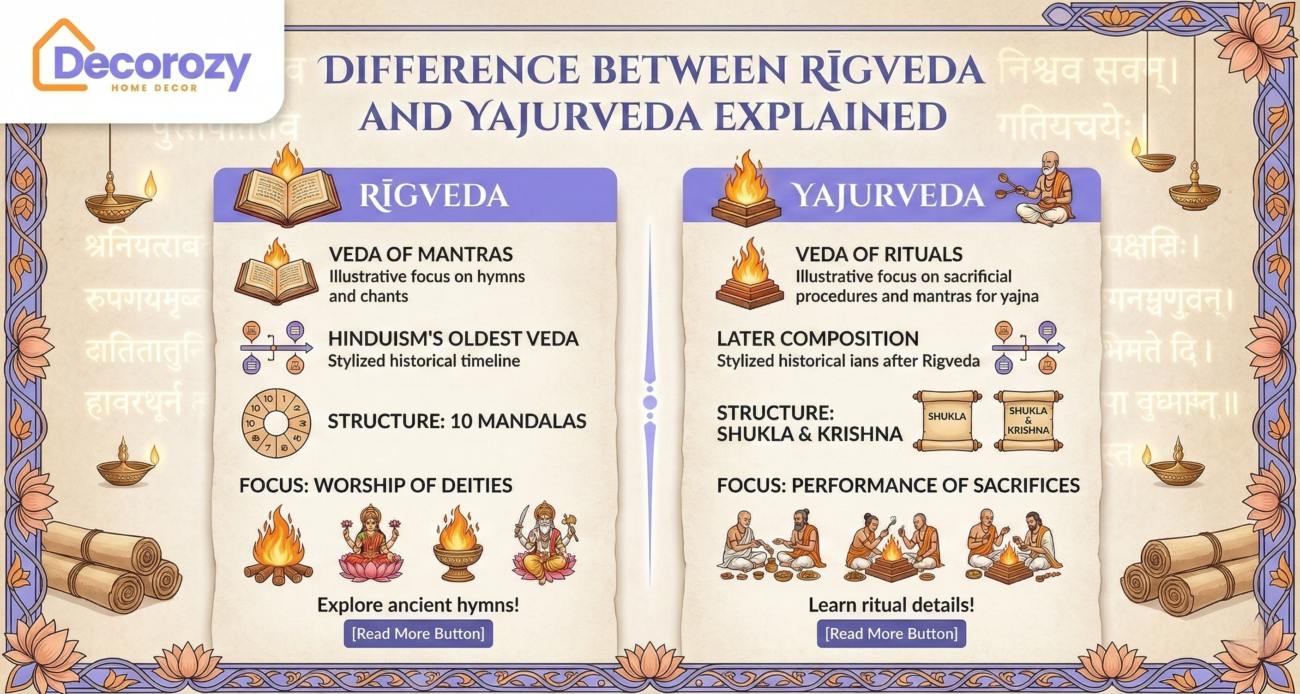
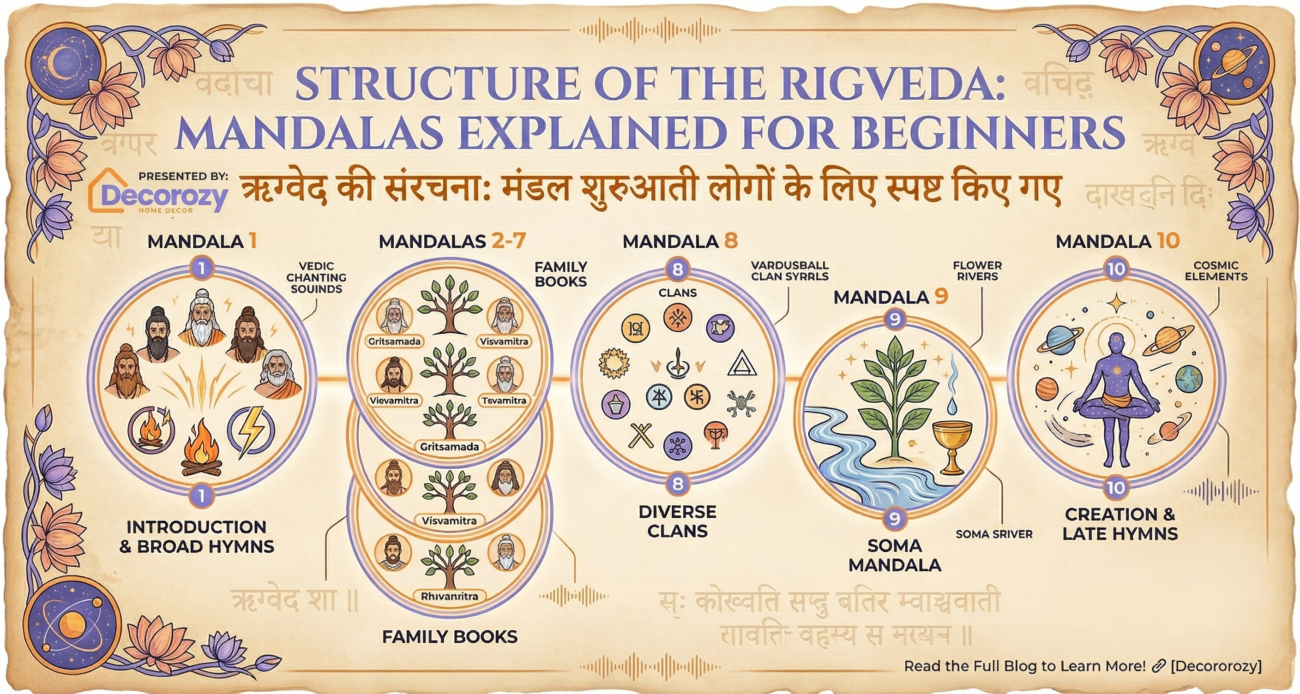
The composition of the Rigveda is not arbitrary; it is highly structured, intentional, and mathematically precise. The entire text is meticulously organized into ten primary books, known as Mandalas.
The meter, specific syllables, and rhythmic structure of the hymns form a complex mathematical code. This intricate structure was specifically designed for perfect oral transmission across thousands of generations.
Some researchers suggest that the specific number of syllables in certain meters directly corresponds to cosmic constants. This includes the synodic periods of the planets and the cycles of the sun and moon.
This mathematical encoding ensured that the text remained virtually unaltered for millennia without written records. Any missing or added syllable would immediately disrupt the meter, alerting the reciter to an error.
The sonic properties of the Sanskrit language itself are considered a core part of this ancient scientific approach. The specific vibrational frequencies of chanted mantras were believed to have direct physical and psychological effects.
The Linguistic Mastery Within Ancient Sanskrit Texts
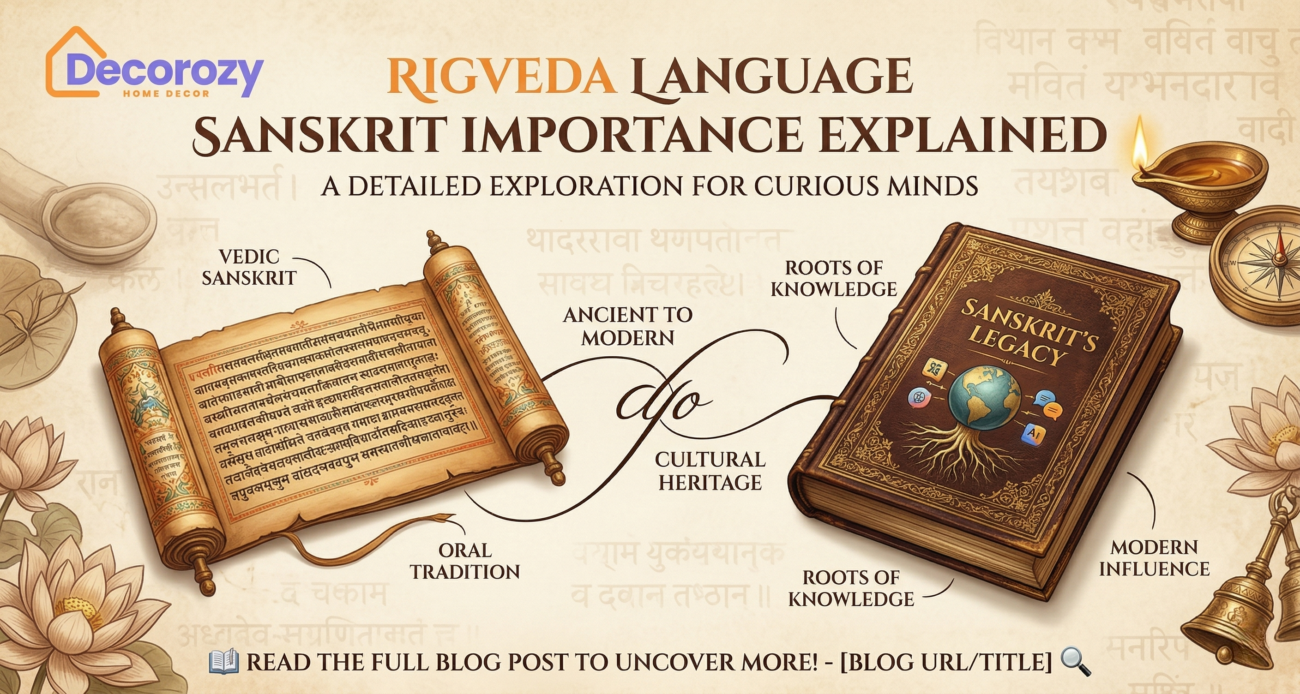
Sanskrit is widely regarded as one of the most logically structured languages in human history. Its grammar and syntax operate with a mathematical precision that rivals modern computer programming languages.
The authors of the Rigveda utilized this linguistic complexity to layer multiple meanings into a single verse. A single hymn can simultaneously describe a natural phenomenon, a historical event, and a psychological state.
This polysemic nature of the text is exactly why translations often vary so wildly between scholars. Unlocking the true meaning requires an understanding of the root sounds and their broader historical context.
The ancient grammarians who preserved these texts developed sophisticated algorithms to prevent linguistic corruption. These early linguistic tools represent a highly advanced understanding of phonetics and cognitive processing.
Studying the linguistic architecture of the text reveals the exceptional intellectual capacity of its creators. It is a testament to an ancient society that highly prioritized the preservation of knowledge.
Spiritual Alchemy and the Origins of the Universe
At its absolute core, the Rigveda remains a profoundly deep spiritual and metaphysical document. It fearlessly explores the deepest questions regarding human consciousness and the very origin of existence.
The famous Nasadiya Sukta, widely known as the Hymn of Creation, is a prime example of this philosophical depth. It questions the very nature of nothingness and the initial spark that ignited creation.
Unlike many dogmatic religious texts, the Rigveda openly embraces inquiry, curiosity, and even skepticism. It acknowledges that the ultimate truth of the universe may ultimately be beyond human comprehension.
The overarching concept of Rta, or cosmic order, is absolutely central to ancient Vedic philosophy. It proposes a singular, universal law that strictly governs both the physical world and moral conduct.
Through deep meditation and complex ritual, the ancient sages sought to perfectly align themselves with this cosmic order. The hymns served as a linguistic vehicle for achieving higher states of spiritual enlightenment.
Conclusion
The fascinating journey to uncover the true depths of ancient Indian literature is an ongoing process. Every new translation, geological survey, and scientific discovery peels back yet another layer of this ancient mystery.
From celestial alignments and mathematical poetry to lost rivers, the text continually challenges our modern understanding of ancient history. It proves definitively that our ancestors possessed remarkable intellect, observational skills, and deep spiritual insight.
If you are fascinated by ancient mysteries, architectural marvels, and sophisticated historical design, continue your exploration with us. Discover more thought-provoking insights, data-driven analysis, and deep historical dives right here on Decorozy.com.
FAQ Schema
- Question 1: What is the biggest mystery of the Rigveda?
- Answer: The biggest mystery revolves around the advanced astronomical data and geographical references, such as the exact path of the lost Saraswati River, which indicate the Vedic civilization was much older and more scientifically advanced than previously believed.
- Question 2: Does the Rigveda contain scientific knowledge?
- Answer: Yes, the Rigveda contains foundational scientific observations, including advanced astronomical tracking of lunar and solar cycles, early metallurgical processes, complex mathematical structures in its linguistic meter, and detailed hydrological data.
- Question 3: What was the Soma plant mentioned in the Rigveda?
- Answer: The Soma plant is described in the Rigveda as a sacred, energizing botanical used to create a divine elixir for rituals. Its exact botanical identity remains a mystery, with theories suggesting it could be Ephedra, a mushroom, or a lost regional plant.