The Divine Guide: Unveiling the Guardian of Lord Jagannath’s Chariot
The annual Rath Yatra in Puri is a spectacle of faith, where the massive Nandighosh Rath rolls through the Grand Road. While millions fix their eyes on Lord Jagannath, a silent, wooden guardian sits at the helm. Understanding the role of the Sarathi of Nandighosh Rath is essential to grasping the spiritual depth of this 600-year-old tradition.
Quick Answer
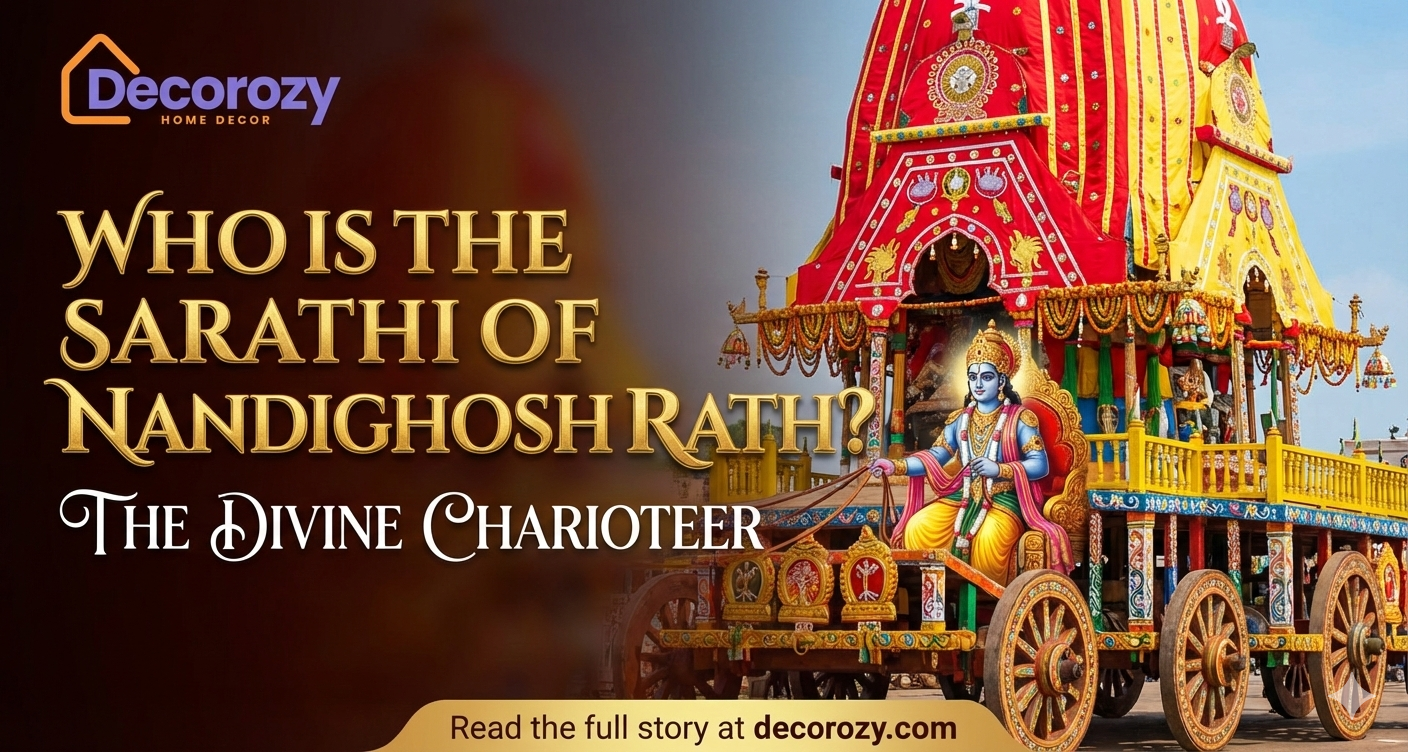
The Sarathi of Nandighosh Rath is represented by a wooden idol known as Daruka. In Hindu mythology, Daruka is the divine charioteer of Lord Krishna (an avatar of Lord Jagannath). During the Rath Yatra, this sacred figure symbolizes divine guidance, ensuring the Lord’s safe journey to the Gundicha Temple.
## The Identity and Symbolism of the Sarathi of Nandighosh Rath
In the context of the Puri Rath Yatra, the “Sarathi” is not a living person steering the wheels, but a meticulously carved wooden deity named Daruka. This celestial charioteer is an integral part of the Nandighosh Chariot, also known by names like Garudadhwaja or Kapidhwaja.
Daruka represents the surrender of the ego to divine will. Just as Daruka drove Krishna’s chariot in the Dwapara Yuga, he continues his service in the Kali Yuga, guiding the 45-foot-tall structure. The presence of the Sarathi of Nandighosh Rath ensures that the journey remains auspicious and protected by higher spiritual forces.
## Essential Roles and Rituals of the Charioteer
The Sarathi of Nandighosh Rath is not merely a decorative element. The installation of Daruka involves specific lineage-based priests and artisans who follow ancient Vedic protocols.
- Divine Alignment: Before the procession begins, rituals are performed to “activate” the Sarathi, seeking blessings for a smooth journey.
- Leading the Devotees: While Daruka provides spiritual direction, traditional human guardians from specific lineages manage the actual movement, coordinating the thousands of devotees pulling the Shankhachuda ropes.
- Protective Guardianship: The Sarathi works in tandem with the chariot’s protector, Lord Hanuman (Kapidhwaja), to shield the deities from obstacles during their transit.
## Engineering a Legend: Features of the Nandighosh Rath
The Nandighosh Rath is a marvel of ancient engineering and symbolism. Standing at 45.6 feet, it is the largest of the three chariots. Its construction requires 832 pieces of sacred wood and features 16 massive wheels representing the 16 aspects of human life.
The chariot is draped in vibrant red and yellow cloth, signifying the brilliance of Lord Jagannath. It is pulled by four white wooden horses: Shankha, Balahaka, Shveta, and Hardashva. At the center of this complex arrangement sits the Sarathi of Nandighosh Rath, balancing the physical weight of the structure with its immense spiritual weight.
## The Spiritual Journey to Salvation
For centuries, the movement of the Nandighosh Rath has been synonymous with Moksha (liberation). In ancient times, the devotion was so intense that some sought to end their earthly cycle under its wheels—a practice long since banned in favor of “living devotion.”
Today, the Sarathi of Nandighosh Rath guides us toward a different kind of sacrifice: the letting go of worldly attachments. Touching the chariot or its ropes is believed to cleanse the soul, a tradition that remains the heartbeat of Odisha’s cultural identity.
Conclusion: Join the Divine Procession
The Sarathi of Nandighosh Rath reminds us that every journey, whether physical or spiritual, requires a divine guide. As the wheels of the Nandighosh Chariot turn again this year, we witness a legacy that transcends time.
Are you planning to attend the Rath Yatra this year? Comment below your favorite memory of Lord Jagannath’s journey!
Section 3: FAQ Schema (Voice Search Optimized)
Q: What is the name of the charioteer of Lord Jagannath’s Rath? A: The charioteer (Sarathi) of Lord Jagannath’s chariot, the Nandighosh Rath, is a wooden deity named Daruka. He is traditionally recognized as the divine driver of Lord Krishna’s chariot.
Q: How many wheels does the Nandighosh Rath have? A: The Nandighosh Rath features 16 wheels, each approximately seven feet in diameter. These wheels symbolize the sixteen essential aspects of human existence and the cycle of life.
Q: What are the colors of the Nandighosh Chariot? A: The Nandighosh Rath is traditionally decorated with red and yellow cloth. These colors help devotees identify Lord Jagannath’s chariot from a distance during the crowded festival in Puri.
Q: Who are the horses of the Nandighosh Rath? A: The four white wooden horses that pull the chariot are named Shankha, Balahaka, Shveta, and Hardashva. They represent the strength and purity required for the divine journey.
Would you like me to generate a high-quality AI image of the Nandighosh Rath to accompany this blog post?