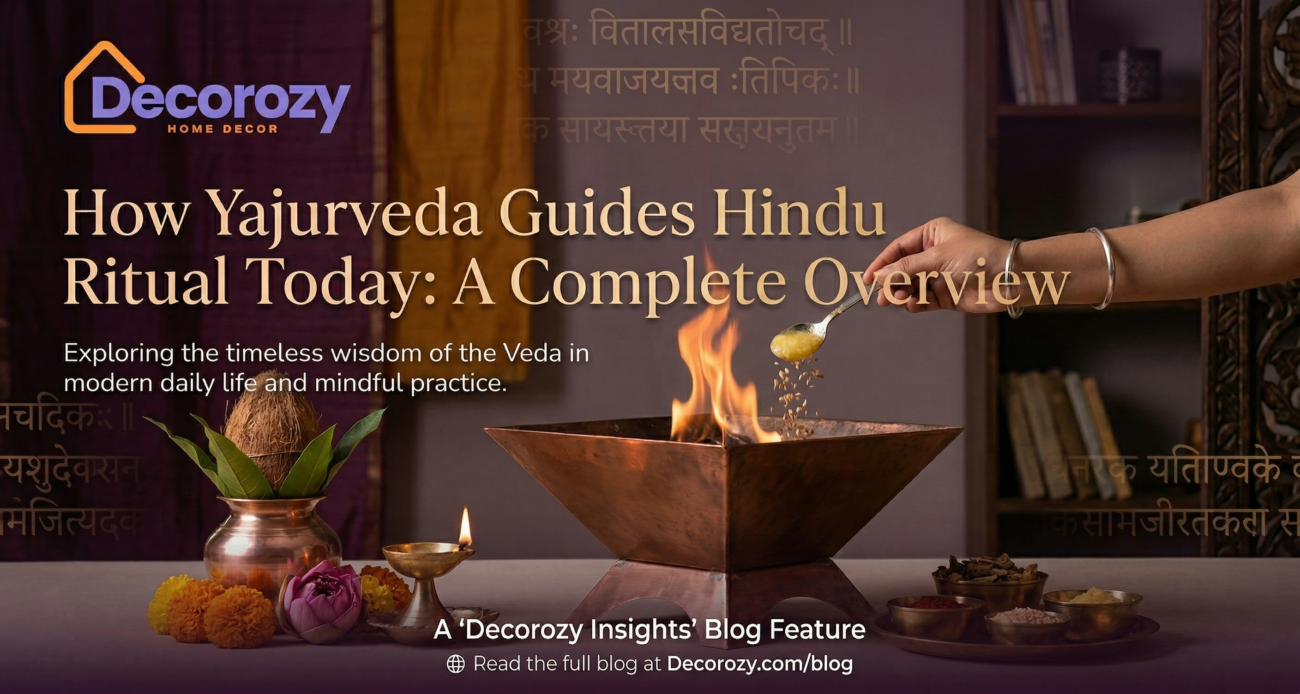
Ancient Indian history is built upon deeply spiritual texts, but none are as action-oriented as the Yajurveda. If you are researching the specific rituals described in the Yajurveda, you are exploring the foundational mechanics of ancient Vedic society.
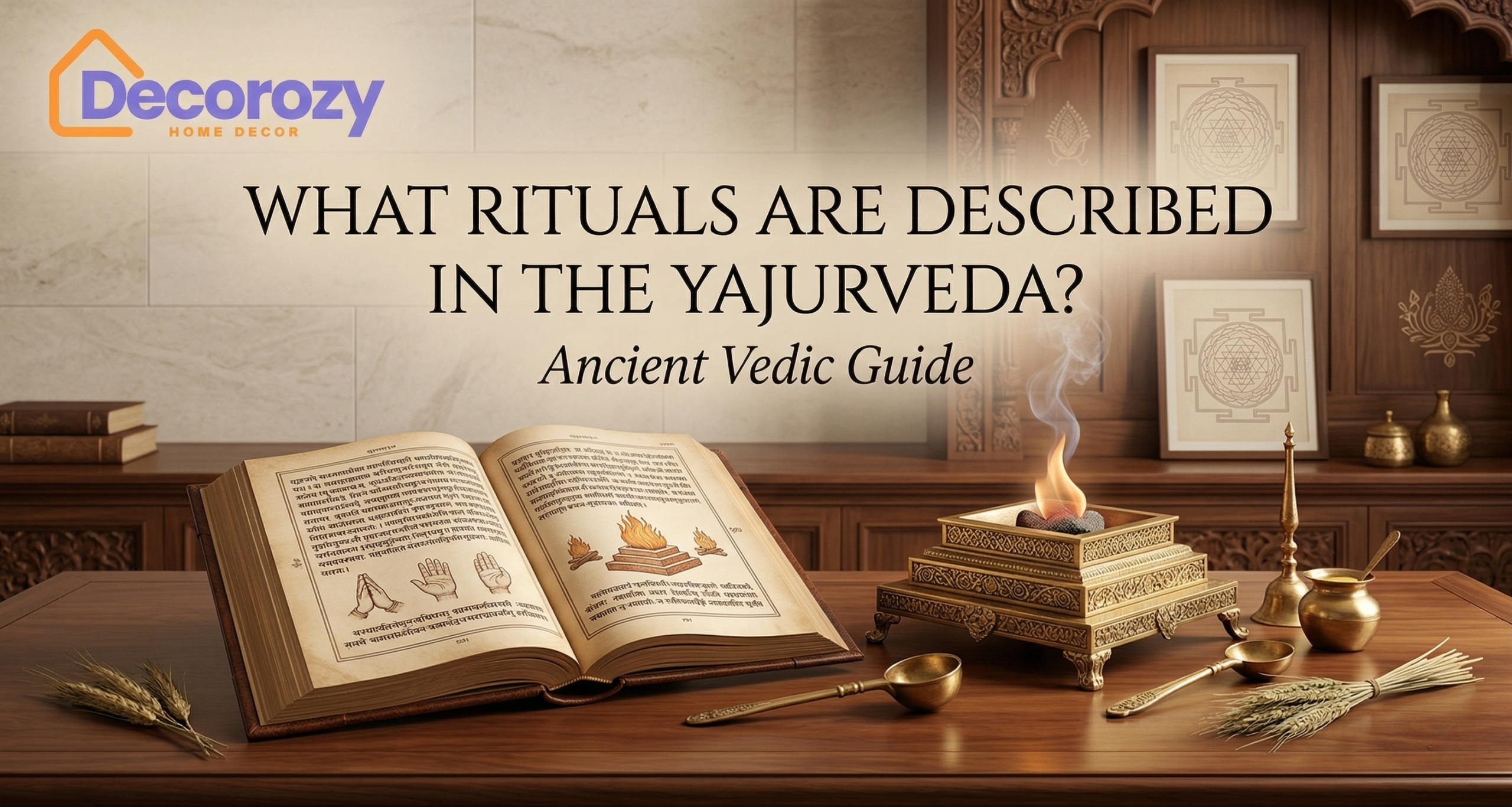
Unlike the Rigveda, which focuses on hymns of praise, the Yajurveda acts as a precise manual for priests. It details exactly how to perform sacred ceremonies and construct elaborate fire altars.
Quick Answer: The rituals described in the Yajurveda primarily focus on complex Vedic sacrifices (Yajnas). These include grand royal ceremonies like the Ashvamedha (Horse Sacrifice) and Rajasuya (Royal Consecration), alongside daily domestic offerings like the Agnihotra and seasonal agricultural rites performed by the Adhvaryu priests.
The Core Rituals Described in the Yajurveda
To understand the scope of these ancient practices, we must look at the specific types of ceremonies documented. The rituals described in the Yajurveda are generally divided into two main categories: Srauta (public, solemn sacrifices) and Grhya (domestic rites).
The Srauta rituals were massive, community-wide events requiring multiple priests. The chief priest, known as the Adhvaryu, used the Yajurveda to measure the sacrificial ground, build altars, and prepare specific offerings.
These public rituals were designed to maintain cosmic order, known as Rta. Ancient practitioners believed that meticulously executing these steps ensured the changing of the seasons, agricultural prosperity, and community survival.
Significance of Royal Rituals Described in the Yajurveda
Some of the most famous rituals described in the Yajurveda were utilized by kings to assert their dominance. The Ashvamedha, or Horse Sacrifice, is perhaps the most well-known. A consecrated horse was allowed to roam freely for a year, and any territory it entered was claimed by the king.
Another vital ceremony is the Rajasuya, the Royal Consecration. This complex ritual validated a king’s divine right to rule, involving sacred baths, offerings to various deities, and a symbolic chariot drive.
Similarly, the Vajapeya (Drink of Strength) was performed to elevate a king to the status of a paramount sovereign. It famously included a chariot race, which the king was ritually destined to win, symbolizing his supreme power and vigor.
Daily Offerings and Fire Rituals Described in the Yajurveda
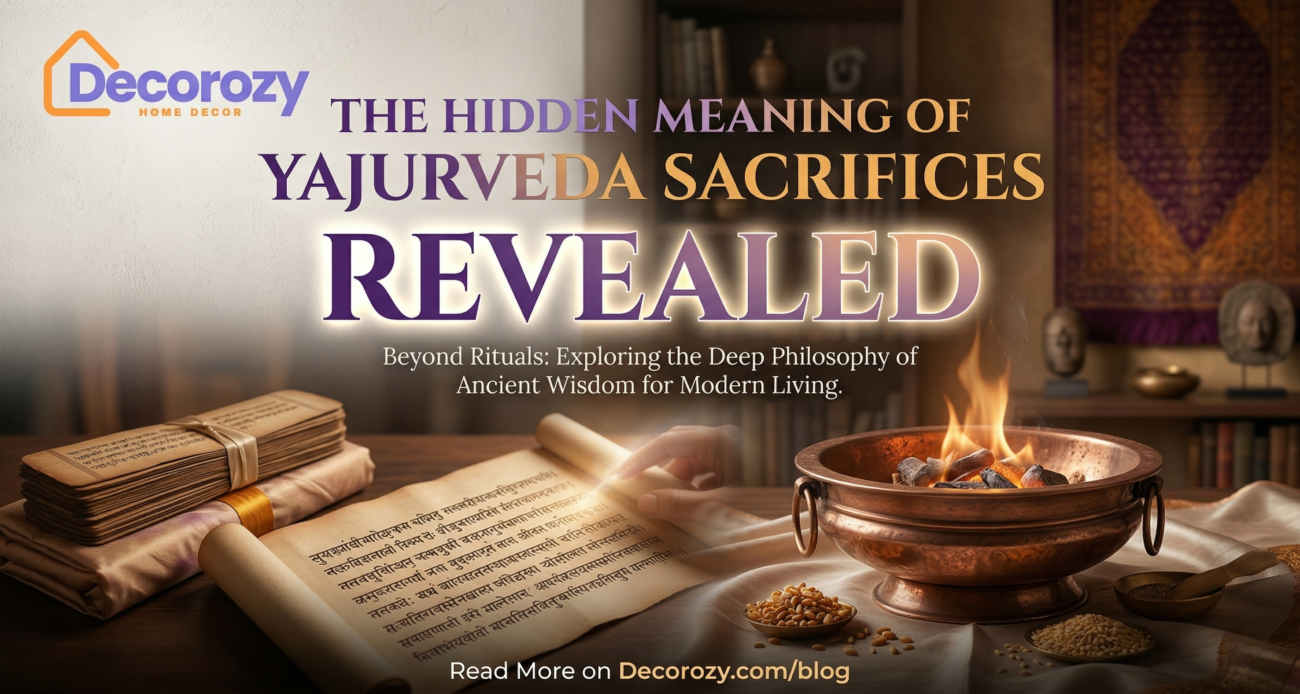
Beyond grand imperial displays, the Yajurveda heavily outlines smaller, regular ceremonies. The Agnihotra was a daily fire offering performed twice a day, at sunrise and sunset, using milk, ghee, and grains.
Seasonal transitions were marked by the Darshapurnamasa, the new and full moon sacrifices. These rituals were essential for agricultural communities, ensuring continued fertility of the land and a successful harvest cycle.
Finally, the text details the Agnicayana, an incredibly complex ritual involving the construction of a massive, bird-shaped fire altar. This intricate architectural feat required laying thousands of specially fired bricks, symbolizing the reconstruction of the cosmos itself.
As you explore the rich tapestry of historical design and culture, understanding these ancient frameworks provides incredible context. Stay connected with Decorozy.com for more deep dives into historical traditions, architecture, and cultural evolution.
FAQ Schema
- Question 1: What is the main purpose of the Yajurveda?
- Answer: The primary purpose of the Yajurveda is to serve as a comprehensive guidebook for Vedic priests. It outlines the specific physical actions, measurements, and mantras required to perform ancient Hindu sacrifices (Yajnas) accurately.
- Question 2: Who were the Adhvaryu priests?
- Answer: The Adhvaryu priests were the vital ritual specialists in ancient Vedic religion. They were responsible for the manual execution of the sacrifices, including preparing the offerings, building the fire altars, and chanting the prose formulas from the Yajurveda.
- Question 3: What is the difference between Shukla and Krishna Yajurveda?
- Answer: The Shukla (White) Yajurveda separates the explanatory prose (Brahmana) from the actual ritual mantras. The Krishna (Black) Yajurveda intertwines the mantras with the theological explanations and ritual instructions, creating a more blended text.