Unlocking the Divine Power of Panchmukhi Hanuman
In Hindu mythology, few deities command as much reverence for strength and devotion as Lord Hanuman. Among his various avatars, Panchmukhi Hanuman—the five-faced form—stands out as a supreme symbol of protection and resilience.
This unique manifestation is not just a mythological wonder but a beacon of hope for devotees seeking to overcome insurmountable obstacles. By understanding the significance of this form, we can unlock deep spiritual lessons on facing life’s challenges with courage.
What is Panchmukhi Hanuman? (Quick Answer)
Panchmukhi Hanuman is the five-faced incarnation of Lord Hanuman, taken to defeat the demon Mahiravana in the Ramayana. Each face—Hanuman, Narasimha, Garuda, Varaha, and Hayagriva—represents a specific direction and divine quality, offering devotees protection, wisdom, health, prosperity, and fearlessness against evil forces.
The Legend Behind Panchmukhi Hanuman
To truly understand the power of this deity, we must look at the Ramayana. During the great war, Ravana’s step-brother, Mahiravana, a powerful sorcerer of the netherworld, abducted Rama and Lakshmana.
Mahiravana intended to sacrifice the brothers to Goddess Kali. To ensure his immortality, the demon had placed his life force in five different lamps located in five different directions. He could only be killed if all five lamps were extinguished simultaneously.
Recognizing this magical barrier, Hanuman assumed the Panchmukhi Hanuman form. With five heads facing different directions, he blew out the lamps at the exact same moment. This act destroyed Mahiravana’s protection, allowing Hanuman to save Rama and Lakshmana, proving that adaptability is key to victory.
Decoding the Symbolism of the Five Faces
The five faces are not merely physical descriptions; they are profound symbols of cosmic balance. This form integrates the energies of five distinct deities.
Here is a breakdown of the divine faces of Panchmukhi Hanuman:
- Hanuman (East-Facing): This is the original monkey face. It purifies the mind and grants devotion (Bhakti). It signifies the removal of past sins and brings purity to the devotee.
- Narasimha (South-Facing): The lion avatar of Lord Vishnu. This face grants fearlessness and protection. It is worshipped specifically to remove fear of enemies and evil spirits.
- Garuda (West-Facing): The divine eagle. Worshiping this face is believed to offer protection from black magic, poisons, and negative astral influences. It represents health and immunity.
- Varaha (North-Facing): The boar avatar of Vishnu. This face is associated with prosperity and wealth (Ashta Aishwarya). It helps removes planetary bad luck (Doshas).
- Hayagriva (Upwards-Facing): The horse-faced avatar. This form represents knowledge, wisdom, and progeny. It ensures the devotee gains spiritual and intellectual clarity.
Spiritual Benefits of Worshipping Panchmukhi Hanuman
Devotees across the world turn to this powerful form for specific life solutions. The holistic nature of the five faces means that prayers offered here address multiple aspects of human existence.
1. Protection from Negative Forces
Because this form was created specifically to destroy sorcery and dark magic in the Ramayana, it is the ultimate shield. Worshipping Panchmukhi Hanuman creates a spiritual boundary that negativity cannot breach.
2. Mental and Physical Healing
With the inclusion of Garuda, this deity is highly effective for health. Many believe that chanting the Panchmukhi Hanuman Kavach can alleviate chronic ailments and remove toxins from the body.
3. Success in Endeavors
Just as Hanuman removed the obstacles preventing Rama’s victory, this form helps remove blockages in a devotee’s career or personal life. The combination of wisdom (Hayagriva) and strength (Narasimha) provides the perfect balance for success.
How to Worship and Connect
To invite these blessings into your life, consistency is vital. Tuesdays and Saturdays are considered the most auspicious days for Hanuman worship.
- Offerings: Light a lamp with sesame oil or ghee.
- Chanting: Recite the “Om Namo Hanumate Panchavaktraya Namaha” mantra.
- Focus: Meditate on the specific face related to your current need—such as Hayagriva for exams or Narasimha for courage.
Conclusion
The story of Panchmukhi Hanuman is a timeless reminder that we possess the inner capacity to face any challenge. By balancing strength, wisdom, protection, and purity, we can extinguish the “lamps” of ignorance and ego in our own lives.
Ready to transform your spiritual routine? Start by chanting the Panchmukhi mantra this Tuesday and share your experience in the comments below!
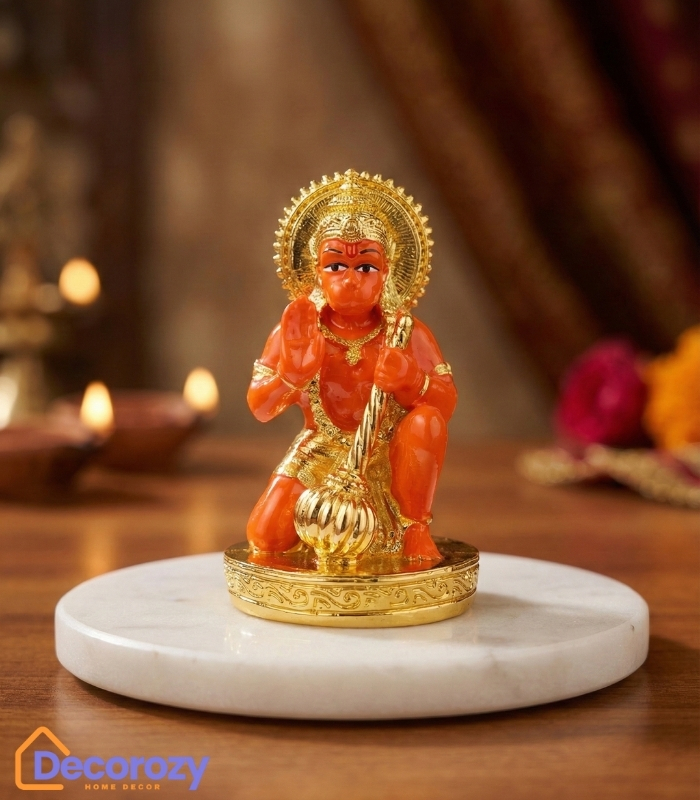
Sinduri Hanuman Ji Idol | 24K Gold Plated Devotional Murti
Invite strength, devotion, and divine protection into your space with this
Sinduri Hanuman Ji Idol.
Beautifully crafted with a sacred sindoor finish and enhanced with
24K gold electroplating, this idol radiates spiritual power and elegance.
83 in stock
Section 3: FAQ Schema (People Also Ask)
Q: Why did Lord Hanuman take the Panchmukhi form? A: Lord Hanuman took the Panchmukhi (five-faced) form to defeat the demon Mahiravana during the Ramayana war. Mahiravana’s life was hidden in five lamps placed in different directions, and they had to be extinguished simultaneously to kill him. This form allowed Hanuman to blow out all five lamps at once.
Q: What are the names of the five faces of Panchmukhi Hanuman? A: The five faces are Hanuman (facing East), Narasimha (facing South), Garuda (facing West), Varaha (facing North), and Hayagriva (facing Upwards). Each face represents a different deity and grants specific blessings like purity, protection, health, prosperity, and knowledge.
Q: Which day is best to worship Panchmukhi Hanuman? A: Tuesdays and Saturdays are considered the most auspicious days to worship Panchmukhi Hanuman. Devotees often visit temples, light oil lamps, and chant the Hanuman Chalisa or specific Panchmukhi mantras on these days to seek protection and strength.