India is home to countless spiritual wonders, but few hold the immense cosmic power of the twelve Jyotirlingas.
Understanding the deep mythology of Trimbakeshwar Jyotirlinga is absolutely essential for anyone seeking genuine spiritual clarity.
This ancient temple in Nashik represents a fascinating intersection of intense devotion, divine forgiveness, and the origin of sacred rivers.
Quick Answer: The mythology of Trimbakeshwar Jyotirlinga centers on Sage Gautama’s deep penance. After accidentally causing a sacred cow’s death, he prayed fiercely to Lord Shiva for forgiveness. Pleased, Shiva brought the River Godavari to Earth for purification and permanently manifested as the unique three-faced Jyotirlinga.
The Core Concept Behind the Mythology of Trimbakeshwar Jyotirlinga
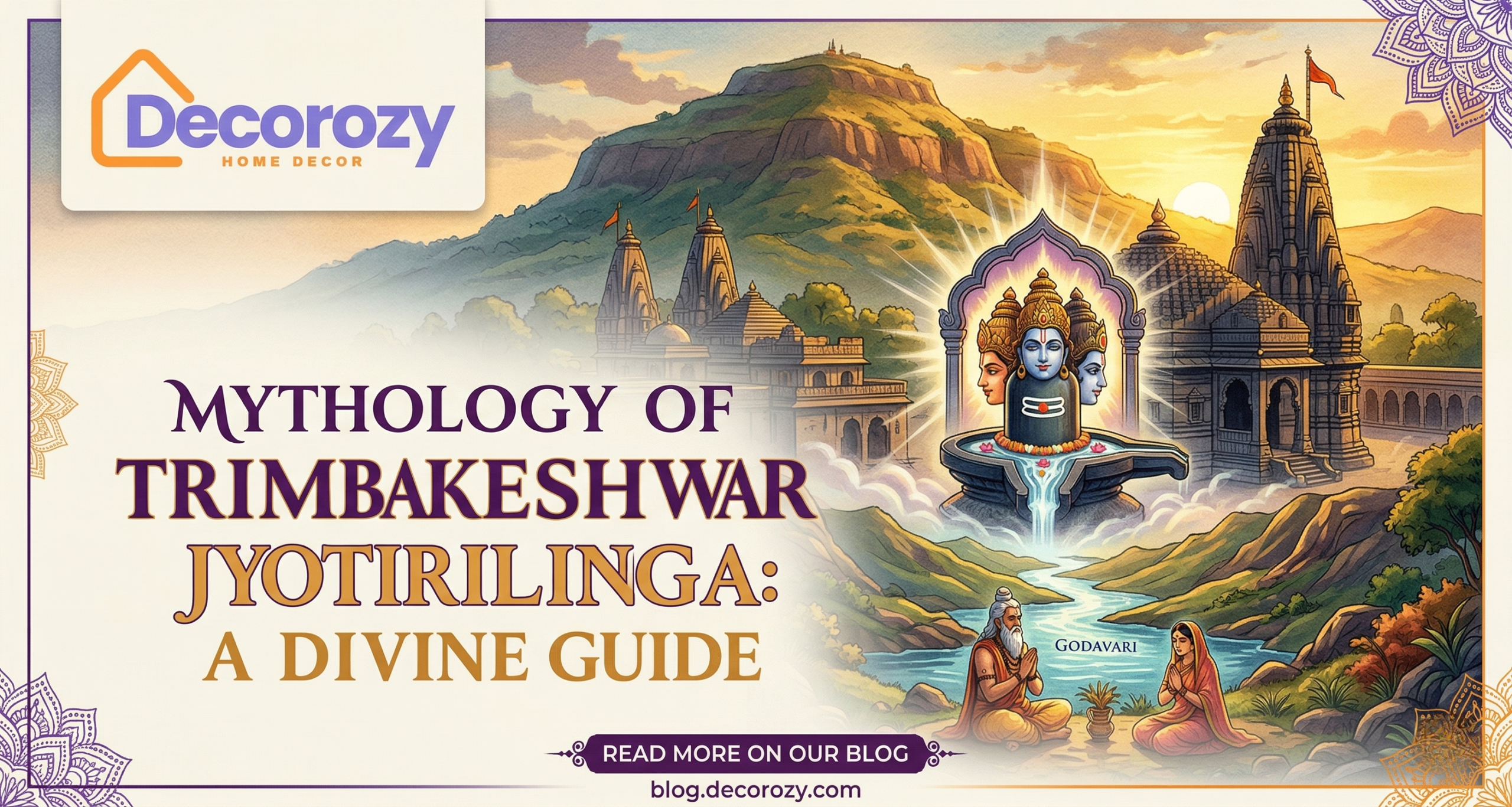
Unlike other prominent shrines, this specific temple houses a completely unique Linga with three distinct faces.
These divine faces beautifully embody the supreme Hindu trinity: Lord Brahma the Creator, Lord Vishnu the Preserver, and Lord Rudra the Destroyer.
This incredibly rare manifestation makes the temple a powerful center of cosmic energy and universal balance.
The surrounding Brahmagiri hills add a profound layer of natural mysticism to the sacred archaeological site.
According to ancient scriptural texts, the gods themselves requested Lord Shiva to reside here permanently.
This undeniable divine presence continues to attract millions of devout spiritual seekers every single year.
Spiritual Significance in the Mythology of Trimbakeshwar Jyotirlinga
The ancient stories surrounding this temple are not merely myths; they are profound lessons in ultimate redemption.
The core narrative firmly teaches us that genuine repentance and austere practices can move even the most powerful deities.
It clearly demonstrates how sincere devotion can completely wash away our deepest earthly mistakes and sins.
Furthermore, the temple is widely celebrated for its specific ancestral rituals, such as the famous Narayan Nagbali pooja.
These specialized, ancient rituals are trusted to fulfill the unrequited desires of ancestors and remove generational curses.
Therefore, the temple stands as a supreme beacon of hope for profound spiritual cleansing and personal transformation.
The Legend of Sage Gautama and the Sacred Godavari River
The central historical legend begins with the highly revered Sage Gautama and his devoted wife, Ahalya.
They lived peacefully in the lush Brahmagiri hills until a group of jealous sages actively plotted against their prosperity.
A magically created cow was sent to their ashram, and it collapsed the moment Gautama gently shooed it away with a blade of grass.
To cleanse the grave sin of cow slaughter (Gohatya), Gautama engaged in incredibly severe austerities to appease Lord Shiva.
Lord Shiva, deeply moved by this unwavering devotion, commanded the heavenly river Ganga to descend to the rocky region.
She appeared as the majestic River Godavari, washing away the sage’s sins and forever blessing the entire Indian peninsula.
The incredible tales surrounding this Jyotirlinga offer deep, valuable insights into India’s rich spiritual heritage.
By exploring these divine legends, we connect more deeply with the timeless forces of faith, devotion, and forgiveness.
Explore more spiritual insights, temple architectures, and cultural guides right here on Decorozy.com!
FAQ Schema
- Question 1: Why does Trimbakeshwar Jyotirlinga have three faces?
- Answer: Unlike other Jyotirlingas, Trimbakeshwar features three distinct faces representing the Hindu trinity of Lord Brahma, Lord Vishnu, and Lord Shiva. This unique characteristic makes it a supreme, unified symbol of cosmic creation, preservation, and destruction.
- Question 2: What is the connection between the Godavari River and Trimbakeshwar?
- Answer: According to mythology, Lord Shiva brought the river Ganga down as the Godavari River to purify Sage Gautama. The sage required absolute cleansing after accidentally killing a magically created cow. The river originates directly from the nearby Brahmagiri hills above the temple.
- Question 3: Who built the current Trimbakeshwar temple structure?
- Answer: While the Jyotirlinga itself is ancient and self-manifested, the current stone temple structure was constructed by Peshwa Balaji Baji Rao. Built in the 18th century, it is crafted from black basalt rock and showcases the classic Hemadpanthi architectural style.